


1 month 2 weeks ago
To recognize this clearly is enough to drive a man out of his senses or to make him shoot himself. And this is just what does happen, and especially often among military men. A man need only come to himself for an instant to be impelled inevitably to such an end.
▼
Source
source
Chapter V, Contradiction Between our Life and our Christian Conscience
4 months 4 days ago
Let not that which in the case of another is contrary to nature become an evil for you; for you are born not to be humiliated along with others, nor to share in their misfortunes, but to share in their good fortune. If, however, someone is unfortunate, remember that his misfortune concerns himself. For God made all mankind to be happy, to be serene.
▼
Source
source
Book III, ch. 24, 1
1 month 1 week ago
In politics continental Europe was infantile - horrifying. What America lacked, for all its political stability, was the capacity to enjoy intellectual pleasures as though they were sensual pleasures. This is what Europe offered, or was said to offer.
▼
Source
source
"My Paris" (1983), p. 235
2 months 1 day ago
The narcissistic, the domineering, the possessive woman can succeed in being a "loving" mother as long as the child is small. Only the really loving woman, the woman who is happier in giving than in taking, who is firmly rooted in her own existence, can be a loving mother when the child is in the process of separation.
▼
Source
source
Ch. 2
3 months 1 week ago
We are responsible not only for what we do but also for what we could have prevented.
▼
Source
source
Introduction (p. xv)

2 months 2 days ago
If love does not know how to give and take without restrictions, it is not love, but a transaction that never fails to lay stress on a plus and a minus.
3 months 3 weeks ago
Women are the most charitable creatures, and the most troublesome. He who shuns women passes up the trouble, but also the benefits. He who puts up with them gains the benefits, but also the trouble. As the saying goes, there's no honey without bees.
▼
Source
source
Act III, scene iv
2 months 5 days ago
To be sure, exchange-value exerts its power in a special way in the realm of cultural goods. For in the world of commodities this realm appears to be exempted from the power of exchange, to be in an immediate relationship with the goods, and it is this appearance in turn which alone gives cultural goods their exchange-value. But they nevertheless simultaneously fall completely into the world of commodities, are produced for the market, and are aimed at the market.
▼
Source
source
p. 279

1 week 3 days ago
I esteem the modern error, That all goes by self-interest and the checking and balancing of greedy knaveries, and that in short, there is nothing divine whatever in the association of men, a still more despicable error, natural as it is to an unbelieving century, than that of a "divine right" in people called Kings. I say, Find me the true Konning, King, or Able-man, and he has a divine right over me.
2 months 2 weeks ago
The representation of the self-sufficiency of the I can certainly co-exist with a representation of the self-sufficiency of the thing, though the self-sufficiency of the I itself cannot co-exist with that of the thing. Only one of these two can come first, only one can be the starting point; only one can be independent. The one that comes second, just because it comes second, necessarily becomes dependent upon the one that comes first, with which it is supposed to be connected. Which of these two should come first?
▼
Source
source
p. 17-18.
3 months 2 weeks ago
The constitution of madness as mental illness, at the end of the eighteenth century, bears witness to a rupture in a dialogue, gives the separation as already enacted, and expels from the memory all those imperfect words, of no fixed syntax, spoken falteringly, in which the exchange between madness and reason was carried out. The language of psychiatry, which is a monologue by reason about madness, could only have come into existence in such a silence.
▼
Source
source
Preface to 1961 edition



4 months 2 weeks ago
To stand on one leg and prove God's existence is a very different thing from going on one's knees and thanking Him.

4 months 3 weeks ago
We obtain the concept, as we do the form, by overlooking what is individual and actual; whereas nature is acquainted with no forms and no concepts, and likewise with no species, but only with an X which remains inaccessible and undefinable for us.
3 months 2 weeks ago
When I say that this phase is necessary, the word phase is perhaps not the most rigorous one. It is not a question of a chronological phase, a given moment, or a page that one day simply will be turned, in order to go on to other things. The necessity of this phase is structural; it is the necessity of an interminable analysis: the hierarchy of dual oppositions always reestablishes itself. Unlike those authors whose death does not await their demise, the time for overturning is never a dead letter.
▼
Source
source
p. 41-42

2 months 1 week ago
Not everyone who says to Me, 'Lord, Lord,' shall enter the kingdom of heaven, but he who does the will of My Father in heaven. Many will say to Me in that day, 'Lord, Lord, have we not prophesied in Your name, cast out demons in Your name, and done many wonders in Your name?' And then I will declare to them, 'I never knew you; depart from Me, you who practice lawlessness!'
▼
Source
source
Matthew 7:21-23 (NKJV) (Also Luke 6:24; 13:26, 27)

1 month 2 weeks ago
After childhood, the senses specialize via the channels of dominant technologies and social weaponries.
▼
Source
source
Letter to The Listener October 1971, Letters of Marshall McLuhan (1987), p. 443

3 months 2 weeks ago
One is still what one is going to cease to be and already what one is going to become. One lives one's death, one dies one's life.
▼
Source
source
Book 2, "The Melodious Child Dead in Me"

3 months 4 weeks ago
It is not possible to run a course aright when the goal itself has not been rightly placed.
▼
Source
source
Aphorism 81

2 months 1 week ago
The music of the soul is also the music of salesmanship. Exchange value, not truth value counts. On it centers the rationality of the status quo, and all alien rationality is bent to It.
▼
Source
source
p. 57

2 months 2 weeks ago
Originally, ethics has no existence apart from religion, which holds it in solution.
▼
Source
source
Ch. 1, The Confusion of Ethical Thought
3 months 2 weeks ago
In the old system, the body of the condemned man became the king's property, on which the sovereign left his mark and brought down the effects of his power. Now he will be rather the property of society, the object of a collective and useful appropriation.
▼
Source
source
Chapter Three, The Gentle Way in Punishment
2 months 3 weeks ago
When superstition is allowed to perform the task of old age in dulling the human temperament, we can say goodbye to all excellence in poetry, in painting, and in music.
▼
Source
source
Ch. 3, as quoted in Selected Writings (1966) edited by Lester G. Crocker

3 months 2 weeks ago
Most people would sooner die than think; in fact, they do so.
2 months 2 weeks ago
The problem of induction is, roughly speaking, the problem of finding a way to prove that certain empirical generalizations which are derived from past experience will hold good also in the future. There are only two ways of approaching this problem on the assumption that it is a genuine problem, and it is easy to see that neither of them can lead to its solution.
▼
Source
source
p. 49.

1 month 3 weeks ago
The general nature of the speech act fallacy can be stated as follows, using "good" as our example. Calling something good is characteristically praising or commending or recommending it, etc. But it is a fallacy to infer from this that the meaning of "good" is explained by saying it is used to perform the act of commendation.
▼
Source
source
P. 139.
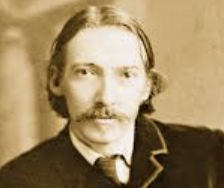
1 month 2 weeks ago
It is the mark of a good action that it appears inevitable in the retrospect. We should have been cut-throats to do otherwise. And there's an end. We ought to know distinctly that we are damned for what we do wrong; but when we have done right, we have only been gentlemen, after all. There is nothing to make a work about.
▼
Source
source
"Reflections and Remarks on Human Life", VI: Right and Wrong, published in Works: Letters and Miscellanies of Robert Louis Stevenson -- Sketches, Criticisms, Etc. (1895), p. 628.

4 months 2 weeks ago
The work of each individual contributes to a totality and so becomes an undying part of the totality. That totality of human lives - past and present and to come - forms a tapestry that has been in existence now for many thousands of years and has been growing more elaborate and, on the whole, more beautiful in all that time. Even the Spacers are an offshoot of the tapestry and they, too, add to the elaborateness and beauty of the pattern. An individual life is one thread in the tapestry and what is one thread compared to the whole?
4 months 5 days ago
And these were the dishes wherein to me, hunger-starven for thee, they served up the sun and the moon.
▼
Source
source
III, 6
2 months 3 days ago
Hooks is a contentious writer, and I don't always agree with her contentions, but Ain't I a Woman has an intellectual vitality and daring that should set new standards for the discussion of race and sex.
▼
Source
source
Ellen Willis in No More Nice Girls: Countercultural Essays

2 months 2 weeks ago
Falsehood and delusion are allowed in no case whatever: But, as in the exercise of all the virtues, there is an œconomy of truth. It is a sort of temperance, by which a man speaks truth with measure that he may speak it the longer.
1 month 1 week ago
No realistic, sane person goes around Chicago without protection.
▼
Source
source
Humboldt's Gift (1975), p. 452
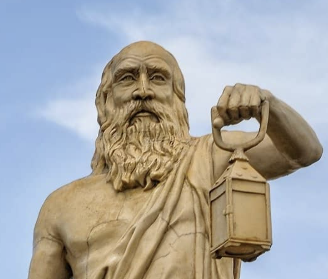
3 months 1 week ago
When people laughed at him because he walked backward beneath the portico, he said to them: "Aren't you ashamed, you who walk backward along the whole path of existence, and blame me for walking backward along the path of the promenade?"
▼
Source
source
Stobaeus, iii. 4. 83
2 months 2 weeks ago
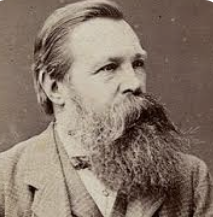
For the first time in the revolutionary movement of 1848, for the first time since 1793, a nation surrounded by superior counter-revolutionary forces dares to counter the cowardly counter-revolutionary fury by revolutionary passion, the terreur blanche by the terreur rouge. For the first time after a long period we meet with a truly revolutionary figure, a man who in the name of his people dares to accept the challenge of a desperate struggle, who for his nation is Danton and Carnot in one person - Lajos Kossuth.
▼
Source
source
The Magyar Struggle in Neue Rheinische Zeitung (13 January 1849).

3 weeks 5 days ago
In Kleist's essay humans are caught between the graceful automatism of the puppet and the conscious freedom of a god. The jerky, stuttering quality of their actions comes from their feeling that they must determine the course of their lives. Other animals live without having to choose their path through life. Whatever uncertainty they may feel sniffing their way through the world is not a permanent condition; once they reach a place of safety, they are at rest. In contrast, human life is spent anxiously deciding how to live.
▼
Source
source
The Faith of Puppets: Leopardi and the Souls of Machines (p.25-6)

3 months 2 weeks ago
Self-reliance, the height and perfection of man, is reliance on God.
▼
Source
source
The Fugitive Slave Law, a lecture in NYC, March 7, 1854
2 months 1 week ago
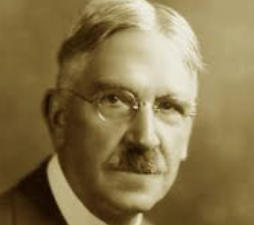
So we are always esthetically disappointed when the sensuous qualities and the intellectual properties of an object do not coalesce.
▼
Source
source
p. 7
2 months 5 days ago
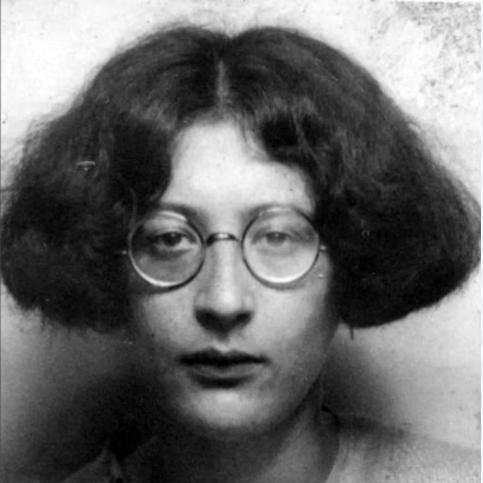
The necessity for power is obvious, because life cannot be lived without order; but the allocation of power is arbitrary because all men are alike, or very nearly. Yet power must not seem to be arbitrarily allocated, because it will not then be recognized as power. Therefore prestige, which is illusion, is of the very essence of power.
▼
Source
source
p. 235
3 months 3 weeks ago
Suicide may also be regarded as an experiment - a question which man puts to Nature, trying to force her to answer. The question is this: What change will death produce in a man's existence and in his insight into the nature of things? It is a clumsy experiment to make; for it involves the destruction of the very consciousness which puts the question and awaits the answer.
▼
Source
source
Vol. 2, Ch. 13, § 160
1 week 3 days ago
"A fair day's wages for a fair day's work": it is as just a demand as governed men ever made of governing. It is the everlasting right of man.
▼
Source
source
Bk. I, ch. 3.

2 months 2 weeks ago
I pride myself on my capacity to perceive the transitory character of everything. An odd gift which has spoiled all my joys; better: all my sensations.
3 months 2 weeks ago
Great men, great nations, have not been boasters and buffoons, but perceivers of the terror of life, and have manned themselves to face it.
▼
Source
source
Fate
3 months 1 week ago
The evidence of our own eyes makes it more plausible to believe that the world was not created by any god at all. If, however, we insist on believing in divine creation, we are forced to admit that the god who made the world cannot be all-powerful and all good. He must be either evil or a bungler.
▼
Source
source
The God of Suffering? Project Syndicate, 2008
4 months 2 weeks ago
There is less trouble and trauma involved in writing a new piece than in trying to salvage an unsatisfactory old one.

3 months 3 weeks ago
Doctors are men who prescribe medicine of which they know little, to human beings of whom they know less, to cure diseases of which they know nothing.
▼
Source
source
Note: This attribution to Voltaire appears in Strauss' Familiar Medical Quotations (1968), p. 394, and in publications as early as 1956
1 month 1 week ago
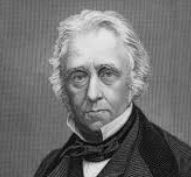
Many politicians of our time are in the habit of laying it down as a self-evident proposition, that no people ought to be free till they are fit to use their freedom. The maxim is worthy of the fool in the old story, who resolved not to go into the water till he had learned to swim. If men are to wait for liberty till they become wise and good in slavery, they may indeed have to wait forever.
▼
Source
source
p. 42
4 months 1 week ago
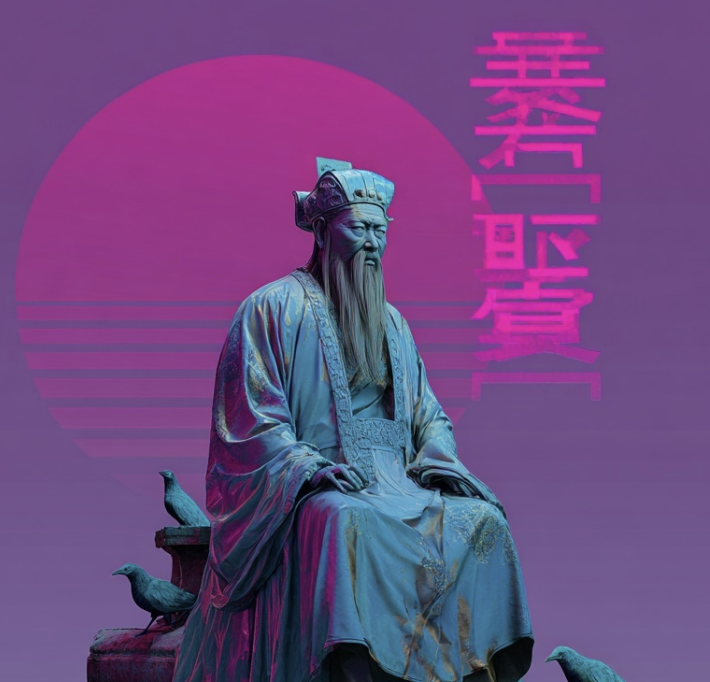
The wise find pleasure in water; the virtuous find pleasure in hills. The wise are active; the virtuous are tranquil. The wise are joyful; the virtuous are long-lived.
3 months 2 weeks ago
There is an artist imprisoned in each one of us. Let him loose to spread joy everywhere.
▼
Source
source
Last Essay: "1967"
1 week 3 days ago
Is it not a right glorious thing, and set of things, this that Shakspeare has brought us? For myself, I feel that there is actually a kind of sacredness in the fact of such a man being sent into this Earth.
CivilSimian.com created by AxiomaticPanic, CivilSimian, Kalokagathia