


2 months 2 weeks ago
It cannot but happen that those individuals whose functions are most out of equilibrium with the modified aggregate of external forces, will be those to die; and that those will survive whose functions happen to be most nearly in equilibrium with the modified aggregate of external forces. But this survival of the fittest, implies multiplication of the fittest. Out of the fittest thus multiplied, there will, as before, be an overthrowing of the moving equilibrium wherever it presents the least opposing force to the new incident force.
▼
Source
source
The Principles of Biology, Vol. I (1864), Part III: The Evolution of Life, Ch. 7: Indirect Equilibration

3 months 2 weeks ago
In the Hindoo scripture the idea of man is quite illimitable and sublime. There is nowhere a loftier conception of his destiny. He is at length lost in Brahma himself 'the divine male.' ... there is no grandeur conception of creation anywhere .... The very indistinctness of its theogeny implies a sublime truth.
▼
Source
source
A Tribute to Hinduism, 2008

3 months 2 weeks ago
Change alone is eternal, perpetual, immortal.
▼
Source
source
Unverified attribution noted in Respectfully Quoted: A Dictionary of Quotations (1993), ed. Suzy Platt, Library of Congress, p. 39;

1 week 3 days ago
He that works and does some Poem, not he that merely says one, is worthy of the name of Poet.
▼
Source
source
Introduction to Cromwell's Letters and Speeches (1845).

2 months 5 days ago
We must leave on one side the beliefs which fill up voids and sweeten what is bitter. The belief in immortality. The belief in the utility of sin: etiam peccata. The belief in the providential ordering of events - in short the "consolations" which are ordinarily sought in religion.
▼
Source
source
p. 258

3 months 3 weeks ago
To which we may add this other Aristotelian consideration, that he who confers a benefit on any one loves him better than he is beloved by him again.
▼
Source
source
Book II, Ch. 8. Of the Affections of Fathers

3 months 2 weeks ago
There are, indeed, things that cannot be put into words. They make themselves manifest. They are what is mystical.
▼
Source
source
(6.522) Original German: Es gibt allerdings Unaussprechliches. Dies zeigt sich, es ist das Mystische.
3 months 3 weeks ago
God's justice and His power are inseparable; 'tis in vain we invoke His power in an unjust cause. We are to have our souls pure and clean, at that moment at least wherein we pray to Him, and purified from all vicious passions; otherwise we ourselves present Him the rods wherewith to chastise us; instead of repairing anything we have done amiss, we double the wickedness and the offence when we offer to Him, to whom we are to sue for pardon, an affection full of irreverence and hatred. Which makes me not very apt to applaud those whom I observe to be so frequent on their knees, if the actions nearest to the prayer do not give me some evidence of amendment and reformation
▼
Source
source
Ch. 56. Of Prayers, tr. Cotton, rev. W. Carew Hazlitt, 1877

3 months 2 weeks ago
The strangest mores of the most of-the-way societies will, in spite of everything, be relatively comprehensible to the person who has a flesh-and-blood knowledge of man's needs, anxieties, and hopes. If, on the other hand, this experience is lacking, he will not even be able to understand the customs of those about him.
▼
Source
source
p. 139


3 months 2 weeks ago
He is great who is what he is from Nature, and who never reminds us of others.
▼
Source
source
Uses of Great Men

2 months 2 days ago
If love does not know how to give and take without restrictions, it is not love, but a transaction that never fails to lay stress on a plus and a minus.
1 week 3 days ago
This Burns appeared under every disadvantage: uninstructed, poor, born only to hard manual toil; and writing, when it came to that, in a rustic special dialect, known only to a small province of the country he lived in. Had he written, even what he did write, in the general language of England, I doubt not he had already become universally recognized as being, or capable to be, one of our greatest men.
2 months 2 weeks ago
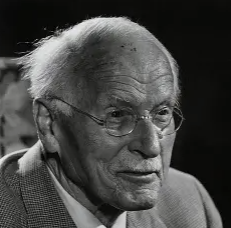
Eros is a superhuman power which, like nature herself, allows itself to be conquered and exploited as though it were impotent. But triumph over nature is dearly paid for. Nature requires no explanations of principle, but asks only for tolerance and wise measure. "Eros is a mighty daemon," as the wise Diotima said to Socrates. We shall never get the better of him, or only to our own hurt. He is not the whole of our inward nature, though he is at least one of its essential aspects.
▼
Source
source
Two Essays on Analytical Psychology, CW 7 (1957). "On the Psychology of the Unconscious" P.32f
4 months 1 week ago
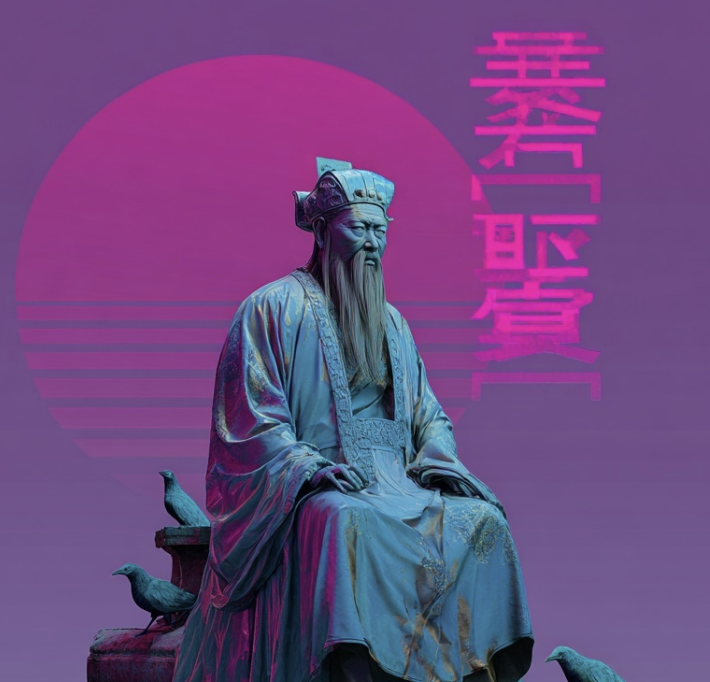
Virtuous, worthy, wise and capable people are chosen as leaders.

3 months 2 weeks ago
Today, criminal justice functions and justifies itself only by this perpetual reference to something other than itself, by this unceasing reinscription in non-juridical systems.

4 days ago
Therefore, my dear Lucilius, begin at once to live, and count each separate day as a separate life.

3 months 3 weeks ago
Fools have a habit of believing that everything written by a famous author is admirable. For my part I read only to please myself and like only what suits my taste.

3 months 2 weeks ago
But simultaneously with the development of capitalist production the credit system also develops. The money-capital which the capitalist cannot as yet employ in his own business is employed by others, who pay him interest for its use.
▼
Source
source
Vol. II, Ch. XVII, p. 325.
3 months 2 weeks ago
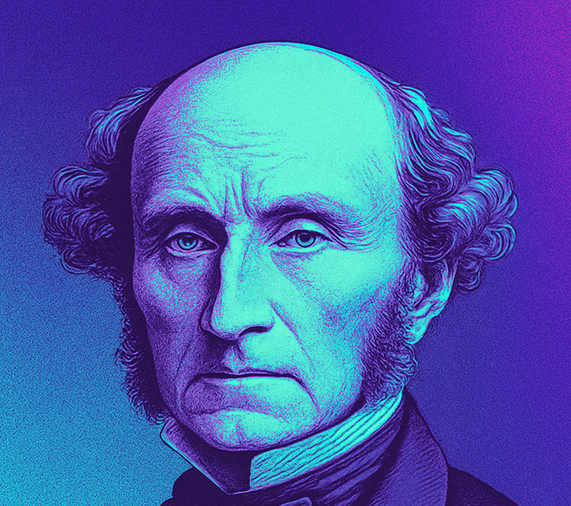
I conceive that the description so often given of a Benthamite, as a mere reasoning machine, though extremely inapplicable to most of those who have been designated by that title, was during two or three years of my life not altogether untrue of me. ...There is nothing very extraordinary in this fact: no youth of the age I then was, can be expected to be more than one thing, and this was the thing I happened to be. Ambition and desire of distinction, I had in abundance; and zeal for what I thought the good of mankind was my strongest sentiment, mixing with and colouring all others. But my zeal was as yet little else, at that period of my life, than zeal for speculative opinions. It had not its root in genuine benevolence, or sympathy with mankind; though these qualities held their due place in my ethical standard. Nor was it connected with any high enthusiasm for ideal nobleness.
▼
Source
source
(pp. 109-110)
3 months 2 weeks ago
It has no sense and cannot just unless it comes to terms with death. Mine as (well as) that of the other. Between life and death, then, this is indeed the place of a sententious injunction that always feigns to speak the just.
▼
Source
source
Exordium

3 months 2 weeks ago
The doctrine of the Second Coming teaches us that we do not and cannot know when the world drama will end. The curtain may be rung down at any moment: say, before you have finished reading this paragraph.
4 months 1 week ago
See a person's means (of getting things). Observe his motives. Examine that in which he rests. How can a person conceal his character? See a person's "being", observe his motive, notice his result. How can a person conceal his character?
3 months 2 weeks ago
I do not wish to kill nor to be killed, but I can foresee circumstances in which both these things would be by me unavoidable. We preserve the so-called peace of our community by deeds of petty violence every day. Look at the policeman's billy and handcuffs! Look at the jail! Look at the gallows! Look at the chaplain of the regiment! We are hoping only to live safely on the outskirts of this provisional army. So we defend ourselves and our hen-roosts, and maintain slavery. I know that the mass of my countrymen think that the only righteous use that can be made of Sharp's rifles and revolvers is to fight duels with them, when we are insulted by other nations, or to hunt Indians, or shoot fugitive slaves with them, or the like. I think that for once the Sharp's rifles and the revolvers were employed in a righteous cause. The tools were in the hands of one who could use them.
1 month 1 week ago
To teach virtue we must educate the emotions, and this means learning "what to feel" in the various circumstances that prompt them.
▼
Source
source
"Knowledge and Feeling" (p. 37)
3 months 3 weeks ago
Political independence, as the right to owe his existence and continuance in society not to the arbitrary will of another, but to his own rights and powers as a member of the commonwealth.
3 months 2 weeks ago
There is no more light in a genius than in any other honest man-but he has a particular kind of lens to concentrate this light into a burning point.
▼
Source
source
p. 41e

3 months 3 weeks ago
Among civilized and thriving nations, on the contrary, though a great number of people do no labor at all, many of whom consume the produce of ten times, frequently of a hundred times more labour than the greater part of those who work; yet the produce of the whole labour of the society is so great, that all are often abundantly supplied, and a workman, even of the lowest and poorest order, if he is frugal and industrious, may enjoy a greater share of the necessaries and conveniencies of life than it is possible for any savage to acquire.
▼
Source
source
Introduction and Plan of the Work, p. 2.

2 months 1 week ago
Ever since the first World War, when the system of liberalism began to shape into the system of authoritarianism, a widespread opinion has blames Hegelianism for the ideological of the new system.
▼
Source
source
P. 390
2 months 5 days ago
The jargon makes it seem that ... the pure attention of the expression to the subject matter would be a fall into sin.
▼
Source
source
p. 9
3 months 2 weeks ago
Rhodora! if the sages ask thee why This charm is wasted on the earth and sky, Tell them, dear, that, if eyes were made for seeing, Then beauty is its own excuse for Being.
▼
Source
source
The Rhodora

1 month 2 weeks ago
When you move into a new area, a new territory and learn a new language, the language is not a new subject, it is an environment, it is total.
▼
Source
source
(p. 105)


2 months 2 weeks ago
An infirmity which affects the whole race, is no proper object for the scorn of an individual who belongs to that race, and who, before he could expose it, must himself have been its slave.
▼
Source
source
p. 12
3 months 3 weeks ago
An avidity to punish is always dangerous to liberty. It leads men to stretch, to misinterpret, and to misapply even the best of laws. He that would make his own liberty secure must guard even his enemy from oppression; for if he violates this duty he establishes a precedent that will reach to himself.

2 months 2 weeks ago
The desire to die was my one and only concern; to it I have sacrificed everything, even death.
3 months 2 weeks ago
You get tragedy where the tree, instead of bending, breaks.
2 months 2 weeks ago
The Present Age, according to my view of it, stands in that Epoch which in my former lecture I named the THIRD, and which I characterized as the Epoch of Liberation-directly from the external ruling Authority, indirectly from the power of Reason as Instinct, and generally from Reason in any form; the Age of absolute indifference towards all truth, and of entire and unrestrained licentiousness:-the state of completed sinfulness.
▼
Source
source
p. 16

4 months 2 weeks ago
There is a cult of ignorance in the United States, and there always has been. The strain of anti-intellectualism has been a constant thread winding its way through our political and cultural life, nurtured by the false notion that democracy means that "my ignorance is just as good as your knowledge."
Just now
A genius doesn't adjust his treatment of a theme to a tyrant's taste.
1 month 3 weeks ago
Violence as a tool is already operating in the world before anyone takes it up: that fact alone neither justifies nor discounts the use of the tool. What seems most important, however, is that the tool is already part of a practice, presupposing a world conducive to its use; that the use of the tool builds or rebuilds a specific kind of world, activating a sedimented legacy of use. When any of us commit acts of violence, we are, in and through those acts, building a more violent world.
▼
Source
source
p. 19
3 months 3 weeks ago
"...the church of England, when she baptizes any one, makes him not a Christian [...] the church of England is mistaken, and makes none but socinians Christians"
▼
Source
source
279

3 months 2 weeks ago
Societies are composed of individuals and are good only insofar as they help individuals to realize their potentialities and to lead a happy and creative life.
▼
Source
source
Chapter 3 (p. 20)

3 months 3 weeks ago
To oppose the torrent of scholastic religion by such feeble maxims as these, that it is impossible for the same thing to be and not to be, that the whole is greater than a part, that two and three make five; is pretending to stop the ocean with a bullrush. Will you set up profane reason against sacred mystery? No punishment is great enough for your impiety. And the same fires, which were kindled for heretics, will serve also for the destruction of philosophers.
▼
Source
source
Part XI - With regard to reason or absurdity


3 months 1 week ago
Do not repeat slander; you should not hear it, for it is the result of hot temper.
▼
Source
source
Maxim no. 23.
2 months 1 week ago
Hegel's theological discussion repeatedly asks what the true relation is between the individual man and a state that no longer satisfies his capacities but exists rather as an 'estranged' institution from which the active political interest of the citizens has disappeared. Hegel defined this state with almost the same categories as those of eighteenth century liberalism: the state rests on the consent of the individuals, it circumscribes their rights and duties and protects its members from those internal and external dangers that might threaten the perpetuation of the whole.
▼
Source
source
P. 32

3 months 2 weeks ago
I think that yesterday was a crisis in my life. I finished the first part of Renouvier's second Essais and see no reason why his definition of free will-"the sustaining of a thought because I choose to when I might have other thoughts"-need be the definition of an illusion. At any rate, I will assume for the present-until next year-that it is no illusion. My first act of free will shall be to believe in free will.
▼
Source
source
Diary entry (April 30, 1870) as quoted in Ralph Barton Perry, The Thought and Character of William James, vol. 1, p. 323; Letters of William James, vol. I, p. 147.
1 month 3 weeks ago
My own view is that philosophy at its best has always, in every period, included some philosophers who brilliantly represent the moral face of the subject and some philosophers who brilliantly represent the theoretical face, as well as some geniuses whose insights span and unite both sides of the subject. To renounce either the moral ambitions of philosophy or its theoretical ambitions is not just to kill the subject of philosophy; it is to commit intellectual and spiritual suicide.
▼
Source
source
Science and Philosophy

3 months 4 weeks ago
Only charity admitteth no excess. For so we see, aspiring to be like God in power, the angels transgressed and fell.
▼
Source
source
Book II, xxii
CivilSimian.com created by AxiomaticPanic, CivilSimian, Kalokagathia