


3 months 4 weeks ago
Like the body the soul can be healthy, youthful, and so on. It can undergo pain, thirst, and hunger. In this physical life, that is, in the visible world, we avoid whatever would defile or deform the body; how much more, then, ought we to avoid that which would tarnish the soul?

2 months 5 days ago
There are, in fact, people who appear to think only with the brain, or with whatever may be the specific thinking organ; while others think with all the body and all the soul, with the blood, with the marrow of the bones, with the heart, with the lungs, with the belly, with the life. And the people who think only with the brain develop into definition-mongers; they become the professionals of thought.

3 months 3 weeks ago
He is happy, whose circumstances suit his temper; but he is more excellent, who can suit his temper to any circumstances.
▼
Source
source
§ 6.9 : Of Qualities Useful to Ourselves, Pt. 1

4 months 3 weeks ago
...and woe betide fateful curiosity should it ever succeed in peering through a crack in the chamber of consciousness, out and down into the depths, and thus gain an intimation of the fact that humanity, in the indifference of its ignorance, rests on the pitiless, the greedy, the insatiable, the murderous clinging in dreams, as it were, to the back of a tiger.

3 months 2 weeks ago
Most people, at a crisis, feel more loyalty to their nation than to their class.
▼
Source
source
Ch. 8: Economic Power
1 month 2 weeks ago
I was taught that the human brain was the crowning glory of evolution so far, but I think it's a very poor scheme for survival.
▼
Source
source
As quoted in The Observer [London]

3 months 2 weeks ago
Beauty is the main positive form of the aesthetic assimilation of reality, in which aesthetic ideal finds it direct expression...
▼
Source
source
About Beauty
2 months 1 week ago
Persons who feel themselves to be exiles in this world-and what noble mind, from Empedocles down, has not had that feeling?-are mightily inclined to believe themselves citizens of another.
▼
Source
source
pp. 39-40
3 months 2 weeks ago
Apart from autograph hunters, I get... many letters from Hindus, beseeching me to adopt some form of mysticism, from young Americans, asking me where I think the line should be drawn in petting, and from Poles, urging me to admit that while all other nationalism may be bad that of Poland is wholly noble. I get letters from engineers who cannot understand Einstein, and from parsons who think that I cannot understand Genesis, from husbands whose wives have deserted them - not (they say) that that would matter, but the wives have taken the furniture with them, and what in these circumstances should an enlightened male do? ...I get letters (concerning whose genuineness I am suspicious) trying to get me to advocate abortion, and I get letters from young mothers asking my opinion of bottle-feeding.
▼
Source
source
Letter to Mr C. L. Aiken, March 19, 1930
3 months 2 weeks ago
Ramsgate is full of Jews and fleas.
▼
Source
source
MEKOR IV, 490, 25 August 1879
3 months 2 days ago
Every body is in place; but nothing essentially incorporeal, or any thing of this kind, has any locality.

3 months 2 weeks ago
Totalitarianism in power invariably replaces all first-rate talents, regardless of their sympathies, with those crackpots and fools whose lack of intelligence and creativity is still the best guarantee of their loyalty.
▼
Source
source
Part 3, Chapter 10
1 month 4 days ago
Scientific men get an awkward habit - no, I won't call it that, for it is a valuable habit - of believing nothing unless there is evidence for it; and they have a way of looking upon belief which is not based upon evidence, not only as illogical, but as immoral.
▼
Source
source
Thomas Henry Huxley. "Lectures on Evolution Title: This is Essay# 3 from" Science and Hebrew Tradition." (1882); as cited in: William Trufant Foster, (1908) Argumentation and debating, p. 55

3 months 2 weeks ago
Catherine: Why commit Evil? Goetz: Because Good has already been done. Catherine: Who has done it? Goetz: God the Father. I, on the other hand, am improvising.
▼
Source
source
Act 3, sc. 4



2 months 4 days ago
The soul was not made to dwell in a thing; and when forced to it, there is no part of that soul but suffers violence.
▼
Source
source
in The Simone Weil Reader, p. 155

2 months ago
You ask me why I do not write something... I think one's feelings waste themselves in words; they ought all to be distilled into actions and into actions which bring results.
▼
Source
source
Letter to a friend, quoted in The Life of Florence Nightingale (1913) by Edward Tyas Cook, p. 94

2 months 2 weeks ago
It is reconciled in policy; and politics ought to be adjusted, not to human reasonings, but to human nature; of which the reason is but a part; and by no means the greatest part.
▼
Source
source
Observations on a Late Publication on the Present State of the Nation (1769), page 78

3 months 3 weeks ago
Through the fortunate effect of my frankness, I had the rarest and surest opportunity to know a man well, which is to study him at leisure in his private life and living, so to speak, with himself. For he share himself without reservation and made me feel as much at home in his house as in mine. I had almost no other abode than his own.
▼
Source
source
Second Dialogue; translated by Judith R. Bush, Christopher Kelly, Roger D. Masters
4 months 2 weeks ago
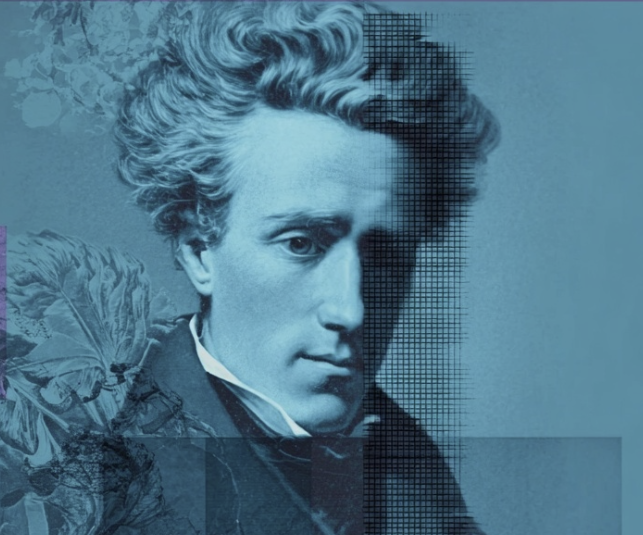
To understand oneself in existence is the Christian principle, except that this self has received much richer and much more profound qualifications that are even more difficult to understand together with existing. The believer is a subjective thinker, and the difference, is only between the simple person and the simple wise person. Here again the oneself is not humanity in general, subjectivity in general, and other such things, whereas everything becomes easy inasmuch as the difficulty is removed and the whole matter is shifted over into the shadow play of abstraction.

3 months ago
Many words befall men, mean and noble alike; do not be astonished by them, nor allow yourself to be constrained. If a lie is told, bear with it gently. But whatever I tell you, let it be done completely. Let no one persuade you by word or deed to do or say whatever is not best for you.
▼
Source
source
As quoted in Divine Harmony: The Life and Teachings of Pythagoras by John Strohmeier and Peter Westbrook.

3 months 3 weeks ago
Upstart greatness is everywhere less respected than ancient greatness.
▼
Source
source
Chapter I, Part II, p. 773.

3 months 2 weeks ago
We live together, we act on, and react to, one another; but always and in all circumstances we are by ourselves. The martyrs go hand in hand into the arena; they are crucified alone. Embraced, the lovers desperately try to fuse their insulated ecstasies into a single self-transcendence; in vain. By its very nature every embodied spirit is doomed to suffer and enjoy in solitude. Sensations, feelings, insights, fancies - all these are private and, except through symbols and at second hand, incommunicable. We can pool information about experiences, but never the experiences themselves. From family to nation, every human group is a society of island universes.
3 months 2 weeks ago
What the rest of us see only under the influence of mescalin, the artist is congenitally equipped to see all the time. His perception is not limited to what is biologically or socially useful.
▼
Source
source
Page 168
3 months 2 weeks ago
Truth is a shining goddess, always veiled, always distant, never wholly approachable, but worthy of all the devotion of which the human spirit is capable.
▼
Source
source
Fact and Fiction (1961), Part II, Ch. 10: "University Education", p. 153
1 month 1 week ago
We take foreigners to be incomplete Americans - convinced that we must help and hasten their evolution.
▼
Source
source
" A Second Half Life" (1991), p. 324

1 month 2 weeks ago
Great ages of innovation are the ages in which entire cultures are junked or scrapped.
▼
Source
source
(p. 309)

2 months 1 week ago
Nobody really thinks who does not abstract from that which is given, who does not relate the facts to the factors which have made them, who does not - in his mind - undo the facts. Abstractness is the very life of thought, the token of its authenticity.
▼
Source
source
p. 134
3 months 3 weeks ago
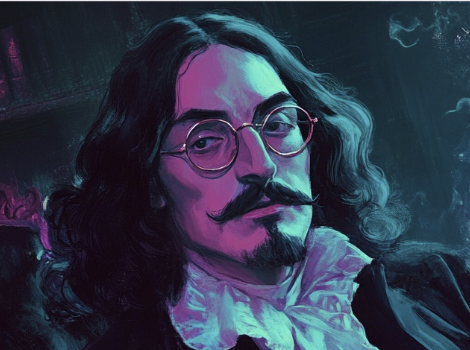
Thus, all unknown quantities can be expressed in terms of a single quantity, whenever the problem can be constructed by means of circles and straight lines, or by conic sections, or even by some other curve of degree not greater than the third or fourth.But I shall not stop to explain this in more detail, because I should deprive you of the pleasure of mastering it yourself, as well as of the advantage of training your mind by working over it, which is in my opinion the principal benefit to be derived from this science. Because, I find nothing here so difficult that it cannot be worked out by anyone at all familiar with ordinary geometry and with algebra, who will consider carefully all that is set forth in this treatise.
▼
Source
source
First Book
3 weeks 1 day ago
From each as they choose, to each as they are chosen.
▼
Source
source
Ch. 7 : Distributive Justice, Section I, Patterning, p. 160

3 months 3 weeks ago
A Christian has no need of any law in order to be saved, since through faith we are free from every law. Thus all the acts of a Christian are done spontaneously, out of a sense of pure liberty. As Christians we do not seek our own advantage or salvation because we are already fully satisfied and saved by God's grace through faith. Now our only motive is to do that which is pleasing to God.
▼
Source
source
pp. 75-76
1 month 2 weeks ago
All media work us over completely. They are so pervasive in their personal, political, economic, aesthetic, psychological, moral, ethical, and social consequences that they leave no part of us untouched, unaffected, unaltered. The medium is the massage. Any understanding of social and cultural change is impossible without a knowledge of the way media work as environments. All media are extensions of some human faculty - psychic or physical.
▼
Source
source
(p. 26)

4 months 6 days ago
Those who deny the first principle should be flogged or burned until they admit that it is not the same thing to be burned and not burned, or whipped and not whipped.

3 months 2 weeks ago
If the inner psychic ground of our individual appearance were not always the same, there could be no science of psychology, which qua science relies on a psychic "inside we are all alike," just as the science of physiology and medicine relies on the sameness of our inner organs. The monstrous sameness and pervasive ugliness so highly characteristic of the findings of modern psychology, and contrasting so obviously with the enormous variety and richness of overt human conduct, witness to the radical difference between the inside and the outside of the human body.
▼
Source
source
pp. 34-35

2 months 2 weeks ago
A self-respecting man is a man without a country. A fatherland is birdlime...
2 months 2 weeks ago
The political freedom of conscience and of the press, so far from being as it is commonly supposed an extension, is a new case of the limitation of rights and discretion. Conscience and the press ought to be unrestrained, not because men have a right to deviate from the exact line that duty prescribes, but because society, the aggregate of individuals, has no right to assume the prerogative of an infallible judge, and to undertake authoritatively to prescribe to its members in matters of pure speculation.
▼
Source
source
Vol. 1, bk 2 : Principles of Society , Ch. 5 : Of Rights
3 months 2 weeks ago
We can pool information about experiences, but never the experiences themselves. From family to nation, every human group is a society of island universes.
▼
Source
source
Page 159

2 months 2 days ago
As more and more women acquired prestige, fame, or money from feminist writings or from gains from feminist movement for equality in the workforce, individual opportunism undermined appeals for collective struggle. Women who were not opposed to patriarchy, capitalism, classism, or racism labeled themselves "feminist." Their expectations were varied. Privileged women wanted social equality with men of their class; some women wanted equal pay for equal work; others wanted an alternative lifestyle. Many of these legitimate concerns were easily co-opted by the ruling capitalist patriarchy.
▼
Source
source
p. 7.
4 months 2 weeks ago
It belongs to the imperfection of everything human that man can only attain his desire by passing through its opposite.

3 months 2 weeks ago
I believe in Christianity as I believe that the sun has risen. Not only because I see it, but because by it I see everything else.
▼
Source
source
"Is Theology Poetry?", 1945
1 week 6 days ago
See now the power of truth; the same experiment which at first glance seemed to show one thing, when more carefully examined, assures us of the contrary.
▼
Source
source
Salviati, Third Day. Naturally Accelerated Motion
3 weeks 1 day ago
Whatever the practical origins of aesthetic discernment may have been, it has been used to create great works of art. When the very loftiest human creations are seen to derive from humble origins and functions, what needs revision is not our esteem for these creations but our notion of nobility.
▼
Source
source
The Nature of Rationality (1993), Ch. V : Instrumental Rationality and Its Limits; Rationality's Imagination, p. 181

2 months 3 weeks ago
The New Englander is attached to his township because it is strong and independent; he has an interest in it because he shares in its management; he loves it because he has no reason to complain of his lot; he invests his ambition and his future in it; in the restricted sphere within his scope, he learns to rule society; he gets to know those formalities without which freedom can advance only through revolutions, and becoming imbued with their spirit, develops a taste for order, understands the harmony of powers, and in the end accumulates clear, practical ideas about the nature of his duties and the extent of his rights.
▼
Source
source
Chapter V.

4 months 2 weeks ago
Science is a systematic method for studying and working out those generalizations that seem to describe the behavior of the universe. It could exist as a purely intellectual game that would never affect the practical life of human beings either for good or evil, and that was very nearly the case in ancient Greece, for instance. Technology is the application of scientific findings to the tools of everyday life, and that application can be wise or unwise, useful or harmful. Very often, those who govern technological decisions are not scientists and know little about science.
2 months 1 week ago
History is nothing but assisted and recorded memory. It might almost be said to be no science at all, if memory and faith in memory were not what science necessarily rest on. In order to sift evidence we must rely on some witness, and we must trust experience before we proceed to expand it. The line between what is known scientifically and what has to be assumed in order to support knowledge is impossible to draw. Memory itself is an internal rumour; and when to this hearsay within the mind we add the falsified echoes that reach us from others, we have but a shifting and unseizable basis to build upon. The picture we frame of the past changes continually and grows every day less similar to the original experience which it purports to describe.
▼
Source
source
Ch. 2 "History"

2 months 2 days ago
The eros-driven soul produces beautiful things, and, above all, beautiful actions, which have a universal value.
3 months 2 weeks ago
To the gross senses the chair seems solid and substantial. But the gross senses and be refined by means of instruments. Closer observations are made, as the result of which we are forced to conclude that the chair is "really" a swarm of electric charges whizzing about in empty space. ... While the substantial chair is an abstraction easily made from the memories of innumerable sensations of sight and touch, the electric charge chair is a difficult and far-fetched abstraction from certain visual sensations so excessively rare (they can only come to us in the course of elaborate experiments) that not one man in a million has ever been in the position to make it for himself. The overwhelming majority of us accept the electric-charge chair on authority, as good Catholics accept transubstantiation.
▼
Source
source
"One and Many," pp. 8-9
2 months 1 week ago
Whenever a nation is converted to Christianity, its Christianity, in practice, must be largely converted to paganism.
▼
Source
source
p. 35

3 months 2 weeks ago
Philosophy may in no way interfere with the actual use of language; it can in the end only describe it.
▼
Source
source
§ 124
CivilSimian.com created by AxiomaticPanic, CivilSimian, Kalokagathia