

3 months 1 week ago
Technically speaking, since our complex societies are highly susceptible to interferences and accidents,they certainly offer ideal opportunities for a prompt disruption of normal activities. These disruptions can, with minimum expense, have considerably destructive consequences. Global terrorism is extreme both in its lack of realistic goals and in its cynical exploitation of the vulnerability of complex systems.
▼
Source
source
Habermas (2004) in: Giovanna Borradori (2004) Philosophy in a Time of Terror: : Dialogues with Jurgen Habermas and Jacques Derrida. p. 34

2 months 5 days ago
Glorious is the risk! - καλος γαρ ο κινδυνος, glorious is the risk that we are able to run of our souls never dying ... Faced with this risk, I am presented with arguments designed to eliminate it, arguments demonstrating the absurdity of the belief in the immortality of the soul; but these arguments fail to make any impression on me, for they are reasons and nothing more than reasons, and it is not with reasons that the heart is appeased. I do not want to die - no; I neither want to die nor do I want to want to die; I want to live for ever and ever and ever. I want this "I" to live - this poor "I" that I am and that I feel myself to be here and now, and therefore the problem of the duration of my soul, of my own soul, tortures me.
4 days ago
The habit of the religious way of thinking has biased our mind so grievously that we are - terrified at ourselves in our nakedness and naturalness; it has degraded us so that we deem ourselves depraved by nature, born devils.
▼
Source
source
Dover 2005, p. 162

2 months 2 weeks ago
A mother-complex is not got rid of by blindly reducing the mother to human proportions. Besides that we run the risk of dissolving the experience "Mother" into atoms, thus destroying something supremely valuable and throwing away the golden key which a good fairy laid in our cradle. That is why mankind has always instinctively added the pre-existent divine pair to the personal parents-the "god"father and "god"-mother of the newborn child-so that, from sheer unconsciousness or shortsighted rationalism, he should never forget himself so far as to invest his own parents with divinity.
▼
Source
source
"Psychological Aspects of the Mother Archetype" (1939) In CW 9, Part I: The Archetypes and the Collective Unconscious P.172

2 months 2 weeks ago
For a long time - always, in fact - I have known that life here on earth is not what I needed and that I wasn't able to deal with it; for this reason and for this reason alone, I have acquired a touch of spiritual pride, so that my existence seems to me the degradation and the erosion of a psalm.

3 months 2 weeks ago
She believed in nothing; only her skepticism kept her from being an atheist.
▼
Source
source
The Words (1964), speaking of his grandmother.

2 months 3 weeks ago
Those wise men knew God to be in things, and Divinity to be latent in Nature, working and glowing differently in different subjects and succeeding through diverse physical forms, in certain arrangements, in making them participants in her, I say, in her being, in her life and intellect.
▼
Source
source
As translated by Arthur Imerti

3 months 3 weeks ago
Accent is the soul of language; it gives to it both feeling and truth.
▼
Source
source
English translation as quoted in A Dictionary of Thoughts: Being a Cyclopedia of Laconic Quotations from the Best Authors of the World, Both Ancient and Modern (1908) by Tryon Edwards, p. 2.
2 months 1 week ago
To feel most beautifully alive means to be reading something beautiful, ready always to apprehend in the flow of language the sudden flash of poetry.
▼
Source
source
A Retrospective Glance at the Lifework of a Master of Books

3 months 2 weeks ago
In reality, the labourer belongs to capital before he has sold himself to capital.
▼
Source
source
Vol. I, Ch. 23, pg. 633.
3 months 3 weeks ago
For all knowledge and wonder (which is the seed of knowledge) is an impression of pleasure in itself.
▼
Source
source
Book I, i, 3

1 month 1 week ago
Much of junk culture has a core of crisis - shoot-outs, conflagrations, bodies weltering in blood, naked embracers or rapist-stranglers. The sounds of junk culture are heard over a ground bass of extremism. Our entertainments swarm with specters of world crisis. Nothing moderate can have any claim to our attention.
▼
Source
source
A Second Half Life (1991), p. 326

3 months 2 weeks ago
There's only one corner of the universe you can be certain of improving, and that's your own self.

1 month 2 weeks ago
Memento mori-remember death! These are important words. If we kept in mind that we will soon inevitably die, our lives would be completely different. If a person knows that he will die in a half hour, he certainly will not bother doing trivial, stupid, or, especially, bad things during this half hour. Perhaps you have half a century before you die-what makes this any different from a half hour?
▼
Source
source
p. 209
2 months 4 days ago
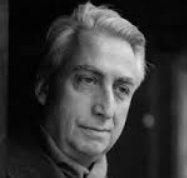
Statistically, myth is on the right. There, it is essential, well-fed, sleek, expensive, garrulous, it invents itself ceaselessly. It takes hold of everything, all aspects of the law, of morality, of aesthetics, of diplomacy, of household equipment, of Literature, of entertainment.
▼
Source
source
p. 148
3 weeks 6 days ago
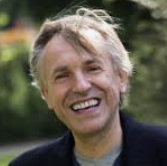
... our descendants may recognize that we are the sociopathic emotional primitives in the grip of an affective psychosis. Jealousy, envy, resentment, ridicule, hate, anger, disgust, spite, contempt, schadenfreude and a whole gamut of nameless but mean-spirited states we undergo each day are a toxic legacy of our Darwinian past. More commonly, perhaps, our genetic make-up ensures we simply feel indifference to the plight of all but a handful of significant others in our lives. Right now, for instance, one knows dimly at some level that there is frightful and preventable suffering in the world. Yet most of us feel no overpowering moral urgency to do anything about it.
▼
Source
source
"Utopian Pharmacology: Mental Health in the Third Millennium MDMA and Beyond", BLTC Research, last updated 2020

1 week 2 days ago
Democracy, which means despair of finding any Heroes to govern you, and contented putting up with the want of them,-alas, thou too, mein Lieber, seest well how close it is of kin to Atheism, and other sad Isms: he who discovers no God whatever, how shall he discover Heroes, the visible Temples of God?

3 days ago
He knows his own strength; he knows that he was born to carry burdens.
1 month 3 weeks ago
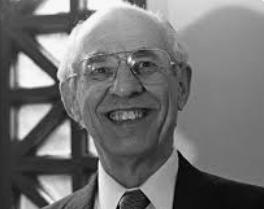
My own view is that philosophy at its best has always, in every period, included some philosophers who brilliantly represent the moral face of the subject and some philosophers who brilliantly represent the theoretical face, as well as some geniuses whose insights span and unite both sides of the subject. To renounce either the moral ambitions of philosophy or its theoretical ambitions is not just to kill the subject of philosophy; it is to commit intellectual and spiritual suicide.
▼
Source
source
Science and Philosophy

2 months 1 day ago
When we resist impermanence, the self intensifies.

2 months 4 days ago
It is not in a person's nature to desire what he already has. Desire is a tendency, the start of a movement toward something, toward a point from which one is absent. If, at the very outset, this movement doubles back on itself toward its point of departure, a person turns round and round like a squirrel in a cage or a prisoner in a condemned cell. Constant turning soon produces revulsion. All workers, especially though not exclusively those who work under inhumane conditions, are easily the victims of revulsion, exhaustion and disgust and the strongest are often the worst affected.
▼
Source
source
p. 245
1 month 2 weeks ago
All our problems are caused by forgetting what lives within us, and we sell our souls for the "bowl of stew" of bodily satisfactions.
▼
Source
source
p. 17
1 month 1 week ago
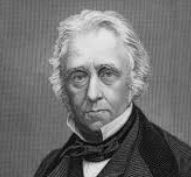
The highest proof of virtue is to possess boundless power without abusing it.
▼
Source
source
The Life and Writings of Addison', The Edinburgh Review (July 1843), quoted in T. B. Macaulay, Critical and Historical Essays Contributed to The Edinburgh Review: A New Edition (1852), p. 706
2 months 2 weeks ago
No one should try to live if he has not completed his training as a victim.

2 months 2 weeks ago
It is justice, not charity, that is wanting in the world.
▼
Source
source
Ch. 4
3 months 3 weeks ago
Lucid intervals and happy pauses.
▼
Source
source
History of King Henry VII, III

2 months 1 week ago
Bourgeois political economy ... never gets to see man who is its real subject. It disregards the essence of man and his history and is thus in the profoundest sense not a 'science of people' but of non-people and of an inhuman world of objects and commodities.
▼
Source
source
"The Foundations of Historical Materialism," Studies in Critical Philosophy (1972), p. 9

3 months 2 weeks ago
Even in those cities which seem to enjoy the blessings of peace, and where the arts florish, the inhabitants are devoured by envy, cares and anxieties, which are greater plagues than any experienced in a town when it is under siege.
1 month 1 week ago
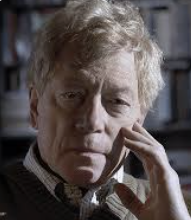
Never in the history of the world have there been so many migrants. And almost all of them are migrating from regions where nationality is weak or non-existent to the established nation states of the West. They are not migrating because they have discovered some previously dormant feeling of love or loyalty towards the nations in whose territory they seek a home. On the contrary, few of them identify their loyalties in national terms and almost none of them in terms of the nation where they settle. They are migrating in search of citizenship which is the principal gift of national jurisdictions, and the origin of the peace, law, stability and prosperity that still prevail in the West.
1 month 1 week ago
Hence it may be concluded that the happiest state of society is that in which supreme power resides in the whole body of a well-informed people. This is an imaginary, perhaps an unattainable, state of things. Yet, in some measure, we may approximate to it; and he alone deserves the name of a great statesman, whose principle it is to extend the power of the people in proportion to the extent of their knowledge, and to give them every facility for obtaining such a degree of knowledge as may render it safe to trust them with absolute power. In the mean time, it is dangerous to praise or condemn constitutions in the abstract; since, from the despotism of St. Petersburg to the democracy of Washington, there is scarcely a form of government which might not, at least in some hypothetical case, be the best possible.
▼
Source
source
pp. 161-162

4 months 2 weeks ago
Hypocrisy is a universal phenomenon. It ends with death, but not before.
1 week 5 days ago
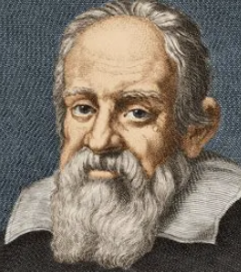
To this end they make a shield of their hypocritical zeal for religion. They go about invoking the Bible, which they would have minister to their deceitful purposes. Contrary to the sense of the Bible and the intention of the holy Fathers, if I am not mistaken, they would extend such authorities until even in purely physical matters - where faith is not involved - they would have us altogether abandon reason and the evidence of our senses in favor of some biblical passage, though under the surface meaning of its words this passage may contain a different sense.
3 months 1 week ago
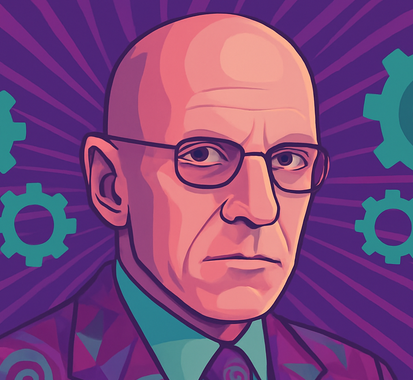
My point is not that everything is bad, but that everything is dangerous, which is not exactly the same as bad. If everything is dangerous, then we always have something to do. So my position leads not to apathy but to a hyper- and pessimistic activism. I think that the ethico-political choice we have to make every day is to determine which is the main danger. "
▼
Source
source
On the Genealogy of Ethics: An Overview of Work in Progress." Afterword, in Hubert L. Dreyfus and Paul Rabinow, Michel Foucault: Beyond Structuralism and Hermeneutics, 2nd ed. Chicago: University of Chicago Press.

3 months 3 weeks ago
As to the Approbation or Esteem of those Blockheads who call themselves the Public, & whom a Bookseller, a Lord, a Priest, or a Party can guide, I do most heartily despise it.
▼
Source
source
Letter 138, To Gilbert Elliot of Minto; August 9, 1757
3 days ago
The wise man is joyful, happy and calm, unshaken, he lives on a plane with the gods.

3 months 2 weeks ago
There are other letters for the child to learn than those which Cadmus invented.

2 months 1 day ago
What excited me was the recognition that this was simply another version of the problem that had obsessed me all of my life -- the problem of those moments when life seems entirely delightful, when we experience a sensation of what G.K. Chesterton called "absurd good news." Life normally strikes most of us as hard, dull and unsatisfying; but in these moments, consciousness seems to glow and expand, and all the contradictions seem to be resolved. Which of the two visions is true? My own reflections had led me to conclude that the vision of "absurd good news" is somehow broader and more comprehensive than the feeling that life is dull, boring and meaningless. Boredom is basically a feeling of narrowness, and surely a narrow vision is bound to be less true than a broad one?
▼
Source
source
p. 16

2 months 2 days ago
People with healthy self-esteem do not need to create pretend identities.

3 months 3 weeks ago
To turn one's eyes away from Jesus means to turn them to the Law.
▼
Source
source
Chapter 2

3 months 2 weeks ago
If I have exhausted the justifications, I have reached bedrock and my spade is turned. Then I am inclined to say: "This is simply what I do."
▼
Source
source
§ 217

3 months 2 weeks ago
So nigh is grandeur to our dust, So near is God to man, When Duty whispers low, Thou must, The youth replies, I can.
▼
Source
source
Voluntaries, st. 3
4 months 2 weeks ago
Scientific writing is abhorrently stylized and places a premium on poor quality.
3 months 2 weeks ago
You have stolen my face from me: you know it and I no longer do.
▼
Source
source
Act 1, sc. 5

3 months 3 weeks ago
Men will not understand ... that when they fulfil their duties to men, they fulfil thereby God's commandments; that they are consequently always in the service of God, as long as their actions are moral, and that it is absolutely impossible to serve God otherwise.
▼
Source
source
As quoted in German Thought, From The Seven Years' War To Goethe's Death : Six Lectures (1880) by Karl Hillebrand, p. 207

3 months ago
Holding fast to these things, you will know the worlds of gods and mortals which permeates and governs everything. And you will know, as is right, nature similar in all respects, so that you will neither entertain unreasonable hopes nor be neglectful of anything.
▼
Source
source
As quoted in Divine Harmony: The Life and Teachings of Pythagoras by John Strohmeier and Peter Westbrook.
2 months 2 weeks ago
The source of our actions resides in an unconscious propensity to regard ourselves as the center, the cause, and the conclusion of time. Our reflexes and our pride transform into a planet the parcel of flesh and consciousness we are. If we had the right sense of our position in the world, if to compare were inseparable from to live, the revelation of our infinitesimal presence would crush us. But to live is to blind ourselves to our own dimensions. . . .


4 months 1 week ago
I am not bothered by the fact that I am not understood. I am bothered when I do not know others.

3 months 2 weeks ago
It is, in fact, far easier to act under conditions of tyranny than it is to think.
▼
Source
source
The Human Condition
1 month 1 week ago
In an age of enormities, the emotions are naturally weakened. We are continually called upon to have feelings - about genocide, for instance, or about famine or the blowing up of passenger planes - and we are all aware that we are incapable of reacting appropriately. A guilty consciousness of emotional inadequacy or impotence makes people doubt their own human weight.
▼
Source
source
"The Distracted Public" (1990), p. 156
CivilSimian.com created by AxiomaticPanic, CivilSimian, Kalokagathia