


3 weeks 6 days ago
Man, little as he may suppose it, is necessitated to obey superiors. He is a social being in virtue of this necessity; nay he could not be gregarious otherwise. He obeys those whom he esteems better than himself, wiser, braver; and will forever obey such; and even be ready and delighted to do it.
2 months 1 week ago
I have not been able to discover the cause of those properties of gravity from phenomena, and I frame no hypotheses; for whatever is not deduced from the phenomena is to be called a hypothesis, and hypotheses, whether metaphysical or physical, whether of occult qualities or mechanical, have no place in experimental philosophy.
▼
Source
source
Letter to Robert Hooke (15 February 1676) [5 February 1676 (O.S.)]

4 months 1 week ago
Technology discloses the active relation of man towards nature, as well as the direct process of production of his very life, and thereby the process of production of his basic societal relations, of his own mentality, and his images of society, too.
▼
Source
source
Vol. I, Ch. 13: "Machinery and Big Industry".

3 months 2 days ago
I am displeased with everything. If they made me God, I would immediately resign.
3 weeks 6 days ago
The great law of culture is: Let each become all that he was created capable of being.
▼
Source
source
Richter.

3 weeks ago
See the foundations of the most celebrated cities hardly now to be discerned; they were ruined by anger. See deserts extending for many miles without an inhabitant: they have been desolated by anger.
2 months 4 weeks ago
Those who have ever valued liberty for its own sake believed that to be free to choose, and not to be chosen for, is an inalienable ingredient in what makes human beings human.
4 months 1 week ago
The question here is not, "How conscience ought to be guided? For Conscience is its own General and Leader; it is therefore enough that each man have one. What we want to know is, how conscience can be her own Ariadne, and disentangle herself from the mazes even of the most raveled and complicated casuistical theology. Here is an ethical proposition that stands in need of no proof: No Action May At Any Time Be Hazarded On The Uncertainty That Perchance It May Not Be Wrong (Quod dubitas, ne feceris! Pliny - which you doubt, then neither do) Hence the Consciousness, that Any Action I am about to perform is Right, is in itself a most immediate and imperative duty. What actions are right, - what wrong - is a matter for the understanding, not for conscience.
▼
Source
source
p. 251 Book IV, Part 2, Section 4

4 months 2 weeks ago
The things that we can see with our physical eyes are mere shadows of reality. If they appear ugly and ill formed, then what must be the ugliness of the soul in sin, deprived of all light? The soul, like the body, can undergo transformation in appearance. In sin it appears as completely ugly to the beholder. In virtue it shines resplendently before God.
3 weeks 6 days ago
Is it not a right glorious thing, and set of things, this that Shakspeare has brought us? For myself, I feel that there is actually a kind of sacredness in the fact of such a man being sent into this Earth.

4 months 1 week ago
It is only when we think abstractly that we have such a high opinion of man. Of men in the concrete, most of us think the vast majority very bad. Civilized states spend more than half their revenue on killing each other's citizens. Consider the long history of the activities inspired by moral fervour: human sacrifices, persecutions of heretics, witch-hunts, pogroms leading up to wholesale extermination by poison gases ... Are these abominations, and the ethical doctrines by which they are prompted, really evidence of an intelligent Creator? And can we really wish that the men who practised them should live for ever? The world in which we live can be understood as a result of muddle and accident; but if it is the outcome of a deliberate purpose, the purpose must have been that of a fiend. For my part, I find accident a less painful and more plausible hypothesis.
▼
Source
source
Essay Do We Survive Death?, 1936
2 months 2 weeks ago
A major task in organizing is to determine, first, where the knowledge is located that can provide the various kinds of factual premises that decisions require.
▼
Source
source
p. 24.
4 months 2 weeks ago
Staying as I am, one foot in one country and the other in another, I find my condition very happy, in that it is free.
▼
Source
source
Letter to Elisabeth of Bohemia, Princess Palatine, Paris, June/July 1648
1 month 4 weeks ago
Without the background of a remembered faith modernism loses its conviction: it becomes routinised. For a long time now it has been assumed that there can be no authentic creation in the sphere of high art which is not is some way a 'challenge' to the ordinary public. Art must give offence, stepping out of the future fully armed against the bourgeois taste for kitsch and cliché. But the result of this is that offence becomes a cliché.
▼
Source
source
Avant-garde and Kitsch (p. 86)
1 month 3 weeks ago
My convictions, positive and negative, on all the matters of which you speak, are of long and slow growth and are firmly rooted. But the great blow which fell on me seemed to stir them to their foundation, and had I lived a couple of centuries earlier I could have fancied a devil scoffing at me and them - and asking me what profit it was to have stripped myself of the hopes and consolations of the mass of mankind? To which my only reply was and is - Oh devil! Truth is better than much profit. I have searched over the grounds of my belief, and if wife and child and name and fame were all to be lost to me one after the other as the penalty, still I will not lie.
5 months 1 week ago
A friend is one soul abiding in two bodies. p. 188; also reported in various sources as:Friendship is a single soul dwelling in two bodies. A true friend is one soul in two bodies. Love is composed of a single soul inhabiting two bodies. What is a friend? A single soul dwelling in two bodies.

4 months 2 weeks ago
For the history of the centuries that have passed since the birth of Christ nowhere reveals conditions like those of the present. There has never been such building and planting in the world. There has never been such gluttonous and varied eating and drinking as now. Wearing apparel has reached its limit in costliness. Who has ever heard of such commerce as now encircles the earth? There have arisen all kinds of art and sculpture, embroidery and engraving, the like of which has not been seen during the whole Christian era. In addition men are so delving into the mysteries of things that today a boy of twenty knows more than twenty doctors formerly knew.
▼
Source
source
Sermon for the Second Sunday in Advent, Luke 21:25-36 (1522), as translated in The Precious and Sacred Writings of Martin Luther (1905) edited by John Nicholas Lenker

1 month 2 weeks ago
Hype is the awkward and desperate attempt to convince journalists that what you've made is worth the misery of having to review it.
▼
Source
source
"Hype"

3 months 3 weeks ago
Many who have not learned wisdom live wisely, and many who do the basest deeds can make most learned speeches.

4 months 1 week ago
By liberty, then, we can only mean a power of acting or not acting, according to the determinations of the will.
▼
Source
source
§ 8.23
5 days ago
The great work of the present for every man, and every organization of men, who would improve social conditions, is the work of education - the propagation of ideas. It is only as it aids this that anything else can avail. And in this work every one who can think may aid - first by forming clear ideas himself, and then by endeavoring to arouse the thought of those with whom he comes in contact.
▼
Source
source
Ch. 21 : Conclusion
2 months 3 weeks ago
Even a statement very close to the periphery can be held true in the face of recalcitrant experience by pleading hallucination or by amending certain statements of the kind called logical laws. Conversely, by the same token, no statement is immune to revision. Revision even of the logical law of the excluded middle has been proposed as a means of simplifying quantum mechanics; and what difference is there in principle between such a shift and the shift whereby Kepler superseded Ptolemy, or Einstein Newton, or Darwin Aristotle?
▼
Source
source
"Two Dogmas of Empiricism"

3 months 1 week ago
Égalité is an expression of envy. It means, in the real heart of every Republican, " No one shall be better off than I am;" and while this is preferred to good government, good government is impossible.
▼
Source
source
Conversation with Nassau William Senior, 22 May 1850 Nassau, p. 94
1 week ago
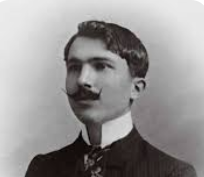
Gather your strength and listen; the whole heart of man is a single outcry. Lean against your breast to hear it; someone is struggling and shouting within you. It is your duty every moment, day and night, in joy or in sorrow, amid all daily necessities, to discern this Cry with vehemence or restraint, according to your nature, with laughter or with weeping, in action or in thought, striving to find out who is imperiled and cries out. And how we may all be mobilized together to free him.

4 months 5 days ago
The devil...the prowde spirit...cannot endure to be mocked.
▼
Source
source
Thomas More, quoted at the beginning of The Screwtape Letters
2 months 4 weeks ago
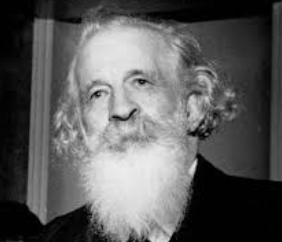
The mollusk's motto would be: one must live to build one's house, and not build one's house to live in.
3 months 2 days ago
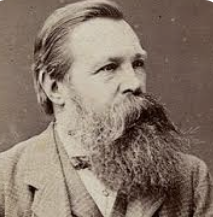
The capitalists soon had everything in their hands and nothing remained to the workers.
3 months 3 weeks ago
If any one hearken with understanding to these sayings of mine many a deed worthy of a good man shall he perform and many a foolish deed be spared.
4 months 1 week ago
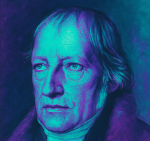
The necessities of the time have accorded to the petty interests of every day life such overwhelming attention : the deep interests of actuality and the strife respecting these have engrossed all the powers and the forces of the mind - as also the necessary means - to so great an extent, that no place has been left to the higher inward life, the intellectual operations of a purer sort; and the better natures have thus been stunted in their growth, and in great measure sacrificed.
▼
Source
source
p. x Inaugural Address, delivered at Heidelberg on the 28th October(1816), Lectures on the history of philosophy, translated from German by E. S. Haldane in Three Volumes (1892-96) full text.

3 months 1 week ago
But man is a Noble Animal, splendid in ashes, and pompous in the grave, solemnizing Nativities and Deaths with equal lustre, nor omitting Ceremonies of Bravery, in the infamy of his nature. Life is a pure flame, and we live by an invisible Sun within us.
▼
Source
source
Chapter V
3 weeks 6 days ago
Whatsoever is not beaverish seems to go forth in the shape of talk. To such length is human intellect wasted or suppressed in this world!

2 months 3 weeks ago
That is why St. John of the Cross calls faith a night. With those who have received a Christian education, the lower parts of the soul become attached to these mysteries when they have no right at all to do so. That is why such people need a purification of which St. John of the Cross describes the stages. Atheism and incredulity constitute an equivalent of such a purification.
▼
Source
source
Faiths of Meditation; Contemplation of the divine" as translated in The Simone Weil Reader (1957) edited by George A. Panichas, p. 418
4 months 1 week ago
The Philosophy of Nature takes up the material, prepared for it by physics out of experience, at the point to which physics has brought it, and again transforms it, without basing it ultimately on the authority of experience. Physics therefore must work into the hands of philosophy, so that the latter may translate into a true comprehension (Begriff) the abstract universal transmitted to it, showing how it issues from that comprehension as an intrinsically necessary whole.
3 months 2 days ago
In order to deceive melancholy, you must keep moving. Once you stop, it wakens, if in fact it has ever dozed off.
3 weeks 6 days ago
The battling Reformer too is, from time to time, a needful and inevitable phenomenon. Obstructions are never wanting: the very things that were once indispensable furtherances become obstructions; and need to be shaken off, and left behind us,-a business often of enormous difficulty.
1 month 3 weeks ago
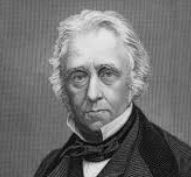
At last I have attained true glory. As I walked through Fleet Street the day before yesterday, I saw a copy of Hume at a bookseller's window with the following label: "Only 2l. 2s. Hume's History of England in eight volumes, highly valuable as an introduction to Macaulay." I laughed so convulsively that the other people who were staring at the books took me for a poor demented gentleman.
▼
Source
source
Alas for poor David! Journal entry (8 March 1849), quoted in George Otto Trevelyan, The Life and Letters of Lord Macaulay, Volume II (1876), p. 253
5 months 1 week ago
That which is desirable on its own account and for the sake of knowing it is more of the nature of wisdom than that which is desirable on account of its results.

2 months 6 days ago
I know that my unity with all people cannot be destroyed by national boundaries and government orders.
▼
Source
source
My Religion (1884)
3 months 2 days ago
Some propose mere welfare measures - while others come forward with grandiose systems of reform which, under the pretense of re-organizing society, are in fact intended to preserve the foundations, and hence the life, of existing society. Communists must unremittingly struggle against these bourgeois socialists because they work for the enemies of communists and protect the society which communists aim to overthrow.
3 months 2 days ago
The need for novelty is the characteristic of an alienated gorilla.
4 months 1 week ago
The goal to be reached is the mind's insight into what knowing is. Impatience asks for the impossible, wants to reach the goal without the means of getting there. The length of the journey has to be borne with, for every moment is necessary, ... because by nothing less could that all-pervading mind ever manage to become conscious of what itself is - for that reason, the individual mind, in the nature of the case, cannot expect by less toil to grasp what its own substance contains.
▼
Source
source
Preface (J. B. Baillie translation), § 29

3 months 1 week ago
Pray, O pray to God, dear friends, if you are not already asses - that he will cause you to become asses... There is none who praiseth not the golden age when men were asses: they knew not how to work the land. One knew not how to dominate another, one understood no more than another; caves and caverns were their refuge; they were not so well covered nor so jealous nor were they confections of lust and of greed. Everything was held in common.

4 months 1 week ago
Alike in the highest regions of speculation and in the smaller practical concerns of daily life, her mind was the same perfect instrument, piercing to the very heart and marrow of the matter; always seizing the essential idea or principle. The same exactness and rapidity of operation, pervading as it did her sensitive as well as her mental faculties, would, with her gifts of feeling and imagination, have fitted her to be a consummate artist, as her fiery and tender soul and her vigorous eloquence would certainly have made her a great orator, and her profound knowledge of human nature and discernment and sagacity in practical life, would, in the times when such a carrière was open to women, have made her eminent among the rulers of mankind. Her intellectual gifts did but minister to a moral character at once the noblest and the best balanced which I have ever met with in life.
▼
Source
source
(pp. 186-187)

5 months 1 week ago
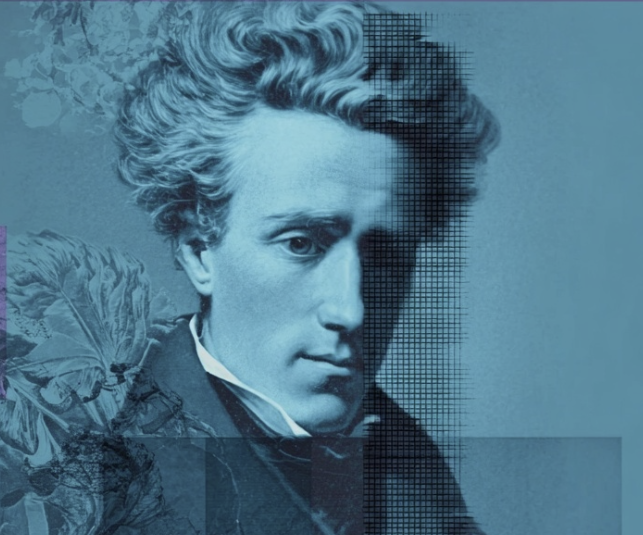
Even Plato assumes that the genuinely perfect condition of man means no sex distinction (and how strange this is for people like Feuerbach who are so occupied with affirming sex-differentiation, regarding which they would do best to appeal to paganism). He assumes that originally there was only the masculine (and when there is no thought of femininity, sex-distinction is undifferentiated), but through degeneration and corruption the feminine appeared. He assumes that base and cowardly men became women in death, but he still gives them hope of being elevated again to masculinity. He thinks that in the perfect life the masculine, as originally, will be the only sex, that is, that sex-distinction is a matter of indifference. So it is in Plato, and this, the idea of the state notwithstanding, was the culmination of his philosophy. How much more so, then, the Christian view.
3 months 2 days ago
In all probability, the proletarian revolution will transform existing society gradually and will be able to abolish private property only when the means of production are available in sufficient quantity. What will be the course of this revolution? Above all, it will establish a democratic constitution, and through this, the direct or indirect dominance of the proletariat.
2 months 2 weeks ago
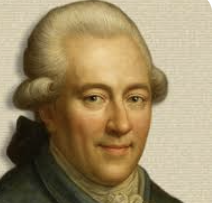
If we make a couple of discoveries here and there we need not believe things will go on like this for ever.... Just as we hit water when we dig in the earth, so we discover the incomprehensible sooner or later.
▼
Source
source
F 82

4 months 1 week ago
We do not directly go about the execution of the purpose that thrills us, but shut our doors behind us, and ramble with prepared minds, as if the half were already done. Our resolution is taking root or hold on the earth then, as seeds first send a shoot downward, which is fed by their own albumen, ere they send one upwards to the light.
▼
Source
source
Pearls of Thought (1881) p. 61
2 months 2 weeks ago
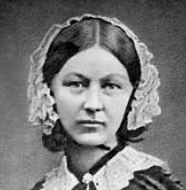
The Church is now more like the Scribes and Pharisees than like Christ... What are now called the "essential doctrines" of the Christian religion he does not even mention.
▼
Source
source
As quoted in The Life of Florence Nightingale (1913) by Edward Tyas Cook, p. 392
CivilSimian.com created by AxiomaticPanic, CivilSimian, Kalokagathia