


4 months 2 weeks ago
My parents, both of whom spoke Russian fluently, made no effort to teach me Russian, but insisted on my learning English as rapidly and as well as possible. They even set about learning English themselves, with reasonable, but limited, success.In a way, I am sorry. It would have been good to know the language of Pushkin, Tolstoy, and Dostoevski. On the other hand, I would not have been willing to let anything get in the way of the complete mastery of English. Allow me my prejudice: surely there is no language more majestic than that of Shakespeare, Milton, and the King James Bible, and if I am to have one language that I know as only a native can know it, I consider myself unbelievably fortunate that it is English.

2 months 2 weeks ago
How good would it be if one could die by throwing oneself into an infinite void.
2 months 6 days ago
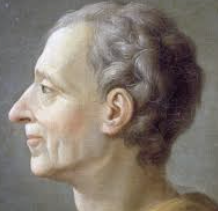
There are only two cases in which war is just: first, in order to resist the aggression of an enemy, and second, in order to help an ally who has been attacked.
▼
Source
source
No. 95. (Usbek writing to Rhedi)
3 months 1 week ago
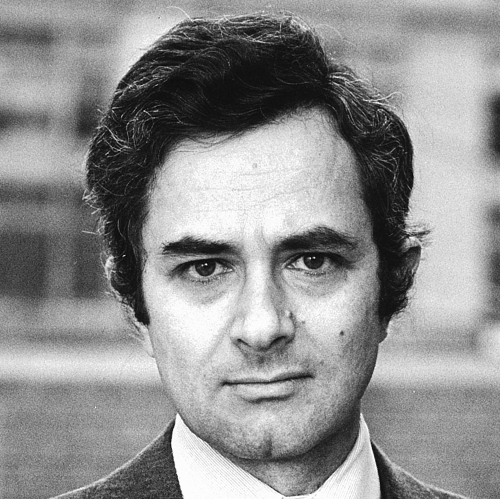
All of us, I believe, are fortunate to have been born.
▼
Source
source
"Death" (1970), p. 7.

2 months 2 weeks ago
It cannot at this time be too often repeated; line upon line; precept upon precept; until it comes into the currency of a proverb, To innovate is not to reform.
▼
Source
source
p. 20

3 months 3 weeks ago
An armed insurrection ... would hinder and bring into disrepute this spiritual insurrection.
▼
Source
source
p. 68
3 months 2 weeks ago
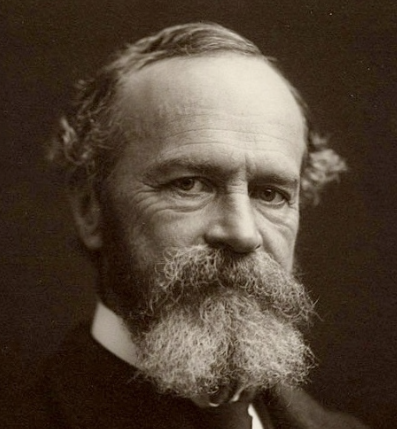
In the deepest heart of all of us there is a corner in which the ultimate mystery of things works sadly.
▼
Source
source
"Is Life Worth Living?"

2 months 3 weeks ago
The hatred that men bear to privilege increases in proportion as privileges become fewer and less considerable, so that democratic passions would seem to burn most fiercely just when they have least fuel. I have already given the reason for this phenomenon. [all conditions are unequal, no inequality is so great as to offend the eye, whereas the slightest dissimilarity is odious in the midst of general uniformity; the more complete this uniformity is, the more insupportable the sight of such a difference becomes.] Hence it is natural that the love of equality should constantly increase together with equality itself, and that it should grow by what it feeds on.
▼
Source
source
Chapter III.

1 month 2 weeks ago
I sit on a man's back, choking him, and making him carry me, and yet assure myself and others that I am very sorry for him and wish to ease his lot by any means possible, except getting off his back.
▼
Source
source
Writings on Civil Disobedience and Nonviolence
3 months 2 weeks ago
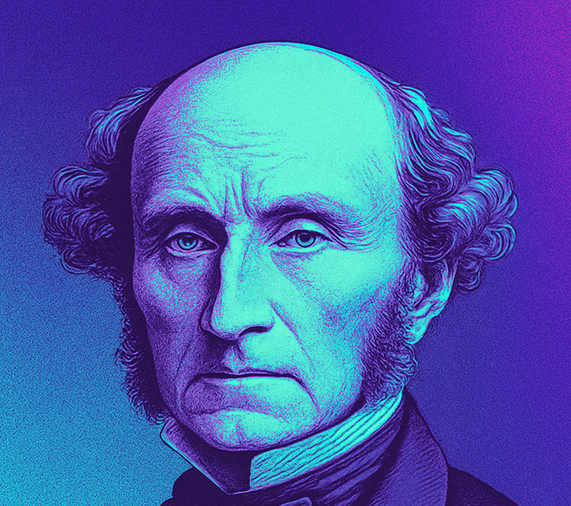
The only purpose for which power can be rightfully exercised over any member of a civilized community, against his will, is to prevent harm to others. His own good, either physical or moral, is not a sufficient warrant.
▼
Source
source
Ch. 1: Introductory

3 months 2 weeks ago
You can do everything with bayonets except sit on them. If you want to preserve your power indefinitely you have to get the consent of the ruled. And this they will do partly by drugs as I foresaw in "Brave new World", and partly by these new techniques of propaganda. They will do it by bypassing the sort of rational side of man and appealing to his subconscious, and his deeper emotions, and his physiology, even, and so making him actually love his slavery. I mean I think this is the danger that actually people may be, in some ways, happy under the new regime. But they will be happy in situations when they oughtn't be happy.

4 months 1 week ago
Thus, where'er the drift of hazardSeems most unrestrained to flow,Chance herself is reined and bitted,And the curb of law doth know.

3 months 2 weeks ago
I have heard with admiring submission the experience of the lady who declared "that the sense of being perfectly well-dressed gives a feeling of inward tranquility which religion is powerless to bestow".
▼
Source
source
Social Aims
2 months 1 week ago
Even to-day, in spite of some signs which are making a tiny breach in that sturdy faith, even to-day, there are few men who doubt that motorcars will in five years' time be more comfortable and cheaper than to-day. They believe in this as they believe that the sun will rise in the morning. The metaphor is an exact one. For, in fact, the common man, finding himself in a world so excellent, technically and socially, believes that it has been produced by nature, and never thinks of the personal efforts of highly-endowed individuals which the creation of this new world presupposed. Still less will he admit the notion that all these facilities still require the support of certain difficult human virtues, the least failure of which would cause the rapid disappearance of the whole magnificent edifice.... These traits together make up the well-known psychology of the spoilt child. Chap.
▼
Source
source
VI: The Dissection Of The Mass-Man Begins
3 months 2 weeks ago
Pray go back and recollect one of the conclusions to which I sought to lead you in my very first lecture. You may remember how I there argued against the notion that the worth of a thing can be decided by its origin. Our spiritual judgment, I said, our opinion of the significance and value of a human event or condition, must be decided on empirical grounds exclusively. If the fruits for life of the state of conversion are good, we ought to idealize and venerate it, even though it be a piece of natural psychology; if not, we ought to make short work of it, no matter what supernatural being may have infused it.
▼
Source
source
Lecture IX, "Conversion, concluded"
2 months 2 weeks ago
To make more plans than an explorer or a crook, yet to be infected at the will's very root.

3 months 2 weeks ago
A young man who wishes to remain a sound Atheist cannot be too careful of his reading. There are traps everywhere... God is, if I may say it, very unscrupulous.
▼
Source
source
p. 191

4 months 1 week ago
Be loyal and trustworthy. Do not befriend anyone who is lower than yourself in this regard. When making a mistake, do not be afraid to correct it.

4 months 1 week ago
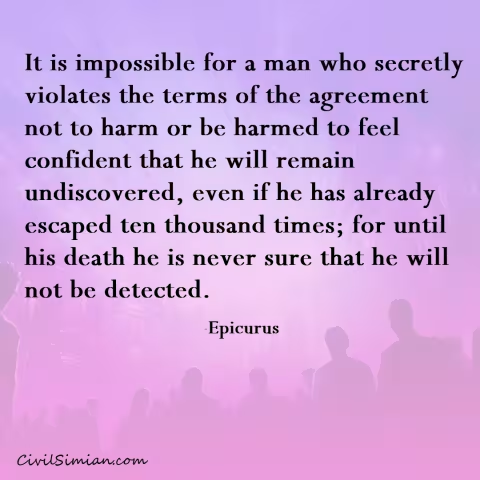
It is impossible for a man who secretly violates the terms of the agreement not to harm or be harmed to feel confident that he will remain undiscovered, even if he has already escaped ten thousand times; for until his death he is never sure that he will not be detected.

4 months 2 weeks ago
This is approximately the way Christendom relates to the essentially Christian, the unconditioned. After seventeen, eighteen detours and running all around someone finally has his finite existence assured, and then we receive a sermon about Seek first the kingdom of God. Is this sobriety or is this intoxication?

3 months 2 weeks ago
I once received a letter from an eminent logician, Mrs. Christine Ladd Franklin, saying that she was a solipsist, and was surprised that there were no others. Coming from a logician, this surprise surprised me.
▼
Source
source
Human Knowledge: Its Scope and Limits (1948), Part III, chapter II, "Solipsism", p. 196
4 months 2 weeks ago
Someone once asked me, "If you had your choice, Dr. Asimov, would it be women or writing?" My answer was, "Well, I can write for twelve hours at a time without getting tired."
1 month 2 weeks ago
Honest work is much better than a mansion.
▼
Source
source
p. 82
3 months 2 weeks ago
What a queer work the Bible is. ...Some texts are very funny. Deut. XXIV, 5: "When a man hath taken a new wife, he shall not go out to war, neither shall he be charged with any business: but he shall be free at home one year, and shall cheer up his wife which he hath taken." I should never have guessed "cheer up" was a Biblical expression. Here is another really inspiring text: "Cursed be he that lieth with his mother-in-law. And all the people shall say, Amen." St Paul on marriage: "I say therefore to the unmarried and widows, It is good for them if they abide even as I. But if they cannot contain, let them marry: for it is better to marry than to burn." This has remained the doctrine of the Church to this day. It is clear that the Divine purpose in the text "it is better to marry than to burn" is to make us all feel how very dreadful the torments of Hell must be.
▼
Source
source
Letter to Colette, August 10, 1918
3 months 1 week ago
If we tried to rely entirely on reason, and pressed it hard, our lives and beliefs would collapse - a form of madness that may actually occur if the inertial force of taking the world and life for granted is somehow lost. If we lose our grip on that, reason will not give it back to us.
▼
Source
source
"The Absurd" (1971), p. 20.
2 months 2 weeks ago
Writers, especially when they act in a body and with one direction, have great influence on the public mind.

2 weeks ago
To be free in an age like ours, one must be in a position of authority. That in itself would be enough to make me ambitious.
▼
Source
source
Letter to his elder sister Henriette (1841).
1 month 4 weeks ago
Body and soul: a horse harnessed beside an ox.
▼
Source
source
D 103
3 months 2 weeks ago
It is not murder which is forgiven but the killer, his person as it appears in circumstances and intentions. The trouble with the Nazi criminals was precisely that they renounced voluntarily all personal qualities, as if nobody were left to be either punished or forgiven. They protested time and again that they had never done anything out of their own initiative, that they had no intentions whatsoever, good or bad, and that they only obeyed orders.

1 week 3 days ago
The "imagination that shudders at the Hell of Dante," is not that the same faculty, weaker in degree, as Dante's own? No one but Shakspeare can embody, out of Saxo Grammaticus, the story of Hamlet as Shakspeare did: but every one models some kind of story out of it; every one embodies it better or worse. We need not spend time in defining. Where there is no specific difference, as between round and square, all definition must be more or less arbitrary. A man that has so much more of the poetic element developed in him as to have become noticeable, will be called Poet by his neighbors.

1 month 3 weeks ago
I do not know what I may appear to the world, but to myself I seem to have been only like a boy playing on the sea-shore, and diverting myself in now and then finding a smoother pebble or a prettier shell than ordinary, whilst the great ocean of truth lay all undiscovered before me.
▼
Source
source
Memoirs of the Life, Writings, and Discoveries of Sir Isaac Newton (1855) by Sir David Brewster (Volume II. Ch. 27).

1 month 4 weeks ago
The Greeks possessed a knowledge of human nature we seem hardly able to attain to without passing through the strengthening hibernation of a new barbarism.
▼
Source
source
F 44

3 months 3 weeks ago
He who dares not offend cannot be honest.
▼
Source
source
24 April 1776, The Forester's Letters", Letter III: To Cato, Pennsylvania Journal

4 months 2 weeks ago
"What on earth prompted you to take a hand in this?""I don't know. My... my code of morals, perhaps.""Your code of morals. What code, if I may ask?" "Comprehension."
2 months 3 weeks ago
There is in fact a manly and legitimate passion for equality that spurs all men to wish to be strong and esteemed. This passion tends to elevate the lesser to the rank of the greater. But one also finds in the human heart a depraved taste for equality, which impels the weak to want to bring the strong down to their level, and which reduces men to preferring equality in servitude to inequality in freedom.
▼
Source
source
Chapter III, Part I
3 months 3 weeks ago
No circumstance is ever so desperate that one cannot nurture some spark of hope.
▼
Source
source
Act I, scene i

3 months 3 weeks ago
No society can surely be flourishing and happy, of which the greater part of the members are poor and miserable. It is but equity, besides, that they who feed, cloath and lodge the whole body of the people, should have such a share of the produce of their own labour as to be themselves tolerably well fed, clothed, and lodged.
▼
Source
source
Chapter VIII, p. 94.
2 months 2 weeks ago
Let us speak plainly: everything which keeps us from self-dissolution, every lie which protects us against our unbreathable certitudes is religious.
2 months 1 day ago
By incestuous symbiosis is meant the tendency to stay tied to the mother and to her equivalents - blood, family, tribe - to fly from the unbearable weight of responsibility, of freedom, of awareness, and to be protected and loved in a state of certainty dependence that the individual pays for with the ceasing of his own human development.
1 month 2 days ago
The history of almost every civilization furnishes examples of geographical expansion coinciding with deterioration in quality.
▼
Source
source
Abridgement of Vols. 1-6 by D. C. Somervell
3 months 2 weeks ago
All sources of energy upon which industry depends are wasted when they are employed; and industry is expending them at a continually increasing rate. Already coal has been largely replaced by oil, and oil is being used up so fast that East and West alike conceive it necessary to their own prosperity to destroy the industry of the other. And what is true of oil is equally true of other natural resources. Every day, many square miles of forest are turned into newspaper, but there is no known process by which newspaper can be turned into forest. You will say that this need not worry us, since newspapers will be replaced by radio, but radio requires electricity, electricity requires power, and power depends upon raw materials.
▼
Source
source
Part I: Man and Nature, Ch. 4: The Limits of Human Power, p. 30
2 months 2 weeks ago
To be a good mother - a woman must have sense, and that independence of mind which few women possess who are taught to depend entirely on their husbands. Meek wives are, in general, foolish mothers; wanting their children to love them best, and take their part, in secret, against the father, who is held up as a scarecrow.
▼
Source
source
Ch. 10
3 months 3 weeks ago
Lead, follow, or get out of the way.
▼
Source
source
George S. Patton: "Lead me, follow me, or get out of my way", as quoted in Pocket Patriot: Quotes from American Heroes (2005) edited by Kelly Nickell, p. 157
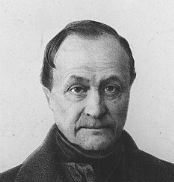
2 months 3 weeks ago
There are three successive states of morality answering to the three principal stages of human life; the personal, the domestic, and the social stage.
▼
Source
source
p. 104

4 months 2 days ago
Five [of the above] rules are of absolute necessity, and cannot be dispensed with without essential defect and often without error.
3 months 2 weeks ago
Democracy is the process by which people choose the man who'll get the blame.
▼
Source
source
Attributed to Russell in Geary's Guide to the World's Great Aphorists (2007), p. 346

3 months 4 weeks ago
Pyrrhus, when his friends congratulated to him his victory over the Romans under Fabricius, but with great slaughter of his own side, said to them, "Yes; but if we have such another victory, we are undone".
▼
Source
source
No. 193
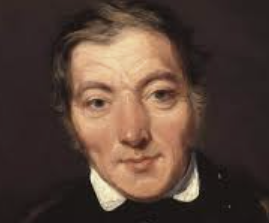
1 month 1 week ago
To preserve permanent good health, the state of mind must be taken into consideration.
▼
Source
source
3rd Part
CivilSimian.com created by AxiomaticPanic, CivilSimian, Kalokagathia