

3 months 4 weeks ago
The best books are those, which those who read them believe they themselves could have written.

2 months 1 week ago
The fear of your own solitude, of its vast surface and its infinity... Remorse is the voice of solitude. And what does this whispering voice say? Everything in us that is not human anymore.
2 months 1 week ago
But no mental action seems necessary or invariable in its character. In whatever manner the mind has reacted under a given sensation, in that manner it is the more likely to react again; were this, however, an absolute necessity, habits would become wooden and ineradicable, and no room being left for the formulation of new habits, intellectual life would come to a speedy close. Thus, the uncertainty of the mental law is no mere defect of it, but is on the contrary of its essence. The truth is, the mind is not subject to "law," in the same rigid sense that matter is. It only experiences gentle forces which merely render it more likely to act a given way than it otherwise would be. There always remains a certain amount of arbitrary spontaneity in its action, without which it would be dead.

3 months 2 weeks ago
Superstition sets the whole world in flames; philosophy quenches them.
▼
Source
source
Dictionnaire philosophique (1822), "Superstition"
3 months 2 weeks ago
The main characteristic of any event is that it has not been foreseen. We don't know the future but everybody acts into the future. Nobody knows what he is doing because the future is being done, action is being done by a "we" and not an "I." Only if I were the only one acting could I foretell the consequences of what I'm doing. What actually happens is entirely contingent, and contingency is indeed one of the biggest factors in all history.

1 day ago
This spirit thrusts itself forward, confident of commendation and esteem. It is superior to all, monarch of all it surveys; hence it should be subservient to nothing, finding no task too heavy, and nothing strong enough to weigh down the shoulders of a man.

3 months 2 weeks ago
The necessity of faith as an ingredient in our mental attitude is strongly insisted on by the scientific philosophers of the present day; but by a singularly arbitrary caprice they say that it is only legitimate when used in the interests of one particular proposition, - the proposition, namely, that the course of nature is uniform. That nature will follow to-morrow the same laws that she follows to-day is, they all admit, a truth which no man can know; but in the interests of cognition as well as of action we must postulate or assume it.

4 months 2 weeks ago
Whoever has overthrown an existing law of custom has hitherto always first been accounted a bad man: but when, as did happen, the law could not afterwards be reinstated and this fact was accepted, the predicate gradually changed: - history treats almost exclusively of these bad men who subsequently became good men!

3 months 2 weeks ago
Understand me: I wish to be a man from somewhere, a man among men. You see, a slave, when he passes by, weary and surly, carrying a heavy load, limping along and looking down at his feet, only at his feet to avoid falling down; he is in his town, like a leaf in greenery, like a tree in a forest, argos surrounds him, heavy and warm, full of herself; I want to be that slave, Electra, I want to pull the city around me and to roll myself up in it like a blanket. I will not leave.
▼
Source
source
Orestes to Electra, Act 2
1 day ago
That you may know that they whom anger possesses are not sane, look at their appearance; for as there are distinct symptoms which mark madmen, such as a bold and menacing air, a gloomy brow, a stern face
2 months 6 days ago
The pathfinders of modern thought did not derive what is good from the law. ... Their role in history was not that of adapting their words and actions to the text of old documents or generally accepted doctrines: they themselves created the documents and brought about the acceptance of their doctrines.
▼
Source
source
p. 33.
3 months 2 weeks ago
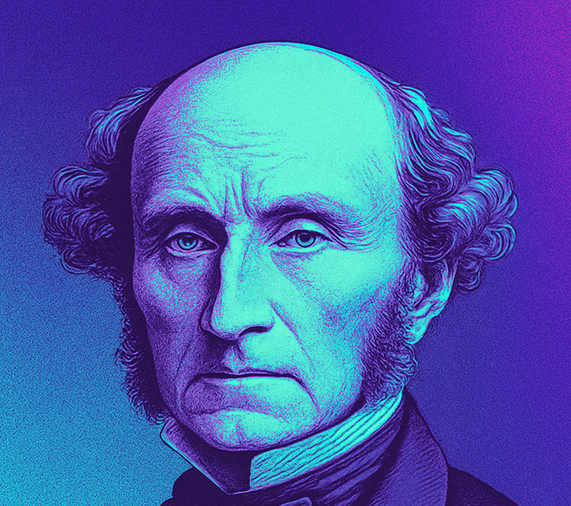
That power should be exercised over any portion of mankind without any obligation of consulting them, is only tolerable while they are in an infantine, or a semi-barbarous state. In any civilized condition, power ought never to be exempt from the necessity of appealing to the reason, and recommending itself by motives which justify it to the conscience and feelings, of the governed.
▼
Source
source
Thoughts on Parliamentary Reform (1859), p. 24
2 months 1 week ago
You rejoice in having made a convert to Atheism. I think there is something unnatural in a zeal of proselytism in an Atheist. I do not believe in an intellectual God, a God made after the image of man. In the vulgar acceptation of the word, therefore, I think a man is right who does not believe in God, but I am also persuaded that a man is wrong who is without religion.
▼
Source
source
Letter to H. B. Rosser (7 March 1820), quoted in C. Kegan Paul, William Godwin: His Friends and Contemporaries, Vol. II (1876), p. 263
1 week 6 days ago
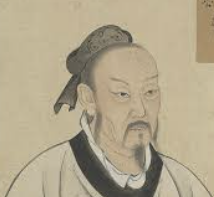
The gentleman knows that whatever is imperfect and unrefined does not deserve praise. ... He makes his eyes not want to see what is not right, makes his ears not want to hear what is not right, makes his mouth not want to speak what is not right, and makes his heart not want to deliberate over what is not right. ... For this reason, power and profit cannot sway him, the masses cannot shift him, and nothing in the world can shake him.
▼
Source
source
Readings in Classical Chinese Philosophy (2001), p. 260

3 months 2 weeks ago
The miracles in fact are a retelling in small letters of the very same story which is written across the whole world in letters too large for some of us to see. Of that larger script part is already visible, part is still unsolved. In other words, some of the miracles do locally what God has already done universally: others do locally what He has not yet done, but will do. In that sense, and from our human point of view, some are reminders and others prophecies.
▼
Source
source
"Miracles" (1942), p. 29

2 months 1 week ago
My Father is glorified in this, that you keep bearing much fruit and prove yourselves my disciples. Just as the Father has loved me, so I have loved you; remain in my love. If you observe my commandments, you will remain in my love, just as I have observed the commandments of the Father and remain in his love. “These things I have spoken to you, so that my joy may be in you and your joy may be made full. This is my commandment, that you love one another just as I have loved you. No one has love greater than this, that someone should surrender his life in behalf of his friends. You are my friends if you do what I am commanding you. I no longer call you slaves, because a slave does not know what his master does. But I have called you friends, because I have made known to you all the things I have heard from my Father.
▼
Source
source
15:8-15, New World Translation of the Holy Scriptures

3 months 2 weeks ago
The tool, as we have seen, is not exterminated by the machine.
▼
Source
source
Vol. I, Ch. 15, Section 2, pg. 422.
2 months 6 days ago
Ressentiment is always to some degree a determinant of the romantic type of mind. At least this is so when the romantic nostalgia for some past era (Hellas, the Middle Ages, etc.) is not primarily based on the values of that period, but on the wish to escape from the present. Then all praise of the "past" has the implied purpose of downgrading present-day reality.
▼
Source
source
L. Coser, trans. (1973), p. 68

3 months 1 week ago
Philosophy unravels the knots in our thinking; hence its results must be simple, but its activity is as complicated as the knots that it unravels.
▼
Source
source
Ch. 9 : Philosophy, p. 183
3 months 3 weeks ago
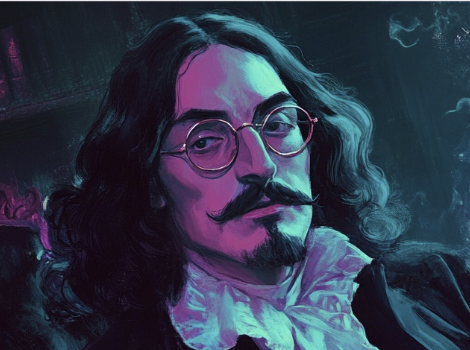
The entire method consists in the order and arrangement of the things to which the mind's eye must turn so that we can discover some truth.
▼
Source
source
Rules for the Direction of the Mind: X.379 As quoted in Clarke, Desmond M. (2006). Descartes : a Biography. Cambridge Press. p. 67. ISBN 978-0-521-82301-2.

1 week 5 days ago
The legacy of modernity is a legacy of fratricidal wars, devastating "development," cruel "civilization," and previously unimagined violence. Erich Auerbach once wrote that tragedy is the only genre that can properly claim realism in Western literature, and perhaps this is true precisely because of the tragedy Western modernity has imposed on the world.
▼
Source
source
46

1 month 4 weeks ago
When we can't dream any longer we die.
▼
Source
source
Quoted by Margaret C. Anderson in "Emma Goldman in Chicago", Mother Earth magazine

3 months 2 weeks ago
I freely admit that the remembrance of David Hume was the very thing that many years ago first interrupted my dogmatic slumber and gave a completely different direction to my researches in the field of speculative philosophy.
1 month 1 week ago
An international socialism is the stated ideal of most socialists; an international liberalism is the unstated tendency of the liberal. To neither system is it thinkable that men live, not by universal aspirations but by local attachments; not by a "solidarity" that stretches across the globe from end to end, but by obligations that are understood in terms which separate men from most of their fellows-in terms such as national history, religion, language, and the customs that provide the basis of legitimacy.
▼
Source
source
How to be a Non-Liberal, Anti-Socialist Conservative, Intercollegiate Review: A Journal of Scholarship and Opinion
4 months 2 days ago
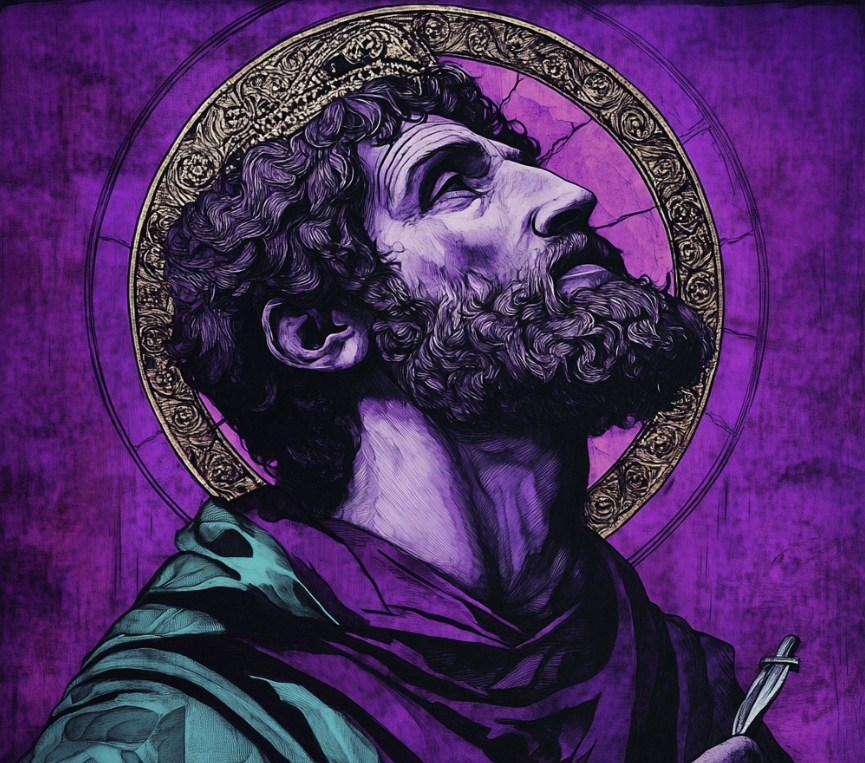
As the soul is the life of the body, so God is the life of the soul. As therefore the body perishes when the soul leaves it, so the soul dies when God departs from it.
▼
Source
source
p. 277

1 month 2 weeks ago
The truth is that the State is a conspiracy designed not only to exploit, but above all to corrupt its citizens ... Henceforth, I shall never serve any government anywhere.
▼
Source
source
As quoted in Tolstoy (1988) by A. N. Wilson, p. 146

3 months 3 weeks ago
Christ ought to be preached with this goal in mind - that we might be moved to faith in him so that he is not just a distant historical figure but actually Christ for you and me.
▼
Source
source
p. 69
3 months 2 weeks ago
The more you obey your conscience, the more your conscience will demand of you.
▼
Source
source
Book IV, Chapter 8, "Is Christianity Hard or Easy?"

3 months 2 weeks ago
To see ourselves as others see us is a most salutary gift. Hardly less important is the capacity to see others as they see themselves.
3 months 2 weeks ago
Phenomena of the external sense are examined and set forth in physics; those of the internal sense in empirical psychology. Pure mathematics considers space in geometry and time in pure mechanics. To these is to be added a certain concept, intellectual to be sure in itself, but whose becoming actual in the concrete requires the auxiliary notions of time and space in the successive addition and simultaneous juxtaposition of separate units, which is the concept of number treated in arithmetic.
1 month 1 week ago
Unfortunately, instead of working out that they have probably misunderstood evolution, creationists conclude, instead, that evolution must be false.
▼
Source
source
Heat the Hornet, a review of Jerry Coyne's book Why Evolution is True

2 months 2 weeks ago
I tell you again that the recollection of the manner in which I saw the Queen of France in the year 1774 and the contrast between that brilliancy, Splendour, and beauty, with the prostrate Homage of a Nation to her, compared with the abominable Scene of 1789 which I was describing did draw Tears from me and wetted my Paper. These Tears came again into my Eyes almost as often as I lookd at the description. They may again. You do not believe this fact, or that these are my real feelings, but that the whole is affected, or as you express it, 'downright Foppery'. My friend, I tell you it is truth-and that it is true, and will be true, when you and I are no more, and will exist as long as men-with their Natural feelings exist.
▼
Source
source
Letter to Philip Francis (20 February 1790), quoted in Alfred Cobban and Robert A. Smith (eds.), The Correspondence of Edmund Burke, Volume VI: July 1789-December 1791 (1967), p. 91

2 months 1 week ago
Just as man as a social being, cannot in the long run exist without a tie to the community, so the individual will never find the real justification for his existence, and his own spiritual and moral autonomy, anywhere except in an extramundane principle capable of relativizing the overpowering influence of external factors.
▼
Source
source
p 23
2 months 2 weeks ago
I would rather sleep in the southern corner of a little country churchyard, than in the tombs of the Capulets.
▼
Source
source
Letter to Matthew Smith

1 month 3 weeks ago
Do not commence your exercises in philosophy in those regions where an error can deliver you over to the executioner.
▼
Source
source
C 16

3 months 2 weeks ago
I do not believe in what is often called... 'exact terminology'... [or] in definitions... [they] do not... add to exactness... I especially dislike pretentious terminology and... pseudo-exactness concerned with it.
3 months 2 weeks ago
...man first of all exists, encounters himself, surges up in the world - and defines himself afterwards.
4 weeks 1 day ago
Civilization, as we know it, is a movement and not a condition, a voyage and not a harbour. No known civilization has, ever reached the goal of civilization yet. There has never been a communion of saints on earth. In the least uncivilized society at its least uncivilized moment, the vast majority of its members have remained very near indeed to the primitive human level. And no society has ever been secure of holding such ground as it has managed to gain in its spiritual advance. Ch. 8: Civilization on Trial Variants: Civilization is a movement and not a condition, a voyage and not a harbor.
▼
Source
source
As quoted in Reader's Digest (October 1958)

3 months 1 week ago
Exercise is the technique by which one imposes on the body tasks that are both repetitive and different, but always graduated. By bending behavior towards a terminal state, exercise makes possible a perpetual characterization of the individual...It thus assures, in the form of continuity and constraint, a growth, an observation, a qualification.
2 months 1 week ago
With the disintegration of all that Nietzsche had revered, existence, to him, had become a desert in which only one thing remained, namely that which had relentlessly forced him into this path: truthfulness that knows no limits and is not subject to any condition.
▼
Source
source
p. 45
1 month 4 weeks ago
The principle of brotherhood expounded by the agitator of Nazareth preserved the germ of life, of truth and justice, so long as it was the beacon light of the few. The moment the majority seized upon it, that great principle became a shibboleth and harbinger of blood and fire, spreading suffering and disaster. The attack on the omnipotence of Rome was like a sunrise amid the darkness of the night, only so long as it was made by the colossal figures of a Huss, a Calvin, or a Luther. Yet when the mass joined in the procession against the Catholic monster, it was no less cruel, no less bloodthirsty than its enemy. Woe to the heretics, to the minority, who would not bow to its dicta. After infinite zeal, endurance, and sacrifice, the human mind is at last free from the religious phantom; the minority has gone on in pursuit of new conquests, and the majority is lagging behind, handicapped by truth grown false with age.


2 months 3 weeks ago
In the United States, the majority undertakes to supply a multitude of ready-made opinions for the use of individuals, who are thus relieved from the necessity of forming opinions of their own.
▼
Source
source
Book One, Chapter II.
1 day ago
To be angry with a man is to hate him; to hate him is to wish him harm; but to wish him well, even if he has done you harm, is the mark of a great mind.
▼
Source
source
Seneca, On Anger (De Ira) 2.34.5 (translated by John W. Basore)
3 months 2 weeks ago
This actual world of what is knowable, in which we are and which is in us, remains both the material and the limit of our consideration.
▼
Source
source
Vol I, Ch. 4, The World As Will: Second Aspect, § 53, as translated by Eric F. J. Payne, 1958

3 months 2 weeks ago
We must therefore glean up our experiments in this science from a cautious observation of human life, and take them as they appear in the common course of the world, by men's behaviour in company, in affairs, and in their pleasures. Where experiments of this kind are judiciously collected and compared, we may hope to establish on them a science, which will not be inferior in certainty, and will be much superior in utility to any other of human comprehension.
▼
Source
source
Introduction
1 day ago
But let the individual man lay claim to ever so many rights because Man or the concept man 'entitles' him to them, because his being man does it: what do I care for his right and his claim? If he has his right only from Man and does not have it from me, then for me he has no right. His life, for example, counts to me only for what it is worth to me. I respect neither a so-called right of property (or his claim to tangible goods) nor yet his right to the 'sanctuary of his inner nature' (or his right to have the spiritual goods and divinities, his gods, remain un-aggrieved). His goods, the sensuous as well as the spiritual, are mine, and I dispose of them as proprietor, in the measure of my - might.
▼
Source
source
Cambridge 1995, p. 219
3 weeks 4 days ago
No critic writing about a film could say more than the film itself, although they do their best to make us think the opposite.
▼
Source
source
"Film Critics"

1 month 2 weeks ago
It is perhaps typical of very creative minds that they hit very large nails not quite on the head.
▼
Source
source
Kenneth Boulding in McLuhan: Hot & Cool (1967) p. 68
2 months 2 weeks ago
The philosopher has never killed any priests, whereas the priest has killed a great many philosophers.
CivilSimian.com created by AxiomaticPanic, CivilSimian, Kalokagathia