


3 months 2 days ago
The different pieces of evidence did not constitute so many neutral elements, until such time as they could be gathered together into a single body of evidence that would bring the final certainty of guilt. Each piece of evidence aroused a particular degree of abomination. Guilt did not begin when all the evidence was gathered together; piece by piece, it was constituted by each of the elements that made it possible to recognize a guilty person. Thus a semi-proof did not leave the suspect innocent until such time as it was completed; it made him semi-guilty; slight evidence of a serious crime marked someone as slightly criminal. In short, penal demonstration did not obey a dualistic system: true or false; but a principle of continuous gradation; a degree reached in the demonstration already formed a degree of guilt and consequently involved a degree of punishment.
▼
Source
source
Chapter One, The body of the condemned, pp.23

1 month 3 weeks ago
Emptiness is not a denial of the proper but an affirmation of it.

3 months 3 days ago
So we do sometimes think because it has been found to pay.
▼
Source
source
§ 470
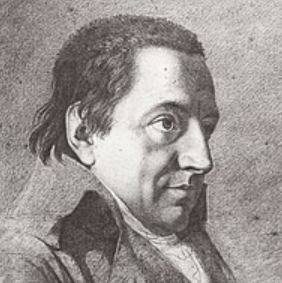
2 months 1 week ago
On condition that you protect my rights, I will protect your rights. How, then, does some party obtain the right to claim the protection of the other? Evidently, by actually protecting the rights of the other. But if this is so, no party will ever obtain a strictly legal claim to the protection of the other.
▼
Source
source
P. 220
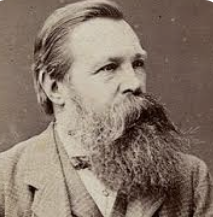
2 months 3 days ago
The abolition of private property is, doubtless, the shortest and most significant way to characterize the revolution in the whole social order which has been made necessary by the development of industry - and for this reason it is rightly advanced by communists as their main demand.
1 month 1 week ago
There is no aphrodisiac like innocence.
▼
Source
source
Chapter 5

1 month 3 weeks ago
Faith which does not doubt is dead faith.
▼
Source
source
La Agonía del Cristianismo (The Agony of Christianity)
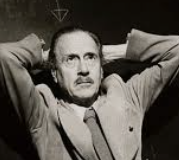
1 month 6 days ago
My method is vertical rather than horizontal so the scenery does not change but the texture does.
▼
Source
source
Letter to The Listener October 1971, Letters of Marshall McLuhan (1987), p. 318
2 months 5 days ago
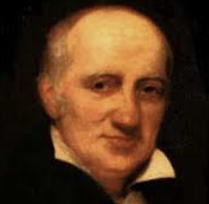
I did not hate the author of my misfortunes - truth and justice acquit me of that; I rather pitied the hard destiny to which he seemed condemned. But I thought with unspeakable loathing of those errors, in consequence of which every man is fated to be, more or less, the tyrant or the slave. I was astonished at the folly of my species, that they did not rise up as one man, and shake off chains so ignominious, and misery so insupportable. So far as related to myself, I resolved - and this resolution has never been entirety forgotten by me - to hold myself disengaged from this odious scene, and never fill the part either of the oppressor or the sufferer.

4 months 6 days ago
The orators and the despots have the least power in their cities since they do nothing that they wish to do, practically speaking, though they do whatever they think to be best.
2 weeks 3 days ago
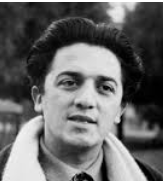
All art is autobiographical; the pearl is the oyster's autobiography.
▼
Source
source
On the autobiographical nature of his films, in The Atlantic
1 month 3 weeks ago
"And the upshot of all this," so I have been told more than once and by more than one person, "will be simply that all you will succeed in doing will be to drive people to the wildest Catholicism." And I have been accused of being a reactionary and even a Jesuit. Be it so! ...I know very well it is madness to seek to turn the waters of the river back to their source, and that it is only the ignorant who seek to find in the past a remedy for their present ills; but I know too that anyone who fights for any ideal whatever, although his ideal may seem to lie in the past, is driving the world on to the future, and that the only reactionaries are those who find themselves at home in the present. Every supposed restoration of the past is a creation of the future, and if the past which it is sought to restore is a dream, something imperfectly known, so much the better.

2 months 4 days ago
As the years pass, the number of those we can communicate with diminishes. When there is no longer anyone to talk to, at last we will be as we were before stooping to a name.

3 months 1 week ago
England's genius filled all measure Of heart and soul, of strength and pleasure, Gave to the mind its emperor, And life was larger than before: Nor sequent centuries could hit Orbit and sum of Shakespeare's wit. The men who lived with him became Poets, for the air was fame.
▼
Source
source
Solution, ll. 35-42

2 months 1 week ago
The Republican form of government is the highest form of government; but because of this it requires the highest type of human nature - a type nowhere at present existing.
▼
Source
source
Vol. 3, Ch. XV, The Americans

3 months 1 week ago
There is no method of reasoning more common, and yet none more blameable, than in philosophical debates to endeavour to refute any hypothesis by a pretext of its dangerous consequences to religion and morality. When any opinion leads us into absurdities, 'tis certainly false; but 'tis not certain an opinion is false, because 'tis of dangerous consequence.
▼
Source
source
Part 3, Section 2

3 months 1 week ago
Any fool can make a ruleAnd every fool will mind it.
▼
Source
source
February 3, 1860
1 month 6 days ago
Relativity theory forced the abandonment, in principle, of absolute space and absolute time.
▼
Source
source
p. 43
1 month 3 weeks ago
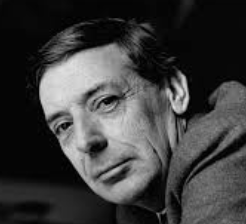
There continue to be complex debates about what Nietzsche understood truth to be. Quite certainly, he did not think, in pragmatist spirit, that beliefs are true if they serve our interests or welfare: we have just seen some of his repeated denials of this idea. The more recently fashionable view is that he was the first of the deniers, thinking that there is no such thing as truth, or that truth is what anyone thinks it is, or that it is a boring category that we can do without. This is also wrong, and more deeply so. Nietzsche did not think that the ideal of truthfulness went into retirement when its metaphysical origins were discovered, and he did not suppose, either, that truthfulness could be detached from a concern for the truth. Truthfulness as an ideal retains its power, and so far from his seeing truth as dispensable or malleable, his main question is how it can be made bearable.
▼
Source
source
p. 16
3 months 3 days ago
The World and Life are one. Physiological life is of course not "Life". And neither is psychological life. Life is the world. Ethics does not treat of the world. Ethics must be a condition of the world, like logic. Ethics and Aesthetics are one.
▼
Source
source
Journal entry (24 July 1916), p. 77e

4 months 5 days ago
He marveled at the strange blindness by which men, though they are so alert to what changes in themselves, impose on their friends an image chosen for them once and for all. He was being judged by what he had been. Just as dogs don't change character, men are dogs to one another.
1 month 3 weeks ago
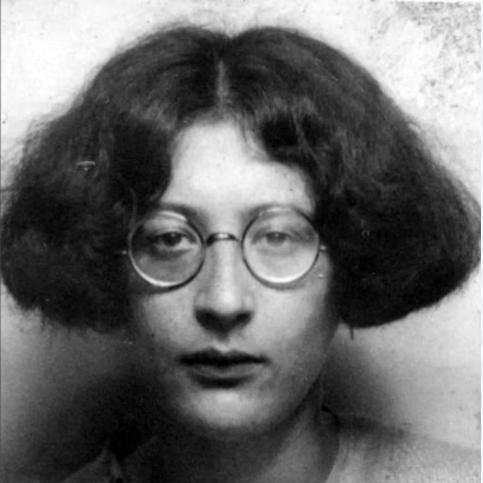
If people were told: what makes carnal desire imperious in you is not its pure carnal element. It is the fact that you put into it the essential part of yourself-the need for Unity, the need for God - they wouldn't believe it. To them it seems obvious that the quality of imperious need belongs to the carnal desire as such. In the same way it seems obvious to the miser that the quality of desirability belongs to gold as such, and not to its exchange value.
1 month 1 day ago
Once you had read the Psychopathology of Everyday Life, you knew that everyday life was psychopathology.
▼
Source
source
Humboldt's Gift (1975) [Penguin Classics, 1996, ISBN 0-140-18944-0], p. 5

3 months 1 week ago
The unitive knowledge of the Divine Ground has, as its necessary condition, self-abnegation and charity. Only by means of self-abnegation and charity can we clear away the evil, folly and ignorance which constitute the thing we call our personality and prevent us from becoming aware of the spark of divinity illuminating the inner man.

3 months 1 week ago
The Austrians are a highly civilised race, half-surrounded by Slavs in a relatively backward state of culture. ... Servia, a country so barbaric that a man can secure the throne by instigating the assassination of his predecessor, is engaged constantly in fermenting the racial discontent of men of the same race who are Austrian subjects.
▼
Source
source
War: The Offspring of Fear (1914), quoted in Ray Monk, Bertrand Russell: The Spirit of Solitude, 1872-1921 (1996), p. 373
2 months ago
The Kantian philosophy left a gulf between thought and being, or between subject and object, which the Hegelian philosophy sought to bridge. The bridge was to be made by positing one universal structure of all being. Being was to be a process wherein a thing 'comprehends' or 'grasps' the various states of existence and draws them into the more or less enduring unity of its 'self,' thus actively constituting itself as 'the same' throughout all change. Everything, in other words, exists more or less as a 'subject.'
▼
Source
source
P. 64
1 month 1 week ago
Materialism ends up denying the existence of any irreducible subjective qualitative states of sentience or awareness.
▼
Source
source
Consciousness and Language (2002) p. 47.

3 months 1 week ago
Despotic government supports itself by abject civilization, in which debasement of the human mind, and wretchedness in the mass of the people, are the chief criterions. Such governments consider man merely as an animal; that the exercise of intellectual faculty is not his privilege; that he has nothing to do with the laws but to obey them; and they politically depend more upon breaking the spirit of the people by poverty, than they fear enraging it by desperation.
▼
Source
source
Means by Which the Fund Is to Be Created
1 month 2 weeks ago
We distinguish diagrammatic from sentential paper-and-pencil representations of information by developing alternative models of information-processing systems that are informationally equivalent and that can be characterized as sentential or diagrammatic. Sentential representations are sequential, like the propositions in a text. Diagrammatic representations are indexed by location in a plane. Diagrammatic representations also typically display information that is only implicit in sentential representations and that therefore has to be computed, sometimes at great cost, to make it explicit for use. We then contrast the computational efficiency of these representations for solving several.illustrative problems in mathematics and physics.
▼
Source
source
p. 65

3 months 1 week ago
Though the principles of the banking trade may appear somewhat abstruse, the practice is capable of being reduced to strict rules. To depart upon any occasion from these rules, in consequence of some flattering speculation of extraordinary gain, is almost always extremely dangerous, and frequently fatal to the banking company which attempts it.
▼
Source
source
Chapter I, Part III, p. 820.

1 month 3 weeks ago
We Americans claim to be a peace-loving people. We hate bloodshed; we are opposed to violence. Yet we go into spasms of joy over the possibility of projecting dynamite bombs from flying machines upon helpless citizens. We are ready to hang, electrocute, or lynch anyone, who, from economic necessity, will risk his own life in the attempt upon that of some industrial magnate. Yet our hearts swell with pride at the thought that America is becoming the most powerful nation on earth, and that it will eventually plant her iron foot on the necks of all other nations. Such is the logic of patriotism.
3 months 1 week ago
While we are reading these sentences, this fair modern world seems only a reprint of the Laws of Menu with the gloss of Culluca. Tried by a New England eye, or the mere practical wisdom of modern times, they are the oracles of a race already in its dotage, but held up to the sky, which is the only impartial and incorruptible ordeal, they are of a piece with its depth and serenity, and I am assured that they will have a place and significance as long as there is a sky to test them by.

2 months ago
The next day as they were leaving Bethany, Jesus was hungry. Seeing in the distance a fig tree in leaf, he went to find out if it had any fruit. When he reached it, he found nothing but leaves, because it was not the season for figs. Then he said to the tree, “May no one ever eat fruit from you again.” And his disciples heard him say it. The next day when they came out from Bethany, He was hungry. After seeing in the distance a fig tree with leaves, He went to find out if there was anything on it. When He came to it, He found nothing but leaves, because it was not the season for figs. He said to it, "May no one ever eat fruit from you again!"
▼
Source
source
Mark 11:12-14 11:12-14
4 months 5 days ago
The direction of the world overwhelms me at this time. In the long run, all the continents (yellow, black and brown) will spill over onto Old Europe. They are hundreds and hundreds of millions. They are hungry and they are not afraid to die. We no longer know how to die or how to kill. We could preach, but Europe believes in nothing. So, we must wait for the year 1000 or a miracle. For my part, I find it harder and harder to live before a wall.
3 months 1 week ago
... it may be hoped that the white population of the world will soon cease to increase. The Asiatic races will be longer, and the negroes still longer, before their birth rate falls sufficiently to make their numbers stable without help of war and pestilence. But it is to be hoped that the religious prejudices which have hitherto hampered the spread of birth control will die out, and that ... the whole world will learn not to be unduly prolific. Until that happens, the benefits aimed at by socialism can only be partially realized, and the less prolific races will have to defend themselves against the more prolific by methods which are disgusting even if they are necessary.

3 months 3 weeks ago
On Ps 60:3: To Thee have I cried from the ends of the earth.
2 months ago
The intellectual is called on the carpet. ... Don't you conceal something? You talk a language which is suspect. You don't talk like the rest of us, like the man in the street, but rather like a foreigner who does not belong here. We have to cut you down to size, expose your tricks, purge you.
▼
Source
source
p. 192

1 month 3 weeks ago
The fierce willingness to repudiate domination in a holistic manner is the starting point for progressive cultural revolution.
▼
Source
source
Women, Art, and Society: Fourth Edition (2007) by Whitney Chadwick ISBN 0-500-20393-8
2 months ago
Notwithstanding I have a few things against thee, because thou sufferest that woman Jezebel, which calleth herself a prophetess, to teach and to seduce my servants to commit fornication, and to eat things sacrificed unto idols. And I gave her space to repent of her fornication; and she repented not. Behold, I will cast her into a bed, and them that commit adultery with her into great tribulation, except they repent of their deeds. And I will kill her children with death; and all the churches shall know that I am he which searcheth the reins and hearts: and I will give unto every one of you according to your works.
▼
Source
source
Revelation

3 months 2 weeks ago
You must acquire the best knowledge first, and without delay; it is the height of madness to learn what you will later have to unlearn.
▼
Source
source
Letter to Christian Northoff (1497), as translated in Collected Works of Erasmus (1974), p. 114

4 months 1 week ago
That which distinguishes the Christian narrow way from the common human narrow way is the voluntary. Christ was not someone who coveted earthly things but had to be satisfied with poverty, no, he chose poverty.

1 month 1 week ago
People understand the meaning of eating lies in the nourishment of the body only when they cease to consider that the object of that activity is pleasure. ...People understand the meaning of art only when they cease to consider that the aim of that activity is beauty, i.e., pleasure.

2 months 1 week ago
Through a wise and salutary neglect [of the colonies], a generous nature has been suffered to take her own way to perfection; when I reflect upon these effects, when I see how profitable they have been to us, I feel all the pride of power sink and all presumption in the wisdom of human contrivances melt and die away within me. My vigour relents. I pardon something to the spirit of liberty.
3 months 2 weeks ago
For what is life but a play in which everyone acts a part until the curtain comes down?
1 month 6 days ago
Headlines are icons, not literature.
▼
Source
source
(p. 5)


3 months 1 week ago
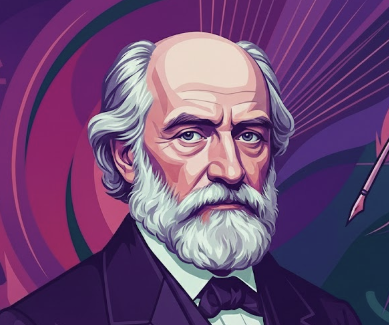
Epicurus, the great teacher of happiness, has correctly and finely divided human needs into three classes. First there are the natural and necessary needs which, if they are not satisfied, cause pain. Consequently, they are only victus et amictus [food and clothing] and are easy to satisfy. Then we have those that are natural yet not necessary, that is, the needs for sexual satisfaction. ... These needs are more difficult to satisfy. Finally, there are those that are neither natural nor necessary, the needs for luxury, extravagance, pomp, and splendour, which are without end and very difficult to satisfy.
▼
Source
source
E. Payne, trans. (1974) Vol. 1, p. 346
3 months 3 weeks ago
The Catholic faith, I now realized could be maintained without presumption. This was especially true after I had heard one or two parts of the Old Testament explained allegorically, whereas before this, when I had interpreted them literally, they had killed me spiritually.
▼
Source
source
A. Outler, trans. (Dover: 2002), Book 5, Chapter 14, p. 81.
3 months 1 week ago
His character does not appear more extraordinary and unusual by the mixture of so much absurdity with so much penetration, than by his tempering such violent ambition, and such enraged fanaticism with so much regard to justice and humanity.
▼
Source
source
Volume III, Chapter LXI; referring to Oliver Cromwell
1 month 2 weeks ago
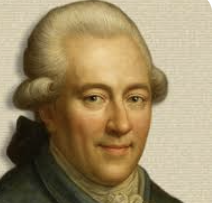
What is called an acute knowledge of human nature is mostly nothing but the observer's own weaknesses reflected back from others.
▼
Source
source
G 7
CivilSimian.com created by AxiomaticPanic, CivilSimian, Kalokagathia