

1 month 3 weeks ago
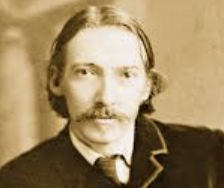
A faculty for idleness implies a catholic appetite and a strong sense of personal identity.
▼
Source
source
An Apology for Idlers.

1 week 5 days ago
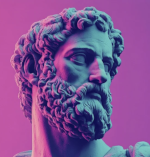
What is wisdom? Always desiring the same things, and always refusing the same things.
▼
Source
source
Line 5 Here, Seneca uses the same observation that Sallust made regarding friendship (in his historical account of the Catilinarian conspiracy, Bellum Catilinae[XX.4]) to define wisdom.

3 months 3 weeks ago
She believed in nothing; only her skepticism kept her from being an atheist.
▼
Source
source
The Words (1964), speaking of his grandmother.

2 months 3 weeks ago
Fortunate those who, born before science, were privileged to die of their first disease!

3 months 3 weeks ago
What is now common to all men is a mere abstract universal, an H.C.F. [Highest Common Factor], and Man's conquest of himself means simply the rule of the Conditioners over the conditioned human material, the world of post-humanity which, some knowingly and some unknowingly, nearly all men in all nations are at present labouring to produce.
4 months 3 weeks ago
It is not necessary to ask whether soul and body are one, just as it is not necessary to ask whether the wax and its shape are one, nor generally whether the matter of each thing and that of which it is the matter are one. For even if one and being are spoken of in several ways, what is properly so spoken of is the actuality.

3 months 3 weeks ago
The more powerful and original a mind, the more it will incline towards the religion of solitude.

4 months 5 days ago
We are, I know not how, double in ourselves, which is the cause that what we believe we do not believe, and cannot disengage ourselves from what we condemn.
▼
Source
source
Ch. 16. Of Glory, tr. Cotton, rev. W. Carew Hazlitt, 1877

3 months 3 weeks ago
Let any one try, I will not say to arrest, but to notice or attend to, the present moment of time. One of the most baffling experiences occurs. Where is it, this present? It has melted in our grasp, fled ere we could touch it, gone in the instant of becoming.
▼
Source
source
Ch. 15

2 weeks 4 days ago
The stupendous Fourth Estate, whose wide world-embracing influences what eye can take in?
4 months 2 weeks ago
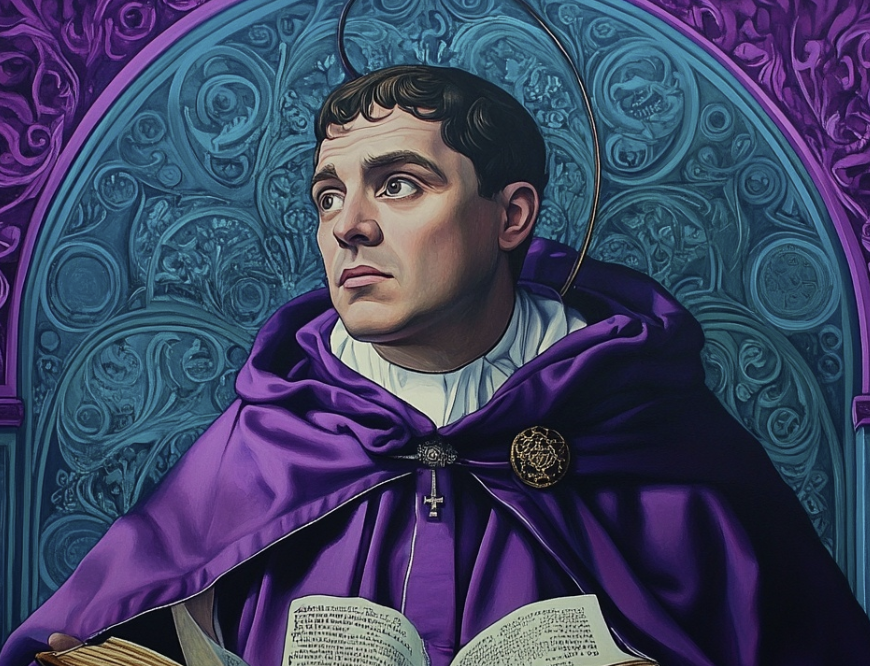
A hymn is the praise of God with song; a song is the exultation of the mind dwelling on eternal things, bursting forth in the voice.
▼
Source
source
Commentary on the Psalms (c. 1273), Introduction

3 months 3 weeks ago
For each new class which puts itself in the place of one ruling before it, is compelled, merely in order to carry through its aim, to represent its interests the common interest of all the members of society, that is, sality, and represent them as the only rational, universally valid ones. The class making a revolution appears from the very start, if only because it is opposed to a class, not as a class but as the representative of the whole of society; it appears as the whole mass of society confronting the one ruling class.
▼
Source
source
"Concerning the production of Consciousness"
2 months 2 weeks ago
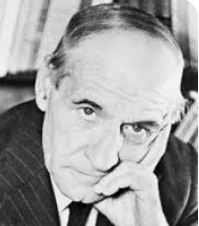
Man is a substantial emigrant on a pilgrimage of being, and it is accordingly meaningless to set limits to what he is capable of being.
▼
Source
source
"Man has no nature"
4 months 1 week ago
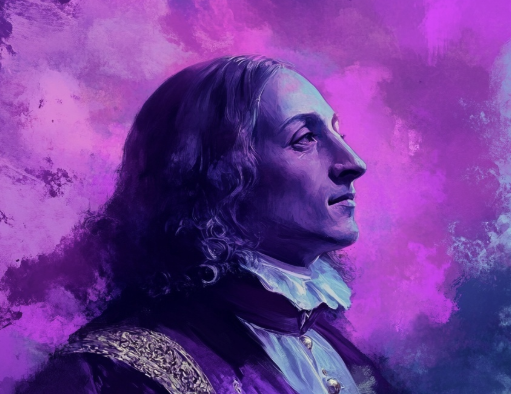
These philosophers of the world place contrarieties in the same subject; for the one attributed greatness to nature and the other weakness to this same nature, which could not subsist; whilst faith teaches us to place them in different subjects: all that is infirm belonging to nature, all that is powerful belonging to grace. Such is the marvelous and novel union which God alone could teach, and which he alone could make, and which is only a type and an effect of the ineffable union of two natures in the single person of a Man-God.
3 months 3 weeks ago
It is certain that we cannot escape anguish, for we are anguish.
3 months 3 weeks ago
"They would say," he answered, "that you do not fail in obedience through lack of love, but have lost love because you never attempted obedience."
▼
Source
source
Ch. 7 : The Pendragon, section 2
1 month 1 week ago
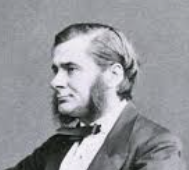
The consciousness of brutes would appear to be related to the mechanism of their body simply as a collateral product of its working, and to be as completely without any power of modifying that working as the steam-whistle which accompanies the work of a locomotive engine is without influence upon its machinery. Their volition, if they have any, is an emotion indicative of physical changes, not a cause of such changes.
3 months 4 weeks ago
A command can express no more than an ought or a shall, because it is a universal, but it does not express an 'is'; and this at once makes plain its deficiency. Against such commands Jesus sets virtue, i.e., a loving disposition, which makes the content of the command superfluous and destroys its form as a command, because that form implies an opposition between a commander and something resisting the command.
2 months 3 weeks ago
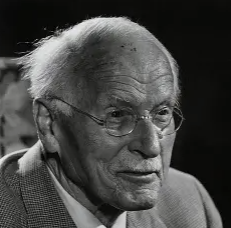
Emotion is the chief source of all becoming-conscious. There can be no transforming of darkness into light and of apathy into movement without emotion.
▼
Source
source
Psychological Aspects of the Mother Archetype
4 months ago
Whatever concept one may hold, from a metaphysical point of view, concerning the freedom of the will, certainly its appearances, which are human actions, like every other natural event are determined by universal laws. However obscure their causes, history, which is concerned with narrating these appearances, permits us to hope that if we attend to the play of freedom of the human will in the large, we may be able to discern a regular movement in it, and that what seems complex and chaotic in the single individual may be seen from the standpoint of the human race as a whole to be a steady and progressive though slow evolution of its original endowment.
▼
Source
source
Introduction
2 weeks 4 days ago
I will remark again, however, as a fact not unimportant to be understood, that the different sphere constitutes the grand origin of such distinction; that the Hero can be Poet, Prophet, King, Priest or what you will, according to the kind of world he finds himself born into. I confess, I have no notion of a truly great man that could not be all sorts of men.

3 months 3 weeks ago
Man flows at once to God when the channel of purity is open.

4 months 4 weeks ago
A person can perhaps succeed in hiding his sins from the world, he can perhaps be foolishly happy that he succeeds, or yet, a little more honest, admit that it is a deplorable weakness and cowardliness that he does not have the courage to become open-but a person cannot hide his sins from himself.

2 months 3 weeks ago
Each of us is born with a share of purity, predestined to be corrupted by our commerce with mankind, by that sin against solitude.
1 week 1 day ago
I have suggested that behind almost all myth lies the mono-plot of the game of hide-and-seek.
▼
Source
source
The Two Hands of God : The Myths of Polarity (1963), p. 29

4 months 6 days ago
Lucid intervals and happy pauses.
▼
Source
source
History of King Henry VII, III
1 week 4 days ago
You remember Thurlow's answer to some one complaining of the injustice of a company. "Why, you never expected justice from a company, did you? they have neither a soul to lose, nor a body to kick."
▼
Source
source
Vol. I, ch. 11, p. 428

3 months 3 weeks ago
If I made laws for Shakers or a school, I should gazette every Saturday all the words they were wont to use in reporting religious experience, as "spiritual life," "God," "soul," "cross," etc., and if they could not find new ones next week, they might remain silent.
▼
Source
source
June 15, 1844
1 week 5 days ago
See the foundations of the most celebrated cities hardly now to be discerned; they were ruined by anger. See deserts extending for many miles without an inhabitant: they have been desolated by anger.
2 months 3 weeks ago
How did this division of the nations come about, what was its basis? The division is in accordance with all the previous history of the nationalities in question. It is the beginning of the decision on the life or death of all these nations, large and small. All the earlier history of Austria up to the present day is proof of this and 1848 confirmed it. Among all the large and small nations of Austria, only three standard-bearers of progress took an active part in history, and still retain their vitality - the Germans, the Poles and the Magyars. Hence they are now revolutionary. All the other large and small nationalities and peoples are destined to perish before long in the revolutionary world storm. (Weltsturm). For that reason they are now counter-revolutionary.
▼
Source
source
The Magyar Struggle in Neue Rheinische Zeitung (13 January 1849).
1 week 1 day ago
Listen intently to a voice singing without words. It may charm you into crying, force you to dance, fill you with rage, or make you jump for joy. You can't tell where the music ends and the emotions begin, for the whole thing is a kind of music-the voice playing on your nerves as the breath plays on a flute. All experience is just that, except that its music has many more dimensions than sound. It vibrates in the dimensions of sight, touch, taste, and smell, and in the intellectual dimension of symbols and words-all evoking and playing upon each other.
▼
Source
source
p. 95
4 months 4 days ago
Thus, all unknown quantities can be expressed in terms of a single quantity, whenever the problem can be constructed by means of circles and straight lines, or by conic sections, or even by some other curve of degree not greater than the third or fourth.But I shall not stop to explain this in more detail, because I should deprive you of the pleasure of mastering it yourself, as well as of the advantage of training your mind by working over it, which is in my opinion the principal benefit to be derived from this science. Because, I find nothing here so difficult that it cannot be worked out by anyone at all familiar with ordinary geometry and with algebra, who will consider carefully all that is set forth in this treatise.
▼
Source
source
First Book
3 months 2 weeks ago
About Pontus there are some creatures of such an extempore being that the whole term of their life is confined within the space of a day; for they are brought forth in the morning, are in the prime of their existence at noon, grow old at night, and then die.
2 months 3 weeks ago
Nostalgia, more than anything, gives us the shudder of our own imperfection.

3 months 4 weeks ago
Man is a credulous animal, and must believe something; in the absence of good grounds for belief, he will be satisfied with bad ones.

2 months 3 weeks ago
I consider you the most honest and truthful of men, more honest and truthful than anyone; and if they say that your mind...that is, that you're sometimes afflicted in your mind, it's unjust. I made up my mind about that, and disputed with others, because, though you really are mentally afflicted (you won't be angry with that, of course; I'm speaking from a higher point of view), yet the mind that matters is better in you than in any of them. It's something, in fact, they have never dreamed of. For there are two sorts of mind: one that matters, and one that doesn't matter.
▼
Source
source
Part 3, Chapter 8
1 week 5 days ago
This spirit thrusts itself forward, confident of commendation and esteem. It is superior to all, monarch of all it surveys; hence it should be subservient to nothing, finding no task too heavy, and nothing strong enough to weigh down the shoulders of a man.
4 months 4 days ago
Fear of evil is greater than the evil itself.
▼
Source
source
Act III, scene xi
3 months 3 weeks ago
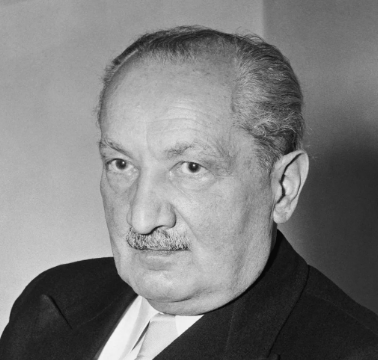
Transcendence constitutes selfhood.
▼
Source
source
Essence of Ground
2 months 3 weeks ago
Bach: a scale of tears upon which our desires for God ascend.

2 months 1 week ago
Its first ethical precept is the identity of means used and aims sought. The ultimate end of all revolutionary social change is to establish the sanctity of human life, the dignity of man, the right of every human being to liberty and wellbeing. Unless this be the essential aim of revolution, violent social changes would have no justification. For external social alterations can be, and have been, accomplished by the normal processes of evolution. Revolution, on the contrary, signifies not mere external change, but internal, basic, fundamental change. That internal change of concepts and ideas, permeating ever-larger social strata, finally culminates in the violent upheaval known as revolution.
4 months 4 days ago
Men never do good unless necessity drives them to it; but when they are free to choose and can do just as they please, confusion and disorder become rampant.
▼
Source
source
Book 1, Ch. 3 (as translated by LJ Walker and B Crick)
2 months 3 weeks ago
...for stones, plants, and animals there is no God, but only for man.
3 months 3 weeks ago
I mean, a genuinely productive society. I mean you could produce plenty of goods without much freedom, but I think the whole sort of creative life of man is ultimately impossible without a considerable measure of individual freedom, of initiative, creation, all these things which we value, and I think value properly, are impossible without a large measure of freedom.
4 months 1 week ago
Rules for Axioms. I. Not to omit any necessary principle without asking whether it is admittied, however clear and evident it may be. II. Not to demand, in axioms, any but things that are perfectly evident in themselves.

1 month 3 weeks ago
There is absolutely no inevitability, so long as there is a willingness to contemplate what is happening.
▼
Source
source
[A chapter sub-heading attributed by McLuhan to Alfred North Whitehead]
2 months 3 weeks ago
To become properly acquainted with a truth, we must first have disbelieved it, and disputed against it.

CivilSimian.com created by AxiomaticPanic, CivilSimian, Kalokagathia