


2 months 3 weeks ago
There was a time when religion was kept secret from popular belief within the mystery cults like a holy fire, sharing a common sanctuary with philosophy. The legends of antiquity name the earliest philosophers as the originators of these mystery cults, from which the most enlightened among the later philosophers, notably Plato, liked to educe their divine teachings. At that time philosophers still had the courage and the right to discuss the singly great themes, the only ones worthy of philosophizing and rising above common knowledge.
▼
Source
source
P. 7

3 months 3 weeks ago
We do not count a man's years until he has nothing else to count.
▼
Source
source
Old Age

3 months 3 weeks ago
The frontiers are not east or west, north or south, but wherever a man fronts a fact, though that fact be his neighbor, there is an unsettled wilderness between him and Canada, between him and the setting sun, or, farther still, between him and it.
2 months 2 weeks ago
No tyranny is more cruel than the one practiced in the shadow of the laws and under color of justice - when, so to speak, one proceeds to drown the unfortunate on the very plank by which they had saved themselves.
▼
Source
source
See Chap. XIV of Considérations sur les causes de la grandeur des Romains et de leur décadence. Considerations on the Causes of the Greatness of the Romans and their Decline (1734), p. 89.
3 months 3 weeks ago
In France at least, the history of science and thought gives pride of place sciences, sciences of the necessary, all close to philosophy: one can observe in their history the almost uninterrupted emergence of truth and pure reason. The other disciplines, however - those, for example, that concern living beings, languages, or economic facts - are considered too tinged with empirical thought, too exposed to the vagaries of chance or imagery to age old traditions and external events, for it to be supposed that their history could be anything other irregular. At most, they are expected to provide evidence of a state of mind, an intellectual fashion, a mixture of archaism and bold conjecture, of intuition and blindness. But what if empirical knowledge, at a given time and in a given culture, did possess a well defined regularity.
▼
Source
source
Foreword to the English edition

3 months 4 weeks ago
The fact that all Mathematics is Symbolic Logic is one of the greatest discoveries of our age; and when this fact has been established, the remainder of the principles of mathematics consists in the analysis of Symbolic Logic itself.
▼
Source
source
Principles of Mathematics (1903), Ch. I: Definition of Pure Mathematics, p. 5

3 months 3 weeks ago
Now, to-day, this moment, is our chance to choose the right side. God is holding back to give us that chance. It will not last for ever. We must take it or leave it.
▼
Source
source
Book II, Chapter 5, "The Practical Conclusion"

2 months 3 weeks ago
There are no solutions, only cowardice masquerading as such.

4 months 1 day ago
This I know, that between finite and infinite there is no comparison; so that the difference between God and the greatest and most excellent created thing is no less than the difference between God and the least created thing.
▼
Source
source
Letter to Hugo Boxel (October 1674) The Chief Works of Benedict de Spinoza (1891) Tr. R. H. M. Elwes, Vol. 2, Letter 58 (54).

4 months ago
Our island is this earth; and the most striking object we behold is the sun. As soon as we pass beyond our immediate surroundings, one or both of these must meet our eye. Thus the philosophy of most savage races is mainly directed to imaginary divisions of the earth or to the divinity of the sun.

2 months 1 week ago
That knowledge which adds greatness to character is knowledge so handled as to transform every phase of immediate experience.

2 months 2 weeks ago
Hegel's philosophy revolved about the universality of reason; it was a rational system with its every part (the subjective as well as the objective spheres) integrated into a comprehensive whole. Marx shows that capitalist society first put such a universality into practice.
▼
Source
source
P. 286-287

1 month 3 weeks ago
Quite often a man goes on for years imagining that the religious teaching that had been imparted to him since childhood is still intact, while all the time there is not a trace of it left in him.
▼
Source
source
Pt. I, ch. 1

1 week 5 days ago
And what is freedom, you ask? It means not being a slave to any circumstance, to any constraint, to any chance; it means compelling Fortune to enter the lists on equal terms.

2 months 2 weeks ago
Why do ye also transgress the commandment of God by your tradition? For God commanded, saying, Honour thy father and mother: and, He that curseth father or mother, let him die the death. But ye say, Whosoever shall say to his father or his mother, It is a gift, by whatsoever thou mightest be profited by me; And honour not his father or his mother, he shall be free. Thus have ye made the commandment of God of none effect by your tradition. Ye hypocrites, well did Esaias prophesy of you, saying, This people draweth nigh unto me with their mouth, and honoureth me with their lips; but their heart is far from me. But in vain they do worship me, teaching for doctrines the commandments of men.
▼
Source
source
15:3-9 (KJV)
1 month 6 days ago
Getting rid of predation isn't a matter of moralising. A python who kills a small human child isn't morally blameworthy. Nor is a lion who hunts and kills a terrified zebra. In both cases, the victim suffers horribly. But the predator lacks the empathetic and mind-reading skills needed to understand the implications of what s/he is doing. Some humans still display a similar deficit. From the perspective of the victim, the moral status or (lack of) guilty intent of a human or nonhuman predator is irrelevant. Either way, to stand by and watch the snake asphyxiate a child would be almost as morally abhorrent as to kill the child yourself. So why turn this principle on its head with beings of comparable sentience to human infants and toddlers? With power comes complicity.
▼
Source
source
"The Radical Plan to Phase out Earth's Predatory Species", io9, 30 Jul. 2014
2 months 2 weeks ago
Ask, and it will be given to you; seek, and you will find; knock, and it will be opened to you. For everyone who asks receives, and he who seeks finds, and to him who knocks it will be opened.
▼
Source
source
Matthew 7:7-8 (NKJV) (Also Luke 11:9-13)
3 months 3 weeks ago
The word liberty in the mouth of Mr. Webster sounds like the word love in the mouth of a courtesan.
▼
Source
source
February 12, 1851; cf. the remark of John Wilkes about Samuel Johnson, "Liberty is as ridiculous in his mouth as Religion in mine" (20 March 1778), quoted in Boswell's Life of Johnson, 1791


3 months 4 days ago
We attest that He is the Willer of all things that are, the ruler of all originated phenomena; there does not come into the visible or invisible world anything meager or plenteous, small or great, good or evil, or any advantage or disadvantage, belief or unbelief, knowledge or ignorance, success or failure, increase or decrease, obedience or disobedience, except by His will. What He wills is, and what He does not, will not; there is not a glance of the eye, nor a stray thought of the heart that is not subject to His will. He is the Creator, the Restorer, the Doer of whatsoever He wills. There is none that rescinds His command, none that supplements His decrees, none that dissuades a servant from disobeying Him, except by His help and mercy, and none has power to obey Him except by His will.
▼
Source
source
Ihyaa 'Ulum al-Deen. Beirut: Dar Ibn Hazm (2005), p. 107.
4 months 2 weeks ago
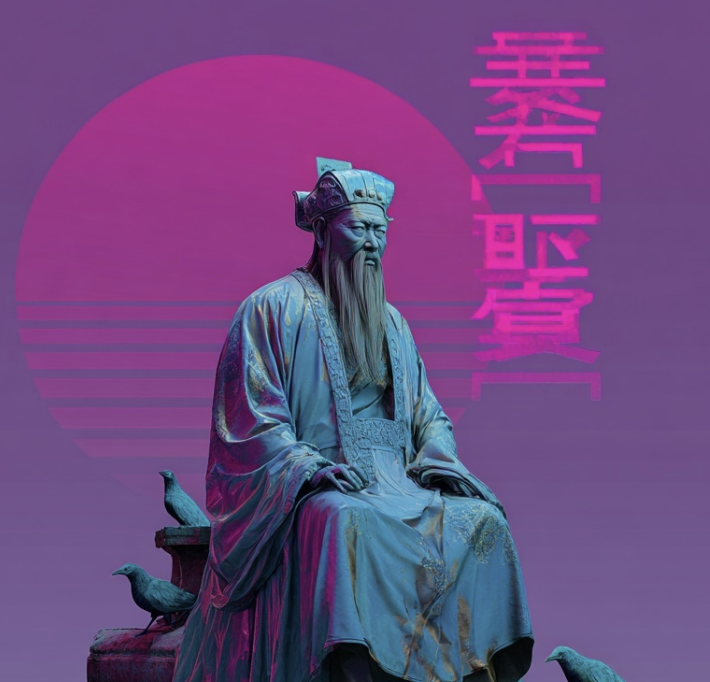
Chi Wan thought thrice, and then acted. When the Master was informed of it, he said, "Twice may do."

3 months 3 weeks ago
Capital is money, capital is commodities. ... By virtue of it being value, it has acquired the occult ability to add value to itself. It brings forth living offspring, or, at the least, lays golden eggs.
▼
Source
source
Vol. I, Ch. 4, pp. 171-172

3 months 1 week ago
There are men and gods, and beings like Pythagoras.
▼
Source
source
Of himself, as quoted in A History of Western Philosophy (1945) by Bertrand Russell

1 month 3 weeks ago
By involving all men in all men, by the electric extension of their own nervous systems, the new technology turns the figure of the primitive society into a universal ground that buries all previous figures.
▼
Source
source
(p. 25)
2 months 3 weeks ago
It is sometimes difficult to avoid the impression that there is a sort of foreknowledge of the coming series of events.
▼
Source
source
p. 94

4 months 4 days ago
There is no man so good that if he placed all his actions and thoughts under the scrutiny of the laws, he would not deserve hanging ten times in his life.
▼
Source
source
Ch. 9
2 months 3 weeks ago
A self-respecting man is a man without a country. A fatherland is birdlime...
2 months 3 weeks ago
As incompetent in life as in death, I loathe myself and in this loathing I dream of another life, another death. And for having sought to be a sage such as never was, I am only a madman among the mad.
2 months 2 weeks ago
The sensate body possesses an art of interrogating the sensible according to its own wishes, an inspired exegesis The Visible and the Invisible, trans.
▼
Source
source
A. Lingis (Evanston: 1968), p. 135

3 months 3 weeks ago
Eh bien, continuons... Well, let's get on with it.

3 months 3 weeks ago
The sentiment of reality can indeed attach itself so strongly to our object of belief that our whole life is polarized through and through, so to speak, by its sense of the existence of the thing believed in, and yet that thing, for the purpose of definite description, can hardly be said to be present to our mind at all.
▼
Source
source
Lecture III, "The Reality of the Unseen"
3 months 4 weeks ago
Pi's face was masked, and it was understood that none could behold it and live. But piercing eyes looked out from the mask, inexorable, cold and enigmatic.
▼
Source
source
"The Mathematician's Nightmare", Nightmares of Eminent Persons and Other Stories, 1954
2 months 3 weeks ago
A people represents not so much an aggregate of ideas and theories as of obsessions.
1 week 1 day ago
This mysterious something has been called God, the Absolute, Nature, Substance, Energy, Space, Ether, Mind, Being, the Void, the Infinite-names and ideas which shift in popularity and respectabilitywith the winds of intellectual fashion, of considering the universe intelligent or stupid, superhuman or subhuman, specific or vague. All of them might be dismissed as nonsense-noises if the notion of an underlying Ground of Being were no more than a product of intellectual speculation. But these names are often used to designate the content of a vivid and almost sensorily concrete experience-the "unitive" experience of the mystic, which, with secondary variations, is found in almost all cultures at all times. This experience is the transformed sense of self which I was discussing in the previous chapter, though in "naturalistic" terms, purified of all hocus-pocus about mind, soul, spirit, and other intellectually gaseous words.
▼
Source
source
p. 104-105
2 months 3 weeks ago
The unconscious is not just evil by nature, it is also the source of the highest good: not only dark but also light, not only bestial, semihuman, and demonic but superhuman, spiritual, and, in the classical sense of the word, "divine."
▼
Source
source
The Practice of Psychotherapy, p. 364
2 months 3 weeks ago
To make more plans than an explorer or a crook, yet to be infected at the will's very root.
3 months 4 days ago
If man's love for himself be necessary, then his love for Him through whom, first his coming-to-be, and second, his continuance in his essential being with all his inward and outward traits, his substance and his accidents, occur must also be necessary. Whoever is so besotted by his fleshy appetites as to lack this love neglects his Lord and Creator. He possesses no authentic knowledge of Him; his gaze is limited to his cravings and to things of sense.
▼
Source
source
Al-Ghazali on Love, Longing, Intimacy & Contentment, Translated with an introduction and notes by Eric Ormsby. Cambridge: The Islamic Texts Society (2011), p. 25.
3 months 3 weeks ago
I think that there is nothing, not even crime, more opposed to poetry, to philosophy, ay, to life itself, than this incessant business.
▼
Source
source
p. 485
4 months 1 week ago
Every habit and faculty is confirmed and strengthened by the corresponding actions, that of walking by walking, that of running by running.
▼
Source
source
Book II, ch. 18, 1
4 months 5 days ago
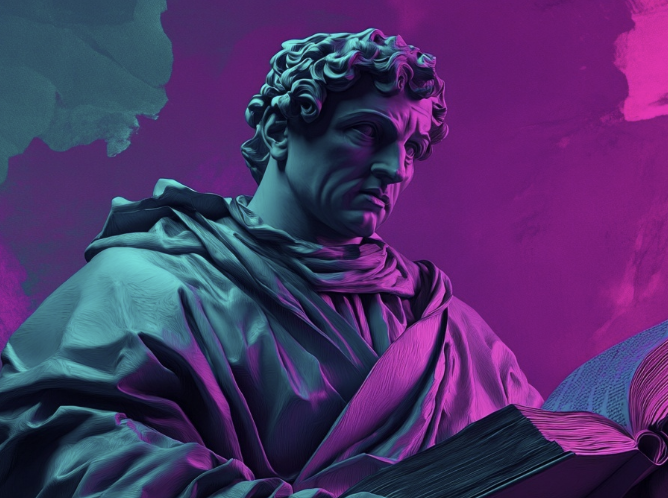
There can be no doubt that the Virgin Mary is in heaven. How it happened we do not know.
▼
Source
source
Weimar edition of Martin Luther's Works (Translation by William J. Cole) Vol. 10, p. 268
2 months 3 weeks ago
At the present time a serious, strong state can have but one sound foundation - military and bureaucratic centralization. Between a monarchy and the most democratic republic there is only one essential difference: in the former, the world of officialdom oppresses and robs the people for the greater profit of the privileged and propertied classes, as well as to line its own pockets, in the name of the monarch; in the latter, it oppresses and robs the people in exactly the same way, for the benefit of the same classes and the same pockets, but in the name of the people's will. In a republic a fictitious people, the "legal nation" supposedly represented by the state, smothers the real, live people. But it will scarcely be any easier on the people if the cudgel with which they are beaten is called the people's cudgel.
1 month 3 weeks ago
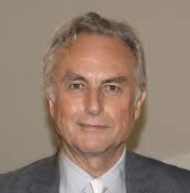
Never say, and never take seriously anyone who says, "I cannot believe that so-and-so could have evolved by gradual selection". I have dubbed this kind of fallacy "the Argument from Personal Incredulity". Time and again, it has proven the prelude to an intellectual banana-skin experience.
3 months 3 weeks ago
There are a thousand hacking at the branches of evil to one who is striking at the root, and it may be that he who bestows the largest amount of time and money on the needy is doing the most by his mode of life to produce that misery which he strives in vain to relieve.
▼
Source
source
p. 87
2 months 2 weeks ago
Whoever believes and is baptized will be saved, but whoever does not believe will be condemned. And these signs will accompany those who believe: In my name they will drive out demons; they will speak in new tongues; they will pick up snakes with their hands; and when they drink deadly poison, it will not hurt them at all; they will place their hands on sick people, and they will get well.
▼
Source
source
Jesus, Mark 16:16-18

3 months 3 weeks ago
Take the happiest man, the one most envied by the world, and in nine cases out of ten his inmost consciousness is one of failure. Either his ideals in the line of his achievements are pitched far higher than the achievements themselves, or else he has secret ideals of which the world knows nothing, and in regard to which he inwardly knows himself to be found wanting.
▼
Source
source
Lectures VI and VII, "The Sick Soul"
3 months 3 weeks ago
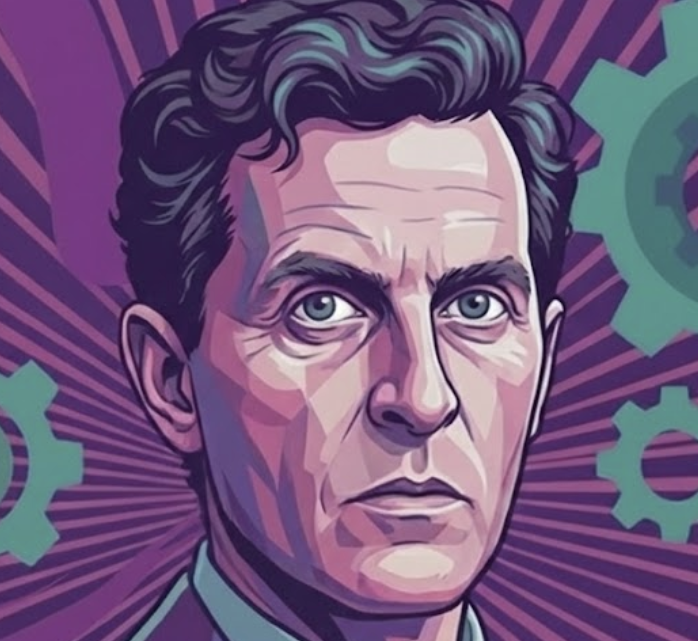
The Sabbath is not simply a time to rest, to recuperate. We should look at our work from the outside, not just from within.
▼
Source
source
p. 91e
3 months 1 day ago
Men are not allowed to think freely about chemistry and biology: why should they be allowed to think freely about political philosophy?
▼
Source
source
As quoted in A Dictionary of Scientific Quotations (1991) by Alan Lindsay Mackay
3 months 3 weeks ago
Nature is no sentimentalist, - does not cosset or pamper us. We must see that the world is rough and surly, and will not mind drowning a man or a woman, but swallows your ships like a grain of dust. The cold, inconsiderate of persons, tingles your blood, benumbs your feet, freezes a man like an apple. The diseases, the elements, fortune, gravity, lightning, respect no persons.
▼
Source
source
p. 182
CivilSimian.com created by AxiomaticPanic, CivilSimian, Kalokagathia