



4 months 3 days ago
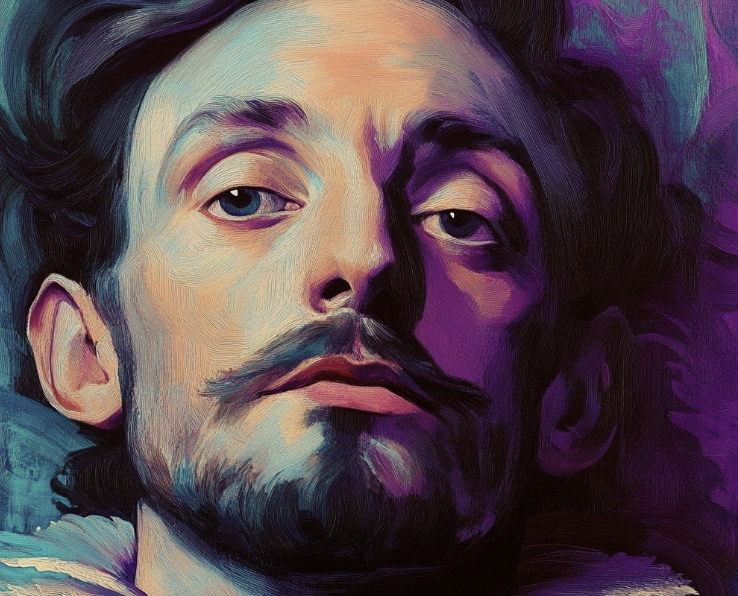
I bequeath my soul to God (...). My body to be buried obscurely. For my name and memory, I leave it to men's charitable speeches, and to foreign nations, and the next age.
▼
Source
source
His Will, 1626

3 months 3 weeks ago
..Whenever it ceases to be true that mankind, as a rule, prefer themselves to others, and those nearest to them to those more remote, from that moment Communism is not only practicable, but the only defensible form of society...

2 weeks 1 day ago
Henry of Essex's religion was the Inner Light or Moral Conscience of his own soul; such as is vouchsafed still to all souls of men;-which Inner Light shone here 'through such intellectual and other media' as there were; producing 'Phantasms,' Kircherean Visual-Spectra, according to circumstances! It is so with all men. The clearer my Inner Light may shine, through the less turbid media; the fewer Phantasms it may produce,-the gladder surely shall I be, and not the sorrier! Hast thou reflected, O serious reader, Advanced- Liberal or other, that the one end, essence, use of all religion past, present and to come, was this only: To keep that same Moral Conscience or Inner Light of ours alive and shining.
2 months 2 weeks ago
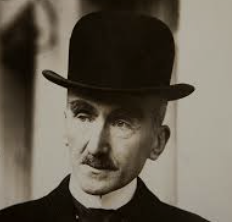
The spectacle of what religions have been in the past, of what certain religions still are to-day, is indeed humiliating for human intelligence. What a farrago of error and folly!'
▼
Source
source
Chapter II : Static Religion
3 months 3 weeks ago
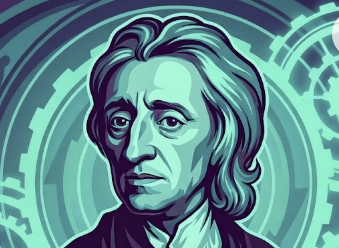
Where danger shews it self, apprehension cannot, without stupidity, be wanting; where danger is, sense of danger should be; and so much fear as should keep us awake, and excite our attention, industry, and vigour; but not to disturb the calm use of our reason, nor hinder the execution of what that dictates.
▼
Source
source
Sec. 115

2 months 1 week ago
In the past human life was lived in a bullock cart; in the future it will be lived in an aeroplane; and the change of speed amounts to a difference in quality.
▼
Source
source
Ch. 6: "The Nineteenth Century", p. 137
2 months 3 days ago
The function of knowledge in the decision-making process is to determine which consequences follow upon which of the alternative strategies. It is the task of knowledge to select from the whole class of possible consequences a more limited subclass, or even (ideally) a single set of consequences correlated with each strategy.
▼
Source
source
p. 78.
3 months 2 weeks ago
When I am furious about something, I sometimes beat the ground or a tree with my walking stick. But I certainly do not believe that the ground is to blame or that my beating can help anything... And all rites are of this kind.
▼
Source
source
Ch. 7 : Remarks on Frazer's Golden Bough, p. 131

3 months 4 weeks ago
Methinks I am like a man, who having struck on many shoals, and having narrowly escap'd shipwreck in passing a small frith, has yet the temerity to put out to sea in the same leaky weather-beaten vessel, and even carries his ambition so far as to think of compassing the globe under these disadvantageous circumstances.
▼
Source
source
Part 4, Section 7
5 days ago
Let me give you a definition of ethics: It is good to maintain and further life - it is bad to damage and destroy life. And this ethic, profound and universal, has the significance of a religion. It is religion.
▼
Source
source
As quoted in Albert Schweitzer : The Man and His Mind (1947) by George Seaver, p. 366

3 months 3 weeks ago
I can imagine no man who will look with more horror on the End than a conscientious revolutionary who has, in a sense sincerely, been justifying cruelties and injustices inflicted on millions of his contemporaries by the benefits which he hopes to confer on future generations: generations who, as one terrible moment now reveals to him, were never going to exist. Then he will see the massacres, the faked trials, the deportations, to be all ineffaceably real, an essential part, his part, in the drama that has just ended: while the future Utopia had never been anything but a fantasy.
2 months 3 weeks ago
I saw a Divine Being. I'm afraid I'm going to have to revise all my various books and opinions.
▼
Source
source
National Post (3 March 2001).
3 months 3 weeks ago
The question was, whether, if the reformers of society and government could succeed in their objects, and every person in the community were free and in a state of physical comfort, the pleasures of life, being no longer kept up by struggle and privation, would cease to be pleasures.
▼
Source
source
(pp. 145-146)
4 months 3 days ago
...it is the peculiar and perpetual error of the human understanding to be more moved and excited by affirmatives than by negatives...
▼
Source
source
Aphorism 46
2 months 1 week ago
Bourgeois society is ruled by equivalence. It makes the dissimilar comparable by reducing it to abstract quantities. To the enlightenment, that which does not reduce to numbers, and ultimately to the one, becomes illusion.
▼
Source
source
John Cumming trans., p. 7
2 weeks 1 day ago
The work we desire and prize is not the courage to die decently, but to live manfully.
4 months 2 weeks ago
The more man meditates upon good thoughts, the better will be his world and the world at large.
1 month 3 weeks ago
It is the fantasy of seizing reality live that continues-ever since Narcissus bent over his spring. Surprising the real in order to immobilize it, suspending the real in the expiration of its double. You bend over the hologram like God over his creature: only God has this power of passing through walls, through people, and finding Himself immaterially in the beyond. We dream of passing through ourselves and of finding ourselves in the beyond: the day when your holographic double will be there in space, eventually moving and talking, you will have realized this miracle. Of course, it will no longer be a dream, so its charm will be lost.
▼
Source
source
"Holograms," p. 105

4 months 3 weeks ago
These people who have fled inward for their freedom also have to live outwardly, become visible, let themselves be seen; they are united with mankind through countless ties of blood, residence, education, fatherland, chance, the importunity of others; they are likewise presupposed to harbour countless opinions simply because these are the ruling opinions of the time; every gesture which is not clearly a denial counts as agreement.

3 months 3 weeks ago
Never read any book that is not a year old.
▼
Source
source
Books

4 months 2 days ago
Like rowers, who advance backward.
▼
Source
source
Book III, Ch. 1. Of Profit and Honesty

3 months 3 weeks ago
As for us, my little friend, we entered [the Communist Party] because we were tired of dying of hunger.
▼
Source
source
Act 3, sc. 2
4 months 1 week ago
The dominion of bad men is hurtful chiefly to themselves who rule, for they destroy their own souls by greater license in wickedness; while those who are put under them in service are not hurt except by their own iniquity. For to the just all the evils imposed on them by unjust rulers are not the punishment of crime, but the test of virtue. Therefore the good man, although he is a slave, is free; but the bad man, even if he reigns, is a slave, and that not of one man, but, what is far more grievous, of as many masters as he has vices; of which vices when the divine Scripture treats, it says, For of whom any man is overcome, to the same he is also the bond-slave.
▼
Source
source
IV, 3 Variant translation: The good man, though a slave, is free; the wicked, though he reigns, is a slave, and not the slave of a single man, but — what is worse — the slave of as many masters as he has vices.

2 months 2 weeks ago
I ask myself; Why is it that only some people suffer? Why are only some selected from the ranks of normal people and put on the torture rack? Some religions maintain that God is trying us through suffering, or that we expiate evil and unbelief through it. If such an explanation can satisfy the religious man, it is not sufficient for anyone who notices that suffering is arbitrary and unjust, because the innocent often suffer most. There is no valid justification for suffering. Suffering has no hierarchy of values.
▼
Source
source
in essay: the monopoly of suffering
2 months 2 weeks ago
Skepticism, like chastity, should not be relinquished too readily.
▼
Source
source
George Santayana, as quoted in Quotations for Our Time (1977) edited by Laurence J. Peter
3 months 3 weeks ago
God may forgive sins, he said, but awkwardness has no forgiveness in heaven or earth.
▼
Source
source
Society and Solitude
2 months 1 week ago
No period of history has ever been great or ever can be that does not act on some sort of high, idealistic motives, and idealism in our time has been shoved aside, and we are paying the penalty for it.
▼
Source
source
Ch. 32, January 13, 1944.
4 months 3 weeks ago
Anxiety and nothing always correspond to each other. As soon as the actuality of freedom and of spirit is posited, anxiety is canceled. But what then does the nothing of anxiety signify more particularly in paganism. This is fate. Fate is a relation to spirit as external. It is the relation between spirit and something else that is not spirit and to which fate nevertheless stands in a spiritual relation. Fate may also signify exactly the opposite, because it is the unity of necessity and accidental. ... A necessity that is not conscious of itself is eo ipso the accidental in relation to the next moment. Fate, then, is the nothing of anxiety.
3 months 3 weeks ago
If we cannot "practice the presence of God," it is something to practice the absence of God, to become increasingly aware of our unawareness till we feel like man who should stand beside a great cataract and hear no noise, or like a man in a story who looks in a mirror and finds no face there, or a man in a dream who stretches his hand to visible objects and gets no sensation of touch. To know that one is dreaming is to no longer be perfectly asleep. Bur for news of the fully waking world you must go to my betters.
▼
Source
source
"Charity"
4 months 3 days ago
Nay, number (itself) in armies, importeth not much, where the people is of weak courage; for (as Virgil saith) it never troubles the wolf how many the sheep be.
▼
Source
source
Essays or Counsels Civil and Moral (1597), XXIX: "Of the True Greatness of Kingdoms and Estates."
3 weeks 3 days ago
What makes The Present Age and The Difference Between a Genius and an Apostle important is not so much that the former essay anticipates Heidegger and the latter, Barth: it would be more accurate to say that Heidegger's originality is widely overestimated, and that many things he says at great length in his highly obscure German were said earlier by various writers who had made the same points much more elegantly, and that some of these writers, including Kierkegaard, were known to Heidegger. Why should Kierkegaard's significance depend on someone else's, quite especially when many points that others copied from him may be wrong?
▼
Source
source
Walter Kaufmann, Preface to The Present Age, by Soren Kierkegaard, Dru translation 1962 p. 15-16
2 months 2 weeks ago
It is not by genius, it is by suffering, and suffering alone, that one ceases to be a marionette.

2 months 1 week ago
So long as one can use scented candy to abate the foul breath of hypocrisy, Puritanism is triumphant.
3 months 3 weeks ago
The concept of justice I take to be defined, then, by the role of its principles in assigning rights and duties and in defining the appropriate division of social advantages. A conception of justice is an interpretation of this role.
▼
Source
source
Chapter I, Section 2, pg. 10
4 months 3 weeks ago
An intellectual is someone whose mind watches itself.
1 month 3 weeks ago
If every strategy today is that of mental terror and of deterrence tied to the suspension and the eternal simulation of catastrophe, then the only means of mitigating this scenario would be to make the catastrophe arrive, to produce or to reproduce a real catastrophe. To which Nature is at times given: in its inspired moments, it is God who through his cataclysms unknots the equilibrium of terror in which humans are imprisoned. Closer to us, this is what terrorism is occupied with as well: making real, palpable violence surface in opposition to the invisible violence of security. Besides, therein lies terrorism's ambiguity.
▼
Source
source
"The China Syndrome," p. 58
2 months 1 week ago
The reason that people take selfies is not narcissism. Rather, it is inner emptiness. There is no meaning to stabilize the ego. Faced with its inner emptiness, the ego constantly produces itself.

2 months 2 weeks ago
Thou shalt do no murder, Thou shalt not commit adultery, Thou shalt not steal, Thou shalt not bear false witness, Honour thy father and thy mother: and, Thou shalt love thy neighbour as thyself.
▼
Source
source
19:18-19 (KJV)
2 months 2 weeks ago
Eternal vigilance is the price of knowledge.
▼
Source
source
p. 58

2 months 1 week ago
Whenever one tries to suppress doubt, there is tyranny.
▼
Source
source
Lectures in philosophy [Leçons de philosophie] (1959) as translated by Hugh Price p. 103

4 months 3 weeks ago
I recognize the necessity of animal experiments with my mind but not with my heart.
3 months 3 weeks ago
...inversion...is an outlet that a child discovers when he is suffocating.
▼
Source
source
p. 91

3 months 3 weeks ago
The State is a collection of officials, different for difference purposes, drawing comfortable incomes so long as the status quo is preserved. The only alteration they are likely to desire in the status quo is an increase of bureaucracy and the power of bureaucrats.
▼
Source
source
Ch. 12: Free Thought and Official Propaganda
3 months 3 weeks ago
If there is equality, it is in His love, not in us.

3 months 3 weeks ago
The baby, assailed by eyes, ears, nose, skin, and entrails at once, feels it all as one great blooming, buzzing confusion; and to the very end of life, our location of all things in one space is due to the fact that the original extents or bignesses of all the sensations which came to our notice at once, coalesced together into one and the same space.
▼
Source
source
Ch. 13
3 months 3 weeks ago
Since reasoning, or inference, the principal subject of logic, is an operation which usually takes place by means of words, and in complicated cases can take place in no other way: those who have not a thorough insight into both the signification and purpose of words, will be under chances, amounting almost to certainty, of reasoning or inferring incorrectly.
▼
Source
source
p. 11: Cited in Gaines (1976) "Foundations of fuzzy reasoning" in: International Journal of Man-Machine Studies 8(6), p. 623

3 months 3 weeks ago
Scientists try to eliminate their false theories, they try to let them die in their stead. The believer-whether animal or man-perishes with his false beliefs.
▼
Source
source
Epistemology Without A Knowing Subject

2 months 6 days ago
Suffering, sad "female humanity!" What are these feelings which they are taught to consider as disgraceful, to deny to themselves? What form do the Chinese feet assume when denied their proper development? If the young girls of the "higher classes," who never commit a false step, whose justly earned reputations were never sullied even by the stain which the fruit of mere "knowledge of good and evil" leaves behind, were to speak, and say what are their thoughts employed upon, their thoughts, which alone are free, what would they say?
CivilSimian.com created by AxiomaticPanic, CivilSimian, Kalokagathia