


1 month 2 weeks ago
A moral point of view too often serves as a substitute for understanding in technological matters.
▼
Source
source
(p. 245)

2 months 2 weeks ago
Nothing in the world is harder than speaking the truth and nothing easier than flattery. If there's the hundredth part of a false note in speaking the truth, it leads to a discord, and that leads to trouble. But if all, to the last note, is false in flattery, it is just as agreeable, and is heard not without satisfaction. It may be a coarse satisfaction, but still a satisfaction. And however coarse the flattery, at least half will be sure to seem true. That's so for all stages of development and classes of society.

3 months 2 weeks ago
There is no history of mankind, there is only an indefinite number of histories of all kinds of aspects of human life. And one of these is the history of political power. This is elevated into the history of the world. But this, I hold, is an offence against every decent conception of mankind. It is hardly better than to treat the history of embezzlement or of robbery or of poisoning as the history of mankind. For the history of power politics is nothing but the history of international crime and mass murder (including it is true, some of the attempts to suppress them). This history is taught in schools, and some of the greatest criminals are extolled as heroes.
▼
Source
source
Vol 2, Ch. 25 "Has History any Meaning?" Variant: There is no history of mankind, there are only many histories of all kinds of aspects of human life. And one of these is the history of political power. This is elevated into the history of the world.

2 months 2 days ago
The Outsider is always unhappy, but he is an agent that ensures the happiness for millions of 'Insiders'.
▼
Source
source
Chapter Seven, The Great Synthesis…
1 month 2 weeks ago
There is a real, living unity in our time, as in any other, but it lies submerged under a superficial hubbub of sensation.
▼
Source
source
Letter to Harold Adam Innis (14 March 1951), published in Letters of Marshall McLuhan (1987), p. 223

3 months 3 weeks ago
Is Christ only to be adored? Or is the holy Mother of God rather not to be honoured? This is the woman who crushed the Serpent's head. Hear us. For your Son denies you nothing.
▼
Source
source
Weimar edition of Martin Luther's Works, English translation edited by J. Pelikan [Concordia: St. Louis], Vol. 51, 128-129

3 months 4 weeks ago
Finally, every man will become dear and pleasing to every other man; all will be beloved by all! and, what is still more desirable, beloved also by Christ; to become acceptable to whom is the highest felicity of human nature.

1 month 1 week ago
What ideas individuals may attach to the term "Millennium" I know not; but I know that society may be formed so as to exist without crime, without poverty, with health greatly improved, with little, if any misery, and with intelligence and happiness increased a hundredfold; and no obstacle whatsoever intervenes at this moment except ignorance to prevent such a state of society from becoming universal.
2 months 1 week ago
Tell me to what you pay attention and I will tell you who you are.
▼
Source
source
p. 94.

2 months 6 days ago
But as far as our own world is concerned, its gradual leveling-down - or, we might say, its death - appears to be proved. And how will this process affect the fate of our spirit? Will it wane with the degradation of the energy of our world and return to unconsciousness, or will it grow according as the utilizable energy diminishes and by virtue of the very efforts that it makes to retard this degradation and to dominate Nature? - for this it is that constitutes the life of the spirit. May it be that consciousness and its extended support are two powers in contraposition, the one growing at the expense of the other?

2 months 2 weeks ago
I would rather sleep in the southern corner of a little country churchyard, than in the tombs of the Capulets.
▼
Source
source
Letter to Matthew Smith

3 months 2 weeks ago
The vessel, though her masts be firm, beneath her copper bears a worm.
▼
Source
source
"Though All the Fates Should Prove Unkind", st. 2
2 months 1 week ago
The metaphor is perhaps one of man's most fruitful potentialities. Its efficacy verges on magic, and it seems a tool for creation which God forgot inside one of His creatures when He made him. All our other faculties keep us within the realm of the real, of what is already there. The most we can do is to combine things or to break them up. The metaphor alone furnishes an escape; between the real things, it lets emerge imaginary reefs, a crop of floating islands. A strange thing, indeed, the existence in man of this mental activity which substitutes one thing for another - from an urge not so much to get at the first as to get rid of the second.
▼
Source
source
"Taboo and Metaphor"
2 months 2 days ago
Most men have nothing in their heads but their physical needs; put them on a desert island with nothing to occupy their minds and they would go insane. They lack real motive. The curse of civilization is boredom.
▼
Source
source
Chapter Eight, The Outsider as a Visionary

4 days ago
You do not know where death awaits you; so be ready for it everywhere.

2 months 1 week ago
If those who lead you say, 'See, the Kingdom is in the sky,' then the birds of the sky will precede you. If they say to you, 'It is in the sea,' then the fish will precede you. Rather, the Kingdom is inside of you, and it is outside of you. When you come to know yourselves, then you will become known, and you will realize that it is you who are the sons of the living Father. But if you will not know yourselves, you dwell in poverty and it is you who are that poverty. (3) And when he was demanded of the Pharisees, when the kingdom of God should come, he answered them and said, The kingdom of God cometh not with observation: Neither shall they say, Lo here! or, lo there! for, behold, the kingdom of God is within you.
▼
Source
source
(Luke 17:21)
1 month 2 weeks ago
A good reputation is more valuable than money.
▼
Source
source
Maxim 108

3 months 2 weeks ago
You have just dined, and however scrupulously the slaughterhouse is concealed in the graceful distance of miles, there is complicity.
▼
Source
source
Fate
3 months 3 weeks ago
Constitutional freedom, as the right of every citizen to have to obey no other law than that to which he has given his consent or approval.

1 week 3 days ago
To such a one, already filled with intellectual substance, and possessing what we may call the practical gold-bullion of human culture, it was an obvious improvement that he should be taught to speak it out of him on occasion; that he should carry a spiritual banknote producible on demand for what of "gold-bullion" he had, not so negotiable otherwise, stored in the cellars of his mind. A man, with wisdom, insight and heroic worth already acquired for him, naturally demanded of the schoolmaster this one new faculty, the faculty of uttering in fit words what he had. A valuable superaddition of faculty:-and yet we are to remember it was scarcely a new faculty; it was but the tangible sign of what other faculties the man had in the silent state.
3 months 1 week ago
Every subjective phenomenon is essentially connected with a single point of view, and it seems inevitable that an objective physical theory will abandon that point of view.
▼
Source
source
p. 167.

3 months ago
Rest satisfied with doing well, and leave others to talk of you as they please.
▼
Source
source
As quoted in The World's Laconics: Or, The Best Thoughts of the Best Authors (1853) by Everard Berkeley Variant: Rest satisfied with doing well, and leave others to talk of you as they will.

1 month 3 weeks ago
To say that a life is grievable is to claim that a life, even before it is lost, is, or will be, worthy of being grieved on the occasion of its loss; the life has value in relation to mortality. One treats a person differently if one brings the sense of the grievability of the other to one's ethical bearing toward the other. If an other's loss would register as a loss, would be marked and mourned, and if the prospect of loss is feared, and precautions are thus taken to safeguard that life from harm or destruction, then our very ability to value and safeguard a life depends upon an ongoing sense of its grievability-the conjectured future of a life as an indefinite potential that would be mourned were it cut short or lost.
▼
Source
source
p. 75

3 months 2 weeks ago
The miracles in fact are a retelling in small letters of the very same story which is written across the whole world in letters too large for some of us to see. Of that larger script part is already visible, part is still unsolved. In other words, some of the miracles do locally what God has already done universally: others do locally what He has not yet done, but will do. In that sense, and from our human point of view, some are reminders and others prophecies.
▼
Source
source
"Miracles" (1942), p. 29
3 months 2 weeks ago
The finest workers in stone are not copper or steel tools, but the gentle touches of air and water working at their leisure with a liberal allowance of time.
3 months 2 weeks ago
What would we really know the meaning of? The meal in the firkin; the milk in the pan; the ballad in the street; the news of the boat; the glance of the eye; the form and the gait of the body; - show me the ultimate reason of these matters; show me the sublime presence of the highest spiritual cause lurking, as always it does lurk, in these suburbs and extremities of nature; let me see every trifle bristling with the polarity that ranges it instantly on an eternal law; and the shop, the plough, and the ledger, referred to the like cause by which light undulates and poets sing; - and the world lies no longer a dull miscellany and lumber-room, but has form and order; there is no trifle; there is no puzzle; but one design unites and animates the farthest pinnacle and the lowest trench.
▼
Source
source
par. 40

2 months 3 weeks ago
To make an end of all things on Earth, and our Planetical System of the World, he (God) need but put out the Sun.

1 month 3 weeks ago
I was taught in the sixth grade that we had a standing army of just over a hundred thousand men and that the generals had nothing to say about what was done in Washington. I was taught to be proud of that and to pity Europe for having more than a million men under arms and spending all their money on airplanes and tanks. I simply never unlearned junior civics. I still believe in it. I got a very good grade.
▼
Source
source
As quoted by James Lundquist in Kurt Vonnegut
2 months 1 day ago
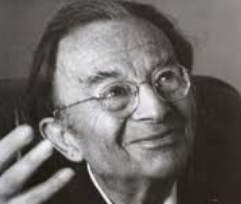
In spite of the universalistic spirit of the monotheistic Western religions and of the progressive political concepts that are expressed in the idea "that all men are created equal," love for mankind has not become a common experience. Love for mankind is looked upon as an achievement which, at best, follows love for an individual or as an abstract concept to be realized only in the future. But love for man cannot be separated from love for one individual. To love one person productively means to be related to his human core, to him as representing mankind. Love for one individual, in so far as it is divorced from love for man, can refer only to the superficial and to the accidental; of necessity it remains shallow.
▼
Source
source
Ch. 2
1 week 3 days ago
But greatly his most important culture he had gathered - and this, too, by his own endeavors - from the better part of the district, the religious men; to whom, as to the most excellent, his own nature gradually attached and attracted him. He was religious with the consent of his whole faculties. Without religion he would have been nothing.
3 months 2 weeks ago
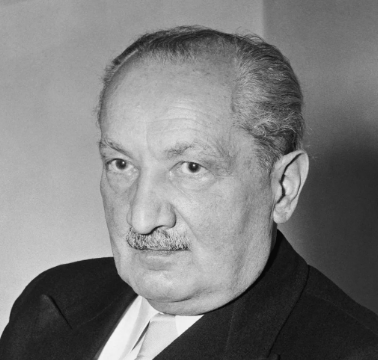
Transcendence constitutes selfhood.
▼
Source
source
Essence of Ground


2 months 5 days ago
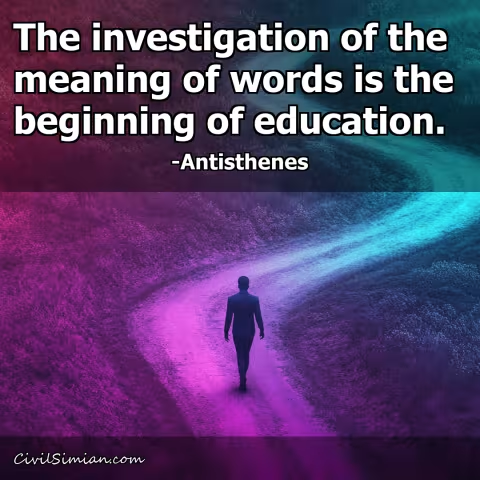
The thought of being under absolute compulsion, the plaything of another, is unendurable for a human being. Hence, if every way of escape from the constraint is taken from him, there is nothing left for him to do but to persuade himself that he does the things he is forced to do willingly, that is to say, to substitute devotion for obedience. ... It is by this twist that slavery debases the soul: this devotion is in fact based on a lie, since the reasons for it cannot bear investigation. ... Moreover, the master is deceived too by the fallacy of devotion.
▼
Source
source
p. 142

3 months 3 weeks ago
The Theophilanthropists believe in the existence of God, and the immortality of the soul.
▼
Source
source
Introduction
2 months 1 week ago
Scientific truth is characterized by its exactness and the certainty of its predictions. But these admirable qualities are contrived by science at the cost of remaining on a plane of secondary problems. leaving intact the ultimate and decisive questions. ... Yet science is but a small part of the human mind and organism. Where it stops, man does not stop.
▼
Source
source
p. 13

3 months ago
Time is the wisest of all things that are; for it brings everything to light.
▼
Source
source
As quoted in Diogenes Laërtius, The Lives and Opinions of Eminent Philosophers, I, 35

3 months 2 weeks ago
I work quite diligently and wish that I were better and smarter. And these both are one and the same.
▼
Source
source
In a letter to Paul Engelmann (1917) as quoted in The Idea of Justice (2010) by Amartya Sen, p. 31
2 months 2 weeks ago
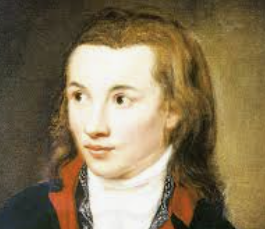
Blood will stream over Europe until the nations become aware of the frightful madness which drives them in circles. And then, struck by celestial music and made gentle, they approach their former altars all together, hear about the works of peace, and hold a great celebration of peace with fervent tears before the smoking altars.
▼
Source
source
As quoted in the Fourth Leaflet of the White Rose
3 months 3 weeks ago
Men will not understand ... that when they fulfil their duties to men, they fulfil thereby God's commandments; that they are consequently always in the service of God, as long as their actions are moral, and that it is absolutely impossible to serve God otherwise.
▼
Source
source
As quoted in German Thought, From The Seven Years' War To Goethe's Death : Six Lectures (1880) by Karl Hillebrand, p. 207
2 months 6 days ago
Progress usually comes from the barbarian, and there is nothing more stagnant than the philosophy of the philosophers and the theology of the theologians.

3 months 2 weeks ago
When you live alone you no longer know what it is to tell a story: the plausible disappears at the same time as the friends. You let events flow by too: you suddenly see people appear who speak and then go away; you plunge into stories of which you can't make head or tail: you'd make a terrible witness.
▼
Source
source
Diary entry of Tuesday, 30 January
3 months 2 weeks ago
We have two bits of evidence about the Somebody. One is the universe He has made. If we used that as our only clue, I think we should have to conclude that He was a great artist (for the universe is a very beautiful place), but also that He is quite merciless and no friend to man (for the universe is a very dangerous and terrifying place.) ...The other bit of evidence is that Moral Law which He has put in our minds. And this is a better bit of evidence than the other, because it is inside information. You find out more about God from the Moral Law than from the universe in general just as you find out more about a man by listening to his conversation than by looking at a house he has built.
▼
Source
source
Book I, Chapter 5, "We Have Cause to Be Uneasy"
3 months 2 weeks ago
I heartily accept the motto, "That government is best which governs least"; and I should like to see it acted up to more rapidly and systematically. Carried out, it finally amounts to this, which also I believe - "That government is best which governs not at all"; and when men are prepared for it, that will be the kind of government which they will have.
2 months 1 week ago
I am he that liveth, and was dead; and, behold, I am alive for evermore, Amen; and have the keys of hell and of death. Write the things which thou hast seen, and the things which are, and the things which shall be hereafter.
▼
Source
source
Revelation 1:18-19

1 month 2 weeks ago
Science has adapted itself entirely to the wealthy classes and accordingly has set itself to heal those who can afford everything, and it prescribes the same methods for those who have nothing to spare.
2 months 3 weeks ago
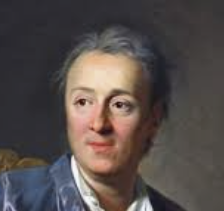
If you want me to believe in God, you must make me touch him.
▼
Source
source
as quoted in Diderot and the Encyclopædists (1897) by John Morley, p. 92.
1 month 2 weeks ago
Casting my perils before swains.

3 months 3 weeks ago
Let us not flutter too high, but remain by the manger and the swaddling clothes of Christ, in whom dwelleth all the fulness of the Godhead bodily.
▼
Source
source
50
1 month 1 week ago
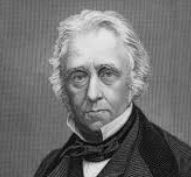
I hold agitation to be essential, not only to the obtaining of good and just measures, but to the existence of a free Government itself. If you choose to adopt the principle of Bishop Horsley, that the people have nothing to do with the laws but to obey them, then, indeed, you may deprecate agitation; but, while we live in a free country, and under a free Government, your deprecation is vain and untenable... I say that the slave-trade would never have been abolished without agitation. I say that slavery would never have been abolished without agitation... What is agitation when it is examined, but the mode in which the people in the great outer assembly debate?
▼
Source
source
Speech in the House of Commons, 29 January 1840
CivilSimian.com created by AxiomaticPanic, CivilSimian, Kalokagathia