

4 months 6 days ago
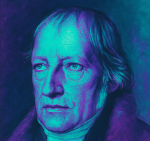
The great thing however is, in the show of the temporal and the transient to recognize the substance which is immanent and the eternal which is present. For the work of Reason (which is synonymous with the Idea) when considered in its own actuality, is to simultaneously enter external existence and emerge with an infinite wealth of forms, phenomena and phases - a multiplicity that envelops its essential rational kernel with a motley outer rind with which our ordinary consciousness is earliest at home. It is this rind that the Concept must penetrate before Reason can find its own inward pulse and feel it still beating even in the outward phases. But this infinite variety of circumstances which is formed in this element of externality by the light of the rational essence shining in it - all this infinite material, with its regulatory laws - is not the object of philosophy....To comprehend what is, is the task of philosophy: and what is is Reason.
▼
Source
source
Works, VII, 17.

4 months 5 days ago
Each man is a hero and an oracle to somebody.
▼
Source
source
Quotation and Originality

3 months 6 days ago
It's easier for a Russian to become an atheist than for anyone else in the world.
▼
Source
source
Part 4, Chapter 7

2 weeks 6 days ago
Some of the wisest of men have in consequence of this called anger a short madness: for it is equally devoid of self control, regardless of decorum, forgetful of kinship, obstinately engrossed in whatever it begins to do, deaf to reason and advice, excited by trifling causes, awkward at perceiving what is true and just, and very like a falling rock which breaks itself to pieces upon the very thing which it crushes.

2 months 4 weeks ago
You are the salt of the earth; but if the salt loses its flavor, how shall it be seasoned? It is then good for nothing but to be thrown out and trampled underfoot by men. You are the light of the world. A city that is set on a hill cannot be hidden. Nor do they light a lamp and put it under a basket, but on a lampstand, and it gives light to all who are in the house. Let your light so shine before men, that they may see your good works and glorify your Father in heaven.
▼
Source
source
Matthew 5:13-16 (NIV) (See also: Mark 9:50; Luke 14:34, 35)
2 months 3 weeks ago
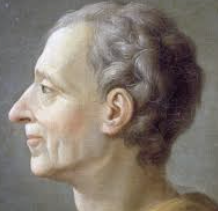
Oh, how empty is praise when it reflects back to its origin!
▼
Source
source
No. 50. (Rica writing to * * *)
2 weeks 2 days ago
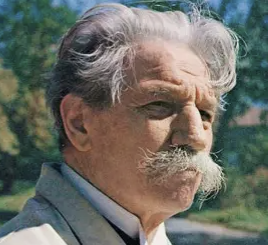
There are two great fundamental problems common to all thought: (i) the problem of world- and life-affirmation and world- and life-negation, and (2) the problem of ethics and the relations between ethics and these two forms of man's spiritual attitude to Being.
▼
Source
source
Preface, p. vii

4 months 5 days ago
We inherit the warlike type; and for most of the capacities of heroism that the human race is full of we have to thank this cruel history. Dead men tell no tales, and if there were any tribes of other type than this they have left no survivors. Our ancestors have bred pugnacity into our bone and marrow, and thousands of years of peace won't breed it out of us. The popular imagination fairly fattens on the thought of wars. Let public opinion once reach a certain fighting pitch, and no ruler can withstand it. In the Boer war both governments began with bluff, but they couldn't stay there; the military tension was too much for them.

4 months 4 days ago
But you must see that if two things are alike, then it is a further question whether the first is copied from the second, or the second from the first, or both from a third.''What would the third be?''Some have thought that all these loves were copies of our love for the Landlord.'
▼
Source
source
Pilgrim's Regress 59

4 months 1 week ago
We must not attach knowledge to the mind, we have to incorporate it there.
▼
Source
source
Ch. 25

3 months 1 week ago
We attest that He is the Willer of all things that are, the ruler of all originated phenomena; there does not come into the visible or invisible world anything meager or plenteous, small or great, good or evil, or any advantage or disadvantage, belief or unbelief, knowledge or ignorance, success or failure, increase or decrease, obedience or disobedience, except by His will. What He wills is, and what He does not, will not; there is not a glance of the eye, nor a stray thought of the heart that is not subject to His will. He is the Creator, the Restorer, the Doer of whatsoever He wills. There is none that rescinds His command, none that supplements His decrees, none that dissuades a servant from disobeying Him, except by His help and mercy, and none has power to obey Him except by His will.
▼
Source
source
Ihyaa 'Ulum al-Deen. Beirut: Dar Ibn Hazm (2005), p. 107.
1 month 4 weeks ago
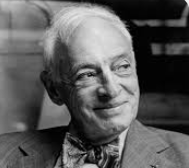
Human beings can lose their lives in libraries. They ought to be warned.
▼
Source
source
Him with His Foot in His Mouth, from Him with His Foot in His Mouth and Other Stories (1984) [Penguin Classics, 1998, ISBN 0-141-18023-4], p. 11

4 months 6 days ago
Next to enjoying ourselves, the next greatest pleasure consists in preventing others from enjoying themselves, or, more generally, in the acquisition of power.
▼
Source
source
Ch. 10: Recrudescence of Puritanism
4 months 4 days ago
There have been men before ... who got so interested in proving the existence of God that they came to care nothing for God himself... as if the good Lord had nothing to do but to exist. There have been some who were so preoccupied with spreading Christianity that they never gave a thought to Christ.
▼
Source
source
Ch. 9
2 weeks 6 days ago
By Hercules, the state would have sustained a great loss if you had not brought him forth from the oblivion to which his two splendid qualities, eloquence and independence, had consigned him: he is now read, is popular, is received into men's hands and bosoms, and fears no old age: but as for those who butchered him, before long men will cease to speak even of their crimes, the only things by which they are remembered.
3 months 1 week ago
Everything that makes diversity of kinds, of species, differences, properties... everything that consists in generation, decay, alteration and change is not an entity, but a condition and circumstance of entity and being, which is one, infinite, immobile, subject, matter, life, death, truth, lies, good and evil.
3 months 5 days ago
To prove cannot mean anything other than to bring the other person to my own conviction. The truth lies only in the unification of "I" and "You." The Other of pure thought, however, is the sensuous intellect in general. In the field of philosophy, proof therefore consists only in the fact that the contradiction between sensuous intellect and pure thought is disposed, so that thought is true not only for itself but also for its opposite.
▼
Source
source
Z. Hanfi, trans., in The Fiery Brook (1972), p. 75

3 months 6 days ago
It is the function of a judge not to make but to declare the law, according to the golden mete-wand of the law and not by the crooked cord of discretion.
▼
Source
source
Preface to Brissot's Address
3 months 6 days ago
If there is to be any philosophy at all, this contradiction must be resolved - and the solution of this problem, or answer to the question: how can we think both of Presentations as conforming to objects, and objects as conforming to presentations? is, not the first, but the highest task of transcendental philosophy.
2 days ago
We are faced with the curiously appalling trend of modern thought, in which the absolute which was once a means of entering into communion with the divine, has now become an instrument used by those who profit from it, to distort, pervert, and conceal the meaning of the present.
2 months 3 weeks ago
Man is a substantial emigrant on a pilgrimage of being, and it is accordingly meaningless to set limits to what he is capable of being.
▼
Source
source
"Man has no nature"
4 months 1 week ago
Man has his own inclinations and a natural will which, in his actions, by means of his free choice, he follows and directs. There can be nothing more dreadful than that the actions of one man should be subject to the will of another; hence no abhorrence can be more natural than that which a man has for slavery. And it is for this reason that a child cries and becomes embittered when he must do what others wish, when no one has taken the trouble to make it agreeable to him. He wants to be a man soon, so that he can do as he himself likes.
▼
Source
source
Part III : Selection on Education from Kant's other Writings, Ch. I Pedagogical Fragments, # 62

2 months 5 days ago
Now about your family. Do you know that since your daughter came out everyone has been enraptured by her? They say she is amazingly beautiful.
▼
Source
source
Bk. I, Ch. I
5 days ago
When the possessions and households of citizens are no longer honored by the acts, as well as the principles, of their government, then the concentration camp ceases to be one of the possibilities of human nature and becomes one of its likelihoods.
▼
Source
source
The Landscaping of Hell : Strip-Mine Morality
2 months 2 weeks ago
Most of the propositions that make up the body of administrative theory today share, unfortunately, this defect of proverbs. For almost every principle one can find an equally plausible and acceptable contradictory principle.
▼
Source
source
Simon, Herbert A. "The proverbs of administration." Public Administration Review 6.1 (1946): 53-67.
4 months 1 week ago
That which is good for the enemy harms you, and that which is good for you harms the enemy.
▼
Source
source
Rule 1 from Machiavelli's Lord Fabrizio Colonna: libro settimo (Book 7) (Modern Italian uses nemico instead of nimico.)
1 month 1 week ago
Human knowledge increases, while human irrationality stays the same. Scientific inquiry may be an embodiment of reason, but what such inquiry demonstrates is that humans are not rational animals. The fact that humanists refuse to accept the demonstration only confirms its truth.
▼
Source
source
An Old Chaos: Humanism and Flying Saucers (p. 81)

2 months 3 days ago
When we put our central nervous system outside us we returned to the primal nomadic state.
4 weeks 1 day ago
The mathematician is born, not made.

2 months 3 weeks ago
It is not only in literature that fiction generates immorality. It does it also in life itself. For the substance of our life is almost exclusively composed of fiction. We fictionalize our future, and, unless we are heroically devoted to truth, we fictionalize our past, refashioning it to our taste. We do not study other people; we invent what they are thinking, saying, and doing. Reality provides us with some raw material, just as novelists often take a theme from a news item, but we envelop it in a fog in which, as in all fiction, values are reversed, so that evil is attractive and good is tedious.
▼
Source
source
"Morality and literature," pp. 161-162

4 months 6 days ago
Through the emancipation of private property from the community, the State has become a separate entity, beside and outside civil society; but is it nothing more than the form of organization which the bourgeois necessarily adopt both for internal and external purposes, for the mutual guarantee of their property and interests.
▼
Source
source
Part One The Marx-Engels Reader, p. 187
3 months 2 days ago
When animus and anima meet, the animus draws his sword of power and the anima ejects her poison of illusion and seduction. The outcome need not always be negative, since the two are equally likely to fall in love (a special instance of love at first sight).
▼
Source
source
Aion (1951). CW 9, Part II: P.338.30
4 months 1 day ago
Enjoyment of the work consists in participation in the creative state of the artist.
▼
Source
source
p. 117

4 months 1 week ago
The Union was a measure from which infinite Good has been derived to this country.
▼
Source
source
Letter to William Strahan (4 April 1760), quoted in Adam Smith, The Correspondence of Adam Smith, eds. E. C. Mossner and I. S. Ross (1987), p. 68
2 months 3 weeks ago
I am normally said to be free to the degree to which no man or body of men interferes with my activity. Political liberty in this sense is simply the area within which a man can act unobstructed by others. If I am prevented by others from doing what I could otherwise do, I am to that degree unfree; and if this area is contracted by other men beyond a certain minimum, I can be described as being coerced, or, it may be, enslaved. Coercion is not, however, a term that covers every form of inability. If I say that I am unable to jump more than ten feet in the air, or cannot read because I am blind, or cannot understand the darker pages of Hegel, it would be eccentric to say that I am to that degree enslaved or coerced. Coercion implies the deliberate interference of other human beings within the area in which I could otherwise act.
3 months 1 week ago
That there is no such thing as what philosophers call material substance, I am seriously persuaded: but if I were made to see any thing absurd or skeptical in this, I should then have the same reason to renounce this, that I imagine I have now to reject the contrary opinion.
▼
Source
source
Philonous to Hylas

3 months 5 days ago
We have a priori reasons for believing that in every sentence there is some one order of words more effective than any other; and that this order is the one which presents the elements of the proposition in the succession in which they may be most readily put together.
▼
Source
source
Pt. I, sec. 3, "The Principle of Economy Applied to Sentences"
2 months 2 weeks ago
Needless to say, I am not opposed to woman suffrage on the conventional ground that she is not equal to it. I see neither physical, psychological, nor mental reasons why woman should not have the equal right to vote with man. But that can not possibly blind me to the absurd notion that woman will accomplish that wherein man has failed. If she would not make things worse, she certainly could not make them better. To assume, therefore, that she would succeed in purifying something which is not susceptible of purification, is to credit her with supernatural powers. Since woman's greatest misfortune has been that she was looked upon as either angel or devil, her true salvation lies in being placed on earth; namely, in being considered human, and therefore subject to all human follies and mistakes. Are we, then, to believe that two errors will make a right? Are we to assume that the poison already inherent in politics will be decreased, if women were to enter the political arena?
1 month 1 week ago
No doubt markets transmit information in the way that Hayek claimed. But what reason is there to believe that - unlike any other social institution - they have a built-in capacity to correct their mistakes? History hardly supports the supposition. Moods of irrational exuberance and panic can, and often do, swamp the price-discovery functions of markets.
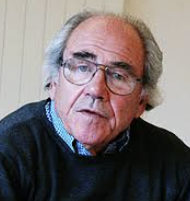
2 months 1 week ago
Those who used to sacrifice animals did not take them for beasts. And even the Middle Ages, which condemned and punished them in due form, was in this way much closer to them than we are, we who are filled with horror at this practice. They held them to be guilty: which was a way of honoring them. We take them for nothing, and it is on this basis that we are "human" with them. We no longer sacrifice them, we no longer punish them, and we are proud of it, but it is simply that we have domesticated them, worse: that we have made of them a racially inferior world, no longer even worthy of our justice, but only of our affection and social charity, no longer worthy of punishment and of death, but only of experimentation and extermination like meat from the butchery.
▼
Source
source
"The Animals: Territory and Metamorphoses," pp. 134-135
4 months 2 weeks ago
The sun, which passeth through pollutions and itself remains as pure as before.
2 months 2 weeks ago
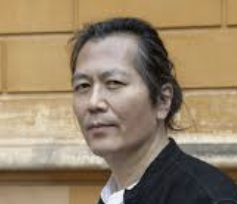
Enlightenment is an awakening to the everyday.
4 months 1 week ago
A man may be humble through vainglory.
▼
Source
source
Ch. 17
2 months 2 weeks ago
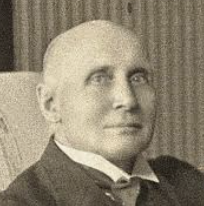
The English never abolish anything. They put it in cold storage.
▼
Source
source
Ch. 36, January 19, 1945.

3 months 1 day ago
Everything is nothing, including the consciousness of nothing.

4 months 2 weeks ago
There is nothing I congratulate myself on more heartily than on never having joined a sect.
▼
Source
source
As quoted in Thomas More and Erasmus (1965) by Ernest Edwin Reynolds, p. 248 [citation needed]
2 days ago
It is satisfaction to a man to do the proper works of a man.
▼
Source
source
VIII, 26
1 month ago
There is in our souls some native seed of reason, which, if nourished by good counsel and training, flowers into virtue, but which, on the other hand, if unable to resist the vices surrounding it, is stifled and blighted.
▼
Source
source
Part 2
2 months 3 weeks ago
In this initial illimitableness of possibilities that characterizes one who has no nature there stands out only one fixed, pre-established, and given line by which he may chart his course, only one limit: the past.
▼
Source
source
"Man has no nature"
4 months 5 days ago
Man exists for his own sake and not to add a laborer to the state.
▼
Source
source
November 15, 1839
CivilSimian.com created by AxiomaticPanic, CivilSimian, Kalokagathia