


1 week 1 day ago
He maintained this attitude up to the very end, and no man ever saw Socrates too much elated or too much depressed. Amid all the disturbance of Fortune, he was undisturbed.
1 month 2 weeks ago
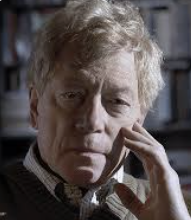
Conservatives have, on the whole, accepted nationality as a sphere of local duties and loyalties, defining an inheritance and a community that has a right to pass on its values from generation to generation. The nation may indeed be the best that we now have, by way of a society linking the dead to the unborn, in the manner extolled by Burke. And for this very reason it arouses the hostility of liberals, who are constantly searching for a place outside loyalty and obedience, from which all human claims can be judged. Hence, in the conflicts of our times, while conservatives leap to the defense of the nation and its interests, wishing to maintain its integrity and to enforce its law, liberals advocate transnational initiatives, international courts, and doctrines of universal rights, all of which, they believe, should stand in judgment over the nation and hold it to account.
▼
Source
source
"The Limits of Liberty," The American Spectator

2 months 3 weeks ago
But as to our country and our race, as long as the well compacted structure of our church and state, the sanctuary, the holy of holies of that ancient law, defended by reverence, defended by power, a fortress at once and a temple, shall stand inviolate on the brow of the British Sion-as long as the British Monarchy, not more limited than fenced by the orders of the State, shall, like the proud Keep of Windsor, rising in the majesty of proportion, and girt with the double belt of its kindred and coeval towers, as long as this awful structure shall oversee and guard the subjected land-so long as the mounds and dykes of the low, fat, Bedford level will have nothing to fear from all the pickaxes of all the levellers of France.
▼
Source
source
pp. 52-53
1 month 3 weeks ago
We often attribute "understanding" and other cognitive predicates by metaphor and analogy to cars, adding machines, and other artifacts, but nothing is proved by such attributions.
2 weeks ago
Only when they must choose between competing theories do scientists behave like philosophers.
▼
Source
source
Logic of Discovery or Psychology of Research?, Criticism and the growth of knowledge edited by Imre Lakatos and Alan Musgrave
2 months 3 weeks ago
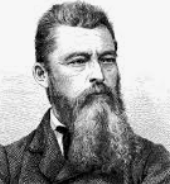
To prove cannot mean anything other than to bring the other person to my own conviction. The truth lies only in the unification of "I" and "You." The Other of pure thought, however, is the sensuous intellect in general. In the field of philosophy, proof therefore consists only in the fact that the contradiction between sensuous intellect and pure thought is disposed, so that thought is true not only for itself but also for its opposite.
▼
Source
source
Z. Hanfi, trans., in The Fiery Brook (1972), p. 75

2 months 2 weeks ago
Foxes have their dens and birds have their nests, but human beings have no place to lay down and rest.

4 months 1 week ago
Anything done against faith or conscience is sinful.
▼
Source
source
Commentary on Romans, cap 14, I 3

2 months 1 week ago
The emptiness of Zen Buddhism... creates a neighborly nearness between things.

2 months 2 weeks ago
Pursued by our origins...we all are.
3 months 3 weeks ago
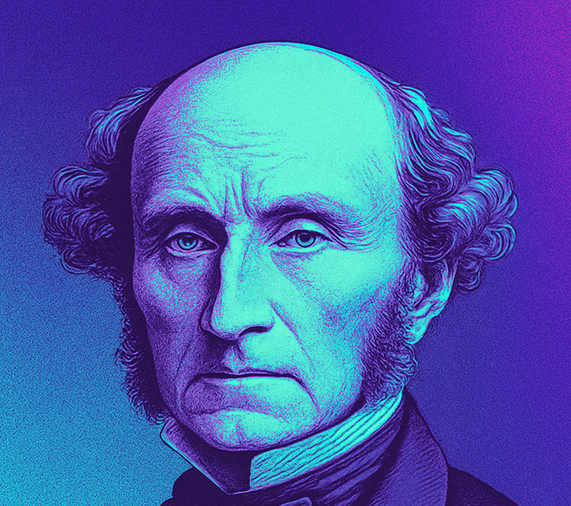
There are but few points in which the English, as a people, are entitled to the moral pre-eminence with which they are accustomed to compliment themselves at the expense of other nations: but, of these points, perhaps the one of greatest importance is, that the higher classes do not lie, and the lower, though mostly habitual liars, are ashamed of lying. To run any risk of weakening this feeling, a difficult one to create, or, when once gone, to restore, would be a permanent evil too great to be incurred for so very temporary a benefit as the ballot would confer, even on the most exaggerated estimate necessity.
▼
Source
source
Thoughts on Parliamentary Reform (1859), pp. 48-49
1 month 1 week ago
The way out of this violent cycle is to deepen democracy-to bring decisions that directly affect people's lives as close as possible to where people are and to where they can take responsibility.
4 months 2 weeks ago
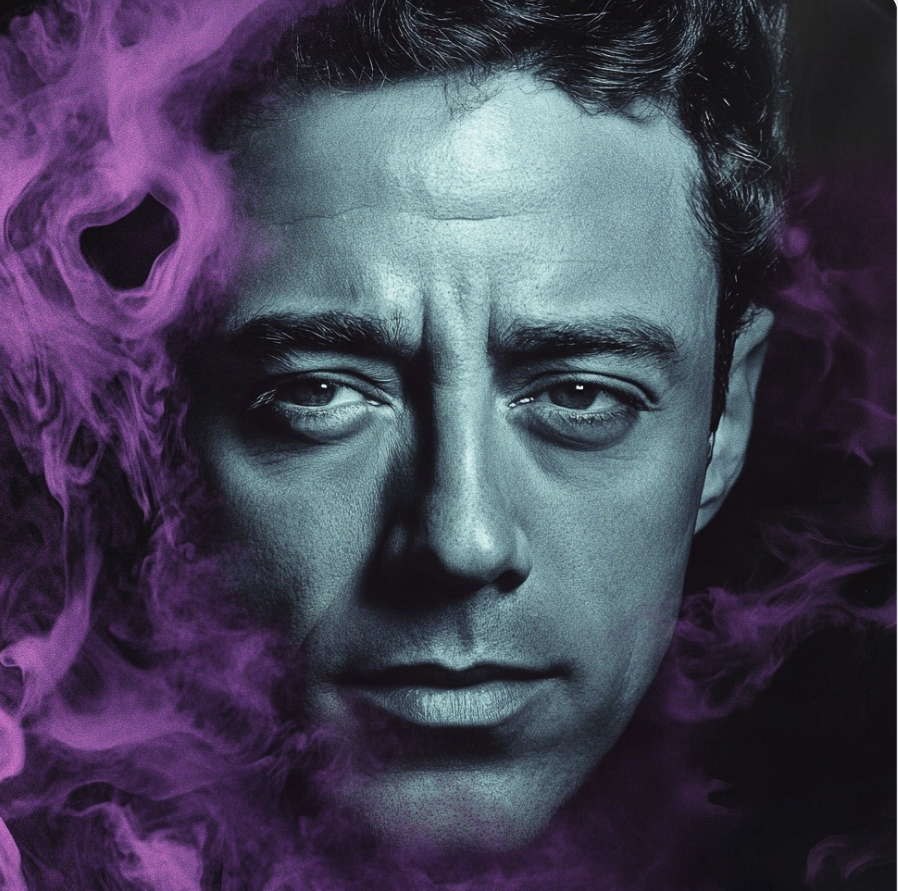
With the exception of professional rationalists, today people despair of true knowledge. If the only significant history of human thought were to be written, it would have to be history of its successive regrets and impotences.
2 months 3 weeks ago
The division of Philosopher and Poet is only apparent, and to the disadvantage of both. It is a sign of disease, and of a sickly constitution.

3 months 5 days ago
That which exercises reason is more excellent than that which does not exercise reason; there is nothing more excellent than the universe, therefore the universe exercises reason.
▼
Source
source
As quoted in De Natura Deorum by Cicero, ii. 8.; iii. 9.
2 months 3 weeks ago
Difficulty is a severe instructor, set over us by the supreme ordinance of a parental Guardian and Legislator, who knows us better than we know ourselves, as he loves us better too. Pater ipse colendi haud facilem esse viam voluit. He that wrestles with us strengthens our nerves, and sharpens our skill. Our antagonist is our helper.
▼
Source
source
Volume iii, p. 453

2 weeks 1 day ago
Consider how, even in the meanest sorts of Labour, the whole soul of a man is composed into a kind of real harmony, the instant he sets himself to work! Doubt, Desire, Sorrow, Remorse, Indignation, Despair itself, all these like helldogs lie beleaguering the soul of the poor dayworker, as of every man: but he bends himself with free valour against his task, and all these are stilled, all these shrink murmuring far off into their caves. The man is now a man. The blessed glow of Labour in him, is it not as purifying fire, wherein all poison is burnt up, and of sour smoke itself there is made bright blessed flame!
2 months 2 weeks ago
So we are always esthetically disappointed when the sensuous qualities and the intellectual properties of an object do not coalesce.
▼
Source
source
p. 7
2 weeks 2 days ago
The destructive work of totalitarian machinery, whether or not this word is used, is usually supported by a special kind of primitive social philosophy. It proclaims not only that the common good of 'society' has priority over the interests of individuals, but that the very existence of individuals as persons is reducible to the existence of the social 'whole'; in other words, personal existence is, in a strange sense, unreal. This is a convenient foundation for any ideology of slavery.
▼
Source
source
"Totalitarianism and the Virtue of the Lie", as quoted in Is God Happy? Selected Essays (2013), Basic Books, p. 57

1 month 3 weeks ago
The ways of thinking implanted by electronic culture are very different from those fostered by print culture. Since the Renaissance most methods and procedures have strongly tended towards stress on the visual organization of knowledge.

2 months 3 weeks ago
Every cause produces more than one effect.
▼
Source
source
On Progress: Its Law and Cause
2 months 2 weeks ago
A word is a bud attempting to become a twig. How can one not dream while writing? It is the pen which dreams. The blank page gives the right to dream.
▼
Source
source
Introduction, sect. 6
2 months 1 week ago
No particular experiences are linked with any particular statements in the interior of the field, except indirectly through considerations of equilibrium affecting the field as a whole.
▼
Source
source
"Two Dogmas of Empiricism"
1 week 1 day ago
Ah, you flavour everything; you are the vanilla of society.
▼
Source
source
Vol. I, ch. 9, p. 312
2 months 2 weeks ago
This fighting-shy of every obligation partly explains the phenomenon, half ridiculous, half disgraceful, Of the setting-up in our days of the platform of "youth" as youth. ... In comic fashion people call themselves "young," because they have heard that youth has more rights than obligations, since it can put off the fulfilment of these latter to the Greek Kalends of maturity. ...[T]he astounding thing at present is that these take it as an effective right precisely in order to claim for themselves all those other rights which only belong to the man who has already done something.
▼
Source
source
Chapter XV: We Arrive At The Real Question

2 months 1 week ago
There is a certain kind of morality which is even more alien to good and evil than amorality is.
▼
Source
source
"The responsibility of writers," p. 169
2 months 3 weeks ago
All those instances to be found in history, whether real or fabulous, of a doubtful public spirit, at which morality is perplexed, reason is staggered, and from which affrighted Nature recoils, are their chosen and almost sole examples for the instruction of their youth.
▼
Source
source
No. 1, volume v, p. 286
1 month 2 weeks ago
Evidence is the only good reason to believe anything.
▼
Source
source
Interview shown in AlJazeera ,
4 months 1 week ago
Before you embark on a journey of revenge, dig two graves.

3 months 1 week ago
The enmity of one's kindred is far more bitter than the enmity of strangers.
2 months 2 weeks ago
I don't understand how people can believe in God, even when I myself think of him everyday.
2 months 2 weeks ago
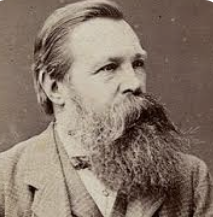
The bourgeoisie has gained a monopoly of all means of existence in the broadest sense of the word. What the proletarian needs, he can obtain only from this bourgeoisie, which is protected in its monopoly by the power of the state. The proletarian is, therefore, in law and in fact, the slave of the bourgeoisie, which can decree his life or death.
▼
Source
source
p. 112
2 weeks 4 days ago
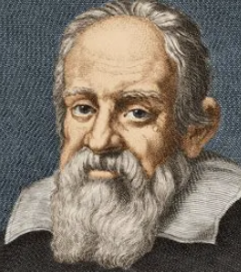
After the publication of my dialogues, I was summoned to Rome by the Congregation of the holy Office, where, being arrived on the 10th of February 1633, I was subjected to the infinite clemency of that tribunal, and of the Sovereign Pontiff, Urban the Eighth; who, notwithstanding, thought me deserving of his esteem.
▼
Source
source
pp. 145-146
1 month 3 weeks ago
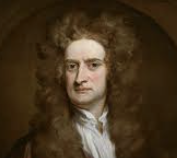
Yet sometimes vegetables and animals are, by certain epithets or circumstances, extended to other significations; as a Tree, when called the tree of life or of knowledge; and a Beast, when called the old serpent, or worshiped. When a Beast or Man is put for a kingdom, his parts and qualities are put for the analogous parts and qualities of the kingdom; as the head of a Beast, for the great men who precede and govern; the tail for the inferior people, who follow and are governed; the heads, if more than one, for the number of capital parts, or dynasties, or dominions in the kingdom, whether collateral or successive, with respect to the civil government; the horns on any head, for the number of kingdoms in that head, with respect to military power...
▼
Source
source
Vol. I, Ch. 2: Of the Prophetic Language
1 month 2 weeks ago
Maybe somewhere in some other galaxy there is a super-intelligence so colossal that from our point of view it would be a god. But it cannot have been the sort of God that we need to explain the origin of the universe, because it cannot have been there that early.
3 months 3 weeks ago
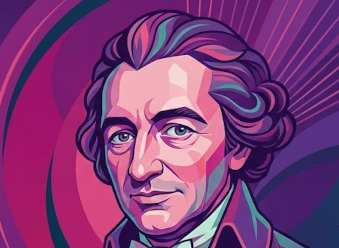
With what consistency, or decency they complain so loudly of attempts to enslave them, while they hold so many hundred thousands in slavery; and annually enslave many thousands more, without any pretence of authority, or claim upon them?

4 months 1 week ago
Violence and injury enclose in their net all that do such things, and generally return upon him who began.
▼
Source
source
Book V, lines 1152-1153 (tr. Rouse)
4 months 1 day ago
So blind is the curiosity by which mortals are possessed, that they often conduct their minds along unexplored routes, having no reason to hope for success, but merely being willing to risk the experiment of finding whether the truth they seek lies there.
▼
Source
source
Rules for the Direction of the Mind: IV

3 months 3 weeks ago
The Hindoos are most serenely and thoughtfully religious than the Hebrews. They have perhaps a purer, more independent and impersonal knowledge of God. Their religious books describe the first inquisitive and contemplative access to God; the Hebrew bible a conscientious return, a grosser and more personal repentance. Repentance is not a free and fair highway to God. A wise man will dispense with repentance. It is shocking and passionate. God prefers that you approach him thoughtful, not penitent, though you are chief of sinners. It is only by forgetting yourself that you draw near to him. The calmness and gentleness with which the Hindoo philosophers approach and discourse on forbidden themes is admirable. In 1853.
▼
Source
source
A Tribute to Hinduism, 2008
4 months 3 weeks ago
Thus every action must be due to one or other of seven causes: chance, nature, compulsion, habit, reasoning, anger, or appetite.
2 months 2 weeks ago
Where love rules, there is no will to power; and where power predominates, there love is lacking. The one is the shadow of the other.
▼
Source
source
P. 97
3 months 2 weeks ago
The aspects of things that are most important for us are hidden because of their simplicity and familiarity. (One is unable to notice something - because it is always before one's eyes.) The real foundations of his enquiry do not strike a man at all. Unless that fact has at some time struck him. - And this means: we fail to be struck by what, once seen, is most striking and most powerful.
▼
Source
source
§ 129

4 months 3 weeks ago
Outside intelligences, exploring the Solar System with true impartiality, would be quite likely to enter the Sun in their records thus: Star X, spectral class G0, 4 planets plus debris.
3 months 2 weeks ago
One can say that the author is an ideological product, since we represent him as the opposite of his historically real function. (When a historically given function is represented in a figure that inverts it, one has an ideological production.) The author is therefore the ideological figure by which one marks the manner in which we fear the proliferation of meaning.
▼
Source
source
What is an author?

4 months 1 week ago
Moderation, in the pursuit of honors or riches, is the only security against disappointment and vexation. A wise man, therefore, will prefer the simplicity of rustic life to the magnificence of courts.

3 months 1 week ago
For this, to draw a right line from every point, to every point, follows the definition, which says, that a line is the flux of a point, and a right line an indeclinable and inflexible flow.
▼
Source
source
Book III. Concerning Petitions and Axioms.
2 months 3 days ago
Cultivate that kind of knowledge which enables us to discover for ourselves in case of need that which others have to read or be told of.
▼
Source
source
D 89
2 months 1 week ago
Power is more 'spacious' than violence. And violence becomes power if it 'gives itself more time.' Looked at from this perspective, power rests on an excess of space and time.
4 months 3 weeks ago
Between God and man there is and remains an eternal, essential, qualitative difference. The paradoxical relationship (which, quite rightly, cannot be thought, but only believed) appears when God appoints a particular man to divine authority, in relation, be it carefully noted, to that which has entrusted to him.

3 months 3 weeks ago
One who believes, as I do, that the free intellect is the chief engine of human progress, cannot but be fundamentally opposed to Bolshevism, as much as to the Church of Rome.
▼
Source
source
Part I, Ch. 9: International Policy
CivilSimian.com created by AxiomaticPanic, CivilSimian, Kalokagathia