


2 months 3 weeks ago
The greatest height of heroism to which an individual, like a people, can attain is to know how to face ridicule; better still, to know how to make oneself ridiculous and not to shrink from the ridicule.

4 months 4 days ago
There are many kinds of gods. Therefore there are many kinds of men.
▼
Source
source
"One and Many," p. 3
3 months 4 weeks ago
You must always be puzzled by mental illness. The thing I would dread most, if I became mentally ill, would be your adopting a common sense attitude; that you could take it for granted that I was deluded.
▼
Source
source
Conversation of 1947 or 1948
3 weeks 5 days ago
In the past you rivalled the Achaians and the Macedonians, peoples of your own race, and Philip, their commander, for the hegemony and glory, but now that the freedom of the Hellenes is at stake at a war against an alien people (Romans), ...And does it worth to ally with the barbarians, to take the field with them against the Epeirotans, the Achaians, the Akarnanians, the Boiotians, the Thessalians, in fact with almost all the Hellenes with the exception of the Aitolians who are a wicked nation... ...So Lakedaimonians it is good to remember your ancestors,... be afraid of the Romans... and do ally yourselves with the Achaians and Macedonians. But if some the most powerful citizens are opposed to this policy at least stay neutral and do not side with the unjust.
▼
Source
source
Histories, IX, 37:7-39:7 (Loeb)

3 months ago
Jean Paul calls the most important night of his life the one when he discovered there was no difference between dying the next day or in thirty years. A revelation as significant as it is futile; if we occasionally manage to grasp its cogency, we resist on the other hand drawing its consequences, in immediacy the difference in question seeming to each of us somehow irreducible, even absolute: to exist is to prove that we have not understood to what point it is all one and the same thing to die now or no matter when.

3 months 4 days ago
That chastity of honour which felt a stain like a wound.
▼
Source
source
Volume iii, p. 332
2 months 3 weeks ago
No man's error becomes his own Law; nor obliges him to persist in it.
▼
Source
source
The Second Part, Chapter 26, p. 144
1 month 3 weeks ago
National loyalty is founded in the love of place, of the customs and traditions that have been inscribed in the landscape and of the desire to protect these good things through a common law and a common loyalty.
1 month 1 week ago
The belief that there is some hidden cabal directing the course of events is a type of anthropomorphism - a way of finding agency in the entropy of history.
▼
Source
source
In the Puppet Theatre: Puppetry, Conspiracy and Ouija Boards (p. 133)
2 months 3 weeks ago
Consciousness (conscientia) is participated knowledge, is co-feeling, and co-feeling is com-passion. Love personalizes all that it loves. Only by personalizing it can we fall in love with an idea. And when love is so great and so vital, so strong and so overflowing, that it loves everything, then it personalizes everything and discovers that the total All, that the Universe, is also a person possessing a Consciousness, a Consciousness which in its turn suffers, pities, and loves, and therefore is consciousness. And this Consciousness of the Universe, which a love, personalizing all that it loves, discovers, is what we call God.

2 months 2 weeks ago
The progress of human knowledge depends on maintaining that touch of scepticism even about the most "unquestionable" truths. A century ago, Darwin's theory of evolution by natural selection was regarded as scientifically unshakeable; today, most biologists have their reservations about it. Fifty years ago, Freud's sexual theory of neurosis was accepted by most psychiatrists; today, it is widely recognized that his methods were highly questionable. At the turn of this century, a scientist who questioned Newton's theory of gravity would have been regarded as insane; twenty years later, it had been supplanted by Einstein's theory, although, significantly, few people actually understood it. It seems perfectly conceivable that our descendants of the twenty-second century will wonder how any of us could have been stupid enough to have been taken in by Darwin, Freud or Einstein.
▼
Source
source
p. 4
5 months 4 days ago
The natural way of doing this [seeking scientific knowledge or explanation of fact] is to start from the things which are more knowable and obvious to us and proceed towards those which are clearer and more knowable by nature; for the same things are not 'knowable relatively to us' and 'knowable' without qualification. So in the present inquiry we must follow this method and advance from what is more obscure by nature, but clearer to us, towards what is more clear and more knowable by nature. Now what is to us plain and obvious at first is rather confused masses, the elements and principles of which became known to us by later analysis...

4 months 1 week ago
If the whole of natural theology, as some people seem to maintain, resolves itself into one simple, though somewhat ambiguous, at least undefined proposition, that the cause or causes of order in the universe probably bear some remote analogy to human intelligence: If this proposition be not capable of extension, variation, or more particular explication: If it affords no inference that affects human life, or can be the source of any action or forbearance: And if the analogy, imperfect as it is, can be carried no farther than to the human intelligence, and cannot be transferred, with any appearance of probability, to the other qualities of the mind; if this really be the case, what can the most inquisitive, contemplative, and religious man do more than give a plain, philosophical assent to the proposition, as often as it occurs, and believe that the arguments on which it is established exceed the objections which lie against it?
▼
Source
source
Philo to Cleanthes, Part XII


3 months 1 week ago
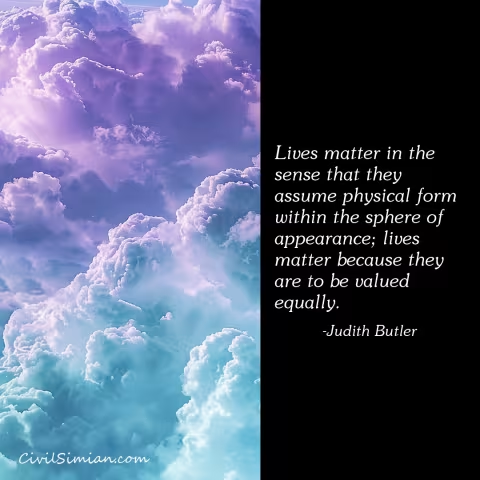
There is surely a piece of Divinity within us, something that was before the Elements, and owes no homage unto the Sun.
▼
Source
source
Section 11
2 months 2 weeks ago
Today's fashion magazines may carry an article about the dangers of anorexia while bombarding its readers with images of emaciated young bodies representing the height of beauty and desirability.
▼
Source
source
As quoted in Feminism is for Everybody: Passionate Politics (2014), p.34

4 months 3 days ago
It is not the same thing. You are perhaps not lying, but you are not telling the truth.
▼
Source
source
Act 1

3 weeks 4 days ago
It is a greatness not of mere body and gigantic bulk, but a rude greatness of soul. There is a sublime uncomplaining melancholy traceable in these old hearts. A great free glance into the very deeps of thought. They seem to have seen, these brave old Northmen, what Meditation has taught all men in all ages, That this world is after all but a show,-a phenomenon or appearance, no real thing. All deep souls see into that,-the Hindoo Mythologist, the German Philosopher,-the Shakspeare, the earnest Thinker, wherever he may be.
3 months ago
At different degrees, everything is pathology, except for indifference.
4 months 1 week ago
Freedom is the alone unoriginated birthright of man, and belongs to him by force of his humanity; and is independence on the will and co-action of every other in so far as this consists with every other person's freedom.
▼
Source
source
Immanuel Kant, The Metaphysics of Ethics by Immanuel Kant, trans. J.W. Semple, ed. with Iintroduction by Rev. Henry Calderwood (Edinburgh: T. & T. Clark, 1886) (3rd edition). Chapter: GENERAL DIVISION OF JURISPRUDENCE.
4 days ago
Never put off till tomorrow what you can do to-day.

4 months 4 days ago
A circuit performed by a capital and meant to be a periodical process, not an individual act, is called its turnover. The duration of this turnover is determined by the sum of its time of production and its time of circulation.
▼
Source
source
Volume II, Ch. VII, p. 158.
3 days ago
There are, in the Palætiological Sciences, two antagonist doctrines: 'Catastrophes' and 'Uniformity'. The doctrine of a 'uniform course of nature' is tenable only when we extend the notion of uniformity so far that it shall include catastrophes.
1 day ago
Soon you'll be ashes or bones. A mere name at most-and even that is just a sound, an echo. The things we want in life are empty, stale, trivial.
▼
Source
source
V. 33, trans. Gregory Hays
4 days ago
I subdue matter and force it to become my mind's good medium. I rejoice in plants, in animals, in man and in gods, as though they were my children. I feel all the universe nestling about me and following me as though it were my own body.
3 weeks 4 days ago
Not the external and physical alone is now managed by machinery, but the internal and spiritual also. Here too nothing follows its spontaneous course, nothing is left to be accomplished by old natural methods. Everything has its cunningly devised implements, its preestablished apparatus; it is not done by hand, but by machinery.
1 day ago
But true good fortune is what you make for yourself. Good fortune: good character, good intentions, and good actions.
▼
Source
source
(Hays translation) V, 37

4 months 3 days ago
I am not asking anyone to accept Christianity if his best reasoning tells him that the weight of the evidence is against it.
▼
Source
source
Book III, Chapter 11, "Faith"
4 months 4 days ago
An intellectual is a person who has discovered something more interesting than sex.
▼
Source
source
As quoted without citation in Discovering Evolutionary Ecology: Bringing Together Ecology And Evolution (2006) by Peter J. Mayhew, p. 24
4 months 3 days ago
There are infinitely many variations of the initial situation and therefore no doubt indefinitely many theorems of moral geometry.
▼
Source
source
Chapter III, Section 21, pg. 126
5 months 1 day ago
Now any dogma, based primarily on faith and emotionalism, is a dangerous weapon to use on others, since it is almost impossible to guarantee that the weapon will never be turned on the user.
2 months 2 weeks ago
The heart, oddly enough, seems to be the essential organ concerned. When we are in a hurry or doing something we dislike, we clench the heart, exactly like clenching a fist, and nothing can get in. When we are filled with a sense of multiplicity and excitement we somehow 'open' the heart and allow reality to flow in. But in that state we only need to entertain the shadow of some unpleasant thought for it to close again. And human beings are so naturally prone to mistrust that it is hard to maintain the openness for very long. Children on the other hand find it easy to slip into states of wonder and delight when the heart finally opens so wide that the whole world seems magical. the 'trick' of the peak experience lies in this ability to relax out of our usual defensive posture and to 'open the heart'.
▼
Source
source
p. 360

4 months 4 days ago
Communism differs from all previous movements in that it overturns the basis of all earlier relations of production and intercourse, and for the first time consciously treats all natural premises as the creatures of hitherto existing men, strips them of their natural character and subjugates them to the power of the united individuals. Its organisation is, therefore, essentially economic, the material production of the conditions of this unity; it turns existing conditions into conditions of unity. The reality, which communism is creating, is precisely the true basis for rendering it impossible that anything should exist independently of individuals, insofar as reality is only a product of the preceding intercourse of individuals themselves.
▼
Source
source
Vol. I, Part 4.
3 months 4 weeks ago
An entire mythology is stored within our language.
▼
Source
source
Ch. 7 : Remarks on Frazer's Golden Bough, p. 133
3 months 3 weeks ago
The animals themselves are incapable of demanding their own liberation, or of protesting against their condition with votes, demonstrations, or boycotts. Human beings have the power to continue to oppress other species forever, or until we make this planet unsuitable for living beings. Will our tyranny continue, proving that morality counts for nothing when it clashes with selfinterest, as the most cynical of poets and philosophers have always said? Or will we rise to the challenge and prove our capacity for genuine altruism by ending our ruthless exploitation of the species in our power, not because we are forced to do so by rebels or terrorists, but because we recognize that our position is morally indefensible? The way in which we answer this question depends on the way in which each one of us, individually, answers it.
▼
Source
source
Ch. 6: Speciesism Today

4 months 4 days ago
It is easy to live for others; everybody does. I call on you to live for yourselves.
▼
Source
source
May 3, 1845

3 months 1 day ago
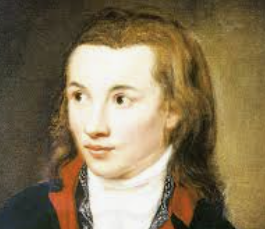
Plants are Children of the Earth; we are Children of the Æther. Our Lungs are properly our Root; we live, when we breathe; we begin our life with breathing.
3 months 4 weeks ago
Nevertheless, among all the temptations I will have to resist today. There would be the temptation of memory: to recount what was for me, and for those of my generation who shared it during a whole lifetime. The experience of Marxism. The quasi-paternal figure of Marx, the way it fought in us with other filiations, the reading of texts and the interpretation of a world in which the Marxist inheritance was-and still remains, and so it will remain-absolutely and thoroughly determinate. One need not be a Marxist or a communist in order to accept this obvious fact. We all live in a world, some would say a culture, that still bears, at an incalculable depth, the mark of this inheritance, whether in a directly visible fashion or not.
▼
Source
source
Injunctions of Marx
4 months 5 days ago
The beginning of religion, more precisely its content, is the concept of religion itself, that God is the absolute truth, the truth of all things, and subjectively that religion alone is the absolutely true knowledge.
1 month 3 weeks ago
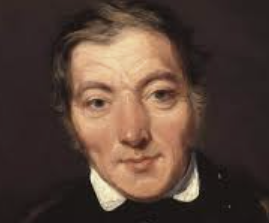
Man is the creature of circumstances.
▼
Source
source
"The Philanthropist"
2 months 3 weeks ago
It is necessary to insist upon this extraordinary but undeniable fact: experimental science has progressed thanks in great part to the work of men astoundingly mediocre, and even less than mediocre. That is to say, modern science, the root and symbol of our actual civilization, finds a place for the intellectually commonplace man and allows him to work therein with success.
▼
Source
source
Chapter XII: The Barbarism Of "Specialisation"
1 month 1 week ago
To affirm that humans thrive in many different ways is not to deny that there are universal human values. Nor is it to reject the claim that there should be universal human rights. It is to deny that universal values can only be fully realized in a universal regime. Human rights can be respected in a variety of regimes, liberal and otherwise. Universal human rights are not an ideal constitution for a single regime throughout the world, but a set of minimum standards for peaceful coexistence among regimes that will always remain different.
▼
Source
source
Two Faces of Liberalism (New Press, 2000, ISBN 0-745-62259-3. 168 pages), ch. 1: Liberal Toleration (p. 21)

4 months 3 weeks ago
He who is not satisfied with a little, is satisfied with nothing.

2 weeks 5 days ago
Impurity is caused by attitude, not events.
▼
Source
source
(trans. Emily Wilson)
1 day ago
When thou art offended at any man's fault, forthwith turn to thyself and reflect in what manner thou doest error thyself... For by attending to this thou wilt quickly forget thy anger, if this consideration is also added, that the man is compelled; for what else could he do? or, if thou art able, take away from him the compulsion.
▼
Source
source
X, 30

4 months 5 days ago
Science seems to be at war with itself.... Naive realism leads to physics, and physics, if true, shows naive realism to be false. Therefore naive realism, if true, is false; therefore it is false.
▼
Source
source
An Inquiry into Meaning and Truth (1940), Introduction, p. 15

4 months 5 days ago
We see in tragedy the noblest men, after a long conflict and suffering, finally renounce forever all the pleasure of life and the aims till then pursued so keenly, or cheerfully and willingly give up life itself.
▼
Source
source
Book 1
3 months ago
The surest means of not losing your mind on the spot: remembering that everything is unreal, and will remain so...
CivilSimian.com created by AxiomaticPanic, CivilSimian, Kalokagathia