


2 months 2 weeks ago
The moment we believe we've understood everything grants us the look of a murderer.

3 months 3 weeks ago
Days of absence,
sad and dreary,
Clothed in sorrow's dark array,
Days of absence, I am weary: She I love is far away.
▼
Source
source
Day of Absence, reported in Bartlett's Familiar Quotations, 10th ed. (1919).

1 month 2 weeks ago
It's misleading to suppose there's any basic difference between education & entertainment. This distinction merely relieves people of the responsibility of looking into the matter.
▼
Source
source
(1957) from "Classroom Without Walls", Explorations Vol. 7, 1957; reprinted in Explorations in Communication ed. E. Carpenter & M. McLuhan, (Boston: Beacon, 1960); and again in McLuhan: Hot and Cool ed. G. E. Stearn (NY: Dial, 1967).

3 months 3 weeks ago
It might otherwise appear paradoxical that money can be replaced by worthless paper; but that the slightest alloying of its metallic content depreciates it.
▼
Source
source
Notebook VII, The Chapter on Capital, p. 734.
3 months 1 week ago
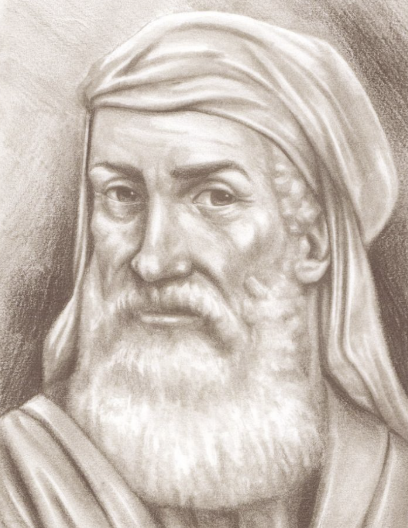
But, when the elements have been mingled in the fashion of a man and come to the light of day, or in the fashion of the race of wild beasts or plants or birds, then men say that these come into being; and when they are separated, they call that woeful death. They call it not aright; but I too follow the custom, and call it so myself.
▼
Source
source
fr. 9 As quoted by John Burnet, Early Greek philosophy (1908) p. 240
6 days ago
You have the courage to tell the masses what no politician told them: you are inferior and all the improvements in your conditions which you simply take for granted you owe to the effort of men who are better than you. If this be arrogance, as some of your critics observed, it is still the truth that had to said in the age of the Welfare State.
▼
Source
source
Mises' letter to Ayn Rand praising Atlas Shrugged,(23 January 1958), quoted in Mises: The Last Knight of Liberalism (2007).

3 months 2 days ago
Love is a God, who cooperates in securing the safety of the city.
▼
Source
source
As quoted in Deipnosophists by Athenaeus, xiii. 561c.

3 months 2 weeks ago
I call this Divine humility because it is a poor thing to strike our colours to God when the ship is going down under us; a poor thing to come to Him as a last resort, to offer up "our own" when it is no longer worth keeping. If God were proud He would hardly have us on such terms: but He is not proud, He stoops to conquer, He will have us even though we have shown that we prefer everything else to Him, and come to Him because there is "nothing better" now to be had.
3 months 3 weeks ago
The life of God - the life which the mind apprehends and enjoys as it rises to the absolute unity of all things - may be described as a play of love with itself; but this idea sinks to an edifying truism, or even to a platitude, when it does not embrace in it the earnestness, the pain, the patience, and labor, involved in the negative aspect of things.
▼
Source
source
§ 19

1 week 4 days ago
On the whole, ought I not to rejoice that God was pleased to give me such a father; that from earliest years I had the example of a real man of God's own making continually before me? Let me learn of him. Let me write my books as he built his houses, and walk as blamelessly through this shadow world; if God so will, to rejoin him at last. Amen.

2 months 1 week ago
And here, facing this supreme religious sacrifice, we reach the summit of the tragedy, the very heart of it - the sacrifice of our own individual consciousness upon the alter of the perfected Human Consciousness, of the Divine Consciousness. But is there really a tragedy? ...if we could succeed in understanding and feeling that we were going to enrich Christ, should we hesitate for a moment in surrendering ourselves to Him? Would the stream that flows into the sea, and feels in the freshness of its waters the bitterness of the salt of the ocean, wish to flow back to its source? would it wish to return to the cloud which drew it life from the sea? is it not joy to feel itself absorbed?

3 months 4 days ago
There are two sides to every question.
▼
Source
source
As quoted in Lives of Eminent Philosophers, by Diogenes Laërtius, Book IX, Sec. 51
1 month 2 weeks ago
The "tragic flaw" is not a detail of characterization, a mere "fly in the ointment", but a structural feature of ordinary consciousness.
▼
Source
source
(p.45)

2 months 3 weeks ago
It is better to be unhappy and know the worst, than to be happy in a fool's paradise!
▼
Source
source
Part 4, Chapter 5
2 months 1 week ago
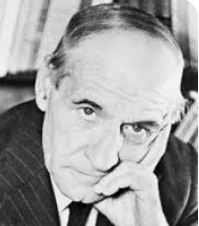
The demagogues, impresarios of alteracion, who have already caused the death of several civilizations, harass men so that they shall not reflect, see to it that they are kept herded together in crowds so that they cannot reconstruct their individuality in the one place where it can be reconstructed, which is in solitude.
▼
Source
source
p. 33

3 months 3 weeks ago
To this I answer: That force is to be opposed to nothing, but to unjust and unlawful force. Whoever makes any opposition in any other case, draws on himself a just condemnation, both from God and man...
▼
Source
source
Second Treatise of Government, Ch. XVIII, sec. 204
1 day ago
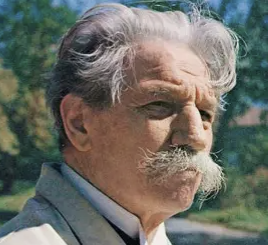
Indian thought has greatly attracted me since in my youth I first became acquainted with it through reading the works of Arthur Schopenhauer. From the very beginning I was convinced that all thought is really concerned with the great problem of how man can attain to spiritual union with infinite Being. My attention was drawn to Indian thought because it is busied with this problem and because by its nature it is mysticism. What I liked about it also was that Indian ethics are concerned with the behaviour of man to all living beings and not merely with his attitude to his fellow-man and to human society.
▼
Source
source
Preface, p. vi
2 months 1 week ago
And the soul, my soul at least, longs for something else, not absorption, not quietude, not peace, not appeasement, it longs ever to approach and never to arrive, it longs for the never-ending longing, for an eternal hope which is eternally renewed but never wholly fulfilled. And together with all this, it longs for an eternal lack of something and an eternal suffering. A suffering, a pain, thanks to which it grows without ceasing in consciousness and longing. Do not write upon the gate of heaven that sentence which Dante placed over the threshold of hell, Lasciate ogni speranza! [Lasciate ogne speranza, voi ch'intrate: All hope abandon, ye who enter in] Do not destroy time!
2 months 2 weeks ago
The poor maidservant who used to say that she only believed in God when she had a toothache puts all theologians to shame.

3 months 3 weeks ago
Instinctively we divide mankind into friends and foes - friends, towards whom we have the morality of co-operation; foes, towards whom we have that of competition. But this division is constantly changing; at one moment a man hates his business competitor, at another, when both are threatened by Socialism or by an external enemy, he suddenly begins to view him as a brother. Always when we pass beyond the limits of the family it is the external enemy which supplies the cohesive force. In times of safety we can afford to hate our neighbour, but in times of danger we must love him.
▼
Source
source
Authority and the Individual, 1949
2 months 1 week ago
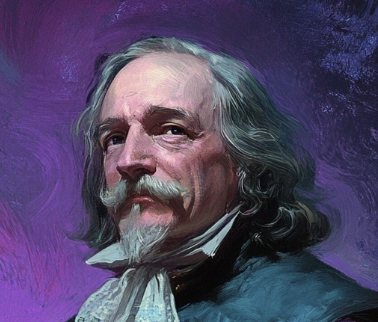
If this superstitious fear of Spirits were taken away, and with it, Prognostiques from Dreams, false Prophecies, and many other things depending thereon, by which, crafty ambitious persons abuse the simple people, men would be much more fitted then they are for civill Obedience.
▼
Source
source
The First Part, Chapter 2, p. 8

4 months 2 weeks ago
People are entirely too disbelieving of coincidence. They are far too ready to dismiss it and to build arcane structures of extremely rickety substance in order to avoid it. I, on the other hand, see coincidence everywhere as an inevitable consequence of the laws of probability, according to which having no unusual coincidence is far more unusual than any coincidence could possibly be.
2 months 2 weeks ago
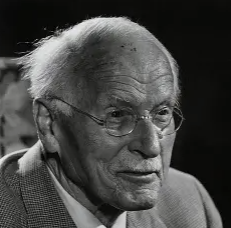
Whereas logic and objectivity are usually the predominant features of a man's outer attitude, or are at least regarded as ideals, in the case of a woman it is feeling. But in the soul it is the other way round: inwardly it is the man who feels, and the woman who reflects. Hence a man's greater liability to total despair, while a woman can always find comfort and hope; accordingly a man is more likely to put an end to himself than a woman. However much a victim of social circumstances a woman may be, as a prostitute for instance, a man is no less a victim of impulses from the unconscious, taking the form of alcoholism and other vices.
▼
Source
source
Psychological Types (1921). CW 6. P.805

2 months 3 weeks ago
The First thing that strikes a traveler in the United States is the innumerable multitude of those who seek to emerge from their original condition; and the second is the rarity of lofty ambition to be observed in the midst of the universally ambitious stir of society. No Americans are devoid of a yearning desire to rise, but hardly any appear to entertain hopes of great magnitude or to pursue very lofty aims. All are constantly seeking to acquire property, power, and reputation.
▼
Source
source
Book Three, Chapter XIX.

2 months 2 weeks ago
Till society is very differently constituted, parents, I fear, will still insist on being obeyed, because they will be obeyed, and constantly endeavour to settle that power on a Divine right, which will not bear the investigation of reason.
▼
Source
source
Ch. 11

3 months 2 weeks ago
Marxism exists in nineteenth-century thought as a fish exists in water; that is, it ceases to breathe anywhere else.
▼
Source
source
As quoted by David Macey, The lives of Michel Foucault (1993) p. 177. Citing 'Les Intellectuels et le Pouvoir', Le'Arc 49, 1972, pp. 3-10.
1 month 3 days ago
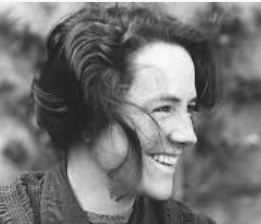
Only in growth, reform, and change, paradoxically enough, is true security to be found.
▼
Source
source
The Wave of the Future

1 month 3 weeks ago
To every action there is always opposed an equal reaction; or, the mutual actions of two bodies upon each other are always equal, and directed to contrary parts.
▼
Source
source
Laws of Motion, III


2 months 1 week ago
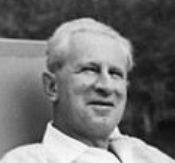
A whole dimension of human activity and passivity has been de-eroticized. The environment from which the individual could obtain pleasure-which he could cathect as gratifying almost as an extended zone of the body-has been rigidly reduced. Consequently, the "universe" of libidinous cathexis is likewise reduced. The effect is a localization and contraction of libido, the reduction of erotic to sexual experience and satisfaction.
▼
Source
source
p. 73

4 months 3 weeks ago
The question is asked in ignorance, by one who does not even know what can have led him to ask it.

3 months 4 weeks ago
There is no wish more natural than the wish to know.
▼
Source
source
Ch. 13

3 months 2 weeks ago
Kierkegaard was by far the most profound thinker of the last century. Kierkegaard was a saint.
▼
Source
source
As quoted in "Wittgenstein and Kierkegaard on the ethico-religious" by Roe Fremstedal in Ideas in History Vol. 1

4 months 2 weeks ago
Such was the vast power which the god settled in the lost island of Atlantis; and this he afterwards directed against our land for the following reasons, as tradition tells: For many generations, as long as the divine nature lasted in them, they were obedient to the laws, and well-affectioned towards the god, whose seed they were; for they possessed true and in every way great spirits, uniting gentleness with wisdom in the various chances of life, and in their intercourse with one another.
2 months 2 weeks ago
History shows that the thinkers who mounted on the top of the ladder of questions, who set their foot on the last rung, that of the absurd, have bequeathed to posterity only an example of sterility.

3 months 2 weeks ago
So much of our time is spent in preparation, so much in routine and so much in retrospect, that the amount of each person's genius is confined to a very few hours.
▼
Source
source
Quoted in Simon Brown (ed.) The New England Farmer, vol. 9 (January 1857) p. 18

5 days ago
Alexander, king of Macedon, began to study geometry; unhappy man, because he would thereby learn how puny was that earth of which he had seized but a fraction! Unhappy man, I repeat, because he was bound to understand that he was bearing a false title. For who can be "great" in that which is puny?
2 months 1 week ago
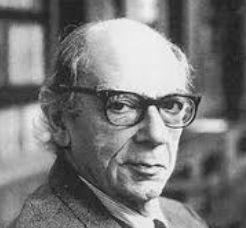
If, as I believe, the ends of men are many, and not all of them are in principle compatible with each other, then the possibility of conflict - and of tragedy - can never wholly be eliminated from human life, either personal or social. The necessity of choosing between absolute claims is then an inescapable characteristic of the human condition. This gives its value to freedom as Acton conceived of it - as an end in itself, and not as a temporary need, arising out of our confused notions and irrational and disordered lives, a predicament which a panacea could one day put right.
2 months 2 weeks ago
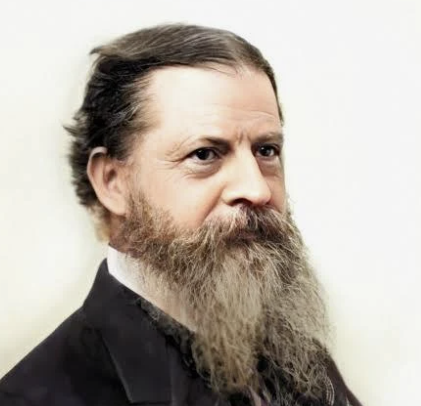
Second, by this and other means we are driven to perceive, what is quite evident in itself, that instantaneous feelings flow together in a continuum of feeling, which has in a modified degree the peculiar vivacity of feeling and has gained generality. And in reference to such general ideas, or continua of feeling, the difficulties about resemblance and suggestion and reference to the external, cease to have any force.
3 months 1 week ago
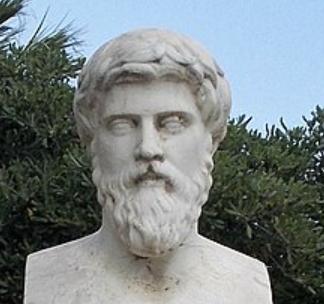
Socrates thought that if all our misfortunes were laid in one common heap, whence every one must take an equal portion, most persons would be contented to take their own and depart.
3 months 4 weeks ago
Tis the sharpness of our mind that gives the edge to our pains and pleasures.
▼
Source
source
Book I, Ch. 14
2 months 2 weeks ago
The first character of a general idea so resulting is that it is living feeling. A continuum of this feeling, infinitesimal in duration, but still embracing innumerable parts, and also, though infinitesimal, entirely unlimited, is immediately present. And in its absence of boundedness a vague possibility of more than is present is directly felt.

3 months 3 weeks ago
He who seeks equality between unequals seeks an absurdity.
▼
Source
source
Ch. 9, Of Aristocracy, Continuation
2 weeks 2 days ago
Marriage and dependent children are a trap for the people! Morality carefully hides this distressing truth from us because it knows no remedy for the evil. But I , who bring a remedy must not dissimulate the woes from fathers, and I must not dissimulate from society its radical vice of pushing seven-eighths of all families into evil practices through poverty.

3 months 4 weeks ago
I feel that the entire spiritual life consists in this: That we gradually turn from those things whose appearance is deceptive to those things that are real.
▼
Source
source
p. 63

3 months 3 weeks ago
The tolls for the maintenance of a high road, cannot with any safety be made the property of private persons.
▼
Source
source
Chapter I, Part III, Article I, p. 786 (See also.. Public-private partnerships).
5 days ago
As our acts and our thoughts are, so will our lives be.
3 months 2 weeks ago
Uttering a word is like striking a note on the keyboard of the imagination.
▼
Source
source
§ 6

3 months 3 weeks ago
Money is the password, and all doors, which are closed to the man of lesser means, fly open to those whom Plutus favors. The invention of money, which has no other usefulness (or at least it should not have any) except for the commercial exchange of the products of man's industry, now serves all that is physically good among men. Especially after money was represented by metal, it has produced avarice which, finally, without indulgence, but by its mere possession, and even with the resolution (of the stingy) not to spend it, still contains a power which people believe can sufficiently compensate for the lack of any other power.
▼
Source
source
Kant, Immanuel (1996), pages 181-182
CivilSimian.com created by AxiomaticPanic, CivilSimian, Kalokagathia