

1 month 2 weeks ago
There is but one art, to omit.
▼
Source
source
As cited in The Harper Book of Quotations, Revised Edition (1993), Ed. R. Fitzhenry, HarperCollins, p. 498 : ISBN 0062732137, 9780062732132
3 months 2 weeks ago
I believe that political power also exercises itself through the mediation of a certain number of institutions that seem to have nothing in common with political power, that have the appearance of being independent, but are not.
▼
Source
source
Debate with Noam Chomsky, École Supérieure de Technologie à Eindhoven, November 1971

1 month 2 weeks ago
The sculptural qualities of the image dim down the purely personal identity.
▼
Source
source
(p. 369)

2 months 3 days ago
Yet it must be acknowledged that there is a fundamental difference between the sexual impulse in men and women. Her need is for a lover, a protector, a father for her children. His desire is for mastery, conquest, to be allowed to use her body for his own satisfaction. He feels like a bee, burying itself in a flower, apparently doing nothing for the flower but taking its sweetness. If he loves her, then his desire is mixed with a kind of pity.

2 months 2 weeks ago
What place do we occupy in the "universe"? A point, if that! Why reproach ourselves when we are evidently so insignificant? Once we make this observation, we grow calm at once: henceforth, no more bother, no more frenzy, metaphysical or otherwise. And then that point dilates, swells, substitutes itself for space. And everything begins all over again.
Just now
Proletarian violence, carried on as a pure and simple manifestation of the sentiment of class struggle, appears thus as a very fine and heroic thing; it is at the service of the immemorial interests of civilization; it is not perhaps the most appropriate method of obtaining immediate material advantages, but it may save the world from barbarism.
▼
Source
source
p. 85
2 months 2 weeks ago
It is the destiny of our race to become united into one great body, thoroughly connected in all its parts, and possessed of similar culture. Nature, and even the passions and vices of Man, have from the beginning tended towards this end. A great part of the way towards it is already passed, and we may surely calculate that it will in time be reached.
▼
Source
source
Jane Sinnett, trans 1846 p. 88
1 month 6 days ago
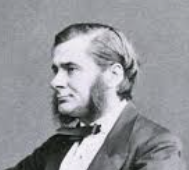
Identical in the physical processes by which he originates-identical in the early stages of his formation-identical in the mode of his nutrition before and after birth, with the animals which lie immediately below him in the scale-Man, if his adult and perfect structure be compared with theirs, exhibits, as might be expected, a marvellous likeness of organization. He resembles them as they resemble one another-he differs from them as they differ from one another.-And, though these differences and resemblances cannot be weighed and measured, their value may be readily estimated; the scale or standard of judgment, touching that value, being afforded and expressed by the system of classification of animals now current among zoologists.
▼
Source
source
Ch.2, p. 83

2 months 3 weeks ago
I am a sick man... I am a wicked man. An unattractive man.
▼
Source
source
Part 1, Chapter 1
1 month ago
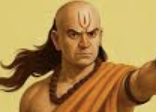
Skills are called hidden treasure as they save like a mother in a foreign country.
2 months 2 weeks ago
What an incitation to hilarity, hearing the word goal while following a funeral procession!
3 months 1 week ago
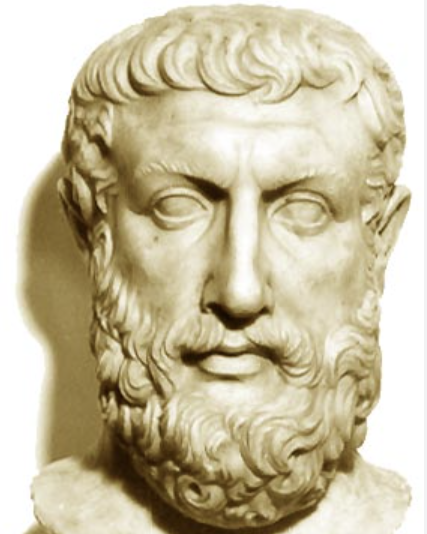
You must learn all things, both the unshaken heart of persuasive truth, and the opinions of mortals in which there is no true warranty.
▼
Source
source
Frag B 1.28-30, quoted by Sextus Empiricus, Against the Mathematicians, vii. 3
Just now
Mussolini is not an ordinary socialist. You will perhaps see him one day as a leader of a consecrated battalion, saluting the flags of Italy with his sword. He is an Italian of the fifteenth century, a condottiere. He is the only man with the strength to correct the weakness of the government.
▼
Source
source
As quoted in The Genesis of Georges Sorel, James H. Meisel, Ann Arbor, Wahr (1951), p. 220, n.21

2 months 3 weeks ago
To keep our eyes open longer were but to set our Antipodes. The Huntsmen are up in America, and they are already past their first sleep in Persia. But who can be drowsy at that hour which freed us from everlasting sleep? or have slumbering thoughts at that time, when sleep itself must end, and as some conjecture all shall awake again?
▼
Source
source
Ch. 5

1 week 4 days ago
He who would write heroic poems should make his whole life a heroic poem.
▼
Source
source
Life of Schiller.
3 months 2 weeks ago
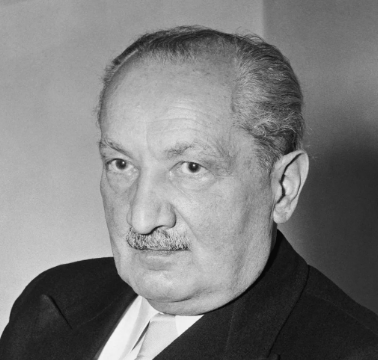
The word "art" does not designate the concept of a mere eventuality; it is a concept of rank.
▼
Source
source
p. 125
3 months 3 weeks ago
Habit... makes the endurance of evil easy (which, under the name of patience, is falsely honored as a virtue), because sensations of the same type, when continued without alteration for a long time, draw our attention away from the senses so that we are scarcely conscious of them at all. On the other hand, habit also makes the consciousness and the remembrance of good that has been received more difficult, which then gradually leads to ingratitude (a real vice). [...] Acquired habit deprives good actions of their moral value because it undermines mental freedom and, moreover, it leads to thoughtless repetitions of the same acts (monotony), and thus becomes ridiculous.
▼
Source
source
Kant, Immanuel (1996), pages 34-35
4 months 3 days ago
The mind must not be forced; artificial and constrained manners fill it with foolish presumption, through unnatural elevation and vain and ridiculous inflation, instead of solid and vigorous nutriment.
2 months 2 weeks ago
I love talking to simple people, with common folk, if you like, and I still do it and still chat now as before with anyone, regardless of intellectual level. On the contrary, I like uneducated people much better and that is obviously my Rumanian heritage.
2 months 1 week ago
In that very hour he became overjoyed in the holy spirit and said: “I publicly praise you, Father, Lord of heaven and earth, because you have carefully hidden these things from wise and intellectual ones and have revealed them to young children. Yes, O Father, because this is the way you approved.
▼
Source
source
Luke 10:21, New World Translation of the Holy Scriptures
2 months 3 days ago
An elaborated culture has a density, complexity, and historical-semantic value that is so strong as to make politics possible... Gramsci's insight is to have recognised that subordination, fracturing, diffusion, reproducing, as much as producing, creating, forcing, guiding, are necessary aspects of elaboration.
▼
Source
source
Quoted in Richard Middleton, Studying Popular Music (Philadelphia: Open University Press, 1990, ISBN 0-335-15275-9), p. 248
4 months 1 week ago
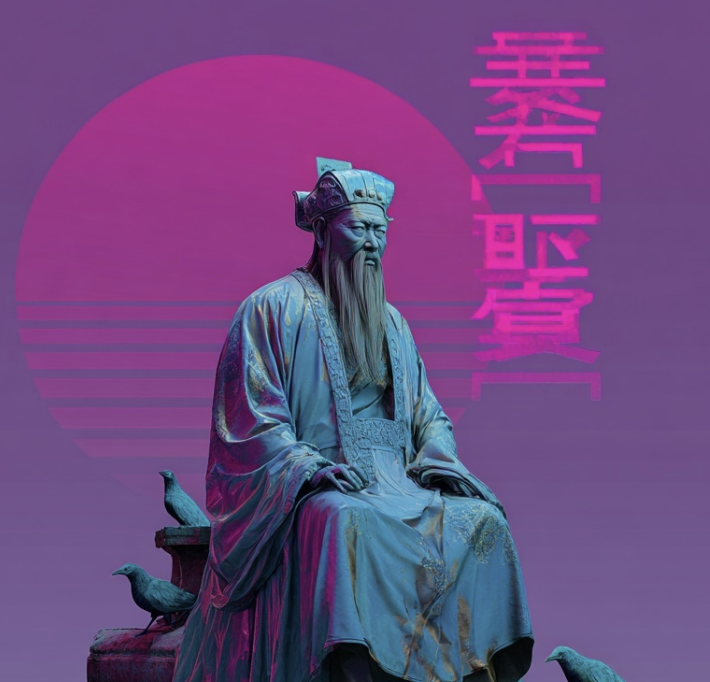
What Heaven has conferred is called The Nature; an accordance with this nature is called The Path of duty; the regulation of this path is called Instruction. The path may not be left for an instant. If it could be left, it would not be the path. On this account, the superior man does not wait till he sees things, to be cautious, nor till he hears things, to be apprehensive.
2 months 1 week ago
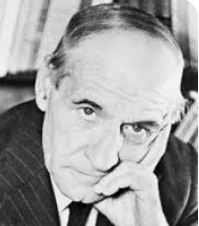
Is it not altogether absurd that, under actual circumstances, the average man does not feel spontaneously, and without being preached at, an ardent enthusiasm for those sciences and the related ones of biology?... Every day furnishes a new invention which this average man utilises. Every day produces a new anesthetic or vaccine from which this average man benefits. ... How is it, nevertheless, that there is no sign of the masses imposing on themselves any sacrifice of money or attention in order to endow science more worthily? Far from this being the case, the post-war period has converted the man of science into a new social pariah.
▼
Source
source
Chap.IX: The Primitive and the Technical
4 months 3 weeks ago
After these matters we ought perhaps next to discuss pleasure. For it is thought to be most intimately connected with our human nature, which is the reason why in educating the young we steer them by the rudders of pleasure and pain; it is thought, too, that to enjoy the things we ought and to hate the things we ought has the greatest bearing on virtue of character. For these things extend right through life, with a weight and power of their own in respect both to virtue and to the happy life, since men choose what is pleasant and avoid what is painful; and such things, it will be thought, we should least of all omit to discuss, especially since they admit of much dispute.

3 months 3 weeks ago
The universe is what it is, not what I choose that it should be.
▼
Source
source
The Value of Free Thought: How to Become a Truth-seeker and Break the Chains of Mental Slavery (1944), p. 24
2 months 2 weeks ago
What we want is not freedom but its appearances. It is for these simulacra that man has always striven. And since freedom, as has been said, is no more than a sensation, what difference is there between being free and believing ourselves free?
2 months 2 weeks ago
When we know what words are worth, the amazing thing is that we try to say anything at all, and that we manage to do so. This requires, it is true, a supernatural nerve.
1 week 4 days ago
"The people may eat grass": hasty words, which fly abroad irrevocable-and will send back tidings.
▼
Source
source
Pt. I, Bk. III, ch. 9.

3 months 3 weeks ago
The rulers of Great Britain have, for more than a century past, amused the people with the imagination that they possessed a great empire on the west side of the Atlantic. This empire, however, has hitherto existed in imagination only.
▼
Source
source
Chapter III, Part V, p. 1032 (Last Page).

3 months 2 weeks ago
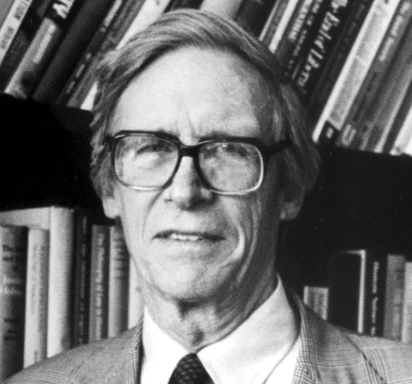
It may be expedient but it is not just that some should have less in order that others may prosper.
▼
Source
source
Chapter I, Section 3, pg. 15

3 months 2 weeks ago
To believe is to know you believe, and to know you believe is not to believe.
4 months 1 week ago
Men all say, "We are wise"; but being driven forward and taken in a net, a trap, or a pitfall, they know not how to escape. Men all say, "We are wise"; but happening to choose the course of the Mean, they are not able to keep it for a round month.
4 months 3 days ago
This right which you have, is not founded any more than his upon any quality or any merit in yourself which renders you worthy of it. Your soul and your body are, of themselves, indifferent to the state of boatman or that of duke; and there is no natural bond that attaches them to one condition rather than to another.
1 week 4 days ago
A great soul, any sincere soul, knows not what he is,-alternates between the highest height and the lowest depth; can, of all things, the least measure-Himself! What others take him for, and what he guesses that he may be; these two items strangely act on one another, help to determine one another. With all men reverently admiring him; with his own wild soul full of noble ardors and affections, of whirlwind chaotic darkness and glorious new light; a divine Universe bursting all into godlike beauty round him, and no man to whom the like ever had befallen, what could he think himself to be?
2 months 2 weeks ago
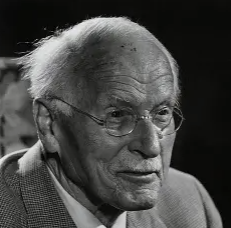
Reason alone does not suffice.
▼
Source
source
p 98
3 months 4 weeks ago
It is not titles that make men illustrious, but men who make titles illustrious.
▼
Source
source
Book 3, Ch. 38
1 month 3 days ago
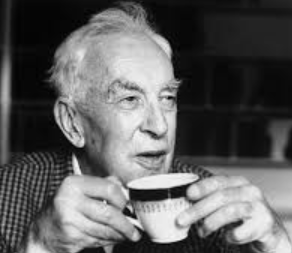
The human race's prospects of survival were considerably better when we were defenceless against tigers than they are today when we have become defenceless against ourselves.
▼
Source
source
"Man and Hunger: The Perspectives of History", Speech to the World Food Congress (4 June 1963)

2 months 5 days ago
No epoch is homogeneous; whatever you may have assigned as the dominant note of a considerable period, it will always be possible to produce men, and great men, belonging to the same time, who exhibit themselves as antagonistic to the tone of their age.
▼
Source
source
Ch. 4: "The Eighteenth Century", p. 93
2 months 6 days ago
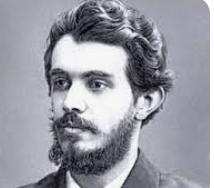
Spirit is never an object; nor a spiritual reality an objective one. In the so-called objective world there's no such nature, thing, or objective reality as spirit. Hence it is easy to deny the reality of spirit. God is spirit because he is not object, because he is subject.
▼
Source
source
p. 10
2 months 3 days ago
Those who devote themselves to rituals must ignore themselves. Rituals produce a distance from the self, a self-transcendence.
4 weeks 1 day ago
Much more seriously, in those traditional eco-systems that we chose to retain, millions of non-human animals will continue periodically to starve, die horribly of thirst and disease, or even get eaten alive. This is commonly viewed as "natural" and hence basically OK. It would indeed be comforting to think that in some sense this ongoing animal holocaust doesn't matter too much. We often find it convenient to act as though the capacity to suffer were somehow inseparably bound up with linguistic ability or ratiocinative prowess. Yet there is absolutely no evidence that this is the case, and a great deal that it isn't.
▼
Source
source
1.9 The Taste of Depravity

2 months 1 week ago
The fault with Hegel lies much deeper than in his glorification of the Prussian monarchy. He is guilty not so much of being servile as of betraying his highest philosophical ideas. His political doctrine surrenders society to nature, freedom to necessity, reason to caprice. And in so doing, it mirrors the destiny of the social order that falls, while in pursuit of its freedom, into a state of nature far below reason.
▼
Source
source
P. 218
2 months 6 days ago
Being, in whose name Heidegger's philosophy increasingly concentrates itself, is for him-as a pure self-presentation to passive consciousness-just as immediate, just as independent of the mediations of the subject as the facts and the sensory data are for the positivists. In both philosophical movements thinking becomes a necessary evil and is broadly discredited. Thinking loses its element of independence. The autonomy of reason vanishes: the part of reason that exceeds the subordinate reflection upon and adjustment to pre-given data. With it, however, goes the conception of freedom and, potentially, the self-determination of human society.
▼
Source
source
p. 9

2 months 1 week ago
It is the furious longing to give finality to the Universe, to make it conscious and personal, that has brought us to believe in God, to wish that God may exist, to create God, in a word. To create Him, yes! This saying ought not to scandalize even the most devout theist. For to believe in God is, in a certain sense, to create Him, although He first creates us. It is He who is continually creating Himself.
3 months 3 weeks ago
Righteousness cannot be born until self-righteousness is dead.
▼
Source
source
Justice in War-Time (1916), p. 192
2 months 3 weeks ago
All things are artificial, for nature is the Art of God.
▼
Source
source
Section 16

4 months 3 weeks ago
Arrogance on the part of the meritorious is even more offensive to us than the arrogance of those without merit: for merit itself is offensive.

3 months 2 weeks ago
Our condition is like that of the poor wolves: if one of the flock wound himself, or so much as limp, the rest eat him up incontinently. That serene Power interposes the check upon the caprices and officiousness of our wills.
2 months 2 weeks ago
How is it possible that the poorer classes can remain healthy and have a reasonable expectation of life under such conditions? What can one expect but that they should suffer from continual outbreaks of epidemics and an excessively low expectation of life? The physical condition of the workers shows a progressive deterioration.
CivilSimian.com created by AxiomaticPanic, CivilSimian, Kalokagathia