


3 months 2 weeks ago
The unitive knowledge of the Divine Ground has, as its necessary condition, self-abnegation and charity. Only by means of self-abnegation and charity can we clear away the evil, folly and ignorance which constitute the thing we call our personality and prevent us from becoming aware of the spark of divinity illuminating the inner man.
3 months 3 weeks ago
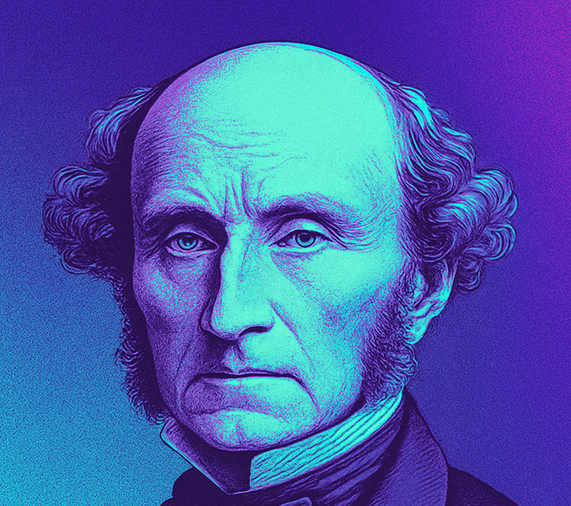
All students of man and society who possess that first requisite for so difficult a study, a due sense of its difficulties, are aware that the besetting danger is not so much of embracing falsehood for true, as of mistaking part of the truth for the whole.
▼
Source
source
"Coleridge". London and Westminster Review., March 1840
2 months 1 week ago
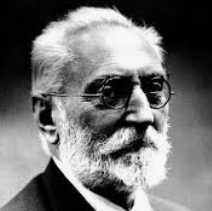
Yes, I know well that others before me have felt what I feel and express; that many others feel it today, although they keep silence about it. ...And I do not keep silence about it because it is for many the thing which must not be spoken, the abomination of abominations - infandum - and I believe that it is necessary now and again to speak the thing which must not be spoken. ...Even if it should lead only to irritating the devotees of progress, those who believe that truth is consolation, it would lead to not a little. To irritating them and making them say: "Poor fellow! if he would only use his intelligence to better purpose!... Someone perhaps will add that I do not know what I say, to which I shall reply that perhaps he may be right - and being right is such a little thing! - but that I feel what I say and I know what I feel and that suffices me. And that it is better to be lacking in reason than to have too much of it.
3 months 1 week ago
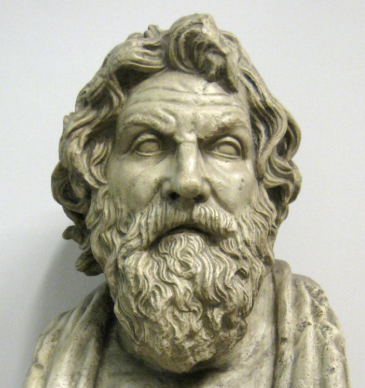
Once, when he was applauded by rascals, he remarked, "I am horribly afraid I have done something wrong."
▼
Source
source
§ 5
2 months 1 week ago
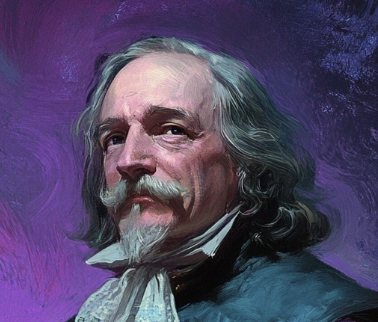
And the Science of them, is the true and onely Moral Philosophy. For Moral Philosophy is nothing else but the Science of what is Good, and Evill, in the conversation, and Society of mankind. Good, and Evill, are names that signify our Appetites, and Aversions; which in different tempers, customes, and doctrines of men, are different.
▼
Source
source
The First Part, Chapter 15, p. 79
2 months 3 days ago
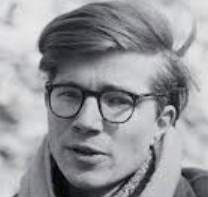
What so impressed me on that first reading was the self-containedness of Tolkien's world. I suppose there are a few novelists who have created worlds that are uniquely their own -- Faulkner, for example, or Dickens. But since their world is fairly close to the actual world, it cannot really be called a unique creation. The only parallel that occurs to me is the Wagner Ring cycle, that one can only enter as if taking a holiday on a strange planet.
▼
Source
source
pp. 8-9
3 months 2 weeks ago
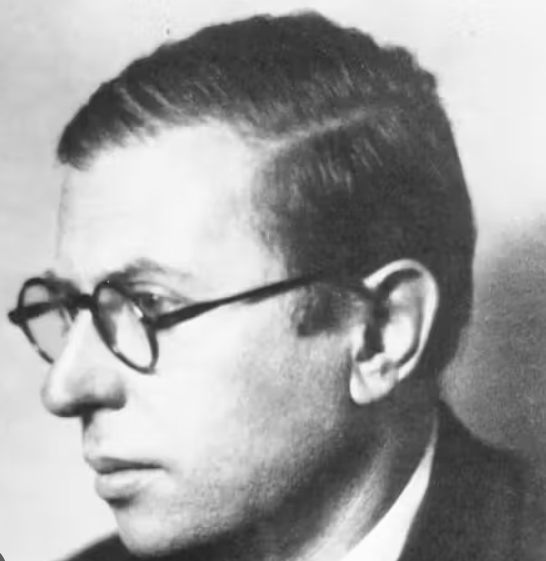
The consciousness of being betrayed is to the collective consciousness of a sacred group what a certain form of schizophrenia is to the individual...it is a form of madness.
▼
Source
source
p. 193

3 months 3 weeks ago
Even the death of Friends will inspire us as much as their lives. They will leave consolation to the mourners, as the rich leave money to defray the expenses of their funerals, and their memories will be incrusted over with sublime and pleasing thoughts, as monuments of other men are overgrown with moss; for our Friends have no place in the graveyard.

3 months 4 weeks ago
By God's grace, I know Satan very well. If Satan can turn God's Word upside down and pervert the Scriptures, what will he do with my words -- or the words of others?
▼
Source
source
Confession Concerning Christ's Supper, Part 3. Robert E. Smith, tr. Dr. Martin Luthers Werke: Kritische Gesamtsusgabe. (Weimar: Herman Boehlaus Nachfolger, 1909), pp. 499-500.
3 months 2 weeks ago
Commoners are weightless. But he was a royal bon vivant who, no matter what, always weighed 125 kilos. I would be very surprised if he didn't have a few pounds left.
▼
Source
source
A soldier in Argos, speaking of the dead King Agamemnon, Act 2
4 weeks 1 day ago
The educated man is the man who does not live in immediate intuition, but in his recollection so that little is new to him any longer.
▼
Source
source
Chapter 4, Philosophy As Writing: The Case Of Hegel, p. 74
2 months 1 week ago
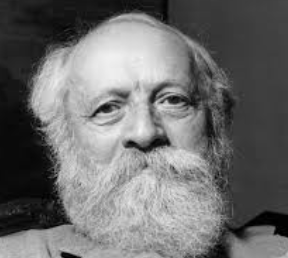
The basic word I-Thou can be spoken only with one's whole being. The concentration and fusion into a whole being can never be accomplished by me, can never be accomplished without me. I require a Thou to become; becoming I, I say Thou.

2 months 2 weeks ago
What an incitation to hilarity, hearing the word goal while following a funeral procession!

3 months 2 weeks ago
Reading the Socratic dialogues one has the feeling: what a frightful waste of time! What's the point of these arguments that prove nothing and clarify nothing?
▼
Source
source
p. 14e
Just now
Myths are not descriptions of things, but expressions of a determination to act... A myth cannot be refuted since it is, at bottom, identical with the convictions of a group, being the expression of these convictions in the language of movement.
▼
Source
source
p. 28-29 (Letter to Daniel Halevy)

4 months 2 weeks ago
The vicious lover is the follower of earthly Love who desires the body rather than the soul; his heart is set on what is mutable and must therefore be inconstant. And as soon as the body he loves begins to pass the first flower of its beauty, he "spreads his wings and flies away," giving the lie to all his pretty speeches and dishonoring his vows, whereas the lover whose heart is touched by moral beauties is constant all his life, for he has become one with what will never fade.
3 months 1 week ago
The essence of the belief that bats have experience is that there is something that it is like to be a bat. Now we know that most bats (the microchiroptera, to be precise) perceive the external world primarily by sonar, or echolocation. ... But bat sonar, though clearly a form of perception, is not similar in its operation to any sense that we possess, and there is no reason to suppose that it is subjectively like anything we can experience or imagine. This appears to create difficulties for the notion of what it is like to be a bat.
▼
Source
source
p. 168.
1 month 2 weeks ago
To be overwise is to ossify; and the scruple-monger ends by standing stockstill.
▼
Source
source
314

2 months 3 weeks ago
I think that the principal and most basic spiritual need of the Russian People is the need for suffering, incessant and unslakeable suffering, everywhere and in everything. I think the Russian People have been infused with this need to suffer from time immemorial. A current of martyrdom runs through their entire history, and it flows not only from external misfortunes and disasters but springs from the very heart of the People themselves. There is always an element of suffering even in the happiness of the Russian People, and without it their happiness is incomplete.
▼
Source
source
A Writer's Diary, Vol. 1: 1873-1876 (1994), pp. 161-162

2 months 1 week ago
Ye do err, not knowing the scriptures, nor the power of God. For in the resurrection they neither marry, nor are given in marriage, but are as the angels of God in heaven. But as touching the resurrection of the dead, have ye not read that which was spoken unto you by God, saying, I am the God of Abraham, and the God of Isaac, and the God of Jacob? God is not the God of the dead, but of the living.
▼
Source
source
22:29-32 (KJV)
2 months 2 days ago
I believe that one can and must hope for a sane society that furthers man's capacity to love his fellow men, to work and create, to develop his reason and his objectivity of a sense of himself that is based on the experience of his productive energy. I believe that one can and must hope for the collective regaining of a mental health that is characterized by the capacity to love and to create...
1 month 3 weeks ago
To subdue destruction is one of the most important affirmations of which we are capable in this world. It is the affirmation of this life, bound up with yours, and with the realm of the living: an affirmation caught up with a potential for destruction and its countervailing force.
▼
Source
source
p. 65
2 months 2 weeks ago
There was a loud echo of Hume in Mach's work, as both emphasized the tangibility of all knowledge-ultimately, all knowledge is based in the senses. Mach also emphasized the internal nature of all knowledge, in that it is experienced in the mind. Finally, he emphasized the importance of quantitative and mathematical methods and models to understand sensory experience.
▼
Source
source
Alan Ebenstein, Hayek's Journey" The Mind of Friedrich Hayek (2003), Ch. 10 : Epistemology, Psychology, and Methodology
2 weeks 3 days ago
The self-evident truth which makes men invincible is that inalienably they are inviolate persons.
▼
Source
source
Ch. XVII: "On This Rock", §2, p. 375
2 months 1 week ago
It would be wrong to suppose that the man of any particular period always looks upon past times as below the level of his own, simply because they are past. It is enough to recall that to the seeming of Jorge Manrique, "Any time gone by was better."... From A.D. 150 on, this impression of a shrinking of vitality, of a falling from position, of decay and loss of pulse shows itself increasingly in the Roman Empire. Had not Horace already sung: "Our fathers, viler than our grandfathers, begot us who are even viler, and we shall bring forth a progeny more degenerate still"?
▼
Source
source
Horace, Odes, III.6] Chap. III: The Height Of The Times
2 months 1 week ago
If any man will come after me, let him deny himself, and take up his cross, and follow me. For whosoever will save his life shall lose it: and whosoever will lose his life for my sake shall find it. For what is a man profited, if he shall gain the whole world, and lose his own soul? or what shall a man give in exchange for his soul? For the Son of man shall come in the glory of his Father with his angels; and then he shall reward every man according to his works. Verily I say unto you, There be some standing here, which shall not taste of death, till they see the Son of man coming in his kingdom.
▼
Source
source
16:24-28 (KJV)
1 month 2 weeks ago
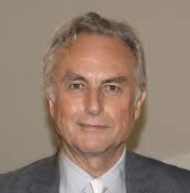
However many ways there may be of being alive, it is certain that there are vastly more ways of being dead.
▼
Source
source
Chapter 1 "Explaining the Very Improbable"
2 months 2 weeks ago
We are fulfilled only when we aspire to nothing, when we are impregnated by that nothing to the point of intoxication.
2 months 2 weeks ago
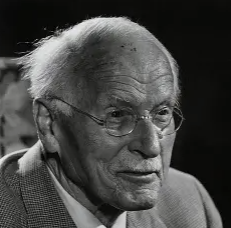
The meeting of two personalities is like the contact of two chemical substances: if there is any reaction, both are transformed.
▼
Source
source
p. 49

1 week 4 days ago
This worthy man, whose nephew is still minister of Eskdalemuir (and author of a book on the Jews), proved the greatest blessing to that household. My father would, in any case, have saved himself. Of the other brothers, it may be doubted whether William Brown was not the primary preserver. They all learned to he masons from him, or from one another; instead of miscellaneous laborers and hunters, became regular tradesmen, the best in all their district, the skilfullest and faithfullest, and the best-rewarded every way. Except my father, none of them attained a decisive religiousness. But they all had prudence and earnestness, love of truth, industry, and the blessings it brings.
2 months 1 week ago
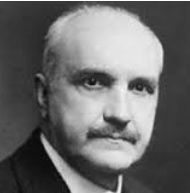
Most men's conscience, habits, and opinions are borrowed from convention and gather continual comforting assurances from the same social consensus that originally suggested them.
▼
Source
source
Ch. VIII: Ideal Society

4 months 1 week ago
There are two kinds of pleasure: one consisting in a state of rest, in which both body and mind are undisturbed by any kind of pain; the other arising from an agreeable agitation of the senses, producing a correspondent emotion in the soul. It is upon the former of these that the enjoyment of life chiefly depends. Happiness may therefore be said to consist in bodily ease, and mental tranquility.

2 months 3 weeks ago
I would rather sleep in the southern corner of a little country churchyard, than in the tombs of the Capulets.
▼
Source
source
Letter to Matthew Smith
2 months 6 days ago
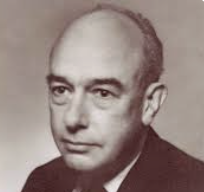
Even a statement very close to the periphery can be held true in the face of recalcitrant experience by pleading hallucination or by amending certain statements of the kind called logical laws. Conversely, by the same token, no statement is immune to revision. Revision even of the logical law of the excluded middle has been proposed as a means of simplifying quantum mechanics; and what difference is there in principle between such a shift and the shift whereby Kepler superseded Ptolemy, or Einstein Newton, or Darwin Aristotle?
▼
Source
source
"Two Dogmas of Empiricism"
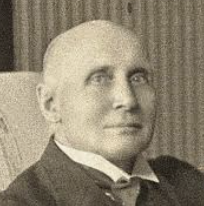
2 months 5 days ago
Error is the price we pay for progress.
2 months 1 week ago
... I once shook hands with Longfellow at a garden party in 1881; and I often saw Dr. Holmes, who was our neighbor in Beacon Street: but Emerson I never saw.
▼
Source
source
p. 50

3 months 3 weeks ago
A spider conducts operations that resemble those of a weaver, and a bee puts to shame many an architect in the construction of her cells. But what distinguishes the worst of architects from the best of bees is this, that the architect raises his structure in imagination before he erects it in reality.
▼
Source
source
Vol. I, Ch. 7, pg. 198.
2 months 1 week ago
The only way to give finality to the world is to give it consciousness. For where there is no consciousness there is no finality, finality presupposing a purpose. And... faith in God is based simply upon the vital need of giving finality to existence, of making it answer to a purpose. We need God, not in order to understand the why, but in order to feel and sustain the ultimate wherefore, to give a meaning to the Universe.
3 months 2 weeks ago
The Quaestor turned back the pages until he found himself among the Pensées. "We are not satisfied," he read, "with the life we have in ourselves and our own being; we want to live an imaginary life in other people's idea of us. Hence all our efforts are directed to seeming what we are not. We labor incessantly to preserve and embellish this imaginary being, and neglect that which is really ours." The Quaestor put down the book, ... and ruefully reflected that all his own troubles had arisen from this desire to seem what in fact he was not. To seem a man of action, when in fact he was a contemplative; to seem a politician, when nature had made him an introspective psychologist; to seem a wit, which God had intended him for a sage.
▼
Source
source
"Variations on a Philosopher" in Themes and Variations (1943), p. 2

4 months 2 weeks ago
Yes, everyone sleeps at that hour, and this is reassuring, since the great longing of an unquiet heart is to possess constantly and consciously the loved one...
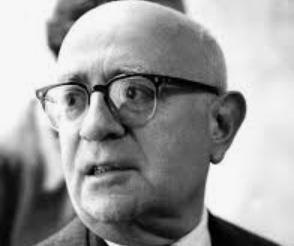
2 months 6 days ago
We cannot think any true thought unless we want the true. Thinking is itself an aspect of practice.
▼
Source
source
p. 45
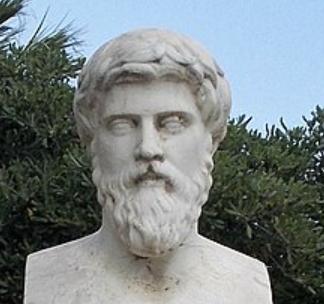
3 months 1 week ago
As Cæsar was at supper the discourse was of death,-which sort was the best. "That," said he, "which is unexpected."
▼
Source
source
Cæsar
2 months 1 week ago
The nineteenth century, utilitarian throughout, set up a utilitarian interpretation of the phenomenon of life which has come down to us and may still be considered as the commonplace of everyday thinking. ... An innate blindness seems to have closed the eyes of this epoch to all but those facts which show life as a phenomenon of utility.
▼
Source
source
p. 16
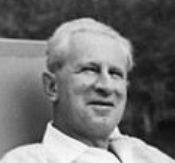
2 months 1 week ago
The transition from philosophy to the domain of state and society had been an intrinsic part of Hegel's system.
▼
Source
source
P. 251
3 months 2 weeks ago
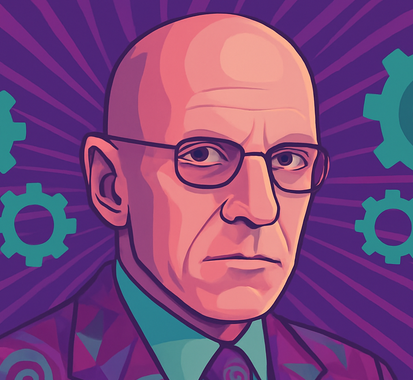
The 'Enlightenment', which discovered the liberties, also invented the disciplines.

3 months 2 weeks ago
A masterpiece of art has in the mind a fixed place in the chain of being, as much as a plant or a crystal.
▼
Source
source
Art
2 months 1 week ago
The Ottoman Empire whose sick body was not supported by a mild and regular diet, but by a powerful treatment, which continually exhausted it.
▼
Source
source
No. 19. (Usbek writing to Rustan)
1 month 3 days ago
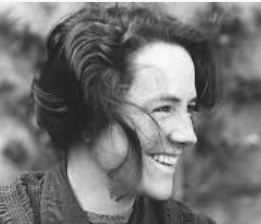
There are no signposts in the sky to show a man has passed that way before. There are no channels marked. The flier breaks each second into new uncharted seas.
▼
Source
source
North to the Orient (1935) Ch. 1

1 month 2 weeks ago
Memento mori-remember death! These are important words. If we kept in mind that we will soon inevitably die, our lives would be completely different. If a person knows that he will die in a half hour, he certainly will not bother doing trivial, stupid, or, especially, bad things during this half hour. Perhaps you have half a century before you die-what makes this any different from a half hour?
▼
Source
source
p. 209

3 months 3 weeks ago
The sense of justice and injustice is not deriv'd from nature, but arises artificially... from education, and human conventions.
▼
Source
source
Part 2, 1.17
CivilSimian.com created by AxiomaticPanic, CivilSimian, Kalokagathia