


2 months 1 week ago
Existing is plagiarism.
2 months 1 week ago
The cry of equality pulls everyone down.
▼
Source
source
Quoted in The Observer September 13, 1987.

3 months 2 weeks ago
Either Man will abolish war, or war will abolish Man.
▼
Source
source
Fact and Fiction (1961), Part IV, Ch. 10: "Can War Be Abolished?", p. 276

3 months 2 weeks ago
God will look to every soul like its first love because He is its first love.


2 months 1 week ago
Whoever believes and is baptized will be saved, but whoever does not believe will be condemned. And these signs will accompany those who believe: In my name they will drive out demons; they will speak in new tongues; they will pick up snakes with their hands; and when they drink deadly poison, it will not hurt them at all; they will place their hands on sick people, and they will get well.
▼
Source
source
Jesus, Mark 16:16-18
3 months 3 weeks ago
The will is not free to strive toward whatever is declared good.
▼
Source
source
Thesis 10

2 days ago
This is the worst trait of minds rendered arrogant by prosperity, they hate those whom they have injured.
▼
Source
source
De Ira (On Anger): Book 2, cap. 33, line 6
3 months 1 week ago
Philosophy is not politics, and we do our best, within our all-too-human limitations, to seek the truth, not to score points against opponents. There is little satisfaction in gaining an easy triumph over a weak opponent while ignoring better arguments against your views.
▼
Source
source
'Last Generation': A Response, The New York Times, June 16, 2010.

1 month 2 weeks ago
Today we experience, in reverse, what pre-literate man faced with the advent of writing.
▼
Source
source
p. 273
2 months 1 week ago
Knowledge is the plague of life, and consciousness, an open wound in its heart.
2 months 1 week ago
We must suffer to the end, to the moment when we stop believing in suffering.
3 months 2 weeks ago
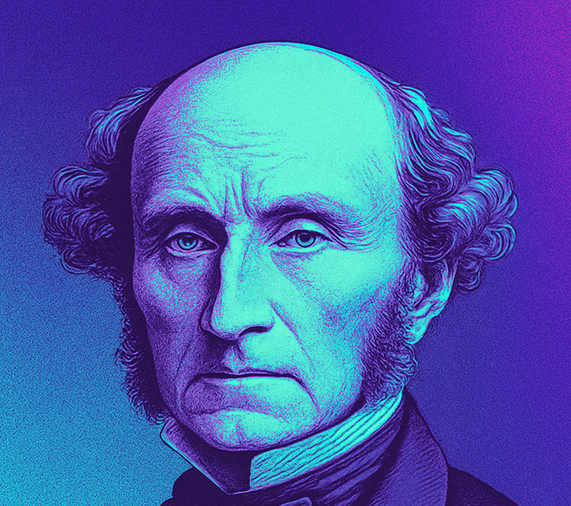
Conformity to nature has no connection whatever with right and wrong. The idea can never be fitly introduced into ethical discussions at all, except, occasionally and partially, into the question of degrees of culpability. To illustrate this point, let us consider the phrase by which the greatest intensity of condemnatory feeling is conveyed in connection with the idea of nature - the word "unnatural." That a thing is unnatural, in any precise meaning which can be attached to the word, is no argument for its being blamable; since the most criminal actions are to a being like man not more unnatural than most of the virtues.
▼
Source
source
page 62; Broadview Press, page 102

4 months 2 weeks ago
Printing will tell you such useful things and such interesting things that not being able to read would be as bad as not being able to see.
2 months 3 weeks ago
I understand Being in all and over all, as there is nothing without participation in Being, and there is no being without Essence. Thus nothing can be free of the Divine Presence.
▼
Source
source
As quoted in "Giordano Bruno" - Theosophy Vol. 26, No. 8
4 months 1 week ago
The more man meditates upon good thoughts, the better will be his world and the world at large.
2 months 1 week ago
Even when nothing happens, everything seems too much for me. What can be said, then, in the presence of an event, any event?

3 months 3 weeks ago
The perfection of a thing does not annul its existence, but, on the contrary, asserts it. Imperfection, on the other hand, does annul it ; therefore we cannot be more certain of the existence of anything, than of the existence of a being absolutely infinite or perfect-that is, of God. For inasmuch as his essence excludes all imperfection, and involves absolute perfection, all cause for doubt concerning his existence is done away, and the utmost certainty on the question is given. This, I think, will be evident to every moderately attentive reader.
▼
Source
source
Part I, Prop. XI
1 week 4 days ago
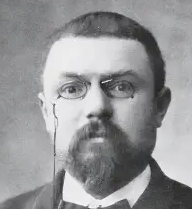
If we study the history of science we see happen two inverse phenomena... Sometimes simplicity hides under complex appearances; sometimes it is the simplicity which is apparent, and which disguises extremely complicated realities....No doubt, if our means of investigation should become more and more penetrating, we should discover the simple under the complex, then the complex under the simple, then again the simple under the complex, and so on, without our being able to foresee what will be the last term. We must stop somewhere, and that science may be possible, we must stop when we have found simplicity. This is the only ground on which we can rear the edifice of our generalizations.
2 days ago
For the state it is indispensable that nobody have an own will; if one had, the state would have to exclude (lock up, banish, etc.) this one; if all had, they would do away with the state. (...) The own will of me is the state's destroyer; it is therefore denounced by the state as 'self-will'. Own will and the state are powers in deadly hostility, between which no 'perpetual peace' is possible. As long as the state asserts itself, it represents own will, its ever-hostile opponent, as unreasonable, evil; and the latter lets itself be talked into believing this.
▼
Source
source
Cambridge 1995, p. 174, 175

2 months 3 weeks ago
In the deep discovery of the Subterranean world, a shallow part would satisfy some enquirers.
▼
Source
source
Chapter I
2 months 1 week ago
I am displeased with everything. If they made me God, I would immediately resign.
2 months 1 week ago
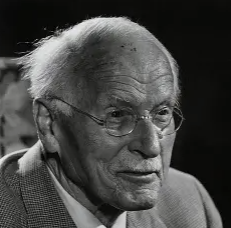
I find that all my thoughts circle around God like the planets around the sun, and are as irresistibly attracted by Him. I would feel it to be the grossest sin if I were to oppose any resistance to this force.
▼
Source
source
Sources: David John Tacey (2007)

3 months 2 weeks ago
There is no history of mankind, there is only an indefinite number of histories of all kinds of aspects of human life. And one of these is the history of political power. This is elevated into the history of the world. But this, I hold, is an offence against every decent conception of mankind. It is hardly better than to treat the history of embezzlement or of robbery or of poisoning as the history of mankind. For the history of power politics is nothing but the history of international crime and mass murder (including it is true, some of the attempts to suppress them). This history is taught in schools, and some of the greatest criminals are extolled as heroes.
▼
Source
source
Vol 2, Ch. 25 "Has History any Meaning?" Variant: There is no history of mankind, there are only many histories of all kinds of aspects of human life. And one of these is the history of political power. This is elevated into the history of the world.
2 months 3 weeks ago
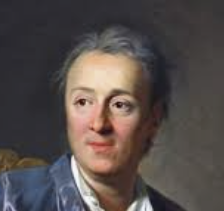
Scepticism is the first step towards truth. Variant: A thing is not proved just because no one has ever questioned it. What has never been gone into impartially has never been properly gone into. Hence skepticism is the first step toward truth. It must be applied generally, because it is the touchstone.
▼
Source
source
As quoted in The Anchor Book of French Quotations with English Translations (1963) by Norbert Gutermam

2 months ago
I could see clearly that this problem could only be solved on the individual and personal level; political revolt is irrelevant. Both Camus and Sartre had been neatly hog-tied by their earlier radicalism. Camus came to see that rebellion is a political roundabout that revolves back to the same old tyranny; too ashamed to admit that he had outgrown his leftism, he found himself in an intellectual cul-de-sac. Sartre accused Camus of being a reactionary; but he paid for his own refusal to reexamine his political convictions by congealing into a grotesque attitude of permanent indignation, shaking his fist at some abstract Authority. Where politics is concerned, he seemed determined to be guided by his emotions.
▼
Source
source
p. 101
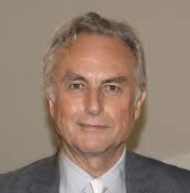
1 month 1 week ago
Even sticking to the higher plane of love, is it so very obvious that you can't love more than one person? We seem to manage it with parental love (parents are reproached if they don't at least pretend to love all their children equally), love of books, of food, of wine (love of Chateau Margaux does not preclude love of a fine Hock, and we don't feel unfaithful to the red when we dally with the white), love of composers, poets, holiday beaches, friends . . . why is erotic love the one exception that everybody instantly acknowledges without even thinking about it?
▼
Source
source
Banishing the Green-Eyed Monster, November 2007.
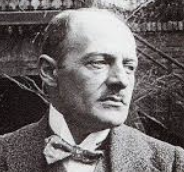
2 months 1 week ago
The "old maid" with her repressed cravings for tenderness, sex, and propagation, is rarely quite free of ressentiment. What we call "prudery," in contrast with true modesty, is but one of the numerous variants of sexual ressentiment. The habitual behavior of many old maids, who obsessively ferret out all sexually significant events in their surroundings in order to condemn them harshly, is nothing but sexual gratification transformed into ressentiment satisfaction. Thus the criticism accomplishes the very thing it pretends to condemn.
▼
Source
source
L. Coser, trans. (1973), pp. 61-62
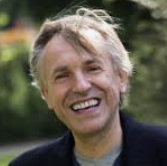
3 weeks 5 days ago
It is hard to imagine an experience more horrific than being eaten alive. Most of us would prefer not to imagine what it must feel like. Note that the photographer here had to persuade the park ranger to violate the park rules and put the baby elephant out of his misery.By analogy, suppose it were lawful to visit Third World countries for photoshoots but illegal to "interfere" and help a stricken human baby. Is there a fundamental difference between "ethical" intervention to help humans and "sentimental" pleas to "interfere" and help non-humans? Should we encourage the preservation of life-forms such as the hyena in their current guise? Or do the value judgements underlying the "science" of conservation biology need to be re-examined?
▼
Source
source
"Hyenas Eat Baby Elephant Alive: The Case for Intervention"
2 months 1 week ago
Antiquity believed that the forces of love in the universe were limited. Therefore they were to be used sparingly,and everyone was to be loved only according to his value.
▼
Source
source
L. Coser, trans. (1961), p. 94

2 months 2 weeks ago
To care only for well-being seems to me positively ill-bred. Whether it's good or bad, it is sometimes very pleasant, too, to smash things.
▼
Source
source
Part 1, Chapter 9
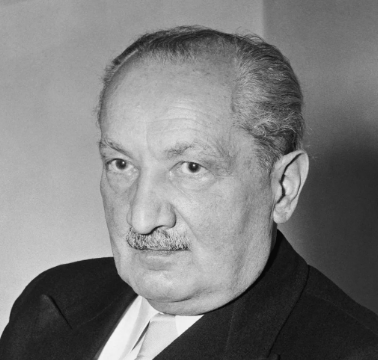
3 months 1 week ago
Nevertheless, the ultimate business of philosophy is to preserve the force of the most elemental words in which Dasein expresses itself, and to keep the common understanding from levelling them off to that unintelligibility which functions in turn as a source of pseudo-problems.
▼
Source
source
Macquarrie & Robinson translation
3 months 2 weeks ago
Better red than dead.
▼
Source
source
Bertrand Russell, attributes this phrase to 'West German friends of peace' but adopted this slogan for the Campaign for Nuclear Disarmament he helped found William Safire, Safire's Political Dictionary, (2008) p. 49-50
7 months 3 weeks ago
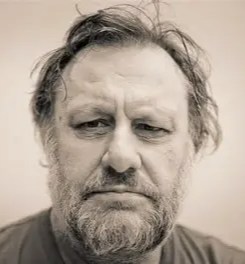
At the beginning of November 2001, there was a series of meetings between White House advisers and senior Hollywood executives with the aim of coordinating the war effort and establishing how Hollywood could help in the "war against terrorism" by getting the right ideological message across not only to Americans, but also to the Hollywood public around the globe — the ultimate empirical proof that Hollywood does in fact function as an "ideological state apparatus."
3 months 1 week ago
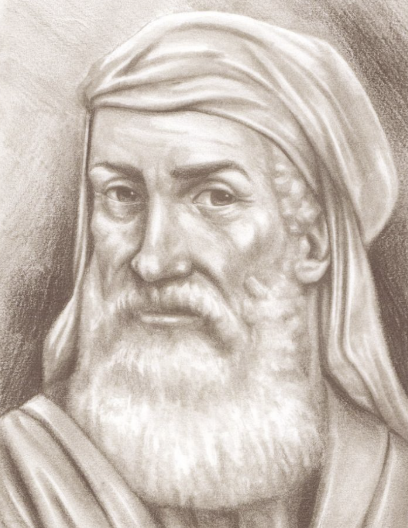
The sight of both eyes becomes one.
▼
Source
source
fr. 88
3 months 2 weeks ago
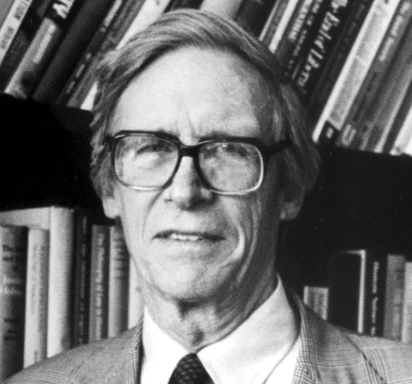
The even larger difference between rich and poor makes the latter even worse off, and this violates the principle of mutual advantage.
▼
Source
source
Chapter II, Section 13, pg. 79

3 months 2 weeks ago
Democracy can hardly be expected to flourish in societies where political and economic power is being progressively concentrated and centralized. But the progress of technology has led and is still leading to just such a concentration and centralization of power.
▼
Source
source
Chapter 3 (p. 19)
4 months 1 week ago
The Master said, "Hard is it to deal with him, who will stuff himself with food the whole day, without applying his mind to anything good! Are there not gamesters and chess players? To be one of these would still be better than doing nothing at all.

3 months 1 week ago
The aim of philosophy is to erect a wall at the point where language stops anyway.
▼
Source
source
Ch. 9 : Philosophy, p. 187


3 months 3 weeks ago
Every faculty in one man is the measure by which he judges of the like faculty in another. I judge of your sight by my sight, of your ear by my ear, of your reason by my reason, of your resentment by my resentment, of your love by my love. I neither have, nor can have, any other way of judging about them.
▼
Source
source
Section I, Chap. III.
2 months 2 weeks ago
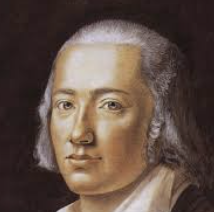
Before either of us knew it, we belonged to each other.
2 months 2 weeks ago
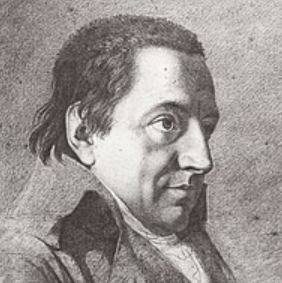
Should it seem to me that truth has been put to silence, and virtue trampled under foot, and that folly and vice will certainly triumph; should it happen, when all hearts were filled with hope for the human race, that the horizon should suddenly darken around them as it had never done before; should the work, well and happily begun, on which all eyes were fixed with joyous expectation, suddenly and unexpectedly be turned into a deed of shame, - yet will I not be dismayed; nor if the good cause should appear to grow and flourish, the lights of freedom and civilization be diffused, and peace and good-will amongst men be extended, shall yet my efforts be relaxed.
▼
Source
source
Jane Sinnett, trans 1846 p.123
2 months 2 weeks ago
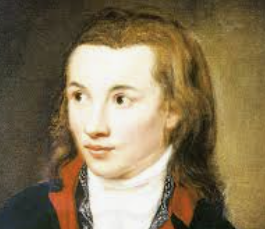
Every beloved object is the center point of a paradise.
▼
Source
source
Fragment No. 51; Jeder geliebte Gegenstand ist der Mittelpunkt eines Paradieses. Variant translations:

1 week 1 day ago
Shall we say, for example, that Science and Art are indebted principally to the founders of Schools and Universities? Did not Science originate rather, and gain advancement, in the obscure closets of the Roger Bacons, Keplers, Newtons; in the workshops of the Fausts and the Watts; wherever, and in what guise soever Nature, from the first times downwards, had sent a gifted spirit upon the earth? Again, were Homer and Shakspeare members of any beneficed guild, or made Poets by means of it? Were Painting and Sculpture created by forethought, brought into the world by institutions for that end? No; Science and Art have, from first to last, been the free gift of Nature; an unsolicited, unexpected gift; often even a fatal one.
1 month 3 weeks ago
It is almost everywhere the case that soon after it is begotten the greater part of human wisdom is laid to rest in repositories.
▼
Source
source
K 37
2 months 1 week ago
No one should try to live if he has not completed his training as a victim.
CivilSimian.com created by AxiomaticPanic, CivilSimian, Kalokagathia