

2 months 4 days ago
Nonbeing must in some sense be, otherwise what is it that there is not? This tangled doctrine might be nicknamed Plato's beard; historically it has proved tough, frequently dulling the edge of Occam's razor.
▼
Source
source
"On What There Is"

3 months 2 weeks ago
He who is in love is wise and is becoming wiser, sees newly every time he looks at the object beloved, drawing from it with his eyes and his mind those virtues which it possesses.
▼
Source
source
The Method of Nature, 1841
3 months 2 weeks ago
Nature magically suits the man to his fortunes, by making these the fruit of his character.
▼
Source
source
Fate

3 months 3 weeks ago
Necessity may be defined in two ways, conformably to the two definitions of cause, of which it makes an essential part. It consists either in the constant conjunction of like objects, or in the inference of the understating from one object to another.
▼
Source
source
§ 8.27

1 month 2 weeks ago
Ivan Ilych's life had been most simple and most ordinary and therefore most terrible.
▼
Source
source
Ch. II
3 months 1 week ago
It is better to fall in with crows than with flatterers; for in the one case you are devoured when dead, in the other case while alive.
▼
Source
source
§ 4
3 weeks 6 days ago
Humans already massively intervene in Nature, whether through habitat destruction, captive breeding programs for big cats, "rewilding", etc. So the question is not whether humans should "interfere", but rather what ethical principles should govern our interventions.
▼
Source
source
The Antispeciesist Revolution, Institute for Ethics and Emerging Technologies, 26 Jul. 2013

4 months 2 weeks ago
The characters of self-restrained officials are exceedingly careful and just and conservative, but they lack keenness and a certain quick and active boldness. The courageous natures, on the other hand, are deficient in justice and caution in comparison with the former, but excel in boldness of action; and unless both these qualities are present it is impossible for a state to be entirely prosperous in public and private matters.
3 months 2 weeks ago
Perseus wore a magic cap that the monsters he hunted down might not see him.We draw the magic cap down over eyes and ears as a make-believe that there are no monsters.
▼
Source
source
Author's prefaces to the First Edition.
3 months 3 weeks ago
In judging policies we should consider the results that have been achieved through them rather than the means by which they have been executed.
▼
Source
source
From an undated letter to Piero Soderini (translated here by Dr. Arthur Livingston), in The Living Thoughts of Machiavelli, by Count Carlo Sforza, published by Cassell, London (1942), p. 85

2 months 3 weeks ago
You may set the Negro free, but you cannot make him otherwise than an alien to the European. Nor is this all we scarcely acknowledge the common features of humanity in this stranger whom slavery has brought among us. His physiognomy is to our eyes hideous, his understanding weak, his tastes low; and we are almost inclined to look upon him as a being intermediate between man and the brutes.
▼
Source
source
Chapter XVIII.
3 months 2 weeks ago
I think that there is nothing, not even crime, more opposed to poetry, to philosophy, ay, to life itself, than this incessant business.
▼
Source
source
p. 485

3 months 2 weeks ago
If literature isn't everything, it's not worth a single hour of someone's trouble.
▼
Source
source
Interview (1960), Quoted in Susan Sontag's introduction to Barthes: Selected Writings, "Writing Itself: On Roland Barthes,"
4 months 2 weeks ago
The question is asked in ignorance, by one who does not even know what can have led him to ask it.
4 months 2 weeks ago
Homer has taught all other poets the art of telling lies skillfully.

3 months 2 weeks ago
Competition for power is of two sorts: between organizations, and between individuals for leadership within an organization.
▼
Source
source
p. 165
1 month 4 days ago
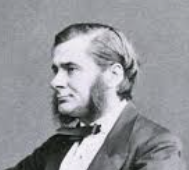
From the point of view of the moralist the animal world is on about the same level as a gladiator's show. The creatures are fairly well treated, and set to fight-whereby the strongest, the swiftest and the cunningest live to fight another day. The spectator has no need to turn his thumbs down, as no quarter is given.
▼
Source
source
(February 1888) "The Struggle for Existence: A Programme". The Nineteenth Century 23: 161-180. (quote from p. 163)
2 months 4 days ago
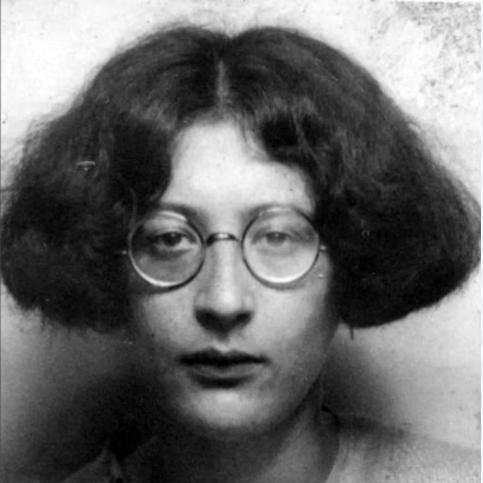
The number 2 thought of by one man cannot be added to the number 2 thought of by another man so as to make up the number 4.
▼
Source
source
Oppression and Liberty (1958), p. 82

2 months 1 week ago
Operational analysis ... cannot raise the decisive question whether the consent itself was not the work of manipulation-a question for which the actual state of affairs provides ample justification. The analysis cannot raise it because it would transcend its terms toward transitive meaning-toward a concept of democracy which would reveal the democratic election as a rather limited democratic process. Precisely such a non-operational concept is the one rejected by the authors as "unrealistic" because it defines democracy on too articulate a level as the clear-cut control of representation by the electorate-popular control as popular sovereignty.
▼
Source
source
p. 116
2 months 4 days ago
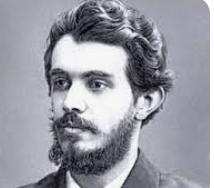
Surprisingly, Berdyaev was able to write, lecture and publish for five years after the October Revolution of 1917. He was once detained and interviewed by the fearsome head of the Cheka, Felix Dzerzhinsky. Although he was released, the Bolsheviks gradually realized that Berdyaev was unassimilable to their cause and gave him a choice, along with a group of other intellectuals, of exile or execution. Reluctantly, Berdyaev chose exile to Berlin. He was never again to return to Russia.
▼
Source
source
Richard Schain, in In Love with Eternity : Philosophical Essays and Fragments (2005), Ch. 7 : Nikolai Alexandrovich Berdyaev - A Champion of the Spirit, p. 44
3 months 2 weeks ago
And when we speak of "abandonment" - a favorite word of Heidegger - we only mean to say that God does not exist and that it is necessary to draw the consequences of his absence to the end.
▼
Source
source
pp. 32-33

2 months 2 weeks ago
I have never in my life met a man like him for noble simplicity, and boundless truthfulness. I understood from the way he talked that anyone who chose could deceive him, and that he would forgive anyone afterwards who had deceived him, and that was why I grew to love him.
▼
Source
source
Part 4, Chapter 8

3 months 2 weeks ago
It is also a study peculiarly adapted to an early stage in the education of philosophical students, since it does not presuppose the slow process of acquiring, by experience and reflection, valuable thoughts of their own.
▼
Source
source
(pp. 19-20)

4 months 3 weeks ago
Life is, after all, not a product of morality.
3 months 1 week ago
Speciesism-the word is not an attractive one, but I can think of no better term-is a prejudice or attitude of bias in favor of the interests of members of one's own species and against those of members of other species.
▼
Source
source
Ch. 1: All Animals Are Equal
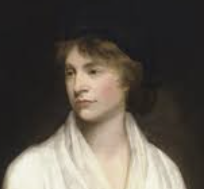
2 months 2 weeks ago
If women be educated for dependence; that is, to act according to the will of another fallible being, and submit, right or wrong, to power, where are we to stop?
▼
Source
source
Ch. 3
3 months 2 weeks ago
We cannot overstate our debt to the Past, but the moment has the supreme claim. The Past is for us; but the sole terms on which it can become ours are its subordination to the Present. Only an inventor knows how to borrow, and every man is or should be an inventor. We must not tamper with the organic motion of the soul.
▼
Source
source
Quotation and Originality

1 month 2 weeks ago
Radio comes to us ostensibly with person to person directness that is private and intimate, while in more urgent fact, it is really a subliminal echo chamber of magic power to touch remote and forgotten chords.
▼
Source
source
(p. 302).
3 months 2 weeks ago
The best life is the one in which the creative impulses play the largest part and the possessive impulses the smallest.

2 months 2 weeks ago
When any work seems to have required immense force and labor to affect it, the idea is grand. Stonehenge, neither for disposition nor ornament, has anything admirable; but those huge rude masses of stone, set on end, and piled each on other, turn the mind on the immense force necessary for such a work. Nay, the rudeness of the work increases this cause of grandeur, as it excludes the idea of art and contrivance; for dexterity produces another sort of effect, which is different enough from this.
▼
Source
source
Part II Section XII
2 months 2 weeks ago
In this choice of inheritance we have given to our frame of polity the image of a relation in blood, binding up the constitution of our country with our dearest domestic ties, adopting our fundamental laws into the bosom of our family affections, keeping inseparable and cherishing with the warmth of all their combined and mutually reflected charities our state, our hearths, our sepulchres, and our altars.
2 months 3 weeks ago
The territorial aristocracy of former ages was either bound by law, or thought itself bound by usage, to come to the relief of its serving-men and to relieve their distresses. But the manufacturing aristocracy of our age first impoverishes and debases the men who serve it and then abandons them to be supported by the charity of the public.
▼
Source
source
Book Two, Chapter XX.
3 months 2 weeks ago
Modern physics... reduces matter to a set of events which proceed outward from a centre. If there is something further in the centre itself, we cannot know about it, and it is irrelevant to physics.
▼
Source
source
An Outline of Philosophy Ch.15 The Nature of our Knowledge of Physics, 1927
3 months 1 week ago
Generally speaking, all the authorities exercising individual control function according to a double mode; that of binary division and branding (mad/sane; dangerous/harmless; normal/abnormal); and that of coercive assignment, of differential distribution (who he is; where he must be; how he is to be characterized' how he is to be recognized' how a constant surveillance is to be exercised over him in a individual way, etc.).
▼
Source
source
Part Four, Complete and austere institutions

4 months 3 days ago
What once sprung from earth sinks back into the earth.
▼
Source
source
Book II, lines 999-1000 (tr. Bailey)
4 months 2 weeks ago
What, then, is that incalculable feeling that deprives the mind of the sleep necessary to life? A world that can be explained even with bad reasons is a familiar world. But, on the other hand, in a universe suddenly divested of illusions and lights, man feels an alien, a stranger. His exile is without remedy since he is deprived of the memory of a lost home or the hope of a promised land. This divorce between man and his life, the actor and his setting, is properly the feeling of absurdity.
4 months 1 week ago
A man's character is formed by the Odes, developed by the Rites and perfected by music.

3 months 3 weeks ago
The violence and injustice of the rulers of mankind is an ancient evil, for which, I am afraid, the nature of human affairs can scarce admit a remedy.
▼
Source
source
Chapter III, Part II, p. 531.
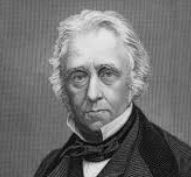
1 month 1 week ago
People crushed by law have no hopes but from power. If laws are their enemies, they will be enemies to laws.
▼
Source
source
According to Kenneth Owen Morgan (The Illustrated History of Britain (1984) p. 421) this was said by Macaulay in 1832. If so, he was quoting a letter written by Edmund Burke in 1777.


3 months ago
It is difficult to walk at one and the same time many paths of life.
▼
Source
source
Pythagorean Ethical Sentences From Stobæus
2 months 2 weeks ago
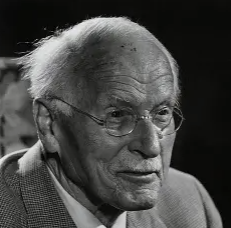
Every archetype is capable of endless development and differentiation. It is therefore possible for it to be more developed or less. In an outward form of religion where all the emphasis is on the outward figure (hence where we are dealing with a more or less complete projection) the archetype is identical with externalized ideas but remains unconscious as a psychic factor. When an unconscious content is replaced by a projected image to that extent, it is cut off from all participation in an influence on the conscious mind. Hence it largely forfeits its own life, because prevented from exerting the formative influence on consciousness natural to it; what is more, it remains in its original form - unchanged, for nothing changes in the unconscious.
3 days ago
A comfortable house is a great source of happiness. It ranks immediately after health and a good conscience.
▼
Source
source
Vol. II, letter to Lord Murray (29 September 1843), p. 501

3 months 2 weeks ago
I... believe in the rationalist tradition of a commonwealth of learning, and in the urgent need to preserve this tradition.

3 months 2 weeks ago
"Their own strength has betrayed them. They have [...] pulled down Deep Heaven on their heads."
▼
Source
source
Ch. 13 : They Have Pulled Down Deep Heaven on Their Heads
2 months 1 week ago
No system would have ever been framed if people had been simply interested in knowing what is true, whatever it may be. What produces systems is the interest in maintaining against all comers that some favourite or inherited idea of ours is sufficient and right.
1 month 2 weeks ago
My reason will still not understand why I pray, but I shall still pray, and my life, my whole life, independently of anything that may happen to me, is every moment of it no longer meaningless as it was before, but has an unquestionable meaning of goodness with which I have the power to invest it.
▼
Source
source
Pt. VIII, ch. 19
1 month 3 weeks ago
Dying is nothing. You have to know how to disappear. Dying comes down to a biological chance and that is of no consequence. Disappearing is of a far higher order of necessity. You must not leave it to biology to decide when you will disappear. To disappear is to pass into an enigmatic state which is neither life nor death. Some animals know how to do this, as do savages, who withdraw while still alive, from the sight of their own people.

4 months 2 weeks ago
Happy is the one in whom there is true sorrow over his sin, so that the extreme unimportance to him of everything else is only the negative expression of the confirmation that one thing is unconditionally important to him, so that the unconditional unimportance to him of everything else is a deadly sickness that still is very far from being a sickness unto death but is precisely unto life, because the life is in this, that one thing is unconditionally important to him: to find forgiveness.
CivilSimian.com created by AxiomaticPanic, CivilSimian, Kalokagathia