

2 months 1 week ago
Liberalism has merely cleared a field in which every soul and every corporate interest may fight with every other for domination. Whoever is victorious in this struggle will make an end of liberalism; and the new order, which will deem itself saved, will have to defend itself in the following age against a new crop of rebels.
▼
Source
source
"The Irony of Liberalism"
2 months 1 week ago
Although the formulations of science now offer the most advanced knowledge of nature, men continue to use obsolete forms of thought long discarded by scientific theory. In so far as these obsolete forms are superfluous for science, the fact that they persist violated the principle of the economy of thought, that characteristic trait of the bourgeois temper.
▼
Source
source
p. 133.

3 months 3 weeks ago
Dear rulers ... I maintain that the civil authorities are under obligation to compel the people to send their children to school. ... If the government can compel such citizens as are fit for military service to bear spear and rifle, to mount ramparts, and perform other martial duties in time of war, how much more has it a right to compel the people to send their children to school, because in this case we are warring with the devil, whose object it is secretly to exhaust our cities and principalities of their strong men.
▼
Source
source
letter to the German rulers (1524), as quoted in The History of Compulsory Education in New England, John William Perrin, 1896

2 months 1 week ago
When you make the two into one, you will become children of Adam, and when you say, 'Mountain, move from here!' it will move.

3 weeks 4 days ago
Hayek's blind spot with regard to politics was clear in the early 1980s when the first Thatcher government, in an attempt to reduce inflation and bring the public finances closer to a balanced budget, was raising interest rates and cutting public spending. As he had done during the 1930s, Hayek attacked these policies as not being severe enough. It would be better, he told me in a conversation we had around this time, if Thatcher imposed a more drastic contraction on the economy so that the wage-setting power of the trade unions could be broken. He appeared unfazed by unemployment, which was already higher (more than three million people) than at any time since the 1930s, and would rise much further if his recommendations were accepted.

3 months 2 weeks ago
The labour-power is a commodity, not capital, in the hands of the labourer, and it constitutes for him a revenue so long as he can continuously repeat its sale; it functions as capital after its sale, in the hands of the capitalist, during the process of production itself.
▼
Source
source
Vol. II, Ch. XIX, p. 384.
3 months 2 weeks ago
Man's urge for change and his need for stability have always balanced and checked each other, and our current vocabulary, which distinguishes between two factions, the progressives and the conservatives, indicates a state of affairs in which this balance has been thrown out of order. No civilization - the man-made artifact to house successive generations - would ever have been possible without a framework of stability, to provide the wherein for the flux of change. Foremost among the stabilizing factors, more enduring than customs, manners and traditions, are the legal systems that regulate our life in the world and our daily affairs with each other.
▼
Source
source
"Civil Disobedience"
2 months 1 week ago
And having said this, Jesus smote his face with both his hands, and then smote the ground with his head. And having raised his head, he said: "Cursed be every one who shall insert into my sayings that I am the son of God." At these words the disciples fell down as dead, whereupon Jesus lifted them up, saying: 'Let us fear God now, if we would not be affrighted in that day.'
▼
Source
source
Ch. 53
1 month 3 weeks ago
Not only does reality resist those who still criticize it, but it also abandons those who defend it. Maybe it is a way for reality to get its revenge from those who claim to believe in it for the sole purpose of eventually transforming it: sending back its supporters to their own desires.
1 month 4 weeks ago
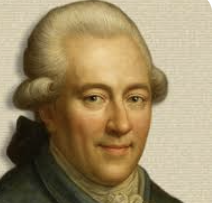
What most clearly characterizes true freedom and its true employment is its misemployment.
▼
Source
source
L 49
1 month 2 weeks ago
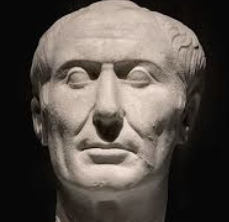
Every day should be passed as if it were to be our last.
▼
Source
source
Maxim 633

1 week 2 days ago
The suffering man ought really 'to consume his own smoke'; there is no good in emitting smoke till you have made it into fire, - which, in the metaphorical sense too, all smoke is capable of becoming!

4 months 1 week ago
The Master said, "Hard is it to deal with him, who will stuff himself with food the whole day, without applying his mind to anything good! Are there not gamesters and chess players? To be one of these would still be better than doing nothing at all.

3 months 2 weeks ago
Tout existant naît sans raison, se prolonge par faiblesse et meurt par rencontre. Every existing thing is born without reason, prolongs itself out of weakness and dies by chance.
3 months 2 weeks ago
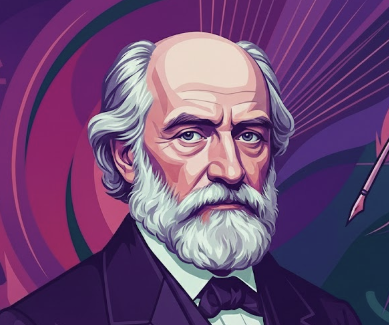
Life is a business that does not cover the costs.
▼
Source
source
Vol II "On the Vanity and Suffering of Life"
3 months 2 weeks ago
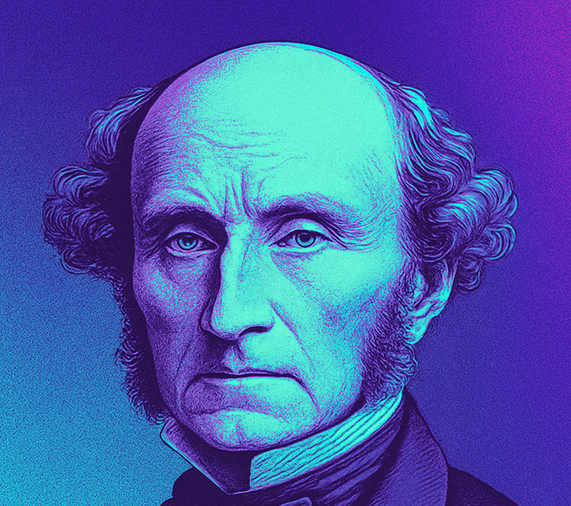
Again, defenders of utility often find themselves called upon to reply to such objections as this-that there is not time, previous to action, for calculating and weighing the effects of any line of conduct on the general happiness. This is exactly as if any one were to say that it is impossible to guide our conduct by Christianity, because there is not time, on every occasion on which anything has to be done, to read through the Old and New Testaments. The answer to the objection is, that there has been ample time, namely, the whole past duration of the human species. During all that time mankind have been learning by experience the tendencies of actions.
▼
Source
source
Ch. 2
2 months 1 week ago
But if it bee well considered, The praise of Ancient Authors, proceeds not from the reverence of the Dead, but from the competition and mutual envy of the Living.
▼
Source
source
Review and Conclusion, p. 395

2 months 3 weeks ago
So many of my thoughts and feelings are shared by the English that England has turned into a second native land of the mind for me.
▼
Source
source
Journeys to England and Ireland, 1835.

2 months 1 day ago
Steiner goes further than this -- and this is his own central contribution to modern thought. He states that once we have made a habit of remembering Mozart and the stars, we shall find ourselves developing powers of 'spiritual vision.' We shall never again feel ourselves to be helpless victims of the external world.
▼
Source
source
p. 169


3 months 2 weeks ago
If you use a trick in logic, whom can you be tricking other than yourself?
▼
Source
source
p. 24e

3 months 2 weeks ago
In fact, contempt for happiness is usually contempt for other people's happiness, and is an elegant disguise for hatred of the human race.
▼
Source
source
p. 198
2 months 1 week ago
Thou sayest that I am a king. To this end was I born, and for this cause came I into the world, that I should bear witness unto the truth. Every one that is of the truth heareth my voice.
▼
Source
source
18:37, (KJV)
3 months 2 weeks ago
Consider MacArthur and his Republican supporters. So limited is his intelligence and his imagination that he is never puzzled for one moment. All we have to do is to go back to the days of the Opium War. After we have killed a sufficient number of millions of Chinese, the survivors among them will perceive our moral superiority and hail MacArthur as a saviour. But let us not be one-sided. Stalin, I should say, is equally simple- minded and equally out of date. He, too, believes that if his armies could occupy Britain and reduce us all to the economic level of Soviet peasants and the political level of convicts, we should hail him as a great deliverer and bless the day when we were freed from the shackles of democracy. One of the painful things about our time is that those who feel certainty are stupid, and those with any imagination and understanding are filled with doubt and indecision.
▼
Source
source
Part I: Man and Nature, Ch. 1: Current Perplexities, pp. 4-5
4 months 1 day ago
It is necessary to show that there is nothing so little known [as the above rules], nothing more difficult to practice, or nothing more useful and universal.

4 months 3 weeks ago
The man who is guided by concepts and abstractions only succeeds by such means in warding off misfortune, without ever gaining any happiness for himself from these abstractions. And while he aims for the greatest possible freedom from pain, the intuitive man, standing in the midst of a culture, already reaps from his intuition a harvest of continually inflowing illumination, cheer, and redemption in addition to obtaining a defense against misfortune. To be sure, he suffers more intensely, when he suffers; he even suffers more frequently, since he does not understand how to learn from experience and keeps falling over and over again into the same ditch.
2 months 1 week ago
The prophet is appointed to oppose the king, and even more: history.
▼
Source
source
BBC radio broadcast (1962), as quoted in The Great Thoughts (1984) by George Seldes
2 months 1 week ago
A man discovers what he is actually worth in this world when he faces society as a man, without money, name, or powerful connections, stripped of all but his native potentialities. He soon finds that nothing has less weight than his human qualities. They are prized so low that the market does not even list them. Strict science, which acknowledges man only as a biological concept, reflects man's lot in the actual world; in himself, man is nothing more than a member of a species. In the eyes of the world, the quality of humanity confers no title to existence, nay, not even a right of sojourn. Such title must be certified by special social circumstances stipulated in documents to be presented on demand.
▼
Source
source
p. 137.
1 week 4 days ago
As for one-party rule, it was questioned neither by the Left Opposition nor by the Right [wing of the Communist party]. All were prisoners of their own doctrine and their own past: all had worked with a will to create the apparatus of violence that crushed them. Bukharin's hopeless attempt to form a league with Kamenev was no more than a pitiful epilogue to his career. In November 1929 the deviationists performed a public act of penance, but even this did not save them. Stalin's victory was complete; the collapse of the Bukharinite opposition meant the triumph of autocracy in the party and in the country. In December 1929 Stalin's fiftieth birthday was celebrated as a major historical event, and from this point we may date the "cult of personality". Trotsky's prophecy of 1903 had come true: party rule had become Central Committee rule, and this in turn had becorne the personal tyranny of a dictator.
▼
Source
source
(pp. 42-3)
2 months 2 weeks ago
Suppose a surface to be part red and part blue; so that every point on it is either red or blue, and of course, no part can be both red and blue. What then, is the color of the surface in the immediate neighborhood of the point. ...it follows that the boundary is half red and half blue. In like manner, we find it necessary to hold that consciousness essentially occupies time... Thus, the present is half past and half time to come. ...Take another case: the velocity of a particle at any instant of time is its mean velocity during an infinitesimal instant in which that time is consumed. Just so, my immediate feeling is my feeling through an infinitesimal duration containing the present instant.

2 months 4 days ago
Just as a vagrant accused of stealing a carrot from a field stands before a comfortably seated judge who keeps up an elegant flow of queries, comments and witticisms while the accused is unable to stammer a word, so truth stands before an intelligence which is concerned with the elegant manipulation of opinions.
▼
Source
source
p. 68

3 days ago
The old Romans had a custom which survived even into my lifetime. They would add to the opening words of a letter: "If you are well, it is well; I also am well." Persons like ourselves would do well to say. "If you are studying philosophy, it is well." For this is just what "being well" means. Without philosophy the mind is sickly.
2 months 1 week ago
Go into the village over against you, and straightway ye shall find an ass tied, and a colt with her: loose them, and bring them unto me. And if any man say ought unto you, ye shall say, The Lord hath need of them; and straightway he will send them. All this was done, that it might be fulfilled which was spoken by the prophet, saying, Tell ye the daughter of Sion, Behold, thy King cometh unto thee, meek, and sitting upon an ass, and a colt the foal of an ass.
▼
Source
source
21:2-5 (KJV)

3 months 2 weeks ago
All gods are homemade, and it is we who pull their strings, and so, give them the power to pull ours Vijaya in Island.
▼
Source
source
1962
1 week 4 days ago
If the gist of the controversy were to be expressed in a single sentence, one might say that the mechanists represented the opposition of the natural sciences to philosophic interference, while the dialecticians stood for the supremacy of philosophy over the sciences and thus reflected the characteristic tendency of Soviet ideological development. The mechanists' outlook might be called negative, while the dialecticians ascribed immense importance to philosophy and regarded themselves as specialists. The mechanists, however, had a much better idea of what science was about. The dialecticians were ignoramuses in this sphere and confined themselves to general formulas about the philosophical need to "generalize" and unify the sciences; on the other hand, they knew more than the mechanists about the history of philosophy. (Eventually the party condemned both camps, and created a dialectical synthesis of both forms of ignorance.)
▼
Source
source
(pg. 64)

4 months 2 weeks ago
Opinions differ as to the reasons why he became the futile laborer of the underworld. To begin with, he is accused of a certain levity in regard to the gods. He stole their secrets.
1 week 2 days ago
Alas! such is the miseducation of these days, it is only among those that are called the uneducated classes - those educated by experience - that you can look for a Man. Even among these, such a sight is growing daily rarer. My father, in several respects, has not, that I can think of, left his fellow. Perhaps among Scottish peasants what Samuel Johnson was among English authors. I have a sacred pride in my peasant father, and would not exchange him, even now, for any king known to me. Gold and the guinea stamp - the Man and the clothes of the man. Let me thank God for that greatest of blessings, and strive to live worthily of it.
1 month 4 weeks ago
There's no need to fear or hope, but only to look for new weapons.
▼
Source
source
from Postscript on the Societies of Control
3 weeks 6 days ago
If I'm a cruel satirist at least I'm not a hyprocrite: I never judge what other people do. Neither a politician nor a priest, I never censor what others do. Neither a philospher nor a psychiatrist, I never bother trying to analyze or resolve my fears and neuroses.
▼
Source
source
"Hypocrisy"
2 months 3 weeks ago
The most dangerous madmen are those created by religion, and ... people whose aim is to disrupt society always know how to make good use of them on occasion.
3 months 2 weeks ago
Being happy involves both a certain achievement in action and a rational assurance about the outcome.
▼
Source
source
Chapter IX, Section 83, p. 549

3 months 2 weeks ago
All men would then be necessarily equal, if they were without needs. It is the poverty connected with our species which subordinates one man to another. It is not inequality which is the real misfortune, it is dependence.
▼
Source
source
"Equality", 1764

3 months 2 weeks ago
The next thing is by gentle degrees to accustom children to those things they are too much afraid of. But here great caution is to be used, that you do not make too much haste, nor attempt this cure too early, for fear lest you increase the mischief instead of remedying it.
▼
Source
source
Sec. 115

2 months 2 weeks ago
Applaud us when we run, console us when we fall, cheer us when we recover.
▼
Source
source
Speech at Bristol Previous to the Election (6 September 1780), quoted in The Works of the Right Honourable Edmund Burke, Vol. II (1855), p. 129
1 month 1 week ago
It is now time for us to pay a decent, a rational, a manly reverence to our ancestors, not by superstitiously adhering to what they, in other circumstances, did, but by doing what they, in our circumstances, would have done.
▼
Source
source
Speech in the House of Commons on the Reform Bill (2 March 1831), quoted in Speeches of the Right Honourable T. B. Macaulay, M.P. (1854), p. 8

1 month 2 weeks ago
At the approach of danger there are always two voices that speak with equal force in the heart of man: one very reasonably tells the man to consider the nature of the danger and the means of avoiding it; the other even more reasonable says that it is too painful and harassing to think of the danger, since it is not a man's power to provide for everything and escape from the general march of events; and that it is therefore better to turn aside from the painful subject till it has come, and to think of what is pleasant. In solitude a man generally yields to the first voice; in society to the second.
▼
Source
source
Bk. X, ch. 17

2 months 5 days ago
Little can be hoped for from a ruler... who has not at some time or other been preoccupied, even if only confusedly, with the first beginning and ultimate end of all things, and above all of man, with the "why" of his origin and the "wherefore" of his destiny.

3 months 3 weeks ago
The world neither ever saw, nor ever will see, a perfectly fair lottery.
▼
Source
source
Chapter X, Part I.
3 months 2 weeks ago
What is the case, the fact, is the existence of atomic facts.
▼
Source
source
(2) Original German: Was der Fall ist, die Tatsache, ist das Bestehen von Sachverhalten.
2 months 4 days ago
Whenever one tries to suppress doubt, there is tyranny.
▼
Source
source
Lectures in philosophy [Leçons de philosophie] (1959) as translated by Hugh Price p. 103
CivilSimian.com created by AxiomaticPanic, CivilSimian, Kalokagathia