

1 month 2 weeks ago
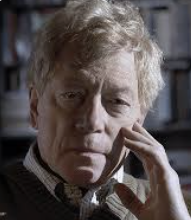
For we are social beings, who can exist and behave as autonomous agents only because we are supported in our ventures by that feeling of primal safety that the bond of society brings. We can envisage no project and no satisfaction on which the eyes of others do not shine. We are joined to those others, and even when they are strangers to us, they are also part of us. It is the indispensable need for membership that brings the national idea to our minds; and there is no rational argument that will expel it, once it is there. Without it, we are homeless; and even if our attitude to home is one of sour disaffection, home is no less necessary to our sense of who we are.
▼
Source
source
'The First Person Plural', in Ronald Beiner (ed.), Theorizing Nationalism (1999), p. 291
1 week 5 days ago
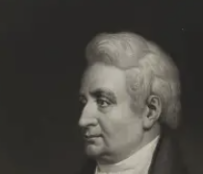
I do not mean to be disrespectful, but the attempt of the Lords to stop the progress of reform reminds me very forcibly of the great storm at Sidmouth, and of the conduct of the excellent Mrs Partington on that occasion. In the winter of 1824 there set in a great flood upon that town - the tide rose to an incredible height - the waves rushed in upon the houses, and everything was threatened with destruction. In the midst of this sublime and terrible storm, Dame Partington, who lived upon the beach, was seen at the door of her house with mop and pattens, trundling her mop, squeezing out the sea-water, and vigorously pushing away the Atlantic Ocean. The Atlantic was roused; Mrs. Partington's spirit was up. But I need not tell you that the contest was unequal.
▼
Source
source
The Atlantic Ocean beat Mrs. Partington. Speech at Taunton
1 month 2 weeks ago
In discussing tradition, we are not discussing arbitrary rules and conventions. We are discussing answers that have been discovered to enduring questions.
▼
Source
source
(p. 21)
1 month 6 days ago
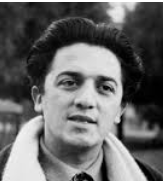
Even if I set out to make a film about a fillet of sole, it would be about me.
▼
Source
source
On the autobiographical nature of his films, in The Atlantic

1 month 3 weeks ago
I am not a "culture critic" because I am not in any way interested in classifying cultural forms. I am a metaphysician, interested in the life of the forms and their surprising modalities. That is why I have no interest in the academic world.
▼
Source
source
Letters of Marshall McLuhan (1987), p. 413

2 months 1 week ago
The "dreams of youth" have become a proverb. That organisations, early rich, fall far short of their promise has been repeated to satiety. But is it extraordinary that it should be so? For do we ever utilise this heroism? Look how it lives upon itself and perishes for lack of food. We do not know what to do with it. We had rather that it should not be there. Often we laugh at it. Always we find it troublesome. Look at the poverty of our life! Can we expect anything else but poor creatures to come out of it?
2 months 2 weeks ago
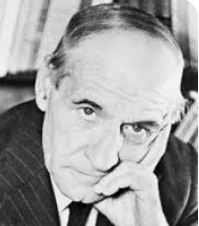
The form most contradictory to human life that can appear among the human species is the "self-satisfied man."
▼
Source
source
Chapter XI: The Self-Satisfied Age



2 months 3 weeks ago
If there is anyone who owes everything to Bach, it is certainly God.
5 days ago
Within a nominally Christian world, chivalry upheld without any substantial alterations an Aryan ethics in the following things: (1) upholding the ideal of the hero rather than the saint, and of the conqueror rather than of the martyr; (2) regarding faithfulness and honor, rather than caritas and humbleness, as the highest virtues; (3) regarding cowardice and dishonor, rather than sin, as the worst possible evil; (4) ignoring or hardly putting into practice the evangelical precepts of not opposing evil and not retaliating against offenses, but rather, methodically punishing unfairness and evil; (5) excluding from its ranks those who followed the Christian precept 'Thou Shalt Not Kill' to the letter; and (6) refusing to love one's enemy and instead fighting him and being magnanimous only after defeating him.

2 weeks 4 days ago
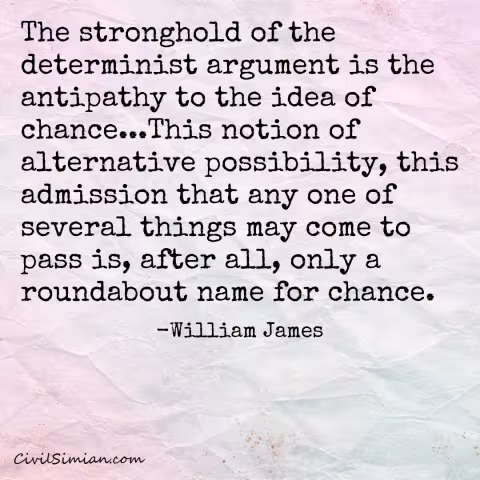
All work, even cotton spinning, is noble; work is alone noble ... A life of ease is not for any man, nor for any god.
▼
Source
source
Bk. III, ch. 4.
2 months 3 weeks ago
Among other men Reason awakes in another form-as the impulse towards Personal Freedom, which, although it never opposes the mild rule of the inward Instinct which it loves, yet rises in rebellion against the pressure of a stranger Instinct which has usurped its rights; and in this awakening it breaks the chains,-not of Reason as Instinct itself, but of the Instinct of foreign natures clothed in the garb of external power.
▼
Source
source
p. 8

1 week 5 days ago
These actions are not essentially difficult; it is we ourselves that are soft and flabby.
3 weeks 3 days ago
One whose intentions and thoughts are cultivated will disregard wealth and nobility. One whose greatest concern is for the Way and righteousness will take lightly kings and dukes. It is simply that when one examines oneself on the inside, external goods carry little weight. A saying goes, "The gentleman makes things his servants. The petty man is servant to things.
▼
Source
source
Readings in Classical Chinese Philosophy (2001), p. 263

2 months 1 week ago
Historical time knows no lasting present.

4 months 3 weeks ago
Milton Ashe is not the type to marry a head of hair and a pair of eyes.
1 week 1 day ago
The deeper we look into nature, the more we recognize that it is full of life, and the more profoundly we know that all life is a secret and that we are united with all life that is in nature. Man can no longer live for himself alone. We realize that all life is valuable, and that we are united to all this life. From this knowledge comes our spiritual relationship to the universe.
▼
Source
source
p. 248

3 months 4 weeks ago
The essence of the Liberal outlook lies not in what opinions are held, but in how they are held: instead of being held dogmatically, they are held tentatively, and with a consciousness that new evidence may at any moment lead to their abandonment.

4 months 5 days ago
Unless I am convinced by the testimony of the Scriptures or by clear reason (for I do not trust either in the pope or in councils alone, since it is well known that they have often erred and contradicted themselves), I am bound by the Scriptures I have quoted and my conscience is captive to the Word of God. I cannot and will not recant anything, since it is neither safe nor right to go against conscience. May God help me. Amen.
▼
Source
source
Statement in defense of his writings at the Diet of Worms (19 April 1521), as translated in The Nature of Protestantism (1963) by Karl Heim, p. 78

4 months 5 days ago
Writing does not cause misery. It is born of misery.
4 months 5 days ago
We must calm the mind of the common man, and tell him to abstain from the words and even the passions which lead to insurrection.
▼
Source
source
p. 62

3 months 3 weeks ago
Your questions refer to words; so I have to talk about words. You say: The point isn't the word, but its meaning, and you think of the meaning as a thing of the same kind as the word, though also different from the word. Here the word, there the meaning.
▼
Source
source
§ 120

4 months 6 days ago
I consider as lovers of books not those who keep their books hidden in their store-chests and never handle them, but those who, by nightly as well as daily use thumb them, batter them, wear them out, who fill out all the margins with annotations of many kinds, and who prefer the marks of a fault they have erased to a neat copy full of faults.
▼
Source
source
Letter to an unidentified friend (1489), as translated in Collected Works of Erasmus (1974), p. 58

3 months 3 weeks ago
How can he [today's writer] be honored, when he does not honor himself; when he loses himself in the crowd; when he is no longer the lawgiver, but the sycophant, ducking to the giddy opinion of a reckless public.
▼
Source
source
Goethe; or, The Writer

4 months 4 weeks ago
Spontaneous love can reach the point of despair, shows that it is in despair, that even when it is happy it loves with the power of despair.
3 months 3 weeks ago
Revolutions never go backwards.
▼
Source
source
p. 214
3 months 2 weeks ago
Aristodemus, a friend of Antigonus, supposed to be a cook's son, advised him to moderate his gifts and expenses. "Thy words," said he, "Aristodemus, smell of the apron."
▼
Source
source
44 Antigonus I

3 months 4 weeks ago
The youth gets together his materials to build a bridge to the moon, or, perchance, a palace or temple on the earth, and, at length, the middle-aged man concludes to build a woodshed with them.
▼
Source
source
July 14, 1852
3 months 4 weeks ago
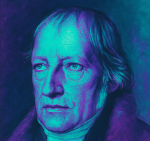
The necessities of the time have accorded to the petty interests of every day life such overwhelming attention : the deep interests of actuality and the strife respecting these have engrossed all the powers and the forces of the mind - as also the necessary means - to so great an extent, that no place has been left to the higher inward life, the intellectual operations of a purer sort; and the better natures have thus been stunted in their growth, and in great measure sacrificed.
▼
Source
source
p. x Inaugural Address, delivered at Heidelberg on the 28th October(1816), Lectures on the history of philosophy, translated from German by E. S. Haldane in Three Volumes (1892-96) full text.
2 months 3 weeks ago
A harmonious being cannot believe in God. Saints, criminals, and paupers have launched him, making him available to all unhappy people.

4 months 3 weeks ago
In every rebellion is to be found the metaphysical demand for unity, the impossibility of capturing it, and the construction of a substitute universe.
1 month 3 weeks ago
Until writing was invented, man lived in acoustic space: boundless, directionless, horizonless, in the dark of the mind, in the world of emotion, by primordial intuition, terror. Speech is a social chart of this bog.
▼
Source
source
(p. 48)
2 months 2 weeks ago
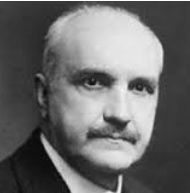
Perhaps the only true dignity of man is his capacity to despise himself.
3 months 4 weeks ago
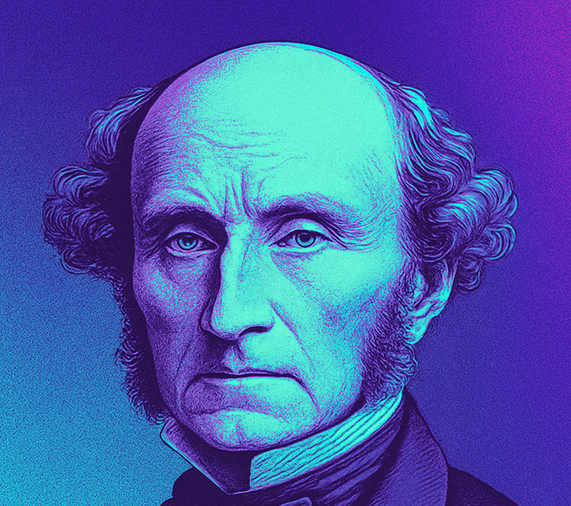
I did not know the way in which, among the ordinary English, the absence of interest in things of an unselfish kind, except occasionally in a special thing here and there, and the habit of not speaking to others, nor much even to themselves, about the things in which they do feel interest, causes both their feelings and their intellectual faculties to remain undeveloped, or to develope themselves only in some single and very limited direction; reducing them, considered as spiritual beings, to a kind of negative existence.
▼
Source
source
(p. 59)
3 months 3 weeks ago
Tis very certain that each man carries in his eye the exact indication of his rank in the immense scale of men, and we are always learning to read it. A complete man should need no auxiliaries to his personal presence.
▼
Source
source
Behavior

1 month 4 days ago
If there is anything unique about the human animal it is that it has the ability to grow knowledge at an accelerating rate while being chronically incapable of learning from experience. Science and technology are cumulative, whereas ethics and politics deal with recurring dilemmas. Whatever they are called, torture and slavery are universal evils; but these evils cannot be consigned to the past like redundant theories in science. They return under different names: torture as enhanced interrogation techniques, slavery as human trafficking. Any reduction in universal evils is an advance in civilization. But, unlike scientific knowledge, the restraints of civilized life cannot be stored on a computer disc. They are habits of behaviour, which once broken are hard to mend. Civilization is natural for humans, but so is barbarism.
▼
Source
source
An Old Chaos: Humanism and Flying Saucers (p. 75)
3 months 2 weeks ago
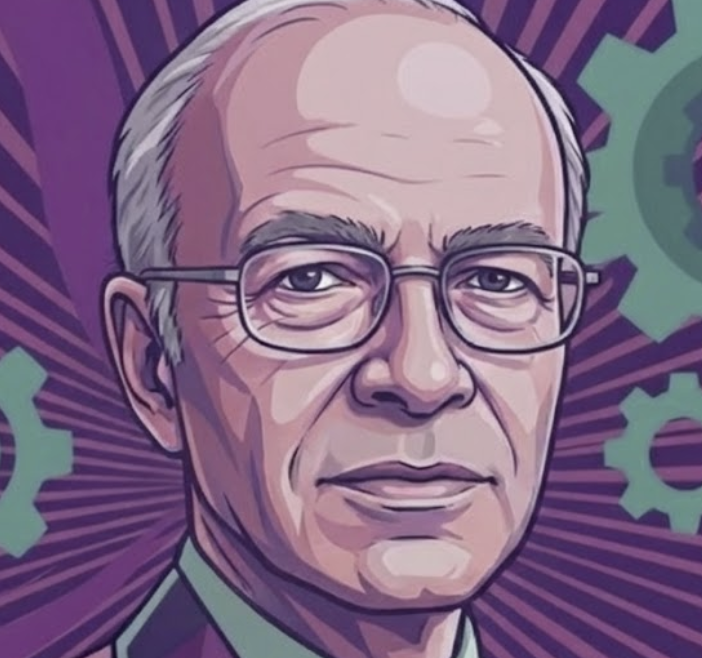
[One thing] underpins, makes consistent, and gives meaning to all our other activities on behalf of animals. This one thing is that we take responsibility for our own lives, and make them as free of cruelty as we can. The first step is that we cease to eat animals. Many people who are opposed to cruelty to animals draw the line at becoming a vegetarian. It was of such people that Oliver Goldsmith, the eighteenth-century humanitarian essayist, wrote: "They pity, and they eat the objects of their compassion."
▼
Source
source
Ch. 4: Becoming a Vegetarian
2 months 6 days ago
The criterion of efficiency dictates that choice of alternatives which produces the largest result for the given application of resources.
▼
Source
source
Simon (1945, p. 179); As cited in: Harry M. Johnson (1966) Sociology: A Systematic Introduction. p. 287.
1 month 2 weeks ago
I hold agitation to be essential, not only to the obtaining of good and just measures, but to the existence of a free Government itself. If you choose to adopt the principle of Bishop Horsley, that the people have nothing to do with the laws but to obey them, then, indeed, you may deprecate agitation; but, while we live in a free country, and under a free Government, your deprecation is vain and untenable... I say that the slave-trade would never have been abolished without agitation. I say that slavery would never have been abolished without agitation... What is agitation when it is examined, but the mode in which the people in the great outer assembly debate?
▼
Source
source
Speech in the House of Commons, 29 January 1840
3 weeks 2 days ago
Hitherto men have speculated vaguely on the unity of universes; it is now about to be demonstrated by reasoning from the passional world to material, guided by the analogy which exists between the two.
▼
Source
source
L'attraction passioneé, Harmonian Man: Selected Writings of Charles Fourier, p. 54

3 months 3 weeks ago
I know only one Church: it is the society of men.
▼
Source
source
Act 1

3 months 4 weeks ago
Let the punishments of criminals be useful. A hanged man is good for nothing; a man condemned to public works still serves the country, and is a living lesson.
▼
Source
source
"Civil and Ecclesiastical Laws," Dictionnaire philosophique (1785-1789)
2 months 2 weeks ago
The Value or WORTH of a man, is as of all other things, his Price; that is to say, so much as would be given for the use of his Power...
▼
Source
source
The First Part, Chapter 10, p. 42
4 months 5 days ago
A man of understanding has lost nothing, if he has himself.
▼
Source
source
Ch. 39

2 months 1 day ago
Every body continues in its state of rest, or of uniform motion in a right line, unless it is compelled to change that state by forces impressed upon it.
▼
Source
source
Laws of Motion, I
5 days ago
Such religion as there can be in modern life, every individual will have to salvage from the churches for himself.
▼
Source
source
p. 397

4 months 1 day ago
I perfectly agree with your Lordship too, that to crush the Industry of so great and so fine a province of the empire, in order to favour the monopoly of some particular towns in Scotland or England, is equally unjust and impolitic. The general opulence and improvement of Ireland might certainly, under proper management, afford much greater resources to the Government, than can ever be drawn from a few mercantile or manufacturing towns.
▼
Source
source
Letter to Henry Dundas (1 November 1779), quoted in Adam Smith, The Correspondence of Adam Smith, eds. E. C. Mossner and I. S. Ross (1987), p. 241
CivilSimian.com created by AxiomaticPanic, CivilSimian, Kalokagathia