


3 months 3 weeks ago
Tis certainly a kind of indignity to philosophy, whose sovereign authority ought every where to be acknowledg'd, to oblige her on every occasion to make apologies for her conclusions, and justify herself to every particular art and science, which may be offended at her.
▼
Source
source
Part 4, Section 5

2 months 4 days ago
For what is specific in the Catholic religion is immortalization and not justification, in the Protestant sense. Rather is this latter ethical. It is from Kant, in spite of what orthodox Protestants may think of him, that Protestantism derived its penultimate conclusions - namely, that religion rests upon morality, and not morality upon religion, as in Catholicism.

1 week 1 day ago
Misery which, through long ages, had no spokesman, no helper, will now be its own helper and speak for itself.

4 months 5 days ago
Charity, by which God and neighbor are loved, is the most perfect friendship.
▼
Source
source
Disputed Questions: On Charity, c. 1270
3 months 1 week ago
It is your concern when your neighbor's wall is on fire.
▼
Source
source
Book I, epistle xviii, line 84

2 months 1 week ago
We die in proportion to the words we fling around us.

3 months 2 weeks ago
The public is a ferocious beast: one must chain it up or flee from it.
▼
Source
source
Letter to Mademoiselle Quinault, quoted in Charles Sainte-Beuve, "Lettres inédites de Voltaire," Causeries de Lundi (20 October 1856) ; an English translation can be found on this page:

3 months 2 weeks ago
A good symbol is the best argument and is a missionary to persuade thousands.
▼
Source
source
Poetry and Imagination
2 months 1 week ago
Only the dead have seen the end of war.
▼
Source
source
"Tipperary"
3 weeks 5 days ago
God may not play dice but he enjoys a good round of Trivial Pursuit every now and again.
▼
Source
source
"God"
3 months 1 week ago
So we do sometimes think because it has been found to pay.
▼
Source
source
§ 470

3 months 3 weeks ago
Man is certainly stark mad; he cannot make a worm, and yet he will be making gods by dozens.
▼
Source
source
Book II, Ch. 12. Apology for Raimond Sebond
3 months 2 weeks ago
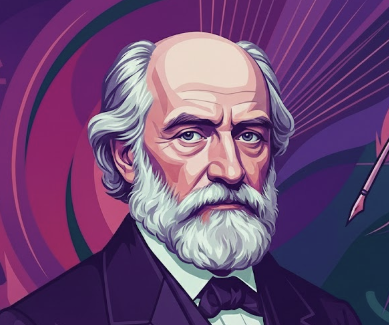
This art is music. It stands quite apart from all the others. In it we do not recognize the copy, the repetition, of any Idea of the inner nature of the world. Yet it is such a great and exceedingly fine art, its effect on man's innermost nature is so powerful, and it is so completely and profoundly understood by him in his innermost being as an entirely universal language, whose distinctness surpasses even that of the world of perception itself, that in it we certainly have to look for more than that.
▼
Source
source
Vol. I, Ch. III, The World As Representation: Second Aspect, as translated by Eric F. J. Payne, 1958
1 month 4 weeks ago
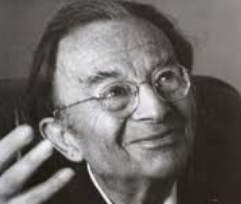
The quest for certainty blocks the search for meaning. Uncertainty is the very condition to impel man to unfold his powers.
▼
Source
source
Ch. 3
3 months 1 week ago
Nor word for word too faithfully translate.
▼
Source
source
Line 133 (tr. John Dryden)
2 months 2 weeks ago
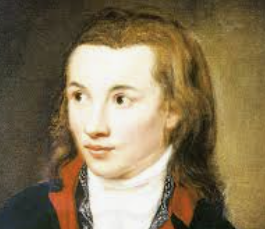
Man is a sun and his senses are the planets.

3 months 2 weeks ago
But, suppose, besides, that the making of the new machinery affords employment to a greater number of mechanics, can that be called compensation to the carpet makers, thrown on the streets?
▼
Source
source
Vol. I, Ch. 15, Section 6, pg. 479.

3 weeks 3 days ago
The repression of liberty that took place in the countries in which Communist regimes were established cannot be adequately explained as a product of backwardness, or of errors in the application of Marxian theory. It was the result of a resolute attempt to realize an Enlightenment utopia - a condition of society in which no serious form of conflict any longer exists.
▼
Source
source
'Isaiah Berlin: The Value of Decency' (p.99)
3 months 2 weeks ago
Perseus wore a magic cap that the monsters he hunted down might not see him.We draw the magic cap down over eyes and ears as a make-believe that there are no monsters.
▼
Source
source
Author's prefaces to the First Edition.
2 months 4 days ago
Knowledge is employed in the service of the necessity of life and primarily in the service of the instinct of personal preservation. The necessity and this instinct have created in man the organs of knowledge and given them such capacity as they possess. Man sees, hears, touches, tastes and smells that which it is necessary for him to see, hear, touch, taste and smell in order to preserve his life. The decay or loss of any of these senses increases the risks with which his life is environed, and if it increases them less in the state of society in which we are actually living, the reason is that some see, hear, touch, taste and smell for others. A blind man, by himself and without a guide, could not live long. Society is an additional sense; it is the true common sense.
1 week 1 day ago
Had there not been a natural goodness and indestructible force in my father, I see not how be could have bodied himself forth from these mean impediments. I suppose good precepts were not wanting. There was the Bible to read. Old John Orr, the schoolmaster, used from time to time to lodge with them; be was religious and enthusiastic (though in practice irregular with drink). In my grandfather, also, there seems to have been a certain geniality; for instance, he and a neighbor, Thomas Hogg, read "Anson's Voyages;" also tho "Arabian Nights," for which latter my father, armed with zealous conviction, scrupled not to censure them openly. By one means and another, at an early age he had acquired principles, lights that not only flickered, but shone steadily to guide his way.
3 months 1 week ago
A philosopher who is not taking part in discussions is like a boxer who never goes into the ring.
▼
Source
source
Conversation of 1930
1 month 1 week ago
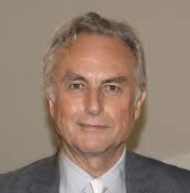
To this day, and in quarters where they should know better, Darwinism is widely regarded as a theory of 'chance'.It is grindingly, creakingly, crashingly obvious that, if Darwinism were really a theory of chance, it couldn't work. You don't need to be a mathematician or physicist to calculate that an eye or a haemoglobin molecule would take from here to infinity to self-assemble by sheer higgledy-piggledy luck. Far from being a difficulty peculiar to Darwinism, the astronomic improbability of eyes and knees, enzymes and elbow joints and the other living wonders is precisely the problem that any theory of life must solve, and that Darwinism uniquely does solve.
▼
Source
source
Chapter 3, "The Message from the Mountain" (p. 77)

2 months 4 weeks ago
Disbelieve nothing wonderful concerning the gods, nor concerning divine dogmas.
▼
Source
source
Symbol 4

1 week 1 day ago
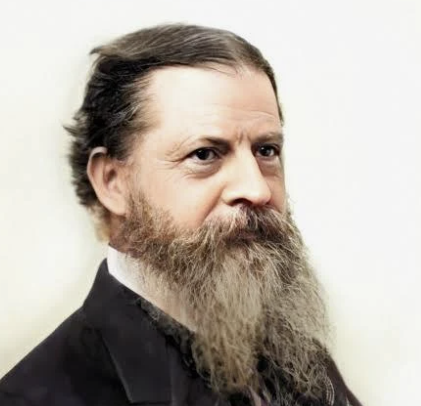
It lies deep in our habits, confirmed by all manner of educational and other arrangements for several centuries back, to consider human talent as best of all evincing itself by the faculty of eloquent speech. Our earliest schoolmasters teach us, as the one gift of culture they have, the art of spelling and pronouncing, the rules of correct speech; rhetorics, logics follow, sublime mysteries of grammar, whereby we may not only speak but write. And onward to the last of our schoolmasters in the highest university, it is still intrinsically grammar, under various figures grammar. To speak in various languages, on various things, but on all of them to speak, and appropriately deliver ourselves by tongue or pen,-this is the sublime goal towards which all manner of beneficent preceptors and learned professors, from the lowest hornbook upwards, are continually urging and guiding us.
2 months 1 week ago
Since space is continuous, it follows that there must be an immediate community of feeling between parts of mind infinitesimally close together. Without this, I believe it would have been impossible for any co-ordination to be established in the action of the nerve-matter of one brain.
2 months 1 week ago
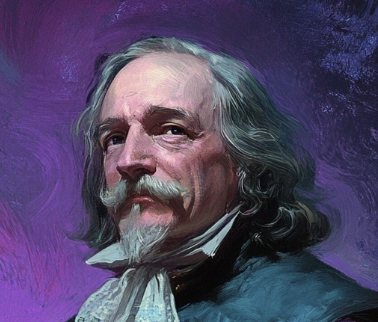
For it is not the bare Words, but the Scope of the writer that giveth true light, by which any writing is to bee interpreted; and they that insist upon single Texts, without considering the main Designe, can derive no thing from them clearly; but rather by casting atomes of Scripture, as dust before mens eyes, make everything more obscure than it is; an ordinary artifice of those who seek not the truth, but their own advantage.
▼
Source
source
The Third Part, Chapter 43, p. 331

4 months 2 weeks ago
Start with a planet like the earth, with a complement of simple compounds bound to exist upon it, add the energy of a nearby sun, and you are bound to end with nucleic acids. You can't avoid it.
1 month 1 week ago
Whenever a system of communication evolves, there is always the danger that some will exploit the system for their own ends.
▼
Source
source
Ch. 4. The Gene machine
3 months 2 weeks ago
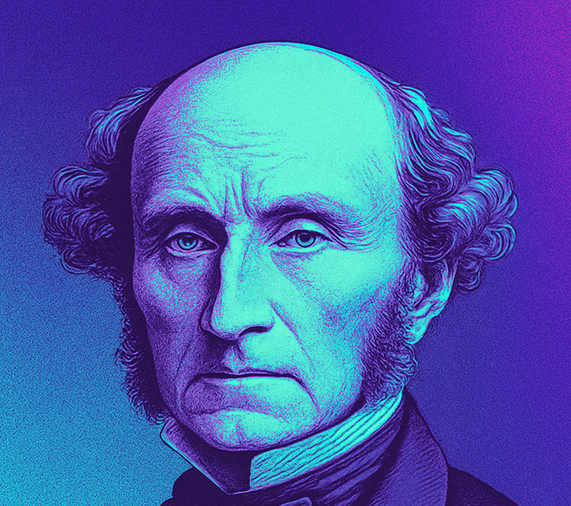
The utilitarian morality does recognise in human beings the power of sacrificing their own greatest good for the good of others. It only refuses to admit that the sacrifice is itself a good. A sacrifice which does not increase, or tend to increase, the sum total of happiness, it considers as wasted. The only self-renunciation which it applauds, is devotion to the happiness, or to some of the means of happiness, of others; either of mankind collectively, or of individuals within the limits imposed by the collective interests of mankind.
▼
Source
source
Ch. 2
3 months 2 weeks ago
United States! the ages plead, - Present and Past in under-song, - Go put your creed into your deed, Nor speak with double tongue.
▼
Source
source
Ode, st. 5

3 months 2 weeks ago
You have stolen my face from me: you know it and I no longer do.
▼
Source
source
Act 1, sc. 5
2 months 4 weeks ago
There is geometry in the humming of the strings, there is music in the spacing of the spheres.
▼
Source
source
As quoted in The Mystery of Matter (1965) edited by Louise B. Young, p. 113
3 months 1 week ago
Logic takes care of itself; all we have to do is to look and see how it does it.
▼
Source
source
Journal entry (13 October 1914), also in Tractatus Logico-Philosophicus (§ 5.47)
2 months 1 week ago
The great problems of life - sexuality, of course, among others - are always related to the primordial images of the collective unconscious. These images are really balancing or compensating factors which correspond with the problems life presents in actuality. This is not to be marvelled at, since these images are deposits representing the accumulated experience of thousands of years of struggle for adaptation and existence.
▼
Source
source
Ch. 5, p. 271

3 months 2 weeks ago
This practically amounts to saying that much that it is legitimate to admire in this field need nevertheless not be imitated, and that religious phenomena, like all other human phenomena, are subject to the law of the golden mean. Political reformers accomplish their successive tasks in the history of nations by being blind for the time to other causes. Great schools of art work out the effects which it is their mission to reveal, at the cost of a one-sidedness for which other schools must make amends. We accept a John Howard, a Mazzini, a Botticelli, a Michael Angelo, with a kind of indulgence. We are glad they existed to show us that way, but we are glad there are also other ways of seeing and taking life. So of many of the saints we have looked at. We are proud of a human nature that could be so passionately extreme, but we shrink from advising others to follow the example.
▼
Source
source
Lectures XIV and XV, "The Value of Saintliness"
3 months 2 weeks ago
If at times I have thought myself unfortunate, it is because of a confusion, an error. I have mistaken myself for someone else... Who am I really? I am the author of The World as Will and Representation, I am the one who has given an answer to the mystery of Being that will occupy the thinkers of future centuries. That is what I am, and who can dispute it in the years of life that still remain for me?
▼
Source
source
From The Total Library by Jorge Luis Borges, 1999
1 week 3 days ago
The history of utopias is no less fascinating than the history of metallurgy or of chemical engineering.
▼
Source
source
New Preface, p. vi

4 months 2 weeks ago
To work and create "for nothing," to sculpture in clay, to know one's creation has no future, to see one's work destroyed in a day while being aware that fundamentally this has no more importance than building for centuries, this is the difficult wisdom that absurd thought sanctions. Performing these two tasks simultaneously, negating on the one hand and magnifying on the other, it the way open to the absurd creator. He must give the void its colors.
3 months 2 weeks ago
Means at our disposal should be regarded as a bulwark against the many evils and misfortunes that can occur. We should not regard such wealth as a permission or even an obligation to procure for ourselves the pleasures of the world.
▼
Source
source
E. Payne, trans. (1974) Vol. 1, p. 348
2 months 4 days ago
It is the furious longing to give finality to the Universe, to make it conscious and personal, that has brought us to believe in God, to wish that God may exist, to create God, in a word. To create Him, yes! This saying ought not to scandalize even the most devout theist. For to believe in God is, in a certain sense, to create Him, although He first creates us. It is He who is continually creating Himself.
3 months 2 weeks ago
Her face seems ravaged by both lightning and hail. But on yours there is something like the promise of a storm: one day passion will burn it to the bone.
▼
Source
source
Act 1
3 months 2 weeks ago
His obedience is real since he really and truly fulfills his mission, since he runs real risks in order to carry out the beloved's orders. But, on the other hand, it is imaginary because he submits only to a creature of his mind.
▼
Source
source
p. 152
2 months 2 weeks ago
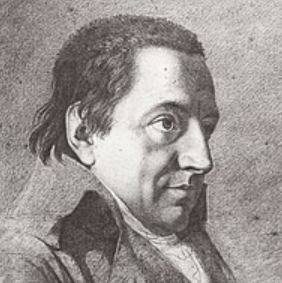
By means of the new education we want to mould the Germans into a corporate body, which shall be stimulated and animated in all its individual members by the same interest.
▼
Source
source
Introduction p. 15
2 months 1 week ago
The world is a perpetual caricature of itself; at every moment it is the mockery and the contradiction of what it is pretending to be.
▼
Source
source
"Dickens"

3 months 2 weeks ago
I do not wish to force my thoughts upon you, but I feel forced myself. Little as I know of Captain Brown, I would fain do my part to correct the tone and the statements of the newspapers, and of my countrymen generally, respecting his character and actions. It costs us nothing to be just. We can at least express our sympathy with, and admiration of, him and his companions, and that is what I now propose to do.

1 month 2 weeks ago
Omnipresence has become an ordinary human dimension.
CivilSimian.com created by AxiomaticPanic, CivilSimian, Kalokagathia