

2 months 3 weeks ago
The single spirit doth simultaneously temper the whole together; this is the single soul of all things; all are filled with God.
▼
Source
source
IV 9; as translated by Dorothea Waley Singer
2 months 3 days ago
The politician being interviewed clearly takes a great deal of trouble to imagine an ending to his sentence: and if he stopped short? His entire policy would be jeopardized!
▼
Source
source
Sentence, in The Pleasure of the Text

3 months 2 weeks ago
As image and apprehension are in an organic unity, so, for a Christian, are human body and human soul.
▼
Source
source
"Priestesses in the Church?" (1948), p. 237

3 months 2 weeks ago
All who are not lunatics are agreed about certain things. That it is better to be alive than dead, better to be adequately fed than starved, better to be free than a slave. Many people desire those things only for themselves and their friends; they are quite content that their enemies should suffer. These people can only be refuted by science: Humankind has become so much one family that we cannot ensure our own prosperity except by ensuring that of everyone else. If you wish to be happy yourself, you must resign yourself to seeing others also happy.
▼
Source
source
"The Science to Save Us from Science," The New York Times Magazine, 3/19/1950
1 month 2 weeks ago
Never promise more than you can perform.
▼
Source
source
Maxim 528
2 months 2 weeks ago
Who am I? Subject and object in one - contemplating and contemplated, thinking and thought of. As both must I have become what I am.
▼
Source
source
Jane Sinnett, trans 1846 p. 71

2 months 1 week ago
For a long time - always, in fact - I have known that life here on earth is not what I needed and that I wasn't able to deal with it; for this reason and for this reason alone, I have acquired a touch of spiritual pride, so that my existence seems to me the degradation and the erosion of a psalm.
3 months 2 weeks ago
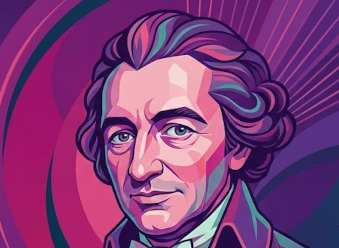
It is a want of feeling to talk of priests and bells while so many infants are perishing in the hospitals, and aged and infirm poor in the streets, from the want of necessaries.
▼
Source
source
Worship and Church Bells, 1797
3 months 2 weeks ago
In spite of Death, the mark and seal of the parental control, Man is yet free, during his brief years, to examine, to criticise, to know, and in imagination to create. To him alone, in the world with which he is acquainted, this freedom belongs; and in this lies his superiority to the resistless forces that control his outward life.
3 months 1 week ago
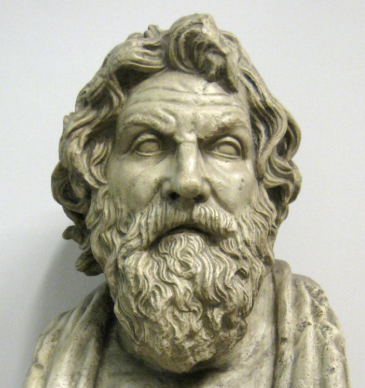
It is better to fall in with crows than with flatterers; for in the one case you are devoured when dead, in the other case while alive.
▼
Source
source
§ 4
4 months ago
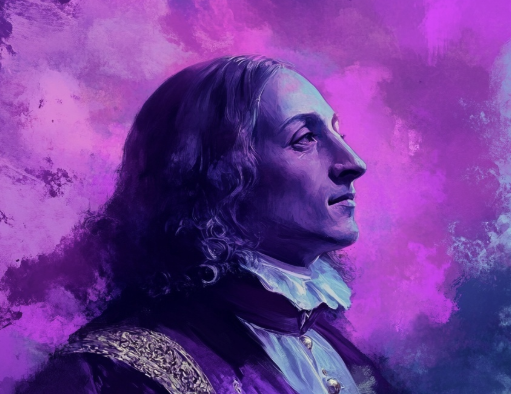
What would you say of that man who was made king by the error of the people, if he had so far forgotten his natural condition as to imagine that this kingdom was due to him, that he deserved it, and that it belonged to him of right? You would marvel at his stupidity and folly. But is there less in the people of rank who live in so strange a forgetfulness of their natural condition?

2 months 2 weeks ago
...a monarchy is a thing perfectly susceptible of reform; perfectly susceptible of a balance of power; and that, when reformed and balanced, for a great country, it is the best of all governments. The example of our country might have led France, as it has led him, to perceive that monarchy is not only reconcilable to liberty, but that it may be rendered a great and stable security to its perpetual enjoyment.
▼
Source
source
p. 400
1 month 2 weeks ago
The other part of the true religion is our duty to man. We must love our neighbour as our selves, we must be charitable to all men for charity is the greatest of graces, greater then even faith or hope & covers a multitude of sins. We must be righteous & do to all men as we would they should do to us.
▼
Source
source
Of Humanity
2 months 2 weeks ago
I am excluded from the possession of a determined object, not through the will of the other, but only through my own free-will. If I had not excluded myself, I should not be excluded. But I must exclude myself from something in virtue of the Conception of Rights.
▼
Source
source
** P. 182

3 months 1 day ago
Not much younger than these (sc. Hermotimus of Colophon and Philippus of Mende) is Euclid, who put together the Elements, collecting many of Eudoxus' theorems, perfecting many of Theaetetus', and also bringing to irrefragable demonstration the things which were only somewhat loosely proved by his predecessors. This man lived in the time of the first Ptolemy. For Archimedes, who came immediately after the first (Ptolemy), makes mention of Euclid: and, further, they say that Ptolemy once asked him if there was in geometry any shorter way than that of the elements, and he answered that there was no royal road to geometry. He is then younger than pupils of Plato but older than Eratosthenes and Archimedes; for the latter were contemporary with one another, as Eratosthenes somewhere says.
▼
Source
source
As quoted by Sir Thomas Little Heath, The Thirteen Books of Euclid's Elements (1908) Vol.1 Introduction and Books I, II p.1, citing Proclus ed. Friedlein, p. 68, 6-20.
1 month 1 week ago
To explain the origin of the DNA/protein machine by invoking a supernatural Designer is to explain precisely nothing, for it leaves unexplained the origin of the Designer.
▼
Source
source
Chapter 6 "Origins and Miracles" (p. 141)

1 month 2 weeks ago
Love hinders death. Love is life. All, everything that I understand, I understand only because I love. Everything is, everything exists, only because I love. Everything is united by it alone. Love is God, and to die means that I, a particle of love, shall return to the general and eternal source.
▼
Source
source
Thoughts of Prince Andrew Bk XII, Ch. 16
2 months 1 week ago
Incredible that the prospect of having a biographer has made no one renounce having a life.
3 months 2 weeks ago
Science, ever since the time of the Arabs, has had two functions: (1) to enable us to know things, and (2) to enable us to do things.

3 months 2 weeks ago
The external embodiment of an act is composed of many parts, and may be regarded as capable of being divided into an infinite number of particulars. An act may be looked on as in the first instance coming into contact with only one of these particulars. But the truth of the particular is the universal. A definite act is not confined in its content to one isolated point of the varied external world, but is universal, including these varied relations within itself. The purpose, which is the product of thought and embraces not the particular only but also the universal side, is intention.
▼
Source
source
Georg Wilhelm Friedrich Hegel, Philosophy of Right translated by SW Dyde Queen's University Canada 1896 p. 114-115

1 week 6 days ago
Material production - the production, for example, or cars, televisions, clothing, and food - creates the means of social life. ... Immaterial production, by contrast, including the production of ideas, knowledges, communication, cooperation, and affective relations, tends to create not the means of social life but social life itself. (146)
▼
Source
source
146

2 months 2 weeks ago
The supporters of the Development Hypothesis... can show that any existing species-animal or vegetable-when placed under conditions different from its previous ones, immediately begins to undergo certain changes fitting it for the new conditions. They can show that in successive generations these changes continue; until, ultimately, the new conditions become the natural ones. They can show that in cultivated plants, in domesticated animals, and in the several races of men, such alterations have taken place. They can show that the degrees of difference so produced are often, as in dogs, greater than those on which distinctions of species are in other cases founded.
4 months 5 days ago
The Law teaches that the universe was invented and created by God, and that it did not come into being by chance or by itself.

2 days ago
... the only contestant who can confidently enter the lists is the man who has seen his own blood, who has felt his teeth rattle beneath his opponent's fist, who has been tripped and felt the full force of his adversary's charge, who has been downed in body but not in spirit, one who, as often as he falls, rises again with greater defiance than ever.
1 month 1 week ago
It may be that brain hardware has co-evolved with the internal virtual worlds that it creates. This can be called hardware-software co-evolution.
3 months 2 weeks ago
"How then shall they have the play-games you allow them, if none must be bought for them?" I answer, they should make them themselves, or at least endeavour it, and set themselves about it. ...And if you help them where they are at a stand, it will more endear you to them than any chargeable toys that you shall buy for them.
▼
Source
source
Sec. 130
1 month 1 week ago
The end of government is to make the governed and the governors happy. That government then is thebest, which in practice produces the greatest happiness to the greatest number; including those who govern, and those who obey.
▼
Source
source
Essay Fourth, The Principles of the Former Essays Applied to Government

2 months 4 days ago
A terrible thing is intelligence. It tends to death as memory tends to stability. The living, the absolutely unstable, the absolutely individual, is strictly unintelligible. Logic tends to reduce everything to identities and genera, to each representation having no more than one self-same content in whatever place, time or relation it may occur to us. And there is nothing that remains for two successive moments of its existence. My idea of God is different each time that I conceive it. Identity, which is death, is the goal of the intellect. The mind seeks what is dead, for what is living escapes it; it seeks to congeal the flowing stream in blocks of ice; it seeks to arrest it. In order to analyze a body it is necessary to extenuate or destroy it. In order to understand anything it is necessary to kill it, to lay it out rigid in the mind.
3 months 2 weeks ago
Wherever one finds oneself inclined to bitterness, it is a sign of emotional failure: a larger heart, and a greater self-restraint, would put a calm autumnal sadness in the place of the instinctive outcry of pain.
▼
Source
source
The Collected Papers of Bertrand Russell: Contemplation and Action, 1902-1914, ed. Richard A. Rempel, Andrew Brink and Margaret Moran (Routledge, 1993
3 months 3 weeks ago
Human knowledge and human power meet in one; for where the cause is not known the effect cannot be produced. Nature to be commanded must be obeyed; and that which in contemplation is as the cause is in operation as the rule.
▼
Source
source
Aphorism 3
1 week 4 days ago
It always seems to me extreme rashness on the part of some when they want to make human abilities the measure of what nature can do. On the contrary, there is not a single effect in nature, even the least that exists, such that the most ingenious theorists can arrive at a complete understanding of it. This vain presumption of understanding everything can have no other basis than never understanding anything. For anyone who had experienced just once the perfect understanding of one single thing, and had truly tasted how knowledge is accomplished, would recognize that of the infinity of other truths he understands nothing.
▼
Source
source
Day One

2 months 1 week ago
The notion contradicts reality when the latter has become self-contradictory. Hegel says that a prevailing social form can be successfully attacked by thought only if this form has come into open contradiction with its own 'truth,' in other words, if it can no longer fulfill the demands of its own contents.
2 months 2 weeks ago
France has always more or less influenced manners in England; and when your fountain is choked up and polluted, the stream will not run long, or not run clear, with us, or perhaps with any nation. This gives all Europe, in my opinion, but too close and connected a concern in what is done in France. Excuse me, therefore, if I have dwelt too long on the atrocious spectacle of the 6th of October, 1789, or have given too much scope to the reflections which have arisen in my mind on occasion of the most important of all revolutions, which may be dated from that day, I mean a revolution in sentiments, manners, and moral opinions.
4 months 1 day ago
Little is needed to ruin and upset everything, only a slight aberration from reason.
▼
Source
source
Book IV, ch. 3, 4.
2 months 1 week ago
The great problems of life - sexuality, of course, among others - are always related to the primordial images of the collective unconscious. These images are really balancing or compensating factors which correspond with the problems life presents in actuality. This is not to be marvelled at, since these images are deposits representing the accumulated experience of thousands of years of struggle for adaptation and existence.
▼
Source
source
Ch. 5, p. 271
1 month 1 week ago
I'm not clever enough to be a physicist. When asked about why he chose to become a biologist.
▼
Source
source
UR Samtiden - Verklighetens magi 27 October 2012.
1 month 2 weeks ago
Even a single hair casts its shadow.
▼
Source
source
Maxim 228

3 months 2 weeks ago
The savage in man is never quite eradicated.
▼
Source
source
September 26, 1859
2 months 1 week ago
Thought is led, by the situation of its objects, to measure their truth in terms of another logic, another universe of discourse. And this logic projects another mode of existence: the realization of the truth in the words and deeds of man. And inasmuch as this project involves man as societal animal," the polis, the movement of thought has a political content. Thus, the Socratic discourse is political discourse inasmuch as it contradicts the established political institutions. The search for the correct definition, for the "concept" of virtue, justice, piety, and knowledge becomes a subversive undertaking, for the concept intends a new polis.
▼
Source
source
pp. 133-134
2 months ago
There is no such thing as data-driven thinking.

3 months 2 weeks ago
Abjection is a methodological conversion, like Cartesian doubt and Husserlian epoche: it establishes the world as a closed system which consciousness regards from without, in the manner of divine understanding.
▼
Source
source
p. 141
2 months 2 weeks ago
The representation of the self-sufficiency of the I can certainly co-exist with a representation of the self-sufficiency of the thing, though the self-sufficiency of the I itself cannot co-exist with that of the thing. Only one of these two can come first, only one can be the starting point; only one can be independent. The one that comes second, just because it comes second, necessarily becomes dependent upon the one that comes first, with which it is supposed to be connected. Which of these two should come first?
▼
Source
source
p. 17-18.
3 months 2 weeks ago
Since men in their endeavors behave, on the whole, not just instinctively, like the brutes, nor yet like rational citizens of the world according to some agreed-on plan, no history of man conceived according to a plan seems to be possible, as it might be possible to have such a history of bees or beavers. One cannot suppress a certain indignation when one sees men's actions on the great world-stage and finds, beside the wisdom that appears here and there among individuals, everything in the large woven together from folly, childish vanity, even from childish malice and destructiveness. In the end, one does not know what to think of the human race, so conceited in its gifts.
▼
Source
source
Introduction
2 months 1 week ago
Beauty is a pledge of the possible conformity between the soul and nature, and consequently a ground of faith in the supremacy of the good.
▼
Source
source
Pt. IV, Expression; § 67: "Conclusion.", p. 270
2 months 2 weeks ago
We have unmistakable proof that throughout all past time, there has been a ceaseless devouring of the weak by the strong.
▼
Source
source
Vol. I, Part III, Ch. 2 General Aspects of the Special-Creation-Hypothesis
2 months 1 week ago
Just because emotion is essential to that act of expression which produces a work of art, it is easy for inaccurate analysis to misconceive its mode of operation and conclude that the work of art has emotion for its significant content. One may cry out with joy or even weep upon seeing a friend from whom one has been long separated. The outcome is not an expressive object -- save to the onlooker. But if the emotion leads one to gather material that is affiliated to the mood which is aroused, a poem may result. In the direct outburst, an objective situation is the stimulus, the cause, of the emotion. In the poem, objective material becomes the content and matter of the emotion, not just its evocative occasion.
▼
Source
source
pp. 71-72
3 months 2 weeks ago
Forgiveness is the key to action and freedom.
▼
Source
source
As quoted in The Concise Columbia Dictionary of Quotations (1989) edited by Robert Andrews, p. 114
2 days ago
It is not the man who has too little, but the man who craves more, that is poor.
▼
Source
source
Line 6.
1 week 4 days ago
There is no science apart from the general. It may even be said that the very object of the exact sciences is to spare us these direct verifications.
▼
Source
source
Ch. I. (1905) Tr. George Bruce Halstead
CivilSimian.com created by AxiomaticPanic, CivilSimian, Kalokagathia