

2 months 1 week ago
I believe that one can and must hope for a sane society that furthers man's capacity to love his fellow men, to work and create, to develop his reason and his objectivity of a sense of himself that is based on the experience of his productive energy. I believe that one can and must hope for the collective regaining of a mental health that is characterized by the capacity to love and to create...
2 months 3 weeks ago
The new education must consist essentially in this, that it completely destroys freedom of will in the soil which it undertakes to cultivate, and produces on the contrary strict necessity in the decisions of the will, the opposite being impossible. Such a will can henceforth be relied on with confidence and certainty.
▼
Source
source
Addresses to the German Nation (1807), Second Address : "The General Nature of the New Education". Chicago and London, The Open Court Publishing Company, 1922, p. 20.

4 months 1 week ago
Pleasant it is, when over a great sea the winds trouble the waters, to gaze from shore upon another's great tribulation: not because any man's troubles are a delectable joy, but because to perceive from what ills you are free yourself is pleasant.
▼
Source
source
Book II, lines 1-4 (tr. Rouse)
4 months 3 weeks ago
And surely to know what this good is, is of great importance for the conduct of life, for in that case we shall be like archers shooting at a definite mark, and shall be more likely to do what is right. But, if this is the case, we must try to comprehend, in outline at least, what it is and to which of the sciences it belongs.
4 months 1 week ago
But if one should guide his life by true principles, man's greatest riches is to live on a little with contented mind; for a little is never lacking.
▼
Source
source
Book V, lines 1117-1119 (tr. Rouse)

3 months 1 week ago
Man is the measure of all things: of things which are, that they are, and of things which are not, that they are not.
▼
Source
source
As quoted in Theaetetus by Plato section 152a

2 months 3 weeks ago
Applaud us when we run, console us when we fall, cheer us when we recover.
▼
Source
source
Speech at Bristol Previous to the Election (6 September 1780), quoted in The Works of the Right Honourable Edmund Burke, Vol. II (1855), p. 129
3 months 4 weeks ago
The question of the principle of the form of the intelligible world turns, therefore, upon making apparent in what manner it is possible for several substances to be in mutual commerce, and for this reason to pertain to the same whole, which is called world. We do not here consider the world, let it be understood, as to matter, that is, as to the nature of the substances of which it consists, whether they be material or immaterial, but as to form, that is to say, how among several things taken separately a connection, and among them all, totality can have place.
2 months 3 weeks ago
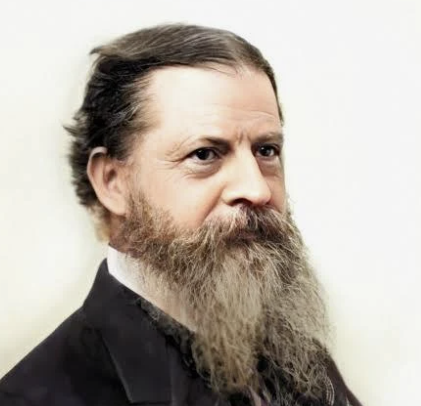
If we endeavor to form our conceptions upon history and life, we remark three classes of men. The first consists of those for whom the chief thing is the qualities of feelings. These men create art. The second consists of the practical men, who carry on the business of the world. They respect nothing but power, and respect power only so far as it [is] exercized. The third class consists of men to whom nothing seems great but reason. If force interests them, it is not in its exertion, but in that it has a reason and a law. For men of the first class, nature is a picture; for men of the second class, it is an opportunity; for men of the third class, it is a cosmos, so admirable, that to penetrate to its ways seems to them the only thing that makes life worth living.
▼
Source
source
Vol. I, par. 43

3 months 3 weeks ago
The Prodigal Son at least walked home on his own feet. But who can duly adore that Love which will open the high gates to a prodigal who is brought in kicking, struggling, resentful, and darting his eyes in every direction for a chance of escape?
3 months 3 weeks ago
Courtship is the time for sowing those seeds which will grow up ten years into domestic hatred.
▼
Source
source
Letter XXVI
3 months 2 weeks ago
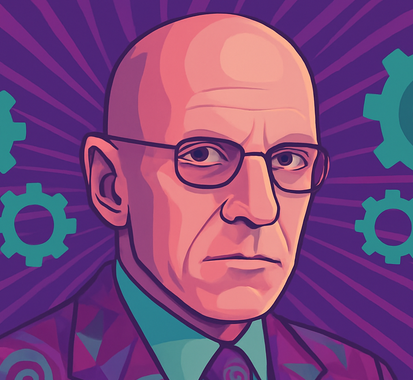
Confession frees, but power reduces one to silence; truth does not belong to the order of power, but shares an original affinity with freedom: traditional themes in philosophy, which a political history of truth would have to overturn by showing that truth is not by nature free--nor error servile--but that its production is thoroughly imbued with relations of power. The confession is an example of this.
▼
Source
source
Vol. I, p. 60

2 months 3 weeks ago
Limiting the liberty of each by the like liberty of all, excludes a wide range of improper actions, but does not exclude certain other improper ones.
▼
Source
source
Pt. II, Ch. 4 : Derivation of a First Principle, § 4
4 months 3 weeks ago
And happiness is thought to depend on leisure; for we are busy that we may have leisure, and make war that we may live in peace.
1 month 1 week ago
Owning our seeds through seed freedom, our own food through food freedom, our own minds and intelligence through intellectual freedom, our own economies through freedom to produce and consume ecologically and locally, is the 'barbarianism' that the 1% would like to extinguish.

2 months 1 week ago
A Pharisee is someone who is virtuous out of obedience to the Great Beast.
▼
Source
source
p. 125
1 week 3 days ago
But now persecution is good, because it exists; every law which originated in ignorance and malice, and gratifies the passions from whence it sprang, we call the wisdom of our ancestors: when such laws are repealed, they will be cruelty and madness; till they are repealed, they are policy and caution.
▼
Source
source
Peter Plymley's Letters (1808), Letter V
4 months 2 weeks ago
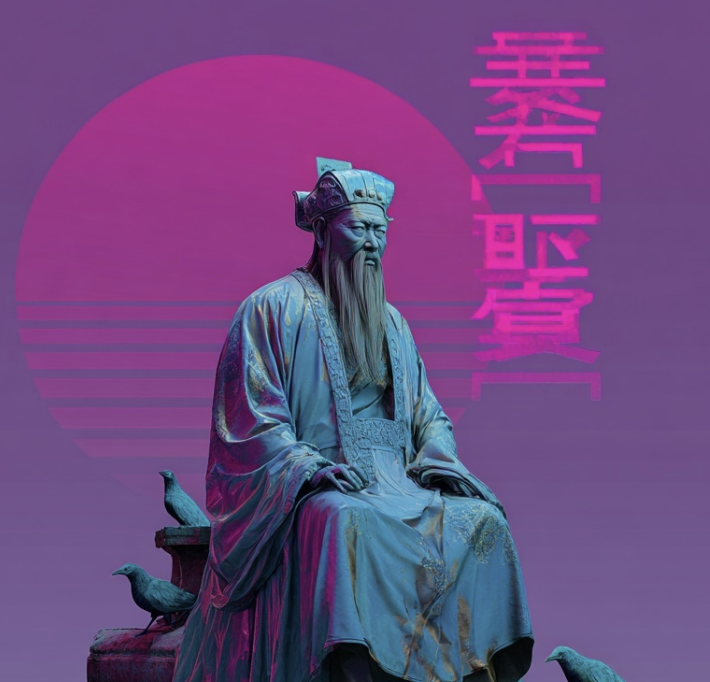
If the Superior Man is not serious, then he will not inspire awe in others. If he is not learned, then he will not be on firm ground. He takes loyalty and good faith to be of primary importance, and has no friends who are not of equal (moral) caliber. When he makes a mistake, he doesn't hesitate to correct it.
3 months 2 weeks ago
The new governmental reason does not deal with what I would call the things in themselves of governmentality, such as individuals, things, wealth, and land. It no longer deals with these things in themselves. It deals with the phenomena of politics, that is to say, interests, which precisely constitute politics and its stakes; it deals with interests, or that respect in which a given individual, thing, wealth, and so on interests other individuals or the collective body of individuals. ... In the new regime, government is basically no longer to be exercised over subjects and other things subjected through these subjects. Government is now to be exercised over what we could call the phenomenal republic of interests. The fundamental question of liberalism is: What is the utility value of government and all actions of government in a society where exchange determines the value of things?
▼
Source
source
Lecture 2, January 17, 1979, pp. 45-46

2 months 2 weeks ago
Have ye not read what David did, when he was an hungred, and they that were with him; How he entered into the house of God, and did eat the shewbread, which was not lawful for him to eat, neither for them which were with him, but only for the priests? Or have ye not read in the law, how that on the sabbath days the priests in the temple profane the sabbath, and are blameless? But I say unto you, That in this place is one greater than the temple. But if ye had known what this meaneth, I will have mercy, and not sacrifice, ye would not have condemned the guiltless.
▼
Source
source
For the Son of man is Lord even of the sabbath day. 12:3-8 (KJV) Said to some Pharisees.
2 months 2 weeks ago
Often it is only after immense intellectual effort, which may have continued over centuries, that humanity at last succeeds in achieving knowledge of a concept in its pure form, by stripping off the irrelevant accretions which veil it from the eye of the mind.
▼
Source
source
Translation J. L. Austin (Oxford, 1950) as quoted by Stephen Toulmin, Human Understanding: The Collective Use and Evolution of Concepts (1972) Vol. 1, p. 56.

2 months ago
There is one ethical principle, either you are preserving life generally, or you aren't. Preserving life in your ends and your means determines whether you are good or evil.
4 months 3 days ago
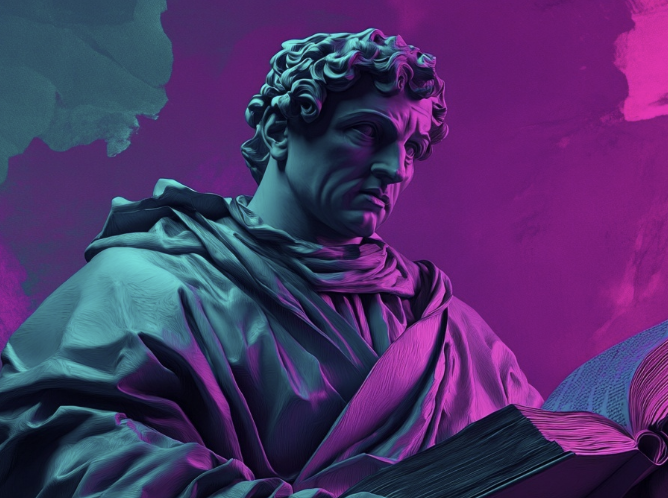
Dear rulers ... I maintain that the civil authorities are under obligation to compel the people to send their children to school. ... If the government can compel such citizens as are fit for military service to bear spear and rifle, to mount ramparts, and perform other martial duties in time of war, how much more has it a right to compel the people to send their children to school, because in this case we are warring with the devil, whose object it is secretly to exhaust our cities and principalities of their strong men.
▼
Source
source
letter to the German rulers (1524), as quoted in The History of Compulsory Education in New England, John William Perrin, 1896
4 months 3 weeks ago
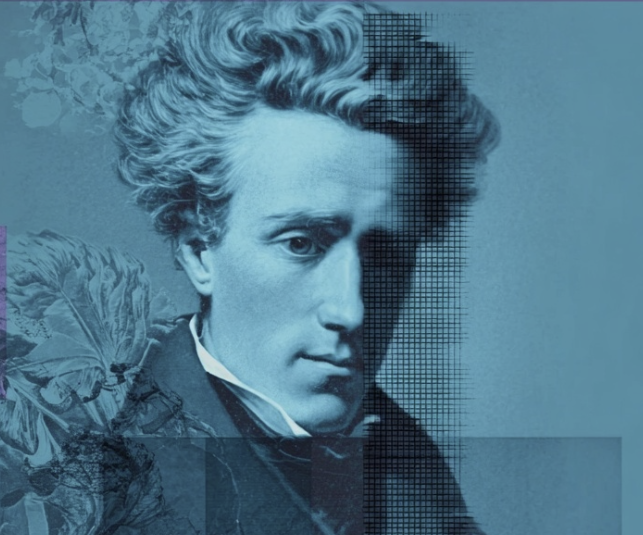
Take a book, the poorest one written, but read it with the passion that it is the only book you will read-ultimately you will read everything out of it, that is, as much as there was in yourself, and you could never get more out of reading, even if you read the best of books.

1 month 3 weeks ago
How good is it to remember one's insignificance: that of a man among billions of men, of an animal amid billions of animals; and one's abode, the earth, a little grain of sand in comparison with Sirius and others, and one's life span in comparison with billions on billions of ages. There is only one significance, you are a worker. The assignment is inscribed in your reason and heart and expressed clearly and comprehensibly by the best among the beings similar to you. The reward for doing the assignment is immediately within you. But what the significance of the assignment is or of its completion, that you are not given to know, nor do you need to know it. It is good enough as it is. What else could you desire?
▼
Source
source
Last Diaries (1979) edited by Leon Stilman, p. 77
2 weeks 5 days ago
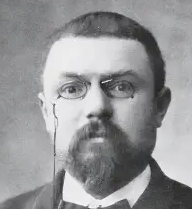
This shows, perhaps, why we have tried to put all physical phenomena into the same frame. But that can not pass for a definition of simultaneity, since this hypothetical intelligence, even if it existed, would be for us impenetrable. It is... necessary to seek something else.

2 months 3 weeks ago
A self-respecting man is a man without a country. A fatherland is birdlime...
4 months 3 days ago
This return of Republics back to their principles also results from the simple virtue of one man, without depending on any law that excites him to any execution: none the less, they are of such influence and example that good men desire to imitate him, and the wicked are ashamed to lead a life contrary to those examples.
▼
Source
source
Book 3, Ch. 1
2 months 1 week ago
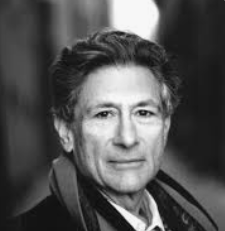
Every single empire in its official discourse has said that it is not like all the others, that its circumstances are special, that it has a mission to enlighten, civilize, bring order and democracy, and that it uses force only as a last resort. And, sadder still, there always is a chorus of willing intellectuals to say calming words about benign or altruistic empires, as if one shouldn't trust the evidence of one's eyes watching the destruction and the misery and death brought by the latest mission civilizatrice.
▼
Source
source
"Preface (2003)"

3 months 3 weeks ago
We are as much as we see. Faith is sight and knowledge. The hands only serve the eyes.
▼
Source
source
April 9, 1841
1 month 1 week ago
It is the indignity of being treated as disposable that pushes people towards religious fundamentalism in order to retrieve a sense of self, of meaning, of significance. This is why globalization breeds religious fundamentalism and free markets create terrorism and extremism, not democracy.
▼
Source
source
(p80)

3 months 1 day ago
A man may be in as just possession of Truth as of a City, and yet be forced to surrender.
▼
Source
source
Section 6

4 months 3 days ago
There is no wish more natural than the wish to know.
▼
Source
source
Ch. 13
4 months 4 days ago
Sir Henry Wotton used to say that critics are like brushers of noblemen's clothes.
▼
Source
source
No. 64
2 months 3 weeks ago
I don't need any support, advice, or compassion, because even if I am the most ruinous man, I still feel so powerful, so strong and fierce. For I am the only one that lives without hope.
2 months 2 weeks ago
Sociology does not 'negate' philosophy, in the sense of taking over the hidden content of philosophy and carrying it into social theory and practice, but sets itself up as a realm apart from philosophy, with a province and truth of its own. Comte is rightly held to be the inaugurator of this separation between philosophy and sociology.
▼
Source
source
P. 375
4 months 1 week ago
Those who deny the first principle should be flogged or burned until they admit that it is not the same thing to be burned and not burned, or whipped and not whipped.
2 months 3 weeks ago
A modest man is steady, an humble man timid, and a vain one presumptuous.
▼
Source
source
Ch. 7
3 weeks 1 day ago
In places where men are used to differences they inevitably become tolerant.
▼
Source
source
Ch. IV: "The Line of Least Resistance", p. 52
1 month 3 weeks ago
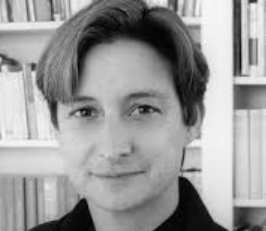
There is no practice of nonviolence that does not negotiate fundamental ethical and political ambiguities, which means that "nonviolence" is not an absolute principle, but the name of an ongoing struggle.
▼
Source
source
p. 23
2 months 1 week ago
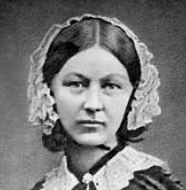
The martyr sacrifices herself (himself in a few instances) entirely in vain. Or rather not in vain; for she (or he) makes the selfish more selfish, the lazy more lazy, the narrow narrower.
▼
Source
source
As quoted in Forever Yours (1990) by Martha Vicinus and Bea Nergaard , p. 275. Letter, c. 1867, to the scholar Benjamin Jowett.
2 months 3 weeks ago
The most interesting aspect of suffering is the sufferer's belief in its absoluteness. He believes he has a monopoly on suffering. I think that I alone suffer, that I alone have the right to suffer, although I also realize that there are modalities of suffering more terrible than mine, pieces of flesh falling from the bones, the body crumbling under one's very eyes, monstrous, criminal , shameful sufferings. One asks oneself, How can this be, and if it be, how can one still speak of finality and other such old wives' tales? Suffering moves me so much that I lose all my courage. I lose heart because I do not understand why there is suffering in the world.
▼
Source
source
in essay: the monopoly of suffering
1 month 2 days ago
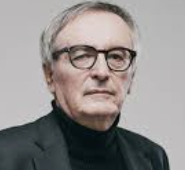
Darwinist thinkers such as Richard Dawkins and Daniel Dennett are militant opponents of Christianity. Yet their atheism and humanism are versions of Christian concepts. As a defender of Darwinism, Dawkins is committed to the view that humans are like other animal species in being 'gene machines' ruled by the laws of natural selection. He asserts nevertheless that humans, uniquely, can defy these natural laws: 'We, alone on earth, can rebel against the tyranny of the selfish replicators.' In affirming human uniqueness in this way, Dawkins relies on a Christian world-view.
▼
Source
source
Post-Apocalypse: After Secularism (pp. 265-6)
2 months 2 weeks ago
Blessed art thou, Simon Barjona: for flesh and blood hath not revealed it unto thee, but my Father which is in heaven. And I say also unto thee, That thou art Peter, and upon this rock I will build my church; and the gates of hell shall not prevail against it. And I will give unto thee the keys of the kingdom of heaven: and whatsoever thou shalt bind on earth shall be bound in heaven: and whatsoever thou shalt loose on earth shall be loosed in heaven.
▼
Source
source
16:17-19 (KJV)

2 weeks 6 days ago
Progressives on the left have shown themselves willing to abandon liberal values in pursuit of social justice objectives. There has been a sustained intellectual attack on liberal principles over the past three decades coming out of academic pursuits like gender studies, critical race theory, postcolonial studies, and queer theory, that deny the universalistic premises underlying modern liberalism. The challenge is not simply one of intolerance of other views or "cancel culture" in the academy or the arts. Rather, the challenge is to basic principles that all human beings were born equal in a fundamental sense, or that a liberal society should strive to be color-blind.
4 months 3 days ago
I would advise no one to send his child where the Holy Scriptures are not supreme. Every institution that does not unceasingly pursue the study of God's word becomes corrupt. Because of this we can see what kind of people they become in the universities and what they are like now. Nobody is to blame for this except the pope, the bishops, and the prelates, who are all charged with training young people. The universities only ought to turn out men who are experts in the Holy Scriptures, men who can become bishops and priests, and stand in the front line against heretics, the devil, and all the world. But where do you find that? I greatly fear that the universities, unless they teach the Holy Scriptures diligently and impress them on the young students, are wide gates to hell.
▼
Source
source
To the Christian Nobility of the German States (1520), translated by Charles M. Jacobs, reported in rev. James Atkinson, The Christian in Society, I (Luther's Works, ed. James Atkinson, vol. 44), p. 207

3 months 1 week ago
To use Virtue is perfect blessedness.

1 month 2 weeks ago
Those who cannot find moral clarity are likely to settle for the far more dangerous simplicity, or purity, instead.

2 weeks 2 days ago
Innumerable are the illusions and legerdemain-tricks of Custom: but of all these, perhaps the cleverest is her knack of persuading us that the Miraculous, by simple repetition, ceases to be Miraculous.
▼
Source
source
Bk. III, ch. 8.
2 months 3 weeks ago
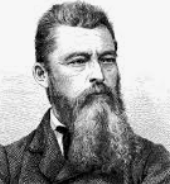
I have always taken as the standard of the mode of teaching and writing, not the abstract, particular, professional philosopher, but universal man, that I have regarded man as the criterion of truth, and not this or that founder of a system, and have from the first placed the highest excellence of the philosopher in this, that he abstains, both as a man and as an author, from the ostentation of philosophy, i.e., that he is a philosopher only in reality, not formally, that he is a quiet philosopher, not a loud and still less a brawling one.
▼
Source
source
Preface to Second Edition
CivilSimian.com created by AxiomaticPanic, CivilSimian, Kalokagathia