


2 months 2 weeks ago
Wherever ideas come together they tend to weld into general ideas; and whenever they are generally connected, general ideas govern the connection; and these general ideas are living feelings spread out.
2 months 2 days ago
If reason is both transcendent and immanent, then philosophy, as culture-bound reflection and argument about eternal questions, is both in time and eternity. We don't have an Archimedean point; we always speak the language of a time and place; but the rightness and wrongness of what we say is not just for a time and a place.
▼
Source
source
Why reason can't be naturalized

1 week 2 days ago
Who else is the enemy of Nature but he who mistakes himself for more intelligent than Nature, though it is the highest school for all of us?
2 weeks 2 days ago
For what gives my work its peculiar quality, and what is most remarkable in the present age, is this. Fortune has guided almost all the affairs of the world in one direction and has forced them to incline towards one and the same end; a historian should likewise bring before his readers under one synoptical view the operations by which she has accomplished her general purpose.

2 months 2 weeks ago
I Jesus have sent mine angel to testify unto you these things in the churches. I am the root and the offspring of David, and the bright and morning star.
▼
Source
source
Revelation 22:17

3 months 3 weeks ago
Whatever games are played with us, we must play no games with ourselves, but deal in our privacy with the last honesty and truth.
▼
Source
source
Illusions

3 months 2 weeks ago
The problems are dissolved in the actual sense of the word - like a lump of sugar in water.
▼
Source
source
Ch. 9 : Philosophy, p. 183
1 week 2 days ago
Great men hallow a whole people and lift up all who live in their time.
▼
Source
source
Ireland, published in The Edinburgh Review
3 months 3 weeks ago
There are two laws discrete Not reconciled, Law for man, and law for thing.
▼
Source
source
Ode: Inscribed to W. H. Channing, st. 9

3 months 3 weeks ago
The life of man is a long march through the night, surrounded by invisible foes, tortured by weariness and pain, towards a goal that few can hope to reach, and where none may tarry long.
2 months 1 week ago
Horace and Aristotle told us of the virtues of their fathers, and the vices of their own time, and authors down through the centuries have told us the same. If they were right, men would now be bears.
1 month 3 weeks ago
The population of the US is nearly 300 million, including many of the best educated, most talented, most resourceful, humane people on earth. By almost any measure of civilised attainment, from Nobel prize-counts on down, the US leads the world by miles. You would think that a country with such resources, and such a field of talent, would be able to elect a leader of the highest quality. Yet, what has happened? At the end of all the primaries and party caucuses, the speeches and the televised debates, after a year or more of non-stop electioneering bustle, who, out of that entire population of 300 million, emerges at the top of the heap? George Bush.
▼
Source
source
"Bin Laden's victory " The Guardian

2 months 1 week ago
Motherhood in the true sense should embrace all children. Because so few realize this truth, child life is so empty of warmth, of love, of color, and beauty. A home-what is it to-day but a cage from which most of its inhabitants wish to escape? No, I should never have found happiness in such a place. My ideals, the struggle for them, and whatever hardships and suffering they have brought, far from wasting my life, have enriched it a thousandfold. To me it has been a grand adventure which I should not have missed for all the wealth in the world.
3 months 3 weeks ago
The activity of to-day and the assurance of to-morrow.
▼
Source
source
p. 215

3 months 3 weeks ago
You are never too old to set another goal, or to dream a new dream. Unknown, but also attributed to Les Brown, a motivational speaker. Commonly attributed to C.S. Lewis, but never with a primary source listed.
4 months 1 week ago
One man will say a thing of himself without comprehending its excellence, in which another will discern a marvelous series of conclusions, which makes us affirm that it is no longer the same expression, and that he is no more indebted for it to the one from whom he has learned it, than a beautiful tree belongs to the one who cast the seed, without thinking of it, or knowing it, into the fruitful soil which caused its growth by its own fertility.



4 months 1 week ago
Charity, by which God and neighbor are loved, is the most perfect friendship.
▼
Source
source
Disputed Questions: On Charity, c. 1270

1 week 2 days ago
Socrates was ennobled by the hemlock draught. Wrench from Cato's hand his sword, the vindicator of liberty, and you deprive him of the greatest share of his glory.

3 months 2 weeks ago
He who upholds Truth with all the might of his power, He who upholds Truth the utmost in his word and deed,He, indeed, is Thy most valued helper, O Mazda Ahura!
▼
Source
source
Ahunuvaiti Gatha; Yasna 31, 22.

2 months 1 week ago
And yet Catholicism does not abandon ethics. No! No modern religion can leave ethics on one side. But our religion - although its doctors may protest against this - is fundamentally and for the most part a compromise between eschatology and ethics; it is eschatology pressed into the service of ethics. What else but this is that atrocity of the eternal pains of hell, which agrees so ill with the Pauline apocatastasis? Let us bear in mind these words which the Theologica Germanica, the manual of mysticism that Luther read, puts into the mouth of God: "If I must recompense your evil, I must recompense it with good, for I am and have no other." And Christ said: "Father, forgive them, for they know not what they do," and there is no man who perhaps knows what he does.
2 months 1 week ago
I know that all this is dull reading, tiresome, perhaps tedious, but it is all necessary. And I must repeat once again that we have nothing to do with a transcendental police system or with the conversion of God into a great Judge or Policeman - that is to say, we are not concerned with heaven or hell considered as buttresses to shore up our poor earthly mortality, nor are we concerned with anything egoistic or personal. It is not I myself alone, it is the whole human race that is involved, it is the ultimate finality of all our civilization. I am but one, but all men are I's.
4 months 1 week ago
If there is something more excellent than the truth, then that is God; if not, then truth itself is God.

3 months 4 weeks ago
The ancient Egyptians had a superstitious antipathy to the sea; a superstition nearly of the same kind prevails among the Indians; and the Chinese have never excelled in foreign commerce.
▼
Source
source
Chapter V, p. 402.
4 months 1 week ago
Suppose a person entering a house were to feel heat on the porch, and going further, were to feel the heat increasing, the more they penetrated within. Doubtless, such a person would believe there was a fire in the house, even though they did not see the fire that must be causing all this heat. A similar thing will happen to anyone who considers this world in detail: one will observe that all things are arranged according to their degrees of beauty and excellence, and that the nearer they are to God, the more beautiful and better they are.
▼
Source
source
Art. 1
3 months 4 weeks ago
No fixed capital can yield any revenue but by means of a circulating capital.
▼
Source
source
Chapter I, p. 311.
1 month 3 weeks ago
Whatever it may be, animals have always had, until our era, a divine or sacrificial nobility that all mythologies recount. Even murder by hunting is still a symbolic relation, as opposed to an experimental dissection. Even domestication is still a symbolic relation, as opposed to industrial breeding. One only has to look at the status of animals in peasant society. And the status of domestication, which presupposes land, a clan, a system of parentage of which the animals are a part, must not be confused with the status of the domestic pet-the only type of animals that are left to us outside reserves and breeding stations-dogs, cats, birds, hamsters, all packed together in the affection of their master. The trajectory animals have followed, from divine sacrifice to dog cemeteries with atmospheric music, from sacred defiance to ecological sentimentality, speaks loudly enough of the vulgarization of the status of man himself.
▼
Source
source
"The Animals: Territory and Metamorphoses," p. 134
3 months 3 weeks ago
Not from a vain or shallow thought His awful Jove young Phidias brought.
▼
Source
source
The Problem, st. 2
3 months 2 weeks ago
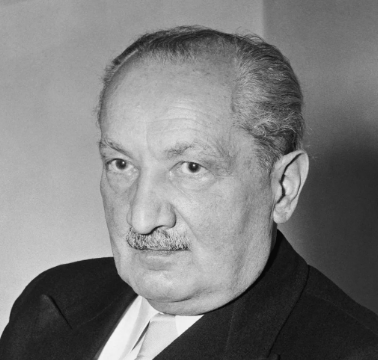
In Nietzsche's view nihilism is not a Weltanschauung that occurs at some time and place or another; it is rather the basic character of what happens in Occidental history.
▼
Source
source
p. 26
4 months 3 weeks ago
Therefore only an utterly senseless person can fail to know that our characters are the result of our conduct.
3 months 4 weeks ago
Whenever the legislature attempts to regulate the differences between masters and their workmen, its counsellors are always the masters. When the regulation, therefore, is in favor of the workmen, it is always just and equitable; but it is sometimes otherwise when in favor of the masters.
▼
Source
source
Chapter x, Part II, p. 168.
2 months 3 weeks ago
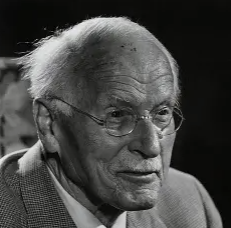
Just as man as a social being, cannot in the long run exist without a tie to the community, so the individual will never find the real justification for his existence, and his own spiritual and moral autonomy, anywhere except in an extramundane principle capable of relativizing the overpowering influence of external factors.
▼
Source
source
p 23
3 months 4 weeks ago
Nobody ever saw a dog make a fair and deliberate exchange of one bone for another with another dog.
▼
Source
source
Chapter II, p. 14.

2 months 2 weeks ago
We suffer: the external world begins to exist . . . ; we suffer to excess: it vanishes. Pain instigates the world only to unmask its unreality.

1 month 1 day ago
If our universe is one of many, unlike others in containing observers like ourselves, there is no need to posit a designer. Most universes will be too chaotic to allow the emergence of life or mind. In that case, the fact that humans exist in this universe needs no special explanation.
▼
Source
source
Sweet Morality (p. 222)
4 months 1 week ago
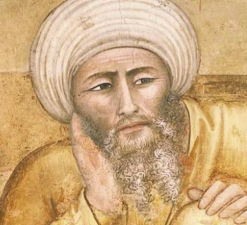
After logic we must proceed to philosophy proper. Here too we have to learn from our predecessors, just as in mathematics and law. Thus it is wrong to forbid the study of ancient philosophy. Harm from it is accidental, like harm from taking medicine, drinking water, or studying law.

3 months 3 weeks ago
In the old dramas it was love that had to be sacrificed to painful duty. In the modern instance the sacrifice is at the shrine of what William James called "the Bitch Goddess, Success." Love is to be abandoned for the stern pursuit of newspaper notoriety and dollars.
▼
Source
source
"Silence is Golden," p. 61
2 months 6 days ago
The narcissistic, the domineering, the possessive woman can succeed in being a "loving" mother as long as the child is small. Only the really loving woman, the woman who is happier in giving than in taking, who is firmly rooted in her own existence, can be a loving mother when the child is in the process of separation.
▼
Source
source
Ch. 2

3 months 2 weeks ago
'Tis well to restrain the wicked, and in any case not to join him in his wrong-doing.
3 months 2 weeks ago
If you tried to doubt everything you would not get as far as doubting anything. The game of doubting itself presupposes certainty.
2 months 3 weeks ago
The assumption that the human psyche possesses layers that lie below consciousness is not likely to arouse serious opposition. But... there could just as well be layers lying above consciousness... The conscious mind can only claim a relatively central position and must put up with the fact that the unconscious psyche transcends and as it were surrounds it on all sides. Unconscious contents connect it backward with the physiological states on the one hand and archetypal data on the other. But it is extended forward by intuitions which are conditioned partly by archetypes and partly by subliminal perceptions depending on the relativity of time and space in the unconscious.
▼
Source
source
p. 132
3 months 2 weeks ago
The idealist tradition, including contemporary phenomenology, has of course admitted subjective points of view as basic and has gone to the opposite length of denying an irreducible objective reality. ... I find the idealist solution unacceptable ...: objective reality cannot be analyzed or shut out of existence any more than subjective reality can. Even if not everything is something from no point of view, some things are.The deep source of both idealism and its objectifying opposite is the same: a conviction that a single world cannot contain both irreducible points of view and irreducible objective reality - that one of them must be what there really is and the other somehow reducible or dependent on it. This is a very powerful idea. To deny it is in a sense to deny that there is a single world.
▼
Source
source
"Subjective and Objective" (1979), p. 212.
4 months 3 days ago
This misplacing hath caused a deficience, or at least a great improficience in the sciences themselves. For the handling of final causes, mixed with the rest in physical inquiries, hath intercepted the severe and diligent inquiry of all real and physical causes, and given men the occasion to stay upon these satisfactory and specious causes, to the great arrest and prejudice of further discovery. For this I find done not only by Plato, who ever anchoreth upon that shore, but by Aristotle, Galen, and others which do usually likewise fall upon these flats of discoursing causes.
▼
Source
source
Book VII, 7
4 months 3 weeks ago
Again, it is possible to fail in many ways (for evil belongs to the class of the unlimited ... and good to that of the limited), while to succeed is possible only in one way (for which reason also one is easy and the other difficult—to miss the mark easy, to hit it difficult); for these reasons also, then, excess and defect are characteristic of vice, and the mean of virtue; For men are good in but one way, but bad in many.
4 months 1 week ago
Come the Day of Judgment, some believe that the body will be different from our present body. This is only transient, that will be eternal. For this also there are religious arguments.

2 weeks 5 days ago
The second failing of liberalism comes directly out of the fact that it attempts to lower the horizons of politics. Liberal societies do not want to tell you how to live. They do not want to define "the good life" because that is the source of conflict, but as a result liberal societies tend not to satisfy these very deep human cravings for community, because... there's something wrong with the basic liberal premise that we all start... as self-interested individuals. We're not self-interested individuals.
▼
Source
source
15:22

2 months 3 weeks ago
Do a man dirt, yourself you hurt.

3 months 3 weeks ago
There ought to be some regulation with respect to the spirit of denunciation that now prevails. If every individual is to indulge his private malignancy or his private ambition, to denounce at random and without any kind of proof, all confidence will be undermined and all authority be destroyed. Calumny is a species of treachery that ought to be punished as well as any other kind of treachery. It is a private vice productive of public evils; because it is possible to irritate men into disaffection by continual calumny who never intended to be disaffected. It is therefore equally as necessary to guard against the evils of unfounded or malignant suspicion as against the evils of blind confidence. It is equally as necessary to protect the characters of public officers from calumny as it is to punish them for treachery or misconduct.
▼
Source
source
Letter to George Jacques Danton

2 weeks 1 day ago
If Governments neglect to invite what noble intellect there is, then too surely all intellect, not omnipotent to resist bad influences, will tend to become beaverish ignoble intellect; and quitting high aims, which seem shut up from it, will help itself forward in the way of making money and such like; or will even sink to be sham intellect, helping itself by methods which are not only beaverish but vulpine, and so "ignoble" as not to have common honesty.
2 months 3 weeks ago
While all these are disturbed and divided by the multifarious objects to which their thoughts must be applied, the Philosopher pursues, in solitary silence and in unbroken concentration of mind, his single and undeviating course towards the Good, the Beautiful, and the True; and that is his daily labour, to which others can only resort at times for rest and refreshment after toil.
▼
Source
source
P. 17
CivilSimian.com created by AxiomaticPanic, CivilSimian, Kalokagathia