

2 months 1 week ago
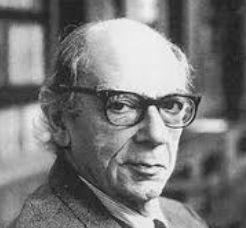
This they do in the service of an imaginary science; and, like the astrologers and soothsayers whom they have succeeded, cast up their eyes to the clouds, and speak in immense, unsubstantiated images and similes, in deeply misleading metaphors and allegories, and make use of hypnotic formulae with little regard for experience, or rational argument, or tests of proven reliability. Thereby they throw dust in their own eyes as well as in ours, obstruct our vision of the real world, and further confuse an already sufficiently bewildered public about the relations of morality to politics, and about the nature and methods of the natural sciences and historical studies alike.
1 month 1 week ago
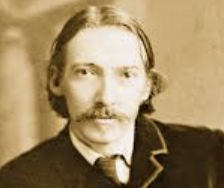
A man, Mr. Scrymgeour, may fall into a thousand perplexities, but if his heart be upright and his intelligence unclouded, he will issue from them all without dishonour.
▼
Source
source
The Rajah's Diamond, Story of the House with the Green Blinds.
1 month 1 week ago
And perhaps this habit of much travel, and the engendering of scattered friendships, may prepare the euthanasia of ancient nations.
▼
Source
source
Pt. I, ch. II.
2 months ago
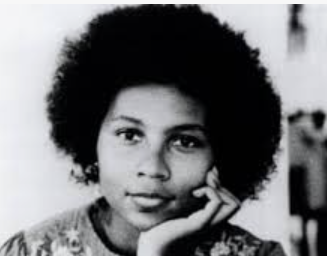
Lying takes the form of mass media creating the myth that feminist movement has completely transformed society, so much so that the politics of patriarchal power have been inverted and that men, particularly white men, just like emasculated black men, have become the victims of dominating women. So, it goes, all men (especially black men) must pull together (as in the Clarence Thomas hearings) to support and reaffirm patriarchal domination. Add to this the widely held assumptions that blacks, other minorities, and white women are taking jobs from white men, and that people are poor and unemployed because they want to be, and it becomes most evident that part of our contemporary crisis is created by a lack of meaningful access to truth.
▼
Source
source
Teaching to Transgress: Education as the Practice of Freedom
3 months 2 weeks ago
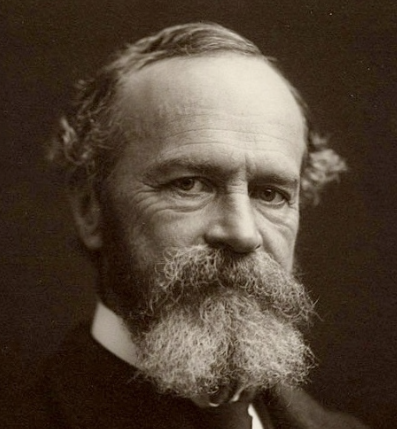
The pivot round which the religious life... revolves, is the interest of the individual in his private personal destiny. Religion, in short, is a monumental chapter in the history of human egotism. The gods believed in-whether by crude savages or by men disciplined intellectually-agree with each other in recognizing personal calls. Religious thought is carried on in terms of personality, this being, in the world of religion, the one fundamental fact. To-day, quite as much as at any previous age, the religious individual tells you that the divine meets him on the basis of his personal concerns.
▼
Source
source
Lecture XX, "Conclusions"
3 months 3 days ago
Being summoned by the Athenians out of Sicily to plead for his life, Alcibiades absconded, saying that that criminal was a fool who studied a defence when he might fly for it.
▼
Source
source
51 Alcibiades
2 months 2 weeks ago
The earth with yellow pears And overgrown with roses wild Upon the pond is bent, And swans divine, With kisses drunk You drop your heads In the sublimely sobering water. But where, with winter come, am I To find, alas, the floweres, and where The sunshine And the shadow of the world? Cold the walls stand And the wordless, in the wind The weathercocks are rattling.
▼
Source
source
"Halves of Life"

4 months 2 weeks ago
In an age as agitated as ours, it no longer suffices just to be advertised in the newspaper. To be advertised in this way is the same thing as being consigned to oblivion. If one is to be noticed, once must as least appear on the first page under a hand that points to and, as it were, announces or advertises the advertisement.

3 months 2 weeks ago
All human activity is prompted by desire. There is a wholly fallacious theory advanced by some earnest moralists to the effect that it is possible to resist desire in the interests of duty and moral principle. I say this is fallacious, not because no man ever acts from a sense of duty, but because duty has no hold on him unless he desires to be dutiful. If you wish to know what men will do, you must know not only, or principally, their material circumstances, but rather the whole system of their desires with their relative strengths.
▼
Source
source
(wav audio file of Russell's voice)
4 months 5 days ago
Corpses are more fit to be cast out than dung.

3 months 1 week ago
What I hold fast to is not one proposition but a nest of propositions.
3 months 2 weeks ago
Choose your parents wisely.
▼
Source
source
On the recipe for longevity; Collected Papers of Bertrand Russell, Vol. 29, 2012
1 month 1 week ago
If wine is to withdraw its most poetic countenance, the sun of the white dinner-cloth, a deity to be invoked by two or three, all fervent, hushing their talk, degusting tenderly, and storing reminiscences-for a bottle of good wine, like a good act, shines ever in the retrospect-if wine is to desert us, go thy ways, old Jack!
▼
Source
source
Pt. I, ch. III
1 month 4 weeks ago
The most important misunderstanding seems to me to lie in a confusion between the human necessities which I consider part of human nature, and the human necessities as they appear as drives, needs, passions, etc., in any given historical period. This division is not very different from Marx's concept of "human nature in general", to be distinguished from "human nature as modified in each historical period". The same distinction exists in Marx when he distinguishes between "constant" or "fixed" drives and "relative" drives. The constant drives "exist under all circumstances and ... can be changed by social conditions only as far as form and direction are concerned". The relative drives "owe their origin only to a certain type of social organization".
1 month 2 days ago
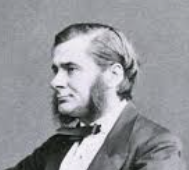
History warns us, however, that it is the customary fate of new truths to begin as heresies and to end as superstitions; and, as matters now stand, it is hardly rash to anticipate that, in another twenty years, the new generation, educated under the influences of the present day, will be in danger of accepting the main doctrines of the 'Origin of Species' with as little reflection, and it may be with as little justification, as so many of our contemporaries, twenty years ago, rejected them. Against any such a consummation let us all devoutly pray; for the scientific spirit is of more value than its products, and irrationally held truths may be more harmful than reasoned errors.
▼
Source
source
The Coming of Age of The Origin of Species (1880); Collected Essays, vol. 2

2 months 1 week ago
I have cast fire upon the world, and see, I am guarding it until it blazes.

1 day ago
Would not anyone who is a man have his slumbers broken by a war-trumpet rather than by a chorus of serenaders?
3 months 2 weeks ago
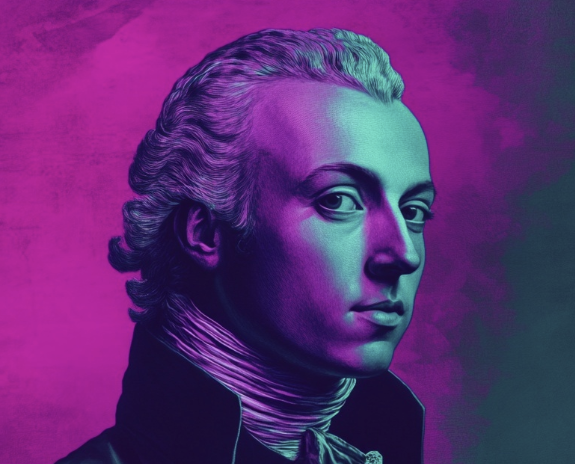
The question of the principle of the form of the intelligible world turns, therefore, upon making apparent in what manner it is possible for several substances to be in mutual commerce, and for this reason to pertain to the same whole, which is called world. We do not here consider the world, let it be understood, as to matter, that is, as to the nature of the substances of which it consists, whether they be material or immaterial, but as to form, that is to say, how among several things taken separately a connection, and among them all, totality can have place.

2 months 2 days ago
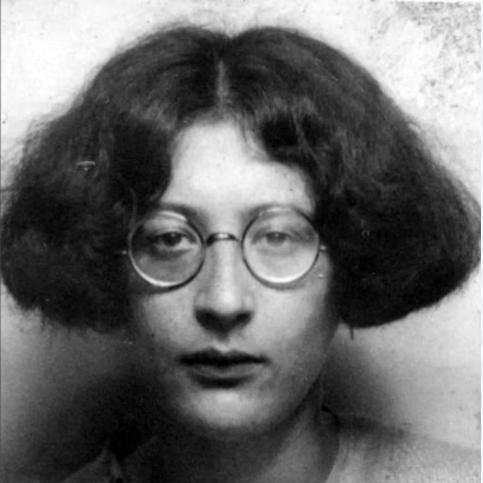
The most important part of education - to teach the meaning of to know (in the scientific sense). The last statement in her notebook

3 months 2 weeks ago
That Man is the product of causes that had no prevision of the end they were achieving; that his origin, his growth, his hopes and fears, his loves and his beliefs, are but the outcome of accidental collocations of atoms; that no fire, no heroism, no intensity of thought and feeling, can preserve individual life beyond the grave; that all the labors of the ages, all the devotion, all the inspiration, all the noonday brightness of human genius, are destined to extinction in the vast death of the solar system, and that the whole temple of Man's achievement must inevitably be buried beneath the debris of a universe in ruins - all these things, if not quite beyond dispute, are yet so nearly certain that no philosophy which rejects them can hope to stand. Only within the scaffolding of these truths, only on the firm foundation of unyielding despair, can the soul's habitation henceforth be safely built.
1 month 1 week ago
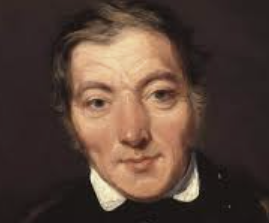
What ideas individuals may attach to the term "Millennium" I know not; but I know that society may be formed so as to exist without crime, without poverty, with health greatly improved, with little, if any misery, and with intelligence and happiness increased a hundredfold; and no obstacle whatsoever intervenes at this moment except ignorance to prevent such a state of society from becoming universal.
3 months 2 weeks ago
How you produce volume after volume the way you do is more than I can conceive. ...But you haven't to forge every sentence in the teeth of irreducible and stubborn facts as I do. It is like walking through the densest brush wood.
▼
Source
source
Letter to Henry James (ca. 1890) as quoted by Robert D. Richardson, William James: In the Maelstrom of American Modernism (2007) p. 297.
3 months 2 weeks ago
Most of us are not neutral in feeling, but, as human beings, we have to remember that, if the issues between East and West are to be decided in any manner that can give any possible satisfaction to anybody, whether Communist or anti-Communist, whether Asian or European or American, whether White or Black, then these issues must not be decided by war. We should wish this to be understood, both in the East and in the West.

2 months 1 week ago
What an incitation to hilarity, hearing the word goal while following a funeral procession!

4 months 2 weeks ago
Ideas are cheap. It's only what you do with them that counts.

4 months 2 weeks ago
These people who have fled inward for their freedom also have to live outwardly, become visible, let themselves be seen; they are united with mankind through countless ties of blood, residence, education, fatherland, chance, the importunity of others; they are likewise presupposed to harbour countless opinions simply because these are the ruling opinions of the time; every gesture which is not clearly a denial counts as agreement.

3 months 3 weeks ago
We are much beholden to Machiavel and others, that write what men do, and not what they ought to do.
▼
Source
source
Book II, xxi, 9
3 months 2 weeks ago
The life of man is a long march through the night, surrounded by invisible foes, tortured by weariness and pain, towards a goal that few can hope to reach, and where none may tarry long.
2 months 1 week ago
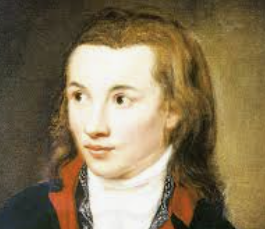
Nature is an Æolian Harp, a musical instrument; whose tones again are keys to higher strings in us.
1 week 3 days ago
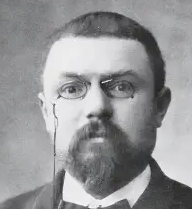
We have not a direct intuition of the equality of two intervals of time.

3 months 3 weeks ago
When we are inclined to boast of our position [as Christians] we should remember that we are but Gentiles, while the Jews are of the lineage of Christ. We are aliens and in-laws; they are blood relatives, cousins, and brothers of our Lord. Therefore, if one is to boast of flesh and blood the Jews are actually nearer to Christ than we are.
▼
Source
source
That Jesus Christ Was Born a Jew Luther's Works, American Edition (Philadelphia: Fortress Press, 1962), Vol. 45, p. 201
4 months 2 weeks ago
Philosophy is the science of truth.

3 months 2 weeks ago
How does it become a man to behave toward this American government today? I answered that he cannot without disgrace be associated with it.

4 months 1 week ago
Art, at least, teaches us that man cannot be explained by history alone and that he also finds a reason for his existence in the order of nature.
2 months 2 weeks ago
Whoever hasn't yet arrived at the clear realization that there might be a greatness existing entirely outside his own sphere and for which he might have absolutely no feeling; whoever hasn't at least felt obscure intimations concerning the approximate location of this greatness in the geography of the human spirit: that person either has no genius in his own sphere, or else he hasn't been educated to the level of the classic.
▼
Source
source
Lucinde and the Fragments, P. Firchow, trans. (1991), "Critical Fragments," § 36

3 months 3 weeks ago
Let us give Nature a chance; she knows her business better than we do.
▼
Source
source
Ch. 13

2 months 2 weeks ago
Resolved to die in the last dike of prevarication.
▼
Source
source
Speech on the sixth article of charge in the impeachment of Warren Hastings (7 May 1789), quoted in The Works of the Right Honourable Edmund Burke, Volume the Tenth (1899), p. 406

2 months ago
The term many presupposes the term one, and the term one presupposes the term many.
▼
Source
source
Pt. I, ch. 2, sec. 2.
3 months 2 weeks ago
Several actual worlds without one another are not, therefore, impossible by the very concept, as Wolf hastily concluded from the notion of a complex or multiplicity which he deemed sufficient to a whole, as such, but only on condition that there exist but one necessary cause of all things. If several are admitted, several worlds without one another will be possible in the strictest metaphysical sense.

1 month 4 weeks ago
I have said that, in a sense, the parasites were a 'shadow' of man's cowardice and passivity. Their strength could increase in an atmosphere of defeat and panic, for it fed on human fear. In that case, the best way to combat them was to change the atmosphere to one of strength and purpose.
▼
Source
source
p. 188

2 months 3 days ago
And what has Don Quixote left, do you ask? I answer, he has left himself, and a man, a living and eternal man, is worth all the theories and all the philosophies. Other peoples have left chiefly institutions, books; we have left souls; St. Teresa is worth any institution, any Critique of Pure Reason.

2 months 3 weeks ago
As soon as laws are necessary for men, they are no longer fit for freedom.
▼
Source
source
As quoted in Short Sayings of Great Men: With Historical and Explanatory Notes (1882) by Samuel Arthur Bent, p. 454
3 months 2 weeks ago
It's not the experience that happens to you: it's what you do with the experience that happens to you.
▼
Source
source
Attributed to Russell in Slaby's Sixty Ways to Make Stress Work for You, 1987

1 month 1 week ago
He dies twice who perishes by his own hand.
▼
Source
source
Maxim 97
2 days ago
The characteristic feature of militarism is not the fact that a nation has a powerful army or navy. It is the paramount role assigned to the army within the political structure. Even in peacetime the army is supreme; it is the predominant factor in political life. The subjects must obey the government as soldiers must obey their superiors. Within a militarist community there is no freedom; there are only obedience and discipline.
▼
Source
source
Omnipotent Government: The Rise of the Total State and Total War

3 months 2 weeks ago
We boil at different degrees.
▼
Source
source
Eloquence
1 month 4 weeks ago
Now he saw the problem with great clarity. If he lived here, life would be pleasant and safe. But it would also be predictable. A child could be born here, grow up here, die here, without ever experiencing the excitement of discovery. Why did Dona question him endlessly about his life in the burrow and his journey to the country of the ants? Because for her, it represented a world that was dangerous and full of fascinating possibilities. For the children of this underground city, life was a matter of repetition, of habit. And this, he suddenly realized, was the heart of the problem. Habit. Habit was a stifling, warm blanket that threatened you with suffocation and lulled the mind into a state of perpetual nagging dissatisfaction. Habit meant the inability to escape from yourself, to change and develop . . .
▼
Source
source
pp. 132-133
2 months 4 weeks ago
Let thy mind rule thy tongue!
CivilSimian.com created by AxiomaticPanic, CivilSimian, Kalokagathia