


4 months 5 days ago
It is time to be old, To take in sail: - The god of bounds, Who sets to seas a shore, Came to me in his fatal rounds, And said: 'No more!
▼
Source
source
Terminus
2 weeks 2 days ago
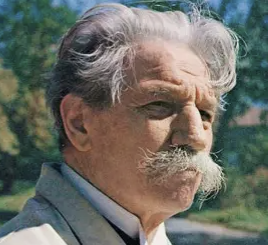
Just as the wave cannot exist for itself, but is ever a part of the heaving surface of the ocean, so must I never live my life for itself, but always in the experience which is going on around me. It is an uncomfortable doctrine which the true ethics whisper into my ear. You are happy, they say; therefore you are called upon to give much.
▼
Source
source
Chapter 26

1 day ago
Social Democratic centralism cannot be based on the mechanical subordination and blind obedience of the party membership to the leading party center. The Social Democratic movement cannot allow the erection of an air-tight partition between the class-conscious nucleus of the proletariat already in the party and its immediate popular environment, the nonparty sections of the proletariat.

5 days ago
We need better government, no doubt about it. But we also need better minds, better friendships, better marriages, better communities.
▼
Source
source
"Think Little"

4 months 5 days ago
Every one knows that there are no real forests in England. The deer in the parks of the great are demurely domestic cattle, fat as London alderman.
▼
Source
source
Vol. I, Ch. 27, pg. 803.
5 months 5 days ago
The best friend is he that, when he wishes a person's good, wishes it for that person's own sake.

3 months 2 weeks ago
If melodiously piping flutes sprang from the olive, would you doubt that a knowledge of flute-playing resided in the olive? And what if plane trees bore harps which gave forth rhythmical sounds? Clearly you would think in the same way that the art of music was possessed by plane trees. Why, then, seeing that the universe gives birth to beings that are animate and wise, should it not be considered animate and wise itself?
▼
Source
source
As quoted in De Natura Deorum by Cicero, ii. 8.
4 months 5 days ago
Every man is a divinity in disguise, a god playing the fool. It seems as if heaven had sent its insane angels into our world as to an asylum. And here they will break out into their native music, and utter at intervals the words they have heard in heaven; then the mad fit returns, and they mope and wallow like dogs!
▼
Source
source
p. 165
2 months 3 weeks ago
The precarious ontological link between Logos and Eros is broken, and scientific rationality emerges as essentially neutral.
▼
Source
source
p. 147

5 days ago
Where the preamble declares, that coercion is a departure from the plan of the holy author of our religion, an amendment was proposed by inserting "Jesus Christ," so that it would read "A departure from the plan of Jesus Christ, the holy author of our religion;" the insertion was rejected by the great majority, in proof that they meant to comprehend, within the mantle of its protection, the Jew and the Gentile, the Christian and Mohammedan, the Hindoo and Infidel of every denomination.
▼
Source
source
Referring to the Virginia Act for Religious Freedom, in his Autobiography, 1821
3 months 2 weeks ago
Happiness is a good flow of life.
▼
Source
source
As quoted by Stobaeus, ii. 77.
1 month 2 weeks ago
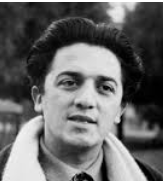
What is an artist? A provincial who finds himself somewhere between a physical reality and a metaphysical one... It's this in-between that I'm calling a province, this frontier country between the tangible world and the intangible one - which is really the realm of the artist.
▼
Source
source
Every Time We Say Goodbye in Sight and Sound [London]

1 month 1 week ago
Might there not be a connection between the attempt to eradicate religion and the loss of freedom? It is unlikely that Mao, who launched his assault on the people and culture of Tibet with the slogan "Religion is poison," would have agreed that his atheist world-view had no bearing on his policies.

2 months 2 weeks ago
When, in the course of human development, existing institutions prove inadequate to the needs of man, when they serve merely to enslave, rob, and oppress mankind, the people have the eternal right to rebel against, and overthrow, these institutions.
2 months 2 days ago
Every one excels in something in which another fails.
▼
Source
source
Maxim 17

2 months 5 days ago
No feats of heroism are needed to achieve the greatest and most important changes in the existence of humanity; neither the armament of millions of soldiers, nor the construction of new roads and machines, nor the arrangement of exhibitions, nor the organization of workmen's unions, nor revolutions, nor barricades, nor explosions, nor the perfection of aerial navigation; but a change in public opinion. And to accomplish this change no exertions of the mind are needed, nor the refutation of anything in existence, nor the invention of any extraordinary novelty; it is only needful that we should not succumb to the erroneous, already defunct, public opinion of the past, which governments have induced artificially; it is only needful that each individual should say what he really feels or thinks, or at least that he should not say what he does not think.
▼
Source
source
Ch. 17
2 months 3 weeks ago
The jargon of authenticity ... is a trademark of societalized chosenness, ... sub-language as superior language.
▼
Source
source
pp. 5-6
2 months 2 days ago
Every day should be passed as if it were to be our last.
▼
Source
source
Maxim 633

4 months 1 week ago
The Christian Religion not only was at first attended with miracles, but even at this day cannot be believed by any reasonable person without one. Mere reason is insufficient to convince us of its veracity: and whoever is moved by Faith to assent to it, is conscious of a continued miracle in his own person, which subverts all the principles of his understanding, and gives him a determination to believe what is most contrary to custom and experience.
▼
Source
source
Section 10 : Of Miracles Pt. 2
3 months 2 days ago
It is the peculiarity of privilege and of every privileged position to kill the intellect and heart of man. The privileged man, whether he be privileged politically or economically, is a man depraved in intellect and heart.
▼
Source
source
As quoted in "Socialism" article of Encyclopaedia Britannica, 9th edition (1887), edited by Thomas Spencer Baynes with assistance of William Robertson Smith, Vol. 22, p. 216, Charles Scribner's Sons
2 months 3 weeks ago
Bourgeois society is ruled by equivalence. It makes the dissimilar comparable by reducing it to abstract quantities. To the enlightenment, that which does not reduce to numbers, and ultimately to the one, becomes illusion.
▼
Source
source
John Cumming trans., p. 7

3 months 2 days ago
Ah! why do women condescend to receive a degree of attention and respect from strangers different from that reciprocation of civility which the dictates of humanity and the politeness of civilization authorize between man and man? And why do they not discover, when, "in the noon of beauty's power", that they are treated like queens only to be deluded by hollow respect. Confined, then, in cages like the feathered race, they have nothing to do but to plume themselves, and stalk with mock majesty from perch to perch.
▼
Source
source
Ch. 4
4 months 2 weeks ago
What is love's perfection? To love our enemies, and to love them to the end that they may be our brothers.
▼
Source
source
First Homily, as translated by John Burnaby (1955), p. 266

2 days ago
We must admit, with the same frankness, that we are ignorant whether matter has in itself the faculty of feeling, or only the power of acquiring it by those modifications or forms to which matter is susceptible; for it is true that this faculty of feeling appears only in organic bodies.This is then another new faculty which might exist only potentially in matter, like all the others which have been mentioned; and this was the hypothesis of the ancients, whose philosophy, full of insight and penetration, deserves to be raised above the ruins of the philosophy of the moderns.
▼
Source
source
Ch. VI Concerning the Sensitive Faculty of Matter
5 months 5 days ago
The least initial deviation from the truth is multiplied later a thousandfold.
3 months 3 weeks ago
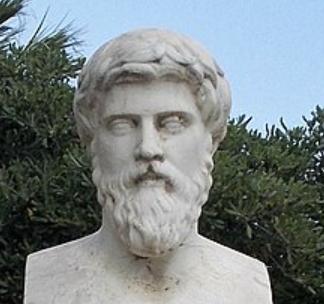
Antagoras the poet was boiling a conger, and Antigonus, coming behind him as he was stirring his skillet, said, "Do you think, Antagoras, that Homer boiled congers when he wrote the deeds of Agamemnon?" Antagoras replied, "Do you think, O king, that Agamemnon, when he did such exploits, was a peeping in his army to see who boiled congers?"
▼
Source
source
46 Antigonus I
3 months 5 days ago
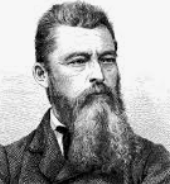
Hegel ... proceeds abstractly from the pre-existence of the intellect. ... He does not appeal to the intellect within us.
▼
Source
source
Z. Hanfi, trans., in The Fiery Brook (1972), p. 68
3 months 3 weeks ago
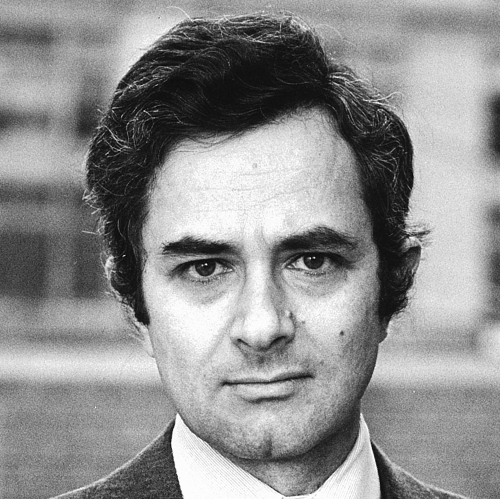
Our own experience provides the basic material for our imagination, whose range is therefore limited. It will not help to try to imagine that one has webbing on one's arms, which enables one to fly around at dusk and dawn catching insects in one's mouth; that one has very poor vision, and perceives the surrounding world by a system of reflected high-frequency sound signals; and that one spends the day hanging upside down by one's feet in an attic. Insofar as I can imagine this (which is not very far), it tells me only what it would be like for me to behave as a bat behaves. But that is not the question. I want to know what it is like for a bat to be a bat. Yet if I try to imagine this, I am restricted to the resources of my own mind, and those resources are inadequate to the task.
▼
Source
source
p. 169.
4 months 4 days ago
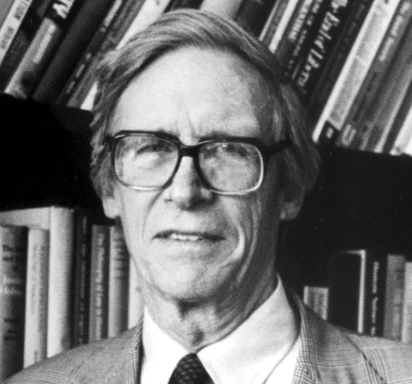
First of all, principles should be general. That is, it must be possible to formulate them without use of what would be intuitively recognized as proper names, or rigged definite descriptions.
▼
Source
source
Chapter III, Section 23, pg. 131

2 months 2 weeks ago
The martyr sacrifices herself (himself in a few instances) entirely in vain. Or rather not in vain; for she (or he) makes the selfish more selfish, the lazy more lazy, the narrow narrower.
▼
Source
source
As quoted in Forever Yours (1990) by Martha Vicinus and Bea Nergaard , p. 275. Letter, c. 1867, to the scholar Benjamin Jowett.
4 months ago
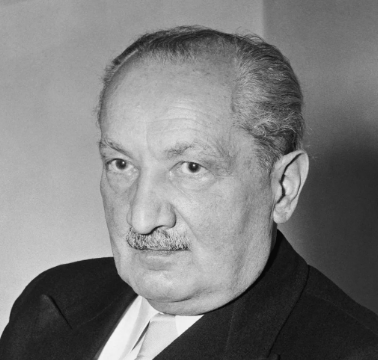
Plato has preserved in the Theaetetus - the story is that Thales, while occupied in studying the heavens above and looking up, fell into a well. A good-looking and whimsical maid from Thrace laughed at him and told him that while he might passionately want to know all things in the universe, the things in front of his very nose and feet were unseen by him." Plato added: "This jest also fits all those who become involved in Philosophy." Therefore, the question, What is a thing?" must always be rated as one that causes housemaids to laugh.
▼
Source
source
p. 3
4 months 4 days ago
This is a long book, not only in pages.
▼
Source
source
Preface, pg. viii

3 months 4 weeks ago
Recalling all the erroneous things that doctors have been able to say about sex or madness does us a fat lot of good. I think that what is currently politically important is to determine the regime of verediction established at a given moment ... on the basis of which you can now recognize, for example, that doctors in the nineteenth century said so many stupid things about sex. ... It is not so much the history of the true or the history of the false as the history of verediction which has a political significance.
▼
Source
source
Lecture 2, January 17, 1979, p. 36
2 months 2 weeks ago
The revolutionary and critical thinker is in a certain way always outside of his society while of course he is at the same time also in it. That he is in it is obvious, but why is he outside it? First, because he is not brainwashed by the ruling ideology, that is to say, he has an extraordinary kind of independence of thought and feeling; hence he can have a greater objectivity than the average person has. There are many emotional factors too. And certainly I do not mean to enter here into the complex problem of the revolutionary thinker. But it seems to me essential that in a certain sense he transcends his society. You may say he transcends it because of the new historical developments and possibilities he is aware of, while the majority still think in traditional terms.
2 days ago
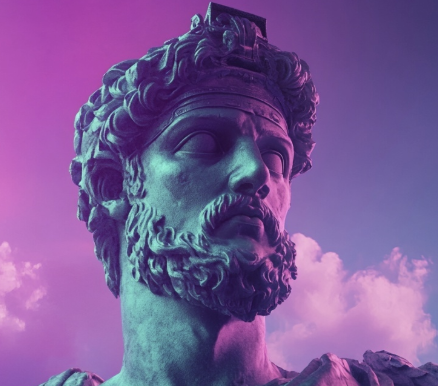
How easy it is to repel and to wipe away every impression which is troublesome or unsuitable, and immediately to be in all tranquility. To shrug it all off and wipe it clean--every annoyance and distraction--and reach utter stillness. Child's play.
▼
Source
source
(Hays translation) V, 2



5 months 1 day ago
He kept the middle way, that's all: he was the type of man for whom one has an affection of the mild but steady order - which is the kind that wears best.
3 months 2 days ago
The case of mere titles is so absurd that it would deserve to be treated only with ridicule were t not for the serious mischief they impose on mankind. The feudal system was a ferocious monster, devouring, where it came, all that the friend of humanity regards with attachment and love. The system of titles appears under a different form. The monster is at length destroyed, and they who followed in his train, and fattened upon the carcasses of those he slew, have stuffed his skin, and, b exhibiting it, hope still to terrify mankind into patient and pusillanimity.
▼
Source
source
Book V, Chapter 13
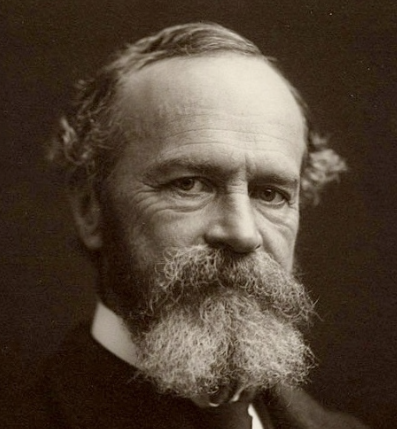
4 months 5 days ago
Let sanguine healthy-mindedness do its best with its strange power of living in the moment and ignoring and forgetting, still the evil background is really there to be thought of, and the skull will grin in at the banquet.
▼
Source
source
Lectures IV and V, "The Religion of Healthy-Mindedness"

1 week 6 days ago
Whoever criticizes others must have something to replace them. Criticism without suggestion is like trying to stop flood with flood and put out fire with fire. It will surely be without worth.
▼
Source
source
Book 4; Universal Love III
2 months 2 weeks ago
Society triumphs over many. They wish to regenerate the world with their institutions, with their moral philosophy, with their love. Then they sink to living from breakfast till dinner, from dinner till tea, with a little worsted work, and to looking forward to nothing but bed. When shall we see a life full of steady enthusiasm, walking straight to its aim, flying home, as that bird is now, against the wind - with the calmness and the confidence of one who knows the laws of God and can apply them?
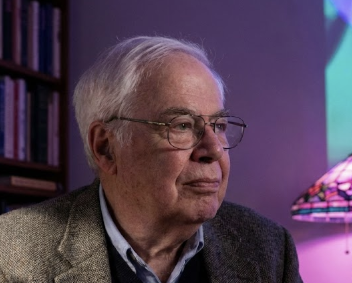
3 months 3 weeks ago
As long as we try to project from the relative and conditioned to the absolute and unconditioned, we shall keep the pendulum swinging between dogmatism and skepticism. The only way to stop this increasingly tiresome pendulum swing is to change our conception of what philosophy is good for. But that is not something which will be accomplished by a few neat arguments. It will be accomplished, if it ever is, by a long, slow process of cultural change - that is to say, of change in common sense, changes in the intuitions available for being pumped up by philosophical arguments.
▼
Source
source
Introduction to Truth and Progress: Philosophical Papers, Volume 3 (1998).
2 months 2 weeks ago
Popular presentation today is all too often that which puts the mob in a position to talk about something without understanding it.
▼
Source
source
G 32

4 months 6 days ago
One of the symptoms of approaching nervous breakdown is the belief that one's work is terribly important, and that to take a holiday would bring all kinds of disaster. If I were a medical man, I should prescribe a holiday to any patient who considered his work important.

5 months 6 days ago
This fact, that the opposite of sin is by no means virtue, has been overlooked. The latter is partly a pagan view, which is content with a merely human standard, and which for that very reason does not know what sin is, that all sin is before God. No, the opposite of sin is faith.
4 days ago
Attractions take place between bodies, affinities between the particles of a body. The former may be compared to the alliances of states, the latter to the ties of family.
2 days ago
Drama, combat, terror, numbness, and subservience - every day these things wipe out your sacred principles, whenever your mind entertains them uncritically or lets them slip in.
▼
Source
source
X. 9
4 days ago
The Sensations are the 'Objective', the Ideas the 'Subjective' part of every act of perception or knowledge.

3 months 1 day ago
Boredom is connected naturally with time, with the horror of time, with the experience and the consciousness of time. Those who are not aware of time do not become bored. Basically life is only possible if one is not aware of time. If one should happen to want to experience consciously one of those moments that pass, one would be lost; life would become unbearable.
2 months 3 days ago
A moral point of view too often serves as a substitute for understanding in technological matters.
▼
Source
source
(p. 245)
CivilSimian.com created by AxiomaticPanic, CivilSimian, Kalokagathia