

1 month 2 weeks ago
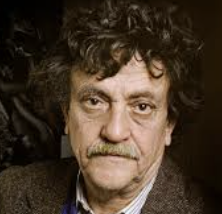
I was taught in the sixth grade that we had a standing army of just over a hundred thousand men and that the generals had nothing to say about what was done in Washington. I was taught to be proud of that and to pity Europe for having more than a million men under arms and spending all their money on airplanes and tanks. I simply never unlearned junior civics. I still believe in it. I got a very good grade.
▼
Source
source
As quoted by James Lundquist in Kurt Vonnegut

3 months 2 weeks ago
How does it become a man to behave toward this American government today? I answered that he cannot without disgrace be associated with it.

4 months 2 weeks ago
No man of sense can put himself and his soul under the control of names... You must consider courageously and thoroughly and not accept anything carelessly.
1 month 3 weeks ago
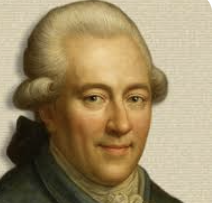
Be wary of passing the judgment: obscure. To find something obscure poses no difficulty: elephants and poodles find many things obscure.
▼
Source
source
E 36
3 months 6 days ago
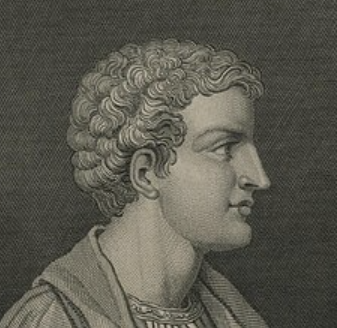
We are but numbers, born to consume resources.
▼
Source
source
Book I, epistle ii, line 27
4 weeks 1 day ago
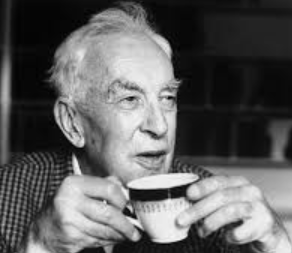
Compared with the life-span of a human being the time-span of a civilization is so vast that a human observer cannot hope to take the measure of its curve unless he is in a position to view it in a distant perspective; and he can only obtain this perspective vis-a-vis some society that is extinct. He can never stand back sufficiently far from the history of the society in which he himself lives and moves and has his being. In other words, to assert of any living society, at any moment in its life, that it is the consummation of human history is to hazard a guess which is intrinsically unsusceptible of immediate verification. When we find that a majority of the members of all societies at all times make this assertion about their own civilizations, it becomes evident that their guesses have really nothing to do with any objective calculation of probabilities but are pure expressions of the egocentric illusion.
▼
Source
source
Vol. 1
3 months 6 days ago
He who is running a race ought to endeavor and strive to the utmost of his ability to come off victor; but it is utterly wrong for him to trip up his competitor, or to push him aside. So in life it is not unfair for one to seek for himself what may accrue to his benefit; but it is not right to take it from another.
▼
Source
source
As quoted in De Officiis by Cicero, iii. 10.
2 months 1 week ago
Thus far, gentlemen, I have been insisting very strenuously upon what the most vulgar common sense has every disposition to assent to and only ingenious philosophers have been able to deceive themselves about. But now I come to a category which only a more refined form of common sense is prepared willingly to allow, the category which of the three is the chief burden of Hegel's song, a category toward which the studies of the new logico-mathematicians, Georg Cantor and the like, are steadily pointing, but to which no modern writer of any stripe, unless it be some obscure student like myself, has ever done anything approaching to justice.
▼
Source
source
Lecture II : The Universal Categories, §3. Laws: Nominalism, CP 5.59
3 months 2 weeks ago
False and doubtful positions, relied upon as unquestionable maxims, keep those who build on them in the dark from truth. Such are usually the prejudices imbibed from education, party, reverence, fashion, interest, et cetera.
▼
Source
source
Book IV, Ch. 7

3 months 2 weeks ago
Rhodora! if the sages ask thee why This charm is wasted on the earth and sky, Tell them, dear, that, if eyes were made for seeing, Then beauty is its own excuse for Being.
▼
Source
source
The Rhodora
1 month 2 days ago
I really have no claim to rank myself among fatalistic, materialistic, or atheistic philosophers. Not among fatalists, for I take the conception of necessity to have a logical, and not a physical foundation; not among materialists, for I am utterly incapable of conceiving the existence of matter if there is no mind in which to picture that existence; not among atheists, for the problem of the ultimate cause of existence is one which seems to me to be hopelessly out of reach of my poor powers. Of all the senseless babble I have ever had occasion to read, the demonstrations of these philosophers who undertake to tell us all about the nature of God would be the worst, if they were not surpassed by the still greater absurdities of the philosophers who try to prove that there is no God.
2 months 1 week ago
To understand this for sense it is not required that a man should be a geometrician or a logician, but that he should be mad. On the proposition that the volume generated by revolving the region under 1/x from 1 to infinity has finite volume.
▼
Source
source
Quoted in Mathematical Maxims and Minims by N. Rose
3 months 6 days ago
What needs saying is worth saying twice.
▼
Source
source
fr. 25

4 months 1 week ago
The slave begins by demanding justice and ends by wanting to wear a crown. He must dominate in his turn.

1 month 2 weeks ago
Literate man, civilized man, tends to restrict and to separate functions, whereas tribal man has freely extended the form of his body to include the universe.
▼
Source
source
(p. 117)


4 months 5 days ago
When the soul has descended into generation (from its first divine condition) she partakes of evil, and is carried a great way into a state the opposite of her first purity and integrity, to be entirely merged in which, is nothing more than to fall into a dark mire. ...The soul dies as much as it is possible for the soul to die: and the death to her is, while baptized or immersed in the present body, to descend into matter, and be wholly subjected by it; and after departing thence to lie there til it shall arise and turn its face away from the abhorrent filth. This is what is meant by falling asleep in Hades, of those who have come there.

3 months 2 weeks ago
A single part of physics occupies the lives of many men, and often leaves them dying in uncertainty.
▼
Source
source
"A Madame la Marquise du Châtelet, Avant-Propos," Eléments de Philosophie de Newton, 1738

1 month 2 weeks ago
People understand the meaning of eating lies in the nourishment of the body only when they cease to consider that the object of that activity is pleasure. ...People understand the meaning of art only when they cease to consider that the aim of that activity is beauty, i.e., pleasure.

4 months 1 day ago
So far as it goes, a small thing may give an analogy of great things, and show the tracks of knowledge.
▼
Source
source
Book II, lines 123-124 (tr. Rouse)

3 months 2 weeks ago
I know. I know that I shall never again meet anything or anybody who will inspire me with passion. You know, it's quite a job starting to love somebody. You have to have energy, generosity, blindness. There is even a moment, in the very beginning, when you have to jump across a precipice: if you think about it you don't do it. I know I'll never jump again.
4 months 6 days ago
Greater fates gain greater rewards.

1 week ago
Books-there is a good kind of a book and a bad kind of a book. I am not to assume that you are all ill acquainted with this; but I may remind you that it is a very important consideration at present. It casts aside altogether the idea that people have that if they are reading any book-that if an ignorant man is reading any book, he is doing rather better than nothing at all.
4 weeks 1 day ago
Of the twenty or so civilizations known to modern Western historians, all except our own appear to be dead or moribund, and, when we diagnose each case, in extremis or post mortem, we invariably find that the cause of death has been either War or Class or some combination of the two. To date, these two plagues have been deadly enough, in partnership, to kill off nineteen out of twenty representatives of this recently evolved species of human society; but, up to now, the deadliness of these scourges has had a saving limit.
▼
Source
source
Ch. 2: The Present Point in History
1 month 2 weeks ago
The newspaper is a corporate symbolist poem, environmental and invisible, as poem.
3 months 6 days ago
Nothing of the All is either empty or superfluous.
▼
Source
source
fr. 13
3 months 3 weeks ago
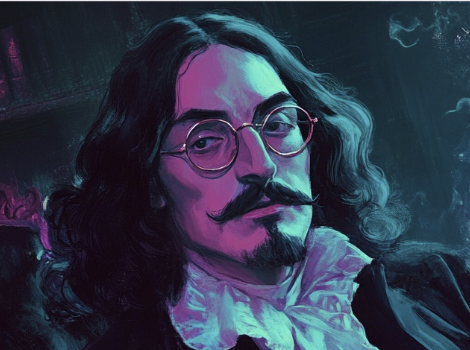
M. Desargues puts me under obligations on account of the pains that it has pleased him to have in me, in that he shows that he is sorry that I do not wish to study more in geometry, but I have resolved to quit only abstract geometry, that is to say, the consideration of questions which serve only to exercise the mind, and this, in order to study another kind of geometry, which has for its object the explanation of the phenomena of nature... You know that all my physics is nothing else than geometry.
▼
Source
source
Letter to Marin Mersenne (July 27, 1638) as quoted by Florian Cajori, A History of Mathematics (1893) letter dated in The Philosophical Writings of Descartes Vol. 3, The Correspondence (1991) ed. John Cottingham, Robert Stoothoff, Dugald Murdoch
2 months 1 week ago
The highest and ultimate personality values are declared to be independent of contrasts like rich and poor, healthy and sick, etc. The world had become accustomed to considering the social hierarchy, based on status, wealth, vital strength, and power, as an exact image of the ultimate values of morality and personality. The only way to disclose the discovery of anew and higher sphere of being and life, of the "kingdom of God" whose order is independent of that worldly and vital hierarchy, was to stress the vanity of the old values in this higher order.
▼
Source
source
L. Coser, trans. (1961), p. 98

2 months 1 week ago
Take heed lest any man deceive you: For many shall come in my name, saying, I am Christ; and shall deceive many. And when ye shall hear of wars and rumours of wars, be ye not troubled: for such things must needs be; but the end shall not be yet. For nation shall rise against nation, and kingdom against kingdom: and there shall be earthquakes in divers places, and there shall be famines and troubles: these are the beginnings of sorrows. But take heed to yourselves: for they shall deliver you up to councils; and in the synagogues ye shall be beaten: and ye shall be brought before rulers and kings for my sake, for a testimony against them. And the gospel must first be published among all nations. But when they shall lead you, and deliver you up, take no thought beforehand what ye shall speak, neither do ye premeditate: but whatsoever shall be given you in that hour, that speak ye: for it is not ye that speak, but the Holy Ghost.
▼
Source
source
13:5b-11 (KJV)
3 months 2 weeks ago
The charlatan takes very different shapes according to circumstances; but at bottom he is a man who cares nothing about knowledge for its own sake, and only strives to gain the semblance of it that he may use it for his own personal ends, which are always selfish and material.
▼
Source
source
"Similes, Parables and Fables" Parerga and Paralipomena, vol. 2, § 394
3 months 6 days ago
And what he fears he cannot make attractive with his touch he abandons.
▼
Source
source
Line 149 (tr. H. R. Fairclough)
4 months 2 weeks ago
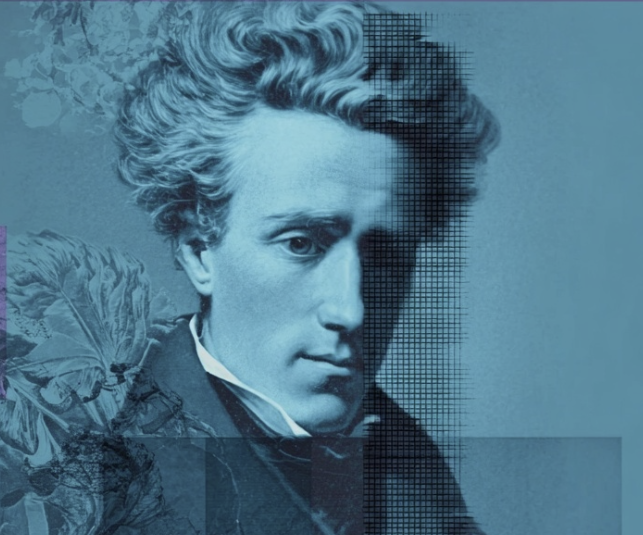
It is of this sort of divine service I used the expression that, in comparison with the Christianity of the New Testament, it is playing Christianity. The expression is essentially true and characterizes the thing perfectly. For what does it mean to play, when one reflects how the word must be understood in this connection? It means to imitate, to counterfeit, a danger when there is no danger, and to do it in such a way that the more art is applied to it, the more delusive the pretense is that the danger is present.
2 months 1 week ago
Answers determined by the social division of labor become truth as such.
▼
Source
source
p. 50: Describing the pragmatist view
2 months 1 week ago
Is this not an advantage? Is it not a sign of immense progress that the masses should have "ideas," that is to say, should be cultured? By no means. The "ideas" of the average man are not genuine ideas, nor is their possession culture. An idea is a putting truth in checkmate. Whoever wishes to have ideas must first prepare himself to desire truth and to accept the rules of the game imposed by it. It is no use speaking of ideas when there is no acceptance of a higher authority to regulate them, a series of standards to which it is possible to appeal in a discussion. These standards are the principles on which culture rests.
▼
Source
source
Chap. VIII: The Masses Intervene In Everything, And Why Their Intervention Is Solely By Violence

1 month 4 weeks ago
Imagine a book of unexplained mysteries written by a contemporary of Shakespeare. It might include the mystery of the falling stars that sweep through the sky foretelling disaster; the mystery of the Kraken, the giant sea devil with 50-foot tentacles; the mystery of monster bones, sometimes found in caves or on beaches. Such a book would be a curious mixture of truth and absurdity, fact and legend. We would all feel superior as we turned its pages and murmured: "Of course, they didn't know about comets and giant squids and dinosaurs." If this book should happen to find its way into the hands of our remote descendants, they may smile pityingly and say: "It's incredible to think that they knew nothing about epsilon fields or multiple psychic feedback or cross gravitational energies. They didn't even know about the ineluctability of time." But let us hope that such a descendant is in a charitable mood, and might add: "And yet they managed to ask a few of the right questions."
▼
Source
source
p. 142
2 days ago
It is, they say, not Russia that plans aggression but, on the contrary, the decaying capitalist democracies. Russia wants merely to defend its own independence. This is an old and well-tried method of justifying aggression. Louis XIV and Napoleon I, Wilhelm II and Hitler were the most peace-loving of all men. When they invaded foreign countries, they did so only in just self-defence. Russia was as much menaced by Estonia or Latvia as Germany was by Luxemburg or Denmark.

2 months 3 weeks ago
We vainly accuse the fury of guns, and the new inventions of death; it is in the power of every hand to destroy us, and we are beholden unto every one we meet he doth not kill us.
▼
Source
source
Section 44
2 months 1 week ago
It is important to understand what I mean by semiosis. All dynamic action, or action of brute force, physical or psychical, either takes place between two subjects, - whether they react equally upon each other, or one is agent and the other patient, entirely or partially, - or at any rate is a resultant of such actions between pairs. But by "semiosis" I mean, on the contrary, an action, or influence, which is, or involves, a cooperation of three subjects, such as a sign, its object, and its interpretant, this tri-relative influence not being in any way resolvable into actions between pairs.
▼
Source
source
"Pragmatism" (1907) in The Essential Peirce : Selected Philosophical Writings (1998) edited by the Peirce Edition Project, Vol. 2, p. 411, Indiana University Press.

3 months 2 weeks ago
In the welter of conflicting fanaticisms, one of the few unifying forces is scientific truthfulness, by which I mean the habit of basing our beliefs upon observations and inferences as impersonal, and as much divested of local and temperamental bias, as is possible for human beings.
▼
Source
source
Chapter XXXI "The Philosophy of Logical Analysis"
2 months 1 week ago
Master, we saw one casting out devils in thy name; and we forbad him, because he followeth not with us. And Jesus said unto him, Forbid him not: for he that is not against us is for us.
▼
Source
source
Luke 9:49-50 (KJV)

3 months 3 weeks ago
We only labor to stuff the memory, and leave the conscience and the understanding unfurnished and void.
▼
Source
source
Book I, Ch. 25
1 week ago
All greatness is unconscious, or it is little and naught.
1 month 3 weeks ago
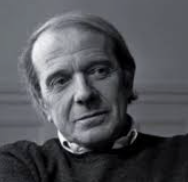
In order for music to free itself, it will have to pass over to the other side - there where territories tremble, where the structures collapse, where the ethoses get mixed up, where a powerful song of the earth is unleashed, the great ritornelles that transmutes all the airs it carries away and makes return.
▼
Source
source
from Essays Critical and Clinical, p. 104.
1 week 3 days ago
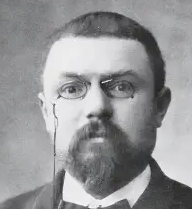
The advance of science is not comparable to the changes of a city, where old edifices are pitilessly torn down to give place to new, but to the continuous evolution of zoologic types which develop ceaselessly and end by becoming unrecognizable to the common sight, but where an expert eye finds always traces of the prior work of the centuries past. One must not think then that the old-fashioned theories have been sterile or vain.
3 months 1 week ago
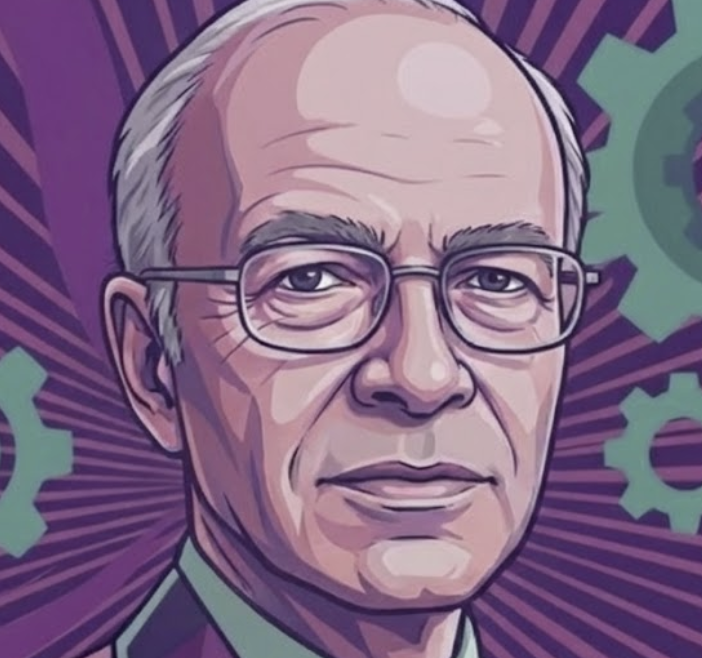
At one level, this movement on behalf of oppressed farm animals is emotional...Yet the movement is also the product of a deep intellectual ferment pioneered by the Princeton scholar Peter Singer...This idea popularized by Professor Singer - that we have ethical obligations that transcend our species - is one whose time appears to have come...What we're seeing now is an interesting moral moment: a grass-roots effort by members of one species to promote the welfare of others...animal rights are now firmly on the mainstream ethical agenda.
▼
Source
source
Nicholas Kristof, "Humanity Even for Nonhumans," in The New York Times (8 April 2009).

4 months 6 days ago
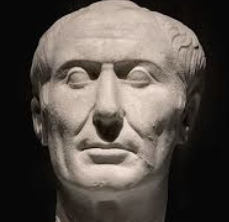
What Heaven has conferred is called The Nature; an accordance with this nature is called The Path of duty; the regulation of this path is called Instruction. The path may not be left for an instant. If it could be left, it would not be the path. On this account, the superior man does not wait till he sees things, to be cautious, nor till he hears things, to be apprehensive.
1 month 2 weeks ago
Either be silent or say something better than silence.
▼
Source
source
Maxim 960

2 months 2 weeks ago
An event has happened, upon which it is difficult to speak, and impossible to be silent.
▼
Source
source
Speech on the sixth article of charge in the impeachment of Warren Hastings (5 May 1789), quoted in The Works of the Right Honourable Edmund Burke, Volume the Tenth (1899), p. 306
3 months 2 weeks ago
To be a philosopher, that is to say, a lover of wisdom (for wisdom is nothing but truth), it is not enough for a man to love truth, in so far as it is compatible with his own interest, with the will of his superiors, with the dogmas of the church, or with the prejudices and tastes of his contemporaries; so long as he rests content with this position, he is only a philautos, not a philosophos [a lover of self, not a lover of wisdom]. For this title of honor is well and wisely conceived precisely by its stating that one should love the truth earnestly and with one's whole heart, and thus unconditionally and unreservedly, above all else, and, if need be, in defiance of all else. Now the reason for this is the one previously stated that the intellect has become free, and in this state it does not even know or understand any other interest than that of truth.
▼
Source
source
E. Payne, trans. (1974) Vol. 1, pp. 21-22
CivilSimian.com created by AxiomaticPanic, CivilSimian, Kalokagathia