

3 weeks 4 days ago
Humans are prone to status quo bias. So let's do a thought-experiment. Imagine we stumble across an advanced civilisation that has abolished predation, disease, famine, and all the horrors of primitive Darwinian life. The descendants of archaic lifeforms flourish unmolested in their wildlife parks - free living, but not "wild". Should we urge scrapping their regime of compassionate stewardship of the living world - and a return to asphyxiation, disembowelling and being eaten alive? Or is a happy biosphere best conserved intact? Reply to "Should humans wipe out all carnivorous animals so the succeeding generations of herbivores can live in peace?"
▼
Source
source
, Quora, 16 Jun. 2018
2 months 1 week ago
Intuition is a method of feeling one's way intellectually into the inner heart of a thing to locate what is unique and inexpressible in it.
▼
Source
source
Quoted in Georgia O'Keeffe, 1887-1986 : Flowers in the Desert (2000) by Britta Benke, p. 28

1 week 4 days ago
What we may be witnessing is not just the end of the Cold War, or the passing of a particular period of post-war history, but the end of history as such ... That is, the end point of mankind's ideological evolution and the universalization of Western liberal democracy as the final form of human government.

8 months 1 week ago
A common goal...
Issue:
Because of subgrouping, physical separation, different types of genetics and other cultural factors, as well as limited isolation people subjectively deviate from their universal human necessity. They become aware of it when they are exposed to difference regularly.
Solution:
With controlled information delivery, as well as a clear ideological goal like universality, we can clear away the noise of chaos to understand deterministic goals directly.

3 months 2 weeks ago
I feel like that intellectual but plain-looking lady who was warmly complimented on her beauty. In accepting his Nobel Prize, in December 1950; Russell denied that he had contributed anything in particular to literature.
▼
Source
source
Quoted in LIFE, Editorials: "A great mind is still annoying and adorning our age", 26 May 1952
2 months 1 week ago
"There is no God," cry the masses more and more vociferously; and with the loss of God man loses his sense of values - is, as it were, massacred because he feels himself of no account.
1 month 2 days ago
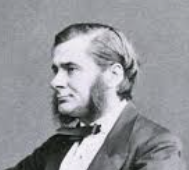
Our reverence for the nobility of manhood will not be lessened by the knowledge, that Man, is in substance and in structure, one with the brutes; for, he alone possesses the marvellous endowment of intelligible and rational speech, whereby, in the secular period of his existence, he has slowly accumulated and organized the experience which is almost wholly lost with the cessation of every individual life in other animals; so that now he stands raised upon it as on a mountain top, far above the level of his humble fellows, and transfigured from his grosser nature by reflecting, here and there, a ray from the infinite source of truth.
▼
Source
source
Ch.2, p. 132

2 months 2 weeks ago
That by any series of changes a protozoon should ever become a mammal, seems to those who are not familiar with zoology, and who have not seen how clear becomes the relationship between the simplest and the most complex forms when intermediate forms are examined, a very grotesque notion. Habitually, looking at things rather in their statical aspect than in their dynamical aspect, they never realize the fact that, by small increments of modification, any amount of modification may in time be generated.

3 months 2 weeks ago
Perhaps I am more than usually jealous with respect to my freedom. I feel that my connection with and obligation to society are still very slight and transient. Those slight labors which afford me a livelihood, and by which it is allowed that I am to some extent serviceable to my contemporaries, are as yet commonly a pleasure to me, and I am not often reminded that they are a necessity. So far I am successful. But I foresee, that, if my wants should be much increased, the labor required to supply them would become a drudgery. If I should sell both my forenoons and afternoons to society, as most appear to do, I am sure, that, for me, there would be nothing left worth living for. I trust that I shall never thus sell my birthright for a mess of pottage.
▼
Source
source
p. 486
1 week ago
These three classes of problems-determination of significant fact, matching of facts with theory, and articulation of theory-exhaust, I think, the literature of normal science, both empirical and theoretical. They do not, of course, quite exhaust the entire literature of science. There are also extraordinary problems, and it may well be their resolution that makes the scientific enterprise as a whole so particularly worthwhile. But extraordinary problems are not to be had for the asking. They emerge only on special occasions prepared by the advance of normal research.
▼
Source
source
p. 34
4 months 2 days ago
When I, who conduct this inquiry, love something, then three things are found: I, what I love, and the love itself. There are, therefore three things: the lover, the beloved and the love.
▼
Source
source
(Cambridge: 2002), Book 9, Chapter 2, Section 2, p. 26
3 months 2 weeks ago
Do not be too moral. You may cheat yourself out of much life so. Aim above morality. Be not simply good; be good for something.
▼
Source
source
Pearls of Thought (1881) p. 177

3 months 1 week ago
Philosophy may in no way interfere with the actual use of language; it can in the end only describe it.
▼
Source
source
§ 124

3 months 2 weeks ago
Capitals accumulate faster than the population; thus wages; thus population; thus grain prices; thus the difficulty of production and hence the exchange values.
▼
Source
source
Notebook III, The Chapter on Capital, p. 271.

3 months 3 weeks ago
You venerate the saints, and you take pleasure in touching their relics. But you disregard their greatest legacy, the example of a blameless life. No devotion is more pleasing to Mary than the imitation of Mary's humility. No devotion is more acceptable and proper to the saints than striving to imitate their virtues.
▼
Source
source
The Erasmus Reader (1990), p. 144.

1 month 4 weeks ago
No revolution can ever succeed as a factor of liberation unless the MEANS used to further it be identical in spirit and tendency with the PURPOSES to be achieved. Revolution is the negation of the existing, a violent protest against man's inhumanity to man with all the thousand and one slaveries it involves. It is the destroyer of dominant values upon which a complex system of injustice, oppression, and wrong has been built up by ignorance and brutality. It is the herald of NEW VALUES, ushering in a transformation of the basic relations of man to man, and of man to society.

1 week ago
They understood in their heart that it was indispensable to be brave; that Odin would have no favor for them, but despise and thrust them out, if they were not brave. Consider too whether there is not something in this! It is an everlasting duty, valid in our day as in that, the duty of being brave. Valor is still value. The first duty for a man is still that of subduing Fear. We must get rid of Fear; we cannot act at all till then.

1 day ago
If you would not have a man flinch when the crisis comes, train him before it comes.

3 months 2 weeks ago
And when we speak of "abandonment" - a favorite word of Heidegger - we only mean to say that God does not exist and that it is necessary to draw the consequences of his absence to the end.
▼
Source
source
pp. 32-33
1 month 1 week ago
One's language is a spiritual location. It houses your soul. If you were born in America all essential communication, your deepest conversations with yourself, will be in English. ... Your English is the principal instrument of your humanity.
▼
Source
source
Part I, p. 27

3 months 2 weeks ago
Never read any book that is not a year old.
▼
Source
source
Books
2 months 1 week ago
The manufacturing worker almost always lives in the countryside and in a more or less patriarchal relation to his landlord or employer; the proletarian lives, for the most part, in the city and his relation to his employer is purely a cash relation. The manufacturing worker is torn out of his patriarchal relation by big industry, loses whatever property he still has, and in this way becomes a proletarian.
4 months 6 days ago
Men are at variance with the one thing with which they are in the most unbroken communion, the reason that administers the whole universe.
3 months 2 weeks ago
Just as we teach children to avoid being destroyed by motor cars if they can, so we should teach them to avoid being destroyed by cruel fanatics, and to this end we should seek to produce independence of mind, somewhat sceptical and wholly scientific, and to preserve, as far as possible, the instinctive joy of life that is natural to healthy children. This is the task of a liberal education: to give a sense of the value of things other than domination, to help create wise citizens of a free community, and through the combination of citizenship with liberty in individual creativeness to enable men to give to human life that splendour which some few have shown that it can achieve.
▼
Source
source
Ch. 18: The Taming of Power

3 months 3 weeks ago
Arts and sciences are not cast in a mould, but are formed and perfected by degrees, by often handling and polishing, as bears leisurely lick their cubs into form.
▼
Source
source
Book II, Ch. 12. Apology for Raimond Sebond

3 months 2 weeks ago
These effects of mescalin are the sort of effects you could expect to follow the administration of a drug having the power to impair the efficiency of the cerebral reducing valve. When the brain runs out of sugar, the undernourished ego grows weak, can't be bothered to undertake the necessary chores, and loses all interest in those spatial and temporal relationships which mean so much to an organism bent on getting on in the world. As Mind at Large seeps past the no longer watertight valve, all kinds of biologically useless things start to happen. ... Other persons discover a world of visionary beauty. To others again is revealed the glory, the infinite value and meaningfulness of naked existence, of the given, unconceptualized event.
▼
Source
source
describing his experiment with mescaline, p. 26
3 months 1 week ago
A good guide will take you through the more important streets more often than he takes you down side streets; a bad guide will do the opposite. In philosophy I'm a rather bad guide.
▼
Source
source
As quoted in Wittgenstein and the Philosophy of Information (2008) edited by Alois Pichler and Herbert Hrachovec, p. 140
4 months 2 weeks ago
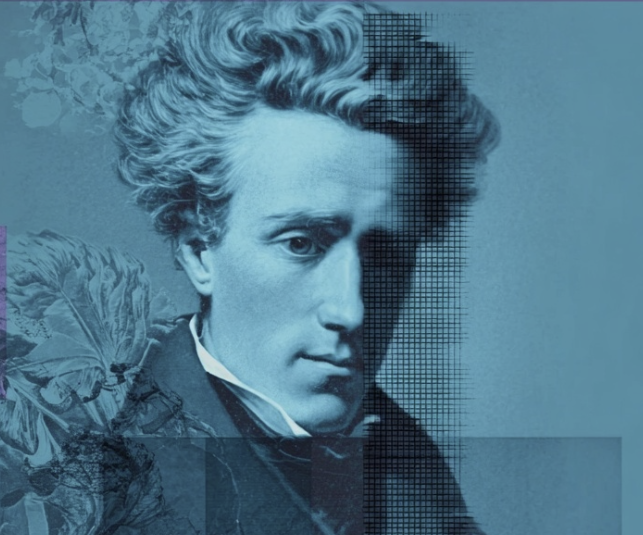
Father in heaven, when the thought of thee awakens in our soul, let it not waken as an agitated bird which flutters confusedly about, but as a child waking from sleep with a celestial smile.

2 months 1 week ago
Isn't history ultimately the result of our fear of boredom?

2 months 2 weeks ago
...no legislator, at any period of the world, has willingly placed the seat of active power in the hands of the multitude: Because there it admits of no control, no regulation; no steady direction whatsoever. The people are the natural control on authority; but to exercise and to control together is contradictory and impossible.
▼
Source
source
p. 441

2 months 2 days ago
We must wish either for that which actually exists or for that which cannot in any way exist - or, still better, for both. That which is and that which cannot be are both outside the realm of becoming.
▼
Source
source
p. 154
2 months 2 weeks ago
Young man, there is America - which at this day serves for little more than to amuse you with stories of savage men and uncouth manners; yet shall, before you taste of death, show itself equal to the whole of that commerce which now attracts the envy of the world.
1 day ago
Whoever complains about the death of anyone, is complaining that he was a man. Everyone is bound by the same terms: he who is privileged to be born, is destined to die.
1 week ago
If we read History with any degree of thoughtfulness, we shall find that checks and balances of Profit and Loss have never been the grand agents with men, that they have never been roused into deep, thorough, all-pervading efforts by any computable prospect of Profit and Loss, for any visible, finite object; but always for some invisible and infinite one.
2 months 1 week ago
The only interesting philosophers are the ones who have stopped thinking and have begun to search for happiness.
3 months 2 weeks ago
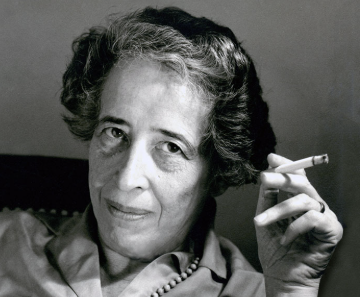
The chief reason warfare is still with us is neither a secret death-wish of the human species, nor an irrepressible instinct of aggression, nor, finally and more plausibly, the serious economic and social dangers inherent in disarmament, but the simple fact that no substitute for this final arbiter in international affairs has yet appeared on the political scene.
▼
Source
source
"On Violence"
1 week ago
Get, by six hundred and fifty-eight votes, or by no vote at all, by the silent intimation of your own eyesight and understanding given you direct out of Heaven, and more sacred to you than anything earthly, and than all things earthly,-a correct image of the fact in question, as God and Nature have made it: that is the one thing needful; with that it shall be well with you in whatsoever you have to do with said fact. Get, by the sublimest constitutional methods, belauded by all the world, an incorrect image of the fact: so shall it be other than well with you; so shall you have laud from able editors and vociferous masses of mistaken human creatures; and from the Nature's Fact, continuing quite silently the same as it was, contradiction, and that only. What else?
4 weeks 1 day ago
I must write it all out, at any cost. Writing is thinking. It is more than living, for it is being conscious of living.
▼
Source
source
Locked Rooms and Open Doors
2 months 1 week ago
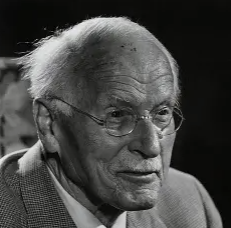
One of the most difficult tasks men can perform, however much others may despise it, is the invention of good games and it cannot be done by men out of touch with their instinctive selves.
▼
Source
source
Jung and the Story of Our Time, Laurens van der Post

3 months 3 weeks ago
The mad mob does not ask how it could be better, only that it be different. And when it then becomes worse, it must change again. Thus they get bees for flies, and at last hornets for bees. Whether Soldiers Can Also Be in a State of Grace
▼
Source
source
1526
1 month 1 week ago
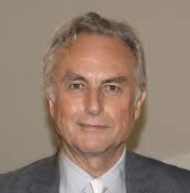
I am extremely pleased by Daniel Fincke's article, which says exactly what I SHOULD have said and, to my regret, didn't make sufficiently clear in my Reason Rally speech. The best way to summarise it would be to modify the quotation from Johann Hari. Johann said, "I respect you too much to respect your ridiculous beliefs". From now on, my version will be, "I respect you too much to accept that you really believe anything so ridiculous as you claim. Please either defend those beliefs and explain why they are not ridiculous, or else declare that you do not hold them and publicly disown the church to which you claim loyalty."
▼
Source
source
comment on Daniel Fincke (2 April 2012), "In Defense of Dawkins's Reason Rally Speech", RichardDawkins.net, retrieved on 1 May 2012

1 month 2 weeks ago
We are swiftly moving at present from an era where business was our culture into an era when culture will be our business. Between these poles stand the huge and ambiguous entertainment industries.
▼
Source
source
(p. 384)
2 months 1 week ago
Just as man as a social being, cannot in the long run exist without a tie to the community, so the individual will never find the real justification for his existence, and his own spiritual and moral autonomy, anywhere except in an extramundane principle capable of relativizing the overpowering influence of external factors.
▼
Source
source
p 23
1 month 2 weeks ago
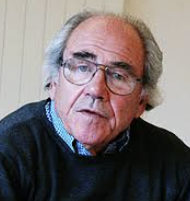
It is the fantasy of seizing reality live that continues-ever since Narcissus bent over his spring. Surprising the real in order to immobilize it, suspending the real in the expiration of its double. You bend over the hologram like God over his creature: only God has this power of passing through walls, through people, and finding Himself immaterially in the beyond. We dream of passing through ourselves and of finding ourselves in the beyond: the day when your holographic double will be there in space, eventually moving and talking, you will have realized this miracle. Of course, it will no longer be a dream, so its charm will be lost.
▼
Source
source
"Holograms," p. 105
4 months 2 weeks ago
While both are dear, Piety requires us to honor truth above our friends.
3 months 2 weeks ago
Political independence, as the right to owe his existence and continuance in society not to the arbitrary will of another, but to his own rights and powers as a member of the commonwealth.
4 months 6 days ago
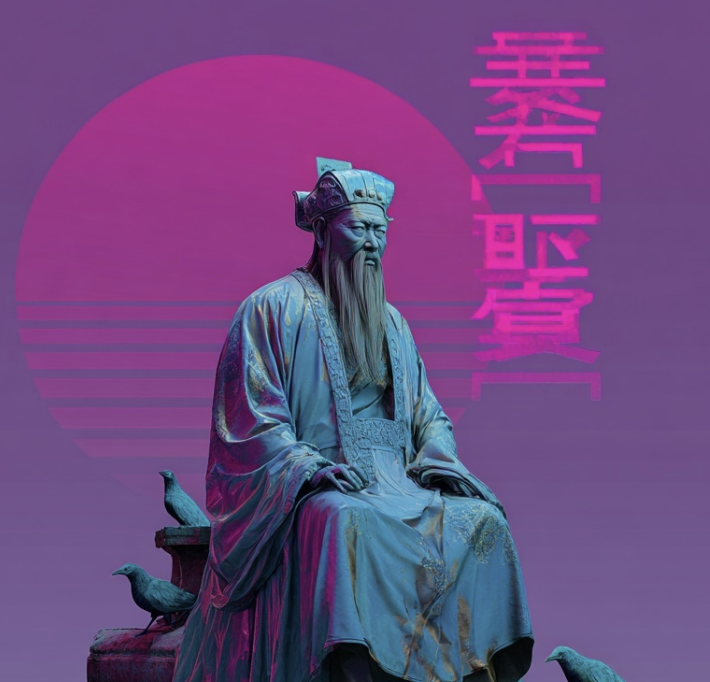
I am not concerned that I have no place; I am concerned how I may fit myself for one. I am not concerned that I am not known; I seek to be worthy to be known.
CivilSimian.com created by AxiomaticPanic, CivilSimian, Kalokagathia