


2 months 2 weeks ago
Wherefore think ye evil in your hearts? For whether is easier, to say, Thy sins be forgiven thee; or to say, Arise, and walk? But that ye may know that the Son of man hath power on earth to forgive sins, (then saith he to the sick of the palsy,) Arise, take up thy bed, and go unto thine house.
▼
Source
source
9:4-6 (KJV) Said to some scribes.
3 months 3 weeks ago
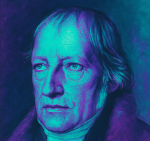
What the history of Philosophy shows us is a succession of noble minds, a gallery of heroes of thought, who, by the power of reason, have penetrated into the being of things, of nature and of spirit, into the Being of God, and have won for us by their labours the highest treasure, the treasure of reasoned knowledge.
▼
Source
source
Introduction p. 1 Lectures on the history of philosophy, Translated from German by E. S. Haldane in Three Volumes (1892-96) full text
2 months 2 days ago
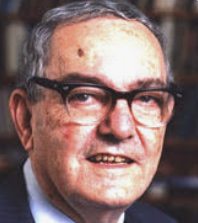
Organizations and institutions provide the general stimuli and attention-directors that channelize the behaviors of the members of the group, and that provide those members with the intermediate objectives that stimulate action.
▼
Source
source
p. 100.

3 months 3 weeks ago
Communism... is the genuine resolution of the antagonism between man and nature and between man and man; it is the true resolution of the conflict between existence and essence, objectification and self-affirmation, freedom and necessity, individual and species. It is the riddle of history solved and knows itself as the solution.
▼
Source
source
Private Property and Communism, p. 43.
1 week 6 days ago
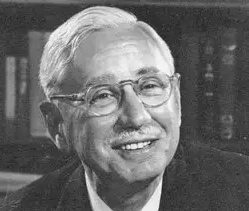
Power dements even more than it corrupts, lowering the guard of foresight and raising the haste of action.
▼
Source
source
Ch. IV : The Convention: September 21, 1792 - October 26, 1795, Part V : The Reign of Terror: September 17, 1793 - July 28, 1794, § 4 : The Revolution Eats Its Children

2 weeks 4 days ago
In a liberal society you're not going to agree on the deepest... moral frameworks, but you are going to agree on factual information, and... if you can't agree on factual information it's very hard to deliberate in common... on what needs to be done in the future, and that's the situation we now face.
▼
Source
source
23:00
2 months 1 week ago
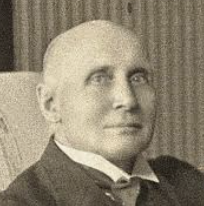
A man really writes for an audience of about ten persons. Of course if others like it, that is clear gain. But if those ten are satisfied, he is content.
▼
Source
source
p. 66

3 months 3 weeks ago
The whole is a riddle, an aenigma, an inexplicable mystery. Doubt, uncertainty, suspence of judgment appear the only result of our most accurate scrutiny, concerning this subject. But such is the frailty of human reason, and such the irresistible contagion of opinion, that even this deliberate doubt could scarcely be upheld; did we not enlarge our view, and opposing one species of superstition to another, set them a quarrelling; while we ourselves, during their fury and contention, happily make our escape, into the calm, though obscure, regions of philosophy.
▼
Source
source
Part XV - General corollary

2 months 2 weeks ago
A people represents not so much an aggregate of ideas and theories as of obsessions.
2 months 2 weeks ago
Religion in its humility restores man to his only dignity, the courage to live by grace.
▼
Source
source
Ch. 4
2 months 2 weeks ago
The most immediate result of this unbalanced specialisation has been that to-day, when there are more "scientists" than ever, there are much less "cultured" men than, for example, about 1750. And the worst is that with these turnspits of science not even the real progress of science itself is assured. For science needs from time to time, as a necessary regulator of its own advance, a labour of reconstitution, and, as I have said, this demands an effort towards unification, which grows more and more difficult, involving, as it does, ever-vaster regions of the world of knowledge. Newton was able to found his system of physics without knowing much philosophy, but Einstein needed to saturate himself with Kant and Mach before he could reach his own keen synthesis. Kant and Mach - the names are mere symbols of the enormous mass of philosophic and psychological thought which has influenced Einstein.
▼
Source
source
Chapter XII: The Barbarism Of "Specialisation"

3 months 3 weeks ago
Other curious and rather ominous consequences of war are the increased anti-Semitism which one meets in all classes, particularly the common people, and the strong recrudescence of anti-negro passions in the South. The first is due to the age-old dislike of a monied, influential and pushing minority, coupled with a special grudge against the Jews as being chiefly instrumental, in public opinion, in getting America into the war.
▼
Source
source
Letter to Julian Huxley (1943), published in Letters of Aldous Huxley (1970), p. 486, also in Aldous Huxley: A Quest for Values, 2017
2 months 3 days ago
One has to do something new in order to see something new.
▼
Source
source
J 1770
1 month 2 weeks ago
A free society is a community of free beings, bound by the laws of sympathy and by the obligations of family love. It is not a society of people released from all moral constraint-for that is precisely the opposite of a society. Without moral constraint there can be no cooperation, no family commitment, no long-term prospects, no hope of economic, let alone social, order.
▼
Source
source
"The Limits of Liberty," The American Spectator
5 days ago
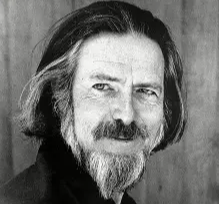
This mysterious something has been called God, the Absolute, Nature, Substance, Energy, Space, Ether, Mind, Being, the Void, the Infinite-names and ideas which shift in popularity and respectabilitywith the winds of intellectual fashion, of considering the universe intelligent or stupid, superhuman or subhuman, specific or vague. All of them might be dismissed as nonsense-noises if the notion of an underlying Ground of Being were no more than a product of intellectual speculation. But these names are often used to designate the content of a vivid and almost sensorily concrete experience-the "unitive" experience of the mystic, which, with secondary variations, is found in almost all cultures at all times. This experience is the transformed sense of self which I was discussing in the previous chapter, though in "naturalistic" terms, purified of all hocus-pocus about mind, soul, spirit, and other intellectually gaseous words.
▼
Source
source
p. 104-105
2 months 2 weeks ago
A heart without music is like beauty without melancholy.
2 months 2 weeks ago
The living have never shown me how to live.
▼
Source
source
"On My Friendly Critics"

3 months 3 weeks ago
Without the aid of trained emotions the intellect is powerless against the animal organism. I had sooner play cards against a man who was quite skeptical about ethics, but bred to believe that 'a gentleman does not cheat,' than against an irreproachable moral philosopher who had been brought up among sharpers. In battle it is not syllogisms that will keep the reluctant nerves and muscles to their post in the third hour of the bombardment.

3 months 3 weeks ago
By 'arguing...' I mean... criticizing... inviting... criticism; and trying to learn from it.
1 week 2 days ago
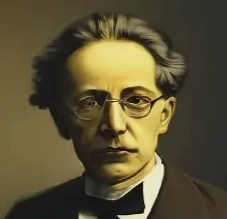
Man with the great M is only an ideal, the species only something thought of.
▼
Source
source
Dover 2005, p. 182
1 month 2 weeks ago
The future of mankind, for the socialist, is simple: pull down the existing order and allow the future to emerge.
▼
Source
source
"Eliot and Conservatism" (p. 208)

3 months 3 weeks ago
I observe that a very large portion of the human race does not believe in God and suffers no visible punishment in consequence. And if there were a God, I think it very unlikely that he would have such an uneasy vanity as to be offended by those who doubt his existence.
▼
Source
source
Bertrand Russell's Best: Silhouettes in Satire (1958), "On Religion".

3 months 3 weeks ago
Tis very certain that each man carries in his eye the exact indication of his rank in the immense scale of men, and we are always learning to read it. A complete man should need no auxiliaries to his personal presence.
▼
Source
source
Behavior

3 months 3 weeks ago
Society should treat all equally well who have deserved equally well of it, that is, who have deserved equally well absolutely. This is the highest abstract standard of social and distributive justice; towards which all institutions, and the efforts of all virtuous citizens, should be made in the utmost degree to converge.
▼
Source
source
Ch. 5
3 months 3 weeks ago
All sentiment is right; because sentiment has a reference to nothing beyond itself, and is always real, wherever a man is conscious of it. But all determinations of the understanding are not right; because they have a reference to something beyond themselves, to wit, real matter of fact; and are not always conformable to that standard.
▼
Source
source
Part I, Essay 23: Of The Standard of Taste
1 week 1 day ago
My idea of heaven is, eating pâté de foie gras to the sound of trumpets.
▼
Source
source
View ascribed by Smith to his friend Henry Luttrell; reported in Hesketh Pearson, The Smith of Smiths (London: Hamish Hamilton, 1934), p. 236

1 month 3 weeks ago
We know very well that we are only allowed to go on eating our dinner, to finish seeing the new play, or to enjoy to the end the ball, the Christmas fete, the promenade, the races or, the hunt, thanks to the policeman's revolver or the soldier's rifle, which will shoot down the famished outcast who has been robbed of his share, and who looks round the corner with covetous eyes at our pleasures, ready to interrupt them instantly, were not policeman and soldier there prepared to run up at our first call for help.
▼
Source
source
Chapter XII, Conclusion-Repent Ye, for the Kingdom of Heaven is at Hand
2 weeks 2 days ago
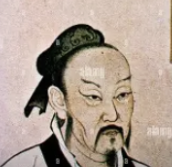
The virtues are not poured into us, they are natural. Seek, and you will find them: neglect, and you will lose them.
▼
Source
source
Uses and Sanctions, no. 22

3 months 3 weeks ago
Those services which the community will most readily pay for it is most disagreeable to render. You are paid for being something less than a man.
▼
Source
source
p. 486

1 month ago
The belief in unity that has fuelled so many utopian dreams is an effort to reconcile the irreconcilable that ends in repression. Berlin suggests we renounce this venerable faith, and learn how to live with intractable conflict.
▼
Source
source
'Isaiah Berlin: The Value of Decency' (p.106-7)

2 weeks 1 day ago
We are to remember what an umpire Nature is; what a greatness, composure of depth and tolerance there is in her. You take wheat to cast into the Earth's bosom; your wheat may be mixed with chaff, chopped straw, barn-sweepings, dust and all imaginable rubbish; no matter: you cast it into the kind just Earth; she grows the wheat, - the whole rubbish she silently absorbs, shrouds it in, says nothing of the rubbish. The yellow wheat is growing there; the good Earth is silent about all the rest, - has silently turned all the rest to some benefit too, and makes no complaint about it! So everywhere in Nature! She is true and not a lie; and yet so great, and just, and motherly in her truth. She requires of a thing only that it be genuine of heart; she will protect it if so; will not, if not so. There is a soul of truth in all the things she ever gave harbor to. Alas, is not this the history of all highest Truth that comes or ever came into the world?

2 months 1 week ago
Attention consists of suspending our thought, leaving it detached, empty, and ready to be penetrated by the object; it means holding in our minds, within reach of this thought, but on a lower level and not in contact with it, the diverse knowledge we have acquired which we are forced to make use of.
1 month 3 weeks ago
All violence consists in some people forcing others, under threat of suffering or death, to do what they do not want to do.
▼
Source
source
The Law of Love and the Law of Violence
2 months 1 week ago
No human being escapes the necessity of conceiving some good outside himself towards which his thought turns in a movement of desire, supplication, and hope. consequently, the only choice is between worshipping the true God or an idol. Every atheist is an idolater - unless he is worshipping the true God in his impersonal aspect. The majority of the pious are idolaters.
▼
Source
source
Last Notebook (1942) p. 308

1 month 1 week ago
The man-like Apes... have certain characters of structure and of distribution in common.
▼
Source
source
Ch.1, p. 34
3 months 3 weeks ago
For the philosophy which is so important in each of us is not a technical matter; it is our more or less dumb sense of what life honestly and deeply means. It is only partly got from books; it is our individual way of just seeing and feeling the total push and pressure of the cosmos. ...I have heard friends and colleagues try to popularize philosophy... but they soon grew dry, and then technical, and the results were only partially encouraging. So my enterprise is a bold one. The founder of pragmatism... gave... lectures... with that very word in its title,-flashes of brilliant light relieved against Cimmerian darkness! None of us... understood all that he said-yet here I stand making a very similar venture. ...There is... a curious fascination in hearing deep things talked about, even though neither we nor the disputants understand them. We get the problematic thrill, we feel the presence of the vastness.
▼
Source
source
Lecture I, The Present Dilemma in Philosophy
2 months 1 week ago
Sensitiveness without impulse spells decadence, and impulse without sensitiveness spells brutality.
▼
Source
source
Ch. 13: "Requisites for Social Progress", p. 280
4 months 1 week ago
The world is divided into men who have wit and no religion and men who have religion and no wit.

2 months 3 weeks ago
I am a sick man... I am a wicked man. An unattractive man.
▼
Source
source
Part 1, Chapter 1
2 months 2 weeks ago
Why is psychology the youngest of the empirical sciences? Why have we not long since discovered the unconscious and raised up its treasure-house of eternal images? Simply because we had a religious formula for everything psychic - and one that is far more beautiful and comprehensive than immediate experience. Though the Christian view of the world has paled for many people, the symbolic treasure-rooms of the East are still full of marvels that can nourish for a long time to come the passion for show and new clothes. What is more, these images - be they Christian or Buddhist or what you will - are lovely, mysterious, richly intuitive.
▼
Source
source
p. 7-8

3 months 3 weeks ago
God gave us the gift of life; it is up to us to give ourselves the gift of living well.
2 weeks 2 days ago
The destructive work of totalitarian machinery, whether or not this word is used, is usually supported by a special kind of primitive social philosophy. It proclaims not only that the common good of 'society' has priority over the interests of individuals, but that the very existence of individuals as persons is reducible to the existence of the social 'whole'; in other words, personal existence is, in a strange sense, unreal. This is a convenient foundation for any ideology of slavery.
▼
Source
source
"Totalitarianism and the Virtue of the Lie", as quoted in Is God Happy? Selected Essays (2013), Basic Books, p. 57
1 month 2 weeks ago
To explain the origin of the DNA/protein machine by invoking a supernatural Designer is to explain precisely nothing, for it leaves unexplained the origin of the Designer.
▼
Source
source
Chapter 6 "Origins and Miracles" (p. 141)
3 months 2 weeks ago
The noblest people are those despising wealth, learning, pleasure and life; esteeming above them poverty, ignorance, hardship and death.
▼
Source
source
Stobaeus, iv. 29a. 19
3 months 3 weeks ago
Not from a vain or shallow thought His awful Jove young Phidias brought.
▼
Source
source
The Problem, st. 2
3 months 3 weeks ago
Under the ideal measure of values there lurks the hard cash.
▼
Source
source
Vol. I, Ch. 3, Section 1, pg. 116.

3 months 2 weeks ago
Coition is a slight attack of apoplexy. For man gushes forth from man, and is separated by being torn apart with a kind of blow.
▼
Source
source
Freeman (1948), p. 150

2 months 2 weeks ago
We have reached the point where the Objective Logic turns into the Subjective Logic, or, where subjectivity emerges as the true form of objectivity. We may sum up Hegel's analysis in the following schema: The true form of reality requires freedom. Freedom requires self-consciousness and knowledge of the truth. Self-consciousness and knowledge of the truth are the essentials of the subject. The form of reality must be conceived as subject.
▼
Source
source
P. 154-155
1 month 3 weeks ago
Pure and complete sorrow is as impossible as pure and complete joy.
▼
Source
source
Bk. XV, ch. 1

1 month 3 weeks ago
When new technologies impose themselves on societies long habituated to older technologies, anxieties of all kinds result.
▼
Source
source
Location, Volume 1 Issues 1-2, 1963, p. 44
CivilSimian.com created by AxiomaticPanic, CivilSimian, Kalokagathia