


3 months 2 weeks ago
The miracles in fact are a retelling in small letters of the very same story which is written across the whole world in letters too large for some of us to see. Of that larger script part is already visible, part is still unsolved. In other words, some of the miracles do locally what God has already done universally: others do locally what He has not yet done, but will do. In that sense, and from our human point of view, some are reminders and others prophecies.
▼
Source
source
"Miracles" (1942), p. 29
4 months 2 weeks ago
That a woman is presented as a teacher, as a prototype of piety, cannot amaze anyone who knows that piety or godliness is fundamentally womanliness. ... from a woman you learn concern for the one thing needful, from Mary, sister of Lazarus, who sat silent at Christ's feet with her heart's choice: the one thing needful.

2 months 1 week ago
Marx explains the alienation of labor as exemplified in, first, the relation of the worker to the product of his labor and, second, the relation of the worker to his own activity. P. 276
1 month 2 weeks ago
Every day should be passed as if it were to be our last.
▼
Source
source
Maxim 633

2 months 1 week ago
The Spirit of the Lord is on me, because he has anointed me to proclaim good news to the poor. He has sent me to proclaim freedom for the prisoners and recovery of sight for the blind, to set the oppressed free, to proclaim the year of the Lord's favor.
▼
Source
source
Luke 4:18-19 NIV

4 months 2 weeks ago
It is all too easy to forget that there are emotional motivations in history, as well as economic ones.

3 months 3 weeks ago
The entire lower world was created in the likeness of the higher world. All that exists in the higher world appears like an image in this lower world; yet all this is but One.

1 week ago
Tell me what kind of man governs a People, you tell me, with much exactness, what the net sum-total of social worth in that People has for some time been.
2 months 1 week ago
But if it bee well considered, The praise of Ancient Authors, proceeds not from the reverence of the Dead, but from the competition and mutual envy of the Living.
▼
Source
source
Review and Conclusion, p. 395
1 month 2 weeks ago
Not only does reality resist those who still criticize it, but it also abandons those who defend it. Maybe it is a way for reality to get its revenge from those who claim to believe in it for the sole purpose of eventually transforming it: sending back its supporters to their own desires.
1 day ago
The fact is that in order to do any thing in this world worth doing, we must not stand shivering on the bank thinking of the cold and the danger, but jump in and scramble through as well as we can.
▼
Source
source
Lecture IX : On the Conduct of the Understanding
2 months 1 week ago
Verily, verily, I say unto you, Except ye eat the flesh of the Son of man, and drink his blood, ye have no life in you. Whoso eateth my flesh, and drinketh my blood, hath eternal life; and I will raise him up at the last day. For my flesh is meat indeed, and my blood is drink indeed. He that eateth my flesh, and drinketh my blood, dwelleth in me, and I in him.
▼
Source
source
6:53-56
2 months 1 week ago
By far the most valuable things, which we know or can imagine, are certain states of consciousness, which may roughly be described as the pleasures of human intercourse and the enjoyment of beautiful objects. No one, probably, who has asked himself the question, has ever doubted that personal affection and the appreciation of what is beautiful in Art or Nature, are good in themselves; nor, if we consider strictly what things are worth having purely for their own sakes, does it appear probable that any one will think that anything else has nearly so much value as the things which are included under these two heads.
▼
Source
source
Principia Ethica (1903; revised edition, Cambridge University Press, 1993).

1 month 2 weeks ago
Environments are not just containers, but are processes that change the content totally.
▼
Source
source
American scholar, Volume 35, 1965, p. 200
1 week ago
Consider, for example, the state of Science generally, in Europe, at this period. It is admitted, on all sides, that the Metaphysical and Moral Sciences are falling into decay, while the Physical are engrossing, every day, more respect and attention. In most of the European nations there is now no such thing as a Science of Mind; only more or less advancement in the general science, or the special sciences, of matter.
3 months ago
The utility of a science which enables men to take cognizance of the travellers on the mind's highway, and excludes those disorderly interlopers, verbal fallacies, needs but small attestation. Its searching penetration by definition alone, before which even mathematical precision fails, would especially commend it to those whom the abstruseness of the study does not terrify, and who recognise the valuable results which must attend discipline of mind. Like a medicine, though not a panacea for every ill, it has the health of the mind for its aim, but requires the determination of a powerful will to imbibe its nauseating yet wholesome influence: it is no wonder therefore that puny intellects, like weak stomachs, abhor and reject it.
▼
Source
source
Introduction to Aristotle's Organon, as translated by Octavius Freire Owen (1853), p. v
2 months 1 week ago
So that in the first place, I put for a general inclination of all mankind a perpetual and restless desire of Power after power, that ceaseth only in Death. And the cause of this is not always that a man hopes for a more intensive delight than he has already attained to, or that he cannot be content with a moderate power: but because he cannot assure the power and means to live well, which he hath present, without the acquisition of more.
▼
Source
source
The First Part, Chapter 11, p. 47

4 months 1 week ago
You have already grasped that Sisyphus is the absurd hero. He is, as much through his passions as through his torture. His scorn of the gods, his hatred of death, and his passion for life won him that unspeakable penalty in which the whole being is exerted toward accomplishing nothing. This is the price that must be paid for the passions of this earth. Nothing is told us about Sisyphus in the underworld. Myths are made for the imagination to breathe life into them.
1 month 3 weeks ago
Organizations and institutions provide the general stimuli and attention-directors that channelize the behaviors of the members of the group, and that provide those members with the intermediate objectives that stimulate action.
▼
Source
source
p. 100.
4 months 1 week ago
Of course, I had to own that he was right; I didn't feel much regret for what I'd done. Still, to my mind, he overdid it, and I'd have liked to have a chance of explaining to him, in a quite friendly, almost affectionate way, that I have never been able to really regret anything in all my life. I've always been far too much absorbed in the present moment, or the immediate future, to think back.

1 day ago
We give voice to our trivial cares, but suffer enormities in silence.
▼
Source
source
line 607; (Phaedra)

2 months 4 weeks ago
Do not ask who started it.
▼
Source
source
Finish it A Dictionary of Thoughts (1908) by Tryon Edwards, p. 234

3 months 2 weeks ago
I think all the great religions of the world - Buddhism, Hinduism, Christianity, Islam, and Communism - both untrue and harmful. It is evident as a matter of logic that, since they disagree, not more than one of them can be true. With very few exception, the religions which a man accepts is that of the community in which he lives, which makes it obvious that the influence of environment is what has led him to accept the religion in question.
▼
Source
source
Preface, 1957

3 months 2 weeks ago
What peculiar privilege has this little agitation of the brain which we call thought, that we must thus make it the model of the whole universe? Our partiality in our own favour does indeed present it on all occasions; but sound philosophy ought carefully to guard against so natural an illusion.
▼
Source
source
Philo to Cleanthes, Part II

2 months 1 week ago
Mind, even more deadly to empires than to individuals, erodes them, compromises their solidity.

2 months 3 weeks ago
We are sleeping on a volcano... A wind of revolution blows, the storm is on the horizon.
▼
Source
source
Speaking in the Chamber of Deputies just prior to to outbreak of revolution in Europe (1848).

3 months 2 weeks ago
The Upanishads and the Vedas haunt me. In them I have found eternal compensation, unfathomable power, unbroken peace.
▼
Source
source
Quoted in S. Londhe, A Tribute to Hinduism, 2008
2 months 1 week ago
And when all the world is overcharged with Inhabitants, then the last remedy of all is Warre, which provideth for every man, by Victory or Death.
▼
Source
source
The Second Part, Chapter 30, p. 181
1 month 2 weeks ago
Let your life be pleasing to the multitude, and it can not be so to yourself.
▼
Source
source
Maxim 1075
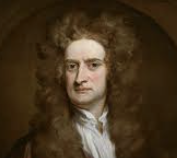
1 month 2 weeks ago
The best and safest method of philosophizing seems to be, first to enquire diligently into the properties of things, and to establish these properties by experiment, and then to proceed more slowly to hypothesis for the explanation of them. For hypotheses should be employed only in explaining the properties of things, but not assumed in determining them, unless so far as they may furnish experiments.
▼
Source
source
Letter to Ignatius Pardies (1672) Philosophical Transactions of the Royal Society (Feb. 1671/2) as quoted by William L. Harper
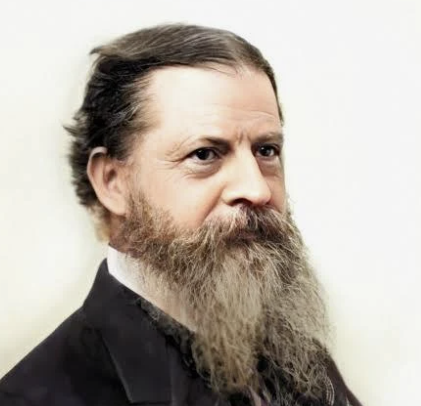
2 months 1 week ago
Accordingly, time logically supposes a continuous range of intensity of feeling. It follows then, from the definition of continuity, that when any particular kind of feeling is present, an infinitesimal continuum of all feelings differing infinitesimally from that, is present.
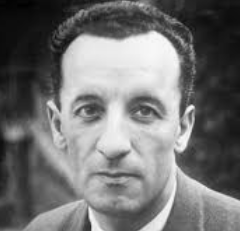
2 months 1 week ago
The function of objective thinking is to reduce all phenomena which bear witness to the union of subject and world, putting in their place the clear idea of the object as in itself and of the subject as pure consciousness. It therefore severs the links which unite the thing and the embodied subject, leaving only sensible qualities to make up our world (to the exclusion of the modes of appearance which we have described), and preferably visual qualities, because these give the impression of being autonomous, and because they are less directly linked to our body and present us with an object rather than introducing us into an atmosphere. But in reality all things are concretions of a setting, and any explicit perception of a thing survives in virtue of a previous communication with a certain atmosphere.
▼
Source
source
p. 374

2 months 3 weeks ago
The world that I regard is my selfe, it is the Microcosme of mine owne frame, that I cast mine eye on; for the other, I use it but like my Globe, and turne it round sometimes for my recreation. Men that look upon my outside, perusing onely my condition, and fortunes, do erre in my altitude; for I am above Atlas his shoulders.
▼
Source
source
Section 12
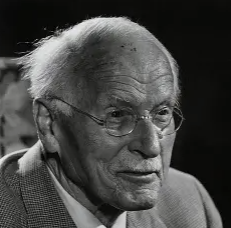
2 months 1 week ago
Metaphysical assertions, however, are statements of the psyche, and are therefore psychological. ... Whenever the Westerner hears the word "psychological," it always sounds to him like "only psychological."
▼
Source
source
Psyche and Symbol (1958), p. 285
2 months 3 weeks ago
The noblest Digladiation is in the Theatre of ourselves.
▼
Source
source
Part I, Section XXIV

3 months 2 weeks ago
Only a neutral, who is indifferent to the stake and perhaps to all stakes, can appreciate aesthetically the grandeur of a fine disaster
▼
Source
source
p. 212
2 months 2 days ago
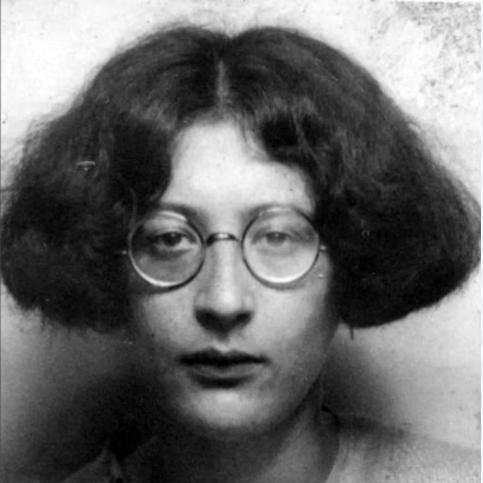
That is why St. John of the Cross calls faith a night. With those who have received a Christian education, the lower parts of the soul become attached to these mysteries when they have no right at all to do so. That is why such people need a purification of which St. John of the Cross describes the stages. Atheism and incredulity constitute an equivalent of such a purification.
▼
Source
source
Faiths of Meditation; Contemplation of the divine" as translated in The Simone Weil Reader (1957) edited by George A. Panichas, p. 418
1 week 5 days ago
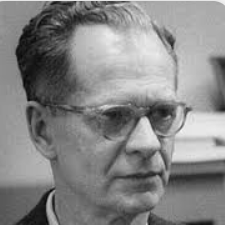
Education is what survives when what has been learned has been forgotten.
▼
Source
source
"New methods and new aims in teaching", in New Scientist, 22(392) (21 May 1964), pp.483-4
3 months 2 weeks ago
Each man is a hero and an oracle to somebody.
▼
Source
source
Quotation and Originality
2 months 1 week ago
Aion is a child at play, gambling; a child's is the kingship. Telesphorus traverses the dark places of the world, like a star flashing from the deep, leading the way to the gates of the sun and the land of dreams.
▼
Source
source
Combining fragments of Heraclitus and Homer
1 month 2 days ago
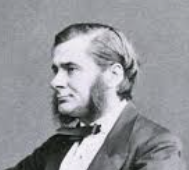
A great chapter of the history of the world is written in the chalk. Few passages in the history of man can be supported by such an overwhelming mass of direct and indirect evidence as that which testifies to the truth of the fragment of the history of the globe, which I hope to enable you to read, with your own eyes, tonight. Let me add, that few chapters of human history have a more profound significance for ourselves. I weigh my words well when I assert, that the man who should know the true history of the bit of chalk which every carpenter carries about in his breeches-pocket, though ignorant of all other history, is likely, if he will think his knowledge out to its ultimate results, to have a truer, and therefore a better, conception of this wonderful universe, and of man's relation to it, than the most learned student who is deep-read in the records of humanity and ignorant of those of Nature.
1 month 2 weeks ago
Picturing others and everything which brings you closer to them is futile from the instant that 'communication' can make their presence immediate.
▼
Source
source
(p. 42)
3 months 2 weeks ago
On the stage on which we are observing it, - Universal History - Spirit displays itself in its most concrete reality.
1 month 3 weeks ago
From any vocabulary of ideas we can build other ideas by formal combinations of signs. But not any set of ideas will be instructive. One must have the right ideas.
▼
Source
source
Chapter 15, Inductive Logic, p. 139.
1 month 4 weeks ago
I believe in the possible realization of a world in which man can be much, even if he has little; a world in which the dominant motivation of existence is not consumption; a world in which "man" is the end, first and last; a world in which man can find the way of giving a purpose to his life as well as the strength to live free and without illusions.
2 months 1 week ago
Entertainment and learning are not opposites; entertainment may be the most effective mode of learning.
▼
Source
source
pp. 66-67
2 months 1 week ago
Moses because of the hardness of your hearts suffered you to put away your wives: but from the beginning it was not so. And I say unto you, Whosoever shall put away his wife, except it be for fornication, and shall marry another, committeth adultery: and whoso marrieth her which is put away doth commit adultery.
▼
Source
source
19:8-9 (KJV)

3 months 2 weeks ago
With the greater part of rich people, the chief enjoyment of riches consists in the parade of riches, which in their eye is never so complete as when they appear to possess those decisive marks of opulence which nobody can possess but themselves.
▼
Source
source
Chapter XI, Part II, p. 202 (See also Thorstein Veblen).
3 months 2 weeks ago
This is the contradiction of racism, colonialism, and all forms of tyranny: in order to treat a man like a dog, one must first recognize him as a man.
1 day ago
I am endeavouring to live every day as if it were a complete life.
CivilSimian.com created by AxiomaticPanic, CivilSimian, Kalokagathia