
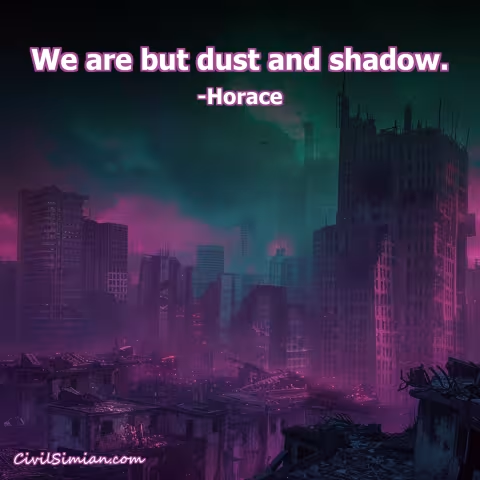
In a block universe, dust and shadow is forever....



Every innovation scraps its immediate predecessor and retrieves still older figures - it causes floods of antiques or nostalgic art forms and stimulates the search for museum pieces.

Repentance deserveth Pardon.

"If God did not exist, he would have to be invented." But all nature cries aloud that he does exist: that there is a supreme intelligence, an immense power, an admirable order, and everything teaches us our own dependence on it.

Jupiter: I committed the first crime by creating men as mortals. After that, what more could you do, you the murderers?
Aegisteus: Come on; they already had death in them: at most you simply hastened things a little.

The terrifying experience and obsession of death, when preserved in consciousness, becomes ruinous. If you talk about death, you save part of yourself. But at the same time, something of your real self dies, because objectified meanings lose the actuality they have in consciousness.

Modern transcendental idealism, Emersonianism, for instance, also seems to let God evaporate into abstract Ideality. Not a deity in concreto, not a superhuman person, but the immanent divinity in things, the essentially spiritual structure of the universe, is the object of the transcendentalist cult. In that address of the graduating class at Divinity College in 1838 which made Emerson famous, the frank expression of this worship of mere abstract laws was what made the scandal of the performance.

That there should one Man die ignorant who had capacity for Knowledge, this I call a tragedy.
Properly speaking, a man has as many social selves as there are individuals who recognise him.
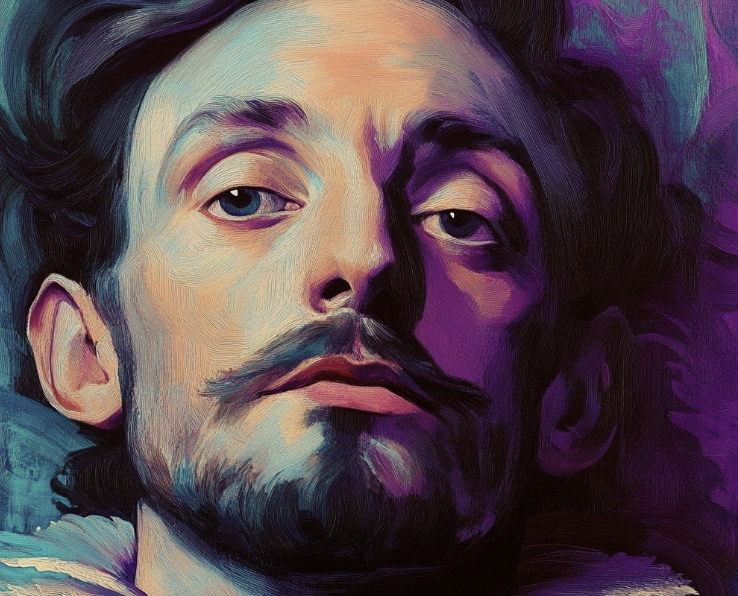
The obliteration of the evil hath been practised by two means, some kind of redemption or expiation of that which is past, and an inception or account de novo for the time to come. But this part seemeth sacred and religious, and justly; for all good moral philosophy (as was said) is but a handmaid to religion.

I am trying here to prevent anyone saying the really foolish thing that people often say about Him: 'I'm ready to accept Jesus as a great moral teacher, but I don't accept His claim to be God.' That is the one thing we must not say. A man who was merely a man and said the sort of things Jesus said would not be a great moral teacher. He would be either a lunatic-on a level with the man who says he is a poached egg-or else he would be the Devil of Hell. You must make your choice. Either this man was, and is, the Son of God: or else a madman or something worse. You can shut Him up for a fool, you can spit at Him and kill Him as a demon; or you can fall at His feet and call Him Lord and God. But let us not come with any patronising nonsense about His being a great human teacher. He has not left that open to us. He did not intend to.
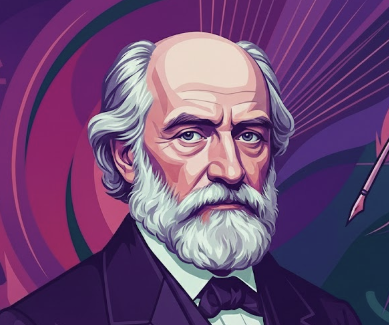
In our monogamous part of the world, to marry means to halve one's rights and double one's duties.
[Mortals] say of some temporal suffering, "No future bliss can make up for it," not knowing Heaven, once attained, will work backwards and turn even that agony into a glory. And of some sinful pleasure they say "Let me have but this and I'll take the consequences": little dreaming how damnation will spread back and back into their past and contaminate the pleasure of the sin. Both processes begin even before death.
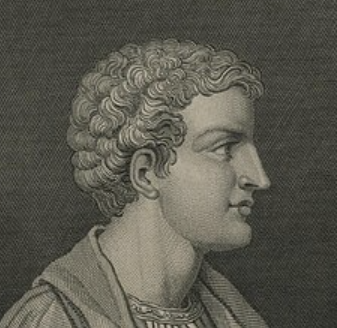
It is difficult to speak of the universal specifically.
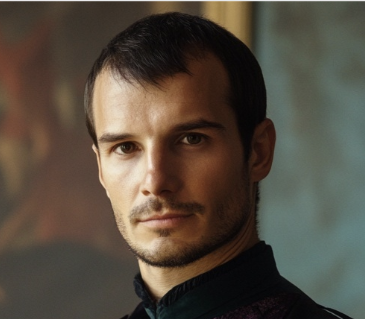
It ought to be remembered that there is nothing more difficult to take in hand, more perilous to conduct, or more uncertain in its success, than to take the lead in the introduction of a new order of things. Because the innovator has for enemies all those who have done well under the old conditions, and lukewarm defenders in those who may do well under the new. This coolness arises partly from fear of the opponents, who have the laws on their side, and partly from the incredulity of men, who do not readily believe in new things until they have had a long experience of them.

It is proof of a base and low mind for one to wish to think with the masses or majority, merely because the majority is the majority. Truth does not change because it is, or is not, believed by a majority of the people.
Violence, less and less embarrassed by the limits imposed by centuries of lawfulness, is brazenly and victoriously striding across the whole world, unconcerned that its infertility has been demonstrated and proved many times in history. What is more, it is not simply crude power that triumphs abroad, but its exultant justification. The world is being inundated by the brazen conviction that power can do anything, justice nothing.
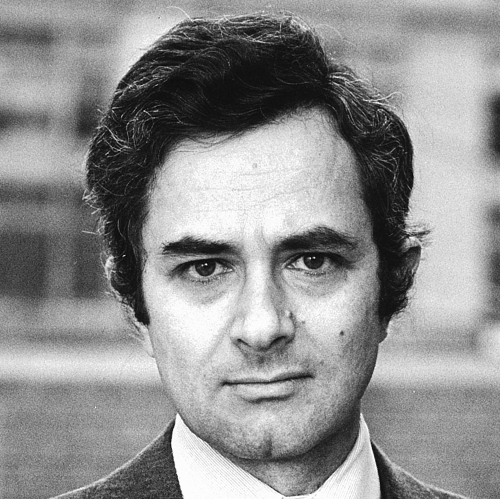
In speaking of the move from subjective to objective characterization, I wish to remain noncommittal about the existence of an endpoint, the completely objective intrinsic nature of the thing, which one might or might not be able to reach. It may be more accurate to think of objectivity as a direction in which the understanding can travel. And in understanding a phenomenon like lightning, it is legitimate to go as far away as one can from a strictly human viewpoint.But in the case of experience, on the other hand, the connexion with a particular point of view seems much closer. It is difficult to understand what could be meant by the objective character of an experience, apart from the particular point of view from which its subject apprehends it. After all, what would be left of what it was like to be a bat if one removed the viewpoint of the bat?
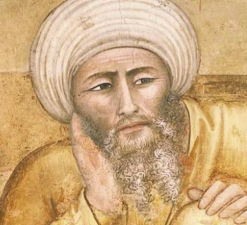
The Law teaches that the universe was invented and created by God, and that it did not come into being by chance or by itself.

Throughout the years in which the US was punishing countries that departed from fiscal prudence, it was borrowing on a colossal scale to finance tax cuts and fund its over-stretched military commitments. Now, with federal finances critically dependent on continuing large inflows of foreign capital, it will be the countries that spurned the American model of capitalism that will shape America's economic future.

The most dangerous madmen are those created by religion, and ... people whose aim is to disrupt society always know how to make good use of them on occasion.
Scepticism is not irrefutable, but obviously nonsensical, when it tries to raise doubts where no questions can be asked. For doubt can exist only where a question exists, a question only where an answer exists, and an answer only where something can be said.

Every man would like to be God, if it were possible; some few find it difficult to admit the impossibility.
Among human beings, the subjection of women is much more complete at a certain level of civilization than it is among savages. And the subjection is always reinforced by morality.

That some have never dreamed is as improbable as that some have never laughed.
Pride is an established conviction of one's own paramount worth in some particular respect, while vanity is the desire of rousing such a conviction in others, and it is generally accompanied by the secret hope of ultimately coming to the same conviction oneself. Pride works from within; it is the direct appreciation of oneself. Vanity is the desire to arrive at this appreciation indirectly, from without.
To be nameless in worthy deeds exceeds an infamous history.But the iniquity of oblivion blindly scattereth her poppy, and deals with the memory of men without distinction to merit of perpetuity. Who can but pity the founder of the Pyramids? Herostratus lives that burnt the Temple of Diana, he is almost lost that built it.
When you live alone you no longer know what it is to tell a story: the plausible disappears at the same time as the friends. You let events flow by too: you suddenly see people appear who speak and then go away; you plunge into stories of which you can't make head or tail: you'd make a terrible witness.
Even in childhood I watched the hours flow, independent of any reference, any action, any event, the disjunction of time from what was not itself, its autonomous existence, its special status, its empire, its tyranny. I remember quite clearly that afternoon when, for the first time, confronting the empty universe, I was no more than a passage of moments reluctant to go on playing their proper parts. Time was coming unstuck from being - at my expense.

You venerate the saints, and you take pleasure in touching their relics. But you disregard their greatest legacy, the example of a blameless life. No devotion is more pleasing to Mary than the imitation of Mary's humility. No devotion is more acceptable and proper to the saints than striving to imitate their virtues.

A genius and an Apostle are qualitatively different, they are definitions which each belong in their own spheres: the sphere of immanence, and the sphere of transcendence.
Truth lives, in fact, for the most part on a credit system. Our thoughts and beliefs 'pass,' so long as nothing challenges them, just as bank-notes pass so long as nobody refuses them.

I wish to write such rhymes as shall not suggest a restraint, but contrariwise the wildest freedom.
Scientific revolutions are inaugurated by a growing sense... that an existing paradigm has ceased to function adequately in the exploration of an aspect of nature to which that paradigm itself had previously led the way. p. 91
What we want is not freedom but its appearances. It is for these simulacra that man has always striven. And since freedom, as has been said, is no more than a sensation, what difference is there between being free and believing ourselves free?
Zeno: The many do not know that except by this devious passage through all things the mind cannot attain to the truth. Zeno: Most people are not aware that this roundabout progress through all things is the only way in which the mind can attain truth and wisdom.

There is no sorrow in the world, when we have escaped from the fear of death.
By capitulating to life, this world has betrayed nothingness. . . . I resign from movement, and from my dreams. Absence! You shall be my sole glory. . . . Let "desire" be forever stricken from the dictionary, and from the soul! I retreat before the dizzying farce of tomorrows. And if I still cling to a few hopes, I have lost forever the faculty of hoping.
A teacher who can show good, or indeed astounding results while he is teaching, is still not on that account a good teacher, for it may be that, while his pupils are under his immediate influence, he raises them to a level which is not natural to them, without developing their own capacities for work at this level, so that they immediately decline again once the teacher leaves the schoolroom.
Every change in the social order, every revolution in property relations, is the necessary consequence of the creation of new forces of production which no longer fit into the old property relations. Private property has not always existed. When, towards the end of the Middle Ages, there arose a new mode of production which could not be carried on under the then existing feudal and guild forms of property, this manufacture, which had outgrown the old property relations, created a new property form, private property. And for manufacture and the earliest stage of development of big industry, private property was the only possible property form; the social order based on it was the only possible social order.

Judge not, that you be not judged. For with what judgment you judge, you will be judged; and with the measure you use, it will be measured back to you. And why do you look at the speck in your brother's eye, but do not consider the plank in your own eye? Or how can you say to your brother, 'Let me remove the speck from your eye'; and look, a plank is in your own eye? Hypocrite! First remove the plank from your own eye, and then you will see clearly to remove the speck from your brother's eye.
What man can you show me who places any value on his time, who reckons the worth of each day, who understands that he is dying daily?

In his Experiment in Autobiography (1934), H.G. Wells pointed out that ever since the beginning of life, most creatures have been 'up against it'. Their lives are a drama of struggle against the forces of nature. Yet nowadays you can say to a man: Yes, you earn a living, you support a family, you love and hate, but -- what do you do? His real interest may be in something else -- art, science, literature, philosophy. The bird is a creature of the air, the fish is a creature of the water, and man is a creature of the mind.

As for the commercial business, I can no longer make head or tail of it. At one moment crisis seems imminent and the City prostrated, the next everything is set fair. I know that none of this will have any impact on the catastrophe.
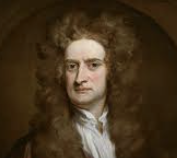
Rational mechanics must be the science of the motions which result from any forces, and of the forces which are required for any motions, accurately propounded and demonstrated. For many things induce me to suspect, that all natural phenomena may depend upon some forces by which the particles of bodies are either drawn towards each other, and cohere, or repel and recede from each other: and these forces being hitherto unknown, philosophers have pursued their researches in vain. And I hope that the principles expounded in this work will afford some light, either to this mode of philosophizing, or to some mode which is more true.

Our dignity is not in what we do, but in what we understand.

The question was, whether, if the reformers of society and government could succeed in their objects, and every person in the community were free and in a state of physical comfort, the pleasures of life, being no longer kept up by struggle and privation, would cease to be pleasures.
Credulity in arts and opinions is likewise of two kinds viz., when men give too much belief to arts themselves, or to certain authors in any art. The sciences that sway the imagination more than the reason are principally three viz., astrology, natural magic, and alchemy. Alchemy may be compared to the man who told his sons that he had left them gold, buried somewhere in his vineyard; while they by digging found no gold, but by turning up the mould about the roots of the vines procured a plentiful vintage. So the search and endeavours to make gold have brought many useful inventions to light.
Act, if you like,-but you do it at your peril. Men's actions are too strong for them. Show me a man who has acted, and who has not been the victim and slave of his action. What they have done commits and enforces them to do the same again. The first act, which was to be an experiment, becomes a sacrament. The fiery reformer embodies his aspiration in some rite or covenant, and he and his friends cleave to the form, and lose the aspiration. The Quaker has established Quakerism, the Shaker has established his monastery and his dance; and, although each prates of spirit, there is no spirit, but repetition, which is anti-spiritual.
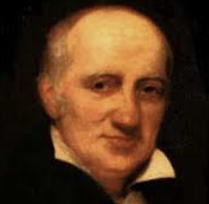
Simplify the social system, in the manner which every motive, but those of usurpation and ambition, powerfully recommends; render the plain dictates of justice level to every capacity; remove the necessity of implicit faith; and we may expect the whole species to become reasonable and virtuous.
CivilSimian.com created by AxiomaticPanic, CivilSimian, Kalokagathia