

2 months 1 week ago
We Shall Naturally look round in vain the macrophysical world for acausal events, for the simple reason that we cannot imagine events that are connected non-causally and are capable of a non-causal explanation. But that does not mean that such events do not exist... The so-called "scientific view of the world" based on this can hardly be anything more than a psychologically biased partial view which misses out all those by no means unimportant aspects that cannot be grasped statistically.
▼
Source
source
p. 5

3 months 2 weeks ago
It may indeed be doubted, whether butcher's meat is any where a necessary of life. Grain and other vegetables, with the help of milk, cheese, and butter, or oil, where butter is not to be had, it is known from experience, can, without any butcher's meat, afford the most plentiful, the most wholesome, the most nourishing, and the most invigorating diet.
▼
Source
source
Chapter II, Part II, Appendix to Articles I and II.

1 month 4 weeks ago
The fundamental tenet of Steiner's teaching is that if we take the trouble to recognize the independent existence of the inner worlds of thought, and keep the mind turned in that direction, we shall soon become increasingly conscious of their reality. We are not, as Sartre believed, stranded in the universe of matter like a whale on a beach. That inner world is our natural home. Moreover, once we grasp this truth, we can also recognize that we ourselves possess an "essential ego," a "true self," a fundamental identity that goes far beyond our usual feeble sense of being "me."
▼
Source
source
p. 26
1 month 1 week ago
The true wisdom is to be always seasonable, and to change with a good grace in changing circumstances. To love playthings well as a child, to lead an adventurous and honourable youth, and to settle when the time arrives, into a green and smiling age, is to be a good artist in life and deserve well of yourself and your neighbour.
▼
Source
source
Crabbed Age and Youth.
1 month 1 day ago
The antagonism between science and religion, about which we hear so much, appears to me to be purely factitious - fabricated, on the one hand, by short-sighted religious people who confound a certain branch of science, theology, with religion; and, on the other, by equally short-sighted scientific people who forget that science takes for its province only that which is susceptible of clear intellectual comprehension; and that, outside the boundaries of that province, they must be content with imagination, with hope, and with ignorance.
▼
Source
source
"The interpreters of Genesis and the interpreters of Nature"

3 months 2 weeks ago
Most books belong to the house and streets only, and in the fields their leaves feel very thin.
2 months 2 weeks ago
There is something beautiful about virtue, Captain. But I am just a poor guy.
▼
Source
source
Scene VI.

2 months 1 week ago
Poetry heals the wounds inflicted by reason.
▼
Source
source
As quoted in Quote, Unquote (1989) by Jonathan Williams, p. 136

3 months 2 weeks ago
Granted that any practice causes more pain to animals than it gives pleasure to man; is that practice moral or immoral? And if, exactly in proportion as human beings raise their heads out of the slough of selfishness, they do not with one voice answer 'immoral,' let the morality of the principle of utility be for ever condemned.
▼
Source
source
Dr. Whewell on Moral Philosophy (1852), in Dissertations and Discussions: Political, Philosophical, and Historical, vol. 2, London: John W. Parker and son, 1859, p. 485

4 months 2 weeks ago
When people are friends, they have no need of justice, but when they are just, they need friendship in addition.
3 months 6 days ago
Bats ... present a range of activity and a sensory apparatus so different from ours that the problem I want to pose is exceptionally vivid (though it certainly could be raised with other species). Even without the benefit of philosophical reflection, anyone who has spent some time in an enclosed space with an excited bat knows what it is to encounter a fundamentally alien form of life.
▼
Source
source
p. 168.
2 months 1 week ago
There is no original truth, only original error.
▼
Source
source
A Retrospective Glance at the Lifework of a Master of Books

2 months 2 weeks ago
Paper, they say, does not blush, but I assure you it's not true and that it's blushing just as I am now, all over.

2 months 2 weeks ago
I have no idea of a liberty unconnected with honesty and justice. Nor do I believe, that any good constitutions of government, or of freedom, can find it necessary for their security to doom any part of the people to a permanent slavery. Such a constitution of freedom, if such can be, is in effect no more than another name for the tyranny of the strongest faction; and factions in republics have been, and are, full as capable as monarchs, of the most cruel oppression and injustice.
▼
Source
source
Speech at Bristol Previous to the Election (6 September 1780), quoted in The Works of the Right Honourable Edmund Burke, Vol. II (1855), p. 163

2 months 1 week ago
Tyranny is just what one can develop a taste for, since it so happens that man prefers to wallow in fear rather than to face the anguish of being himself.

4 months 1 week ago
He could almost wish he were superstitious. He could then console himself with the thought that the casual meaningless meeting had really been directed by a knowing and purposeful Fate.
4 months 1 week ago
Titles are an important part of a story and I take considerable care in choosing one. In fact, I cannot start a story until I have chosen a title.

3 months 2 weeks ago
We boil at different degrees.
▼
Source
source
Eloquence

4 months 2 weeks ago
The liar is a person who uses the valid designations, the words, in order to make something which is unreal appear to be real. He says, for example, "I am rich," when the proper designation for his condition would be "poor." He misuses fixed conventions by means of arbitrary substitutions or even reversals of names. If he does this in a selfish and moreover harmful manner, society will cease to trust him and will thereby exclude him. What men avoid by excluding the liar is not so much being defrauded as it is being harmed by means of fraud. Thus, even at this stage, what they hate is basically not deception itself, but rather the unpleasant, hated consequences of certain sorts of deception. It is in a similarly restricted sense that man now wants nothing but truth: he desires the pleasant, life-preserving consequences of truth. He is indifferent toward pure knowledge which has no consequences; toward those truths which are possibly harmful and destructive he is even hostilely inclined.

2 months 1 week ago
The kingdom of heaven is like unto leaven, which a woman took, and hid in three measures of meal, till the whole was leavened.
▼
Source
source
13:33 (KJV)

2 months 1 week ago
German idealism rescued philosophy from the attack of British empiricism, and the struggle between the two became not merely a clash of different philosophical school, but a struggle for philosophy as such.
▼
Source
source
P. 16
1 month 4 weeks ago
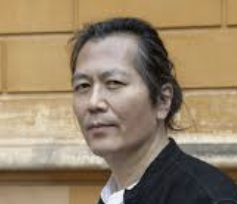
God is nothingness: He is 'beyond all speech.'

3 weeks 2 days ago
Throughout the years in which the US was punishing countries that departed from fiscal prudence, it was borrowing on a colossal scale to finance tax cuts and fund its over-stretched military commitments. Now, with federal finances critically dependent on continuing large inflows of foreign capital, it will be the countries that spurned the American model of capitalism that will shape America's economic future.

3 months 2 weeks ago
The hatefulness of a hated person is "real"-in hatred you see men as they are; you are disillusioned; but the loveliness of a loved person is merely a subjective haze concealing a "real" core of sexual appetite or economic association. Wars and poverty are "really" horrible; peace and plenty are mere physical facts about which men happen to have certain sentiments.
▼
Source
source
Letter XXX

1 month 2 weeks ago
The new media are not bridges between man and nature: they are nature.
▼
Source
source
(p. 14)
3 months 5 days ago
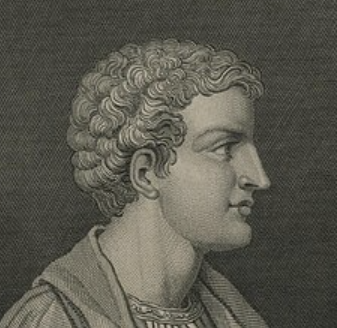
O Fortune, cruellest of heavenly powers, why make such game of this poor life of ours?
▼
Source
source
Book II, satire viii, line 61 (trans. Conington)

2 months ago
The English never abolish anything. They put it in cold storage.
▼
Source
source
Ch. 36, January 19, 1945.

4 months 1 day ago
The Catholic faith, I now realized could be maintained without presumption. This was especially true after I had heard one or two parts of the Old Testament explained allegorically, whereas before this, when I had interpreted them literally, they had killed me spiritually.
▼
Source
source
A. Outler, trans. (Dover: 2002), Book 5, Chapter 14, p. 81.
3 months 6 days ago
If we tried to rely entirely on reason, and pressed it hard, our lives and beliefs would collapse - a form of madness that may actually occur if the inertial force of taking the world and life for granted is somehow lost. If we lose our grip on that, reason will not give it back to us.
▼
Source
source
"The Absurd" (1971), p. 20.

3 months 2 weeks ago
The history of science, like the history of all human ideas, is a history of irresponsible dreams, of obstinacy, and of error. But science is one of the very few human activities - perhaps the only one - in which errors are systematically criticized and fairly often, in time, corrected. This is why we can say that, in science, we often learn from our mistakes, and why we can speak clearly and sensibly about making progress there.
▼
Source
source
Ch. 1 "Science : Conjectures and Refutations"

3 months 2 weeks ago
It is certain that we cannot escape anguish, for we are anguish.

3 months 2 weeks ago
As soon as we have contrived to give our pupil an idea of the word "Useful," we have got an additional means of controlling him, for this word makes a great impression on him, provided that its meaning for him is a meaning relative to his own age, and provided he clearly sees its relation to his own well-being. This word makes no impression on your scholars because you have taken no pains to give it a meaning they can understand, and because other people always undertake to supply their needs so that they never require to think for themselves, and do not know what utility is. "What is the use of that?"
2 months 2 weeks ago
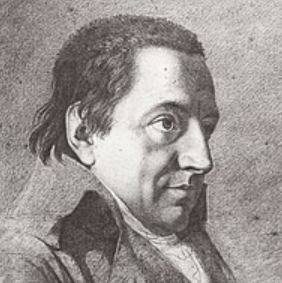
Upon the progress of knowledge the whole progress of the human race is immediately dependent: he who retards that, hinders this also. And he who hinders this, -what character does he assume towards his age and posterity? Louder than with a thousand voices, by his actions he proclaims into the deafened ear of the world present and to come -"As long as I live at least, the men around me shall not become wiser or better; - for in their progress I too, notwithstanding all my efforts to the contrary, should be dragged forward in some direction; and this I detest I will not become more enlightened, - I will not become nobler. Darkness and perversion are my elements, and I will summon all my powers together that I may not be dislodged from them."
▼
Source
source
Αs translated by William Smith, in The Popular Works of Johann Gottlieb Fichte (1889), Vol. I, Lecture IV, p. 188.

1 week ago
Flimsy, desultory readers, who fly from foolish book to foolish book, and get good of none, and mischief of all-are not these as foolish, unhealthy eaters, who mistake their superficial false desire after spiceries and confectioneries for their real appetite, of which even they are not destitute, though it lies far deeper, far quieter, after solid nutritive food?
1 week 5 days ago
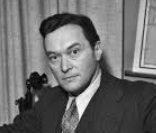
A free press is not a privilege but an organic necessity in a great society. ...Without criticism and reliable and intelligent reporting, the government cannot govern. For there is no adequate way in which it can keep itself informed about what the people of the country are thinking and doing and wanting.
▼
Source
source
International Press Institute Association, London
2 months 2 weeks ago
The use of force alone is but temporary. It may subdue for a moment; but it does not remove the necessity of subduing again: and a nation is not governed, which is perpetually to be conquered.
2 months 1 week ago
Not bodies produce sensations, but element-complexes (sensation-complexes) constitute the bodies. When the physicist considers the bodies as the permanent reality, the `elements' as the transient appearance, he does not realise that all `bodies' are only mental symbols for element-complexes (sensation-complexes)
▼
Source
source
p. 23, as quoted in Lenin as Philosopher: A Critical Examination of the Philosophical Basis of Leninism (1948) by Anton Pannekoek, p. 33
3 months 2 weeks ago
Percepts and phenomena which precedes the logical use of the intellect is called appearance, while the reflex knowledge originating from several appearances compared by the intellect is called experience.

3 months 2 weeks ago
What modern apologists call 'true' Christianity is something depending upon a very selective process. It ignores much that is to be found in the Gospels: for example, the parable of the sheep and the goats, and the doctrine that the wicked will suffer eternal torment in Hell fire. It picks out certain parts of the Sermon on the Mount, though even these it often rejects in practice. It leaves the doctrine of non-resistance, for example, to be practised only by non-Christians such as Gandhi. The precepts that it particularly favours are held to embody such a lofty morality that they must have had a divine origin. And yet ... these precepts were uttered by Jews before the time of Christ.
▼
Source
source
"Can Religion Cure Our Troubles?", in Stockholm newspaper Dagens Nyheter, part II., 11/11/1954

3 months 2 weeks ago
A witty saying proves nothing.
▼
Source
source
Le dîner du comte de Boulainvilliers (1767): Deuxième Entretien
1 month 3 weeks ago
In Administrative Behavior, bounded rationality is largely characterized as a residual category - rationality is bounded when it falls short of omniscience. And the failures of omniscience are largely failures of knowing all the alternatives, uncertainty about relevant exogenous events, and inability to calculate consequences. There was needed a more positive and formal characterization of the mechanisms of choice under conditions of bounded rationality... Two concepts are central to the characterization: search and satisficing.
▼
Source
source
p. 502; As cited in Barros (2010, p. 464-5).
3 months 2 weeks ago
The love of power is a part of human nature, but power-philosophies are, in a certain precise sense, insane. The existence of the external world, both that of matter and of other human beings, is a datum, which may be humiliating to a certain kind of pride, but can only be denied by a madman. Men who allow their love of power to give them a distorted view of the world are to be found in every asylum: one man will think he is Governor of the Bank of England, another will think he is the King, and yet another will think he is God. Highly similar delusions, if expressed by educated men in obscure language, lead to professorships in philosophy; and if expressed by emotional men in eloquent language, lead to dictatorships. Certified lunatics are shut up because of the proneness to violence when their pretensions are questioned; the uncertified variety are given control of powerful armies, and can inflict death and disaster upon all sane men within their reach.
▼
Source
source
Ch. 16: Power philosophies
4 months 2 weeks ago
It occurs to me that artists go forward by going backward, something which I have nothing against intrinsically when it is a reproduced retreat - as is the case with the better artists. But it does not seem right that they stop with the historical themes already given and, so to speak, think that only these are suitable for poetic treatment, because these particular themes, which intrinsically are no more poetic than others, are now again animated and inspirited by a great poetic nature. In this case the artists advance by marching on the spot. - Why are modern heroes and the like not just as poetic? Is it because there is so much emphasis on clothing the content in order that the formal aspect can be all the more finished?
2 months 1 week ago
Except for music, everything is a lie, even solitude, even ecstasy. Music, in fact, is the one and the other, only better.

4 months 5 days ago
At fifteen my heart was set on learning; at thirty I stood firm; at forty I had no more doubts; at fifty I knew the will of heaven; at sixty my ear was obedient; at seventy I could follow my heart's desire without overstepping the boundaries of what was right.
3 months 2 weeks ago
The Few assume to be the deputies, but they are often only the despoilers of the Many.
▼
Source
source
Pt. IV, sec. 3, ch. 3
4 months 2 weeks ago
Be attentive therefore, according to the instruction of the Gospel, to learn obedience from the lily and the bird. Be not affrighted, do no despair, when thou comparest thy life with these teachers. There is nothing to despair about, for indeed thou shalt learn from them; and the Gospel first comforts thee by telling thee that God is the God of patience, and then it adds: 'Thou shalt learn from the lilies and the birds, learn to be absolutely obedient like the lilies and the birds, learn not to serve two masters; for no man can serve two masters, he must either ... or.

3 months 3 weeks ago
Hurl your calumnies boldly; something is sure to stick.
▼
Source
source
De Augmentis Scientiarum
CivilSimian.com created by AxiomaticPanic, CivilSimian, Kalokagathia