

4 months ago
What is faith? Is it a belief in otherworldly realities, in which imagination reigns supreme, and perhaps in truths expressed by sacred scriptures defined outside of all rationality, whose interpretation allows us to deduce everything and its opposite? Or is it the path of intelligence, indeed of the whole being, towards the Absolute, which precisely for this reason removes everything relative, all pretended knowledge, empties our soul and leads us into nothingness, into that “night” , from which alone the dawn can rise, or rather, the eternal light can reveal itself? These two questions belong, I believe, to every thinking consciousness of all time, but even more so in our time, that is, after the Enlightenment, after contemporary philology, which makes that faith as belief and that adherence to Scripture that was perhaps possible for a man of the Middle Ages extremely problematic. Must we pretend to believe in the existence of biblical characters and events that have been shown to have the same historical reality as the Homeric heroes and the Trojan War?

4 months ago
The wise through excess of wisdom is made a fool.
▼
Source
Experience
4 months ago
If Hegel be the inspired and too often incoherent prophet of the Absolute, if Bradley be its chivalrous knight, McTaggart is its devoted and extremely acute family solicitor.
▼
Source
From John McTaggart Ellis McTaggart (1928)
4 months ago
What renders man an imaginative and moral being is that in society he gives new aims to his life which could not have existed in solitude: the aims of friendship, religion, science, and art.
▼
Source
Ch. V: Democracy
4 months ago
We must therefore glean up our experiments in this science from a cautious observation of human life, and take them as they appear in the common course of the world, by men's behaviour in company, in affairs, and in their pleasures. Where experiments of this kind are judiciously collected and compared, we may hope to establish on them a science, which will not be inferior in certainty, and will be much superior in utility to any other of human comprehension.
▼
Source
Introduction
4 months ago
Little is needed to ruin and upset everything, only a slight aberration from reason.
▼
Source
Book IV, ch. 3, § 4.
4 months ago
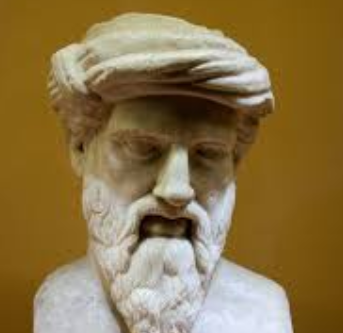
The following became universally known: first, that he maintains that the soul is immortal; second, that it changes into other kinds of living things; third, that events recur in certain cycles and that nothing is ever absolutely new; and fourth, that all living things should be regarded as akin. Pythagoras seems to have been the first to bring these beliefs into Greece.
▼
Source
Porphyrius in Life of Pythagoras

4 months ago
The aspects of things that are most important for us are hidden because of their simplicity and familiarity. (One is unable to notice something — because it is always before one's eyes.) The real foundations of his enquiry do not strike a man at all. Unless that fact has at some time struck him. — And this means: we fail to be struck by what, once seen, is most striking and most powerful.
▼
Source
§ 129

4 months ago
I felt the universe suddenly quake, and that a golden spirit sprang up from the ground, veiled my body, and changed my body into a golden one. At the same time my body became light. I was able to understand the whispering of the birds, and was clearly aware of the mind of God, the creator of the universe. At that moment I was enlightened: the source of Budo is God's love — the spirit of loving protection for all beings … Budo is not the felling of an opponent by force; nor is it a tool to lead the world to destruction with arms. True Budo is to accept the spirit of the universe, keep the peace of the world, correctly produce, protect and cultivate all beings in nature.
▼
Source
An account of an experience of transcendent awareness, soon after a contest where, unarmed, he defeated a naval officer armed with a bokken (wooden sword) without harming him; as quoted in Aikido (1985) by Kisshomaru Ueshiba
4 months ago
It makes a great difference in the force of a sentence whether a man be behind it or no.
▼
Source
p. 261
4 months ago
When one is considering systems it's always wise to raise questions about the most obvious and simple assumptions.
▼
Source
p. ix
4 months ago
England is the paradise of individuality, eccentricity, heresy, anomalies, hobbies, and humors.
▼
Source
"The British Character"
4 months ago
The most perfect philosophy of the natural kind only staves off our ignorance a little longer: as perhaps the most perfect philosophy of the moral or metaphysical kind serves only to discover larger portions of it. Thus the observation of human blindness and weakness is the result of all philosophy, and meets us at every turn, in spite of our endeavours to elude or avoid it.
▼
Source
Section 4 : Sceptical Doubts Concerning The Operations of The Understanding
4 months ago
If we carefully trace the terms nazar, and nazaret, throughout the best known works of ancient writers, we will meet them in connection with “Pagan” as well as Jewish adepts. Thus, Alexander Polyhistor says of Pythagoras that he was a disciple of the Assyrian Nazarrt, whom some suppose to be Ezekiel. Diogenes Laertius states most positively that Pythagoras, after being initiated into all the Mysteries of the Greeks and barbarians, “went into Egypt and afterward visited the Chaldeans and Magi;” and Apuleius maintains that it was Zoroaster who instructed Pythagoras. (p. 140)
▼
Source
The Veil of Isis, Part 1, Science.
4 months ago
A new word is like a fresh seed sown on the ground of the discussion.
▼
Source
p. 2e
4 months ago
The real Art of Peace is not to sacrifice a single one of your warriors to defeat an enemy. Vanquish your foes by always keeping yourself in a safe and unassailable position; then no one will suffer any losses. The Way of a Warrior, the Art of Politics, is to stop trouble before it starts. It consists in defeating your adversaries spiritually by making them realize the folly of their actions. The Way of a Warrior is to establish harmony.
4 months ago
Emerson broke away from all conditions of age or country and represented nothing except intelligence itself.
▼
Source
George Santayana, The Genteel Tradition in American Philosophy (1911), p. 50
4 months ago
The story begins with a somewhat disgruntled hero, who perceived of the world as populated with stupid people, everywhere committing the environmental fallacy. The fallacy was a case not merely of the “mind’s falling into error,” but rather of the mind leading all of us into incredible dangers as it first builds crisis and then attacks crisis. Like all heroes, this one looked about for resources, for aids that would help in a dangerous battle, and he found plenty of support – in both the past and the present. It won’t hurt to summarize the story thus far. If the intellect is to engage in the heroic adventure of securing improvement in the human condition, it cannot rely on “approaches,” like politics and morality, which attempt to tackle problems head-on, within the narrow scope. Attempts to address problems in such a manner simply lead to other problems, to an amplification of difficulty away from real improvement. Thus the key to success in the hero’s attempt seems to be comprehensiveness. Never allow the temptation to be clear, or to use reliable data, or to “come up to the standards of excellence,” divert you from the relevant, even though the relevant may be elusive, weakly supported by data, and requiring loose methods. Thus the academic world of Western twentieth century society is a fearsome enemy of the systems approach, using as it does a politics to concentrate the scholars’ attention on matters that are scholastically respectable but disreputable from a systems-planning point of view.
▼
Source
p. 145; cited in [http://filer.case.edu/nxb41/churchman.html C. WEST CHURCHMAN: CHAMPION OF THE SYSTEMS APPROACH], 2004-2007 Case Western Reserve University
4 months ago
There is nothing impossible in the existence of the supernatural: its existence seems to me decidedly probable.
▼
Source
The Genteel Tradition at Bay (1931)
4 months ago
The whole is a riddle, an aenigma, an inexplicable mystery. Doubt, uncertainty, suspence of judgment appear the only result of our most accurate scrutiny, concerning this subject. But such is the frailty of human reason, and such the irresistible contagion of opinion, that even this deliberate doubt could scarcely be upheld; did we not enlarge our view, and opposing one species of superstition to another, set them a quarrelling; while we ourselves, during their fury and contention, happily make our escape, into the calm, though obscure, regions of philosophy.
▼
Source
Part XV - General corollary
4 months ago
A History of Western Philosophy#Chapter III. Pythagoras
4 months ago
If life becomes hard to bear we think of a change in our circumstances. But the most important and effective change, a change in our own attitude, hardly even occurs to us, and the resolution to take such a step is very difficult for us.
▼
Source
p. 53e
4 months ago
China and Arabia are ours, India is ours,Muslims we are, the whole world is ours...
4 months ago
The successful construction of all machinery depends on the perfection of the tools employed; and whoever is a master in the arts of tool-making possesses the key to the construction of all machines... The contrivance and construction of tools must therefore ever stand at the head of the .
▼
Source
p. 173; As cited in: Samuel Smiles (1864) [http://books.google.com/books?id=5trBcaXuazgC&pg=PA245 Industrial biography; iron-workers and tool-makers], p. 245
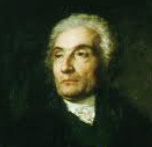
4 months ago
The most beautiful monuments of Athens belong to the century of Pericles. In Rome, what writers were produced under the Republic? Only Plautus and Terence. Lucretius, Sallust, and Cicero saw the Republic die. Then came the century of Augustus when the nation was all that it could be by way of talents. The arts, in general, need a king; they only flourish under the influence of sceptres. Even in Greece, the only country where they flourished in the milieu of a republic, Lysippos and Apelles worked for Alexander. Aristotle owed to Alexander’s generosity the means to compose his history of animals; and, after the death of this monarch, the poets, scholars, and artists went to look for protection and rewards in the courts of his successors.
▼
Source
p. 179
4 months ago
If reason (I mean abstract reason, derived from inquiries a priori) be not alike mute with regard to all questions concerning cause and effect, this sentence at least it will venture to pronounce, That a mental world, or universe of ideas, requires a cause as much, as does a material world, or universe of objects; and, if similar in its arrangement, must require a similar cause. For what is there in this subject, which should occasion a different conclusion or inference? In an abstract view, they are entirely alike; and no difficulty attends the one supposition, which is not common to both of them.
▼
Source
Philo to Cleanthes, Part IV
4 months ago
I can well understand why children love sand.
▼
Source
Although this quote has been attributed to Wittgenstein in Wittgenstein's Mistress by David Markson, there is no verifiable source from Wittgenstein that it can be traced back to.

4 months ago
The motivationless theory of goods [transfers] can bridge the gulf between history and exact research by securing the important continuity of the research, being linked to both.
▼
Source
p. 278
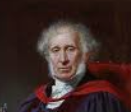
4 months ago
Amid the destructive convulsions of the physical world, even pious minds may have for an instant questioned the superintending providence of God. In the midst of famine, or pestilence, or war, they may have stood horror- struck at the scene. In the triumphs of fraud, oppression, and injustice, over honesty, and liberty, and law. Faith may have wavered, and Hope despaired; but in no condition, either of the physical or the moral world, does the mind question the POWER of its Maker. The omnipotence of the Creator, and the exertion of it in every corner of space, — His care over the falling sparrow, and His guidance of the gigantic planet, are the earliest of our acquired truths, and the very first that observation and experience confirm. When Reason gives wisdom to our perceptions, omnipotence is the grand truth which they inculcate. Whatever the eye sees, or the ear hears, or the fingers touch, — every motion of our body, every function it performs, every structure in its fabric, impresses on the mind, and fixes in the heart the conviction, that the Creator is all-powerful as well as all-wise. Omnipotence, in short, is the only attribute of God which is universally appreciated, which skepticism never unsettles, and which we believe as firmly when under the influence of our corrupt passions, as when we are looking devoutly to heaven. All the other attributes of God are inferences. His omnipresence, His omniscience, His justice, mercy, and truth, are the deductions of reason, and, however true and demonstrable, they exercise little influence over the mind; but the attribute of omnipotence predominates over them all, and no mind responsive to its power will ever be disturbed by the ideas which it suggests of infinity of time, infinity of space, and infinity of life.
▼
Source
More Worlds Than One: The Creed of the Philosopher and the Hope of the Christian (1856), "Religious Difficulties", p. 152-153
4 months ago
False opinions are like false money, struck first of all by guilty men and thereafter circulated by honest people who perpetuate the crime without knowing what they are doing.
▼
Source
Original text:Les fausses opinions ressemblent à la fausse monnaie qui est frappée d'abord par de grands coupables et dépensée ensuite par d'honnêtes gens qui perpétuent le crime sans savoir ce qu'ils font. | "First Dialogue," p. 13
4 months ago
In every page of David Hume, there is more to be learned than from Hegel's, Herbart's and Schleiermacher's complete philosophical works.
▼
Source
Arthur Schopenhauer, in: Arthur Schopenhauer (2016) The World As Will And Idea: 3 vols in 1. p. 721

4 months ago
They see a race of law-makers legislating without knowing what their laws are about; today voting a law on the sanitation of towns, without the faintest notion of hygiene, tomorrow making regulations for the armament of troops, without so much as understanding a gun; making laws about teaching and education without ever having given a lesson of any sort, or even an honest education to their own children; legislating at random in all directions, but never forgetting the penalties to be meted out to ragamufffins, the prison and the galleys, which are to be the portion of men a thousand times less immoral than these legislators themselves.
▼
Source
I
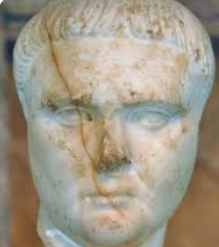
4 months ago
Diogenes was surprised by the fact that had he claimed to be a physician for the teeth, everybody would flock to him who needed to have a tooth pulled; yes, and by heavens, had he professed to treat the eyes, all who were suffering from sore eyes would present themselves, and similarly, if he had claimed to know of a medicine for diseases of the spleen or for gout or for running of the nose; but when he declared that all who should follow his treatment would be relieved of folly, wickedness, and intemperance, not a man would listen to him or seek to be cured by him, ... as though it were worse for a man to suffer from an enlarged spleen or a decayed tooth than from a soul that is foolish, ignorant, cowardly, rash, pleasure-loving, illiberal, irascible, unkind, and wicked, in fact utterly corrupt.
▼
Source
p. 381
4 months ago
The contrast between us two [Maistre and his wife] is the very strangest in the world. For me, as you may have found out, I am the pococurante senator, and above all things very free in saying what I think. She, on the contrary, will take care that it is noon before allowing that the sun has risen, for fear of committing herself. She knows what must be done or what must not be done on the tenth of October 1808, at ten o'clock in the morning, to avoid some inconvenience which otherwise would come to pass at midnight between the fifteenth and sixteenth of March 1810. "But, my dear husband, you pay attention to nothing; you believe that nobody is thinking of any harm. Now I know, I have been told, I have guessed, I foresee, I warn you," etc. "Come now, my dear, leave me alone. You are only wasting your time: I foresee that I shall never foresee things: that's your business." She is the supplement to me, and hence when I am separated from her, as I am now, I suffer absurdly from being obliged to think about my own affairs; I would rather have to chop wood all day.
▼
Source
Letter to a friend about his wife
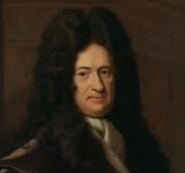
4 months ago
It is an extremely useful thing to have knowledge of the true origins of memorable discoveries, especially those that have been found not by accident but by dint of meditation. It is not so much that thereby history may attribute to each man his own discoveries and others should be encouraged to earn like commendation, as that the art of making discoveries should be extended by considering noteworthy examples of it.
▼
Source
Opening paragraph of Historia et Origo Calculi Differentialis (1714) Commercium epistolicum D. Joannis Collins et aliorum de analysi promota, see also Mathematische Schriften, Ed. C. I. Gerhardt, Georg Olms Verlag (1971) vol. 5, pp. 392–410; Tr. J. M. Chi

4 months ago
No one is ignorant that there are two avenues by which opinions are received into the soul, which are its two principal powers: the understanding and the will.
4 months ago
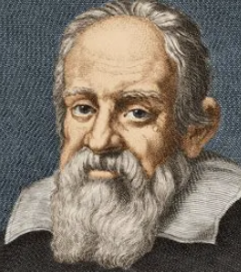
Whence do you have it that the terrestrial globe is so heavy? For my part, either I do not know what heaviness is, or the terrestrial globe is neither heavy nor light, as likewise all other globes of the universe. Heaviness to me (and I believe to Nature) is that innate tendency by which a body resists being moved from its natural place and by which, when forcibly removed therefrom, it spontaneously returns there. Thus a bucketful of water raised on high and set free, returns to the sea; but who will say that the same water remains heavy in the sea, when being set free there, does not move?
4 months ago
Ah, if men were those superior beings that the utopians of authority like to speak to us of, if we could close our eyes to reality, and live, like them, in a world of dreams and illusions as to the superiority of those who think themselves called to power, perhaps we also should do like them; perhaps we also should believe in the virtues of those who govern.With virtuous masters, what dangers could slavery offer? Do you remember the Slave-owner of whom we heard so often, hardly thirty years ago? Was he not supposed to take paternal care of his slaves? "He alone," we were told, "could hinder these lazy, indolent, improvident children dying of hunger. How could he crush his slaves through hard labor, or mutilate them by blows, when his own interest lay in feeding them well, in taking care of them as much as of his own children! And then, did not 'the law' see to it that the least swerving of a slave-owner from the path of duty was punished?" How many times have we not been told so! But the reality was such that, having returned from a voyage to Brazil, Darwin was haunted all his life by the cries of agony of mutilated slaves, by the sobs of moaning women whose fingers were crushed in thumbscrews!
4 months ago
Anaximander used to assert that the primary cause of all things was the Infinite,—not defining exactly whether he meant air or water or anything else.
▼
Source
Anaximander, 2.
4 months ago
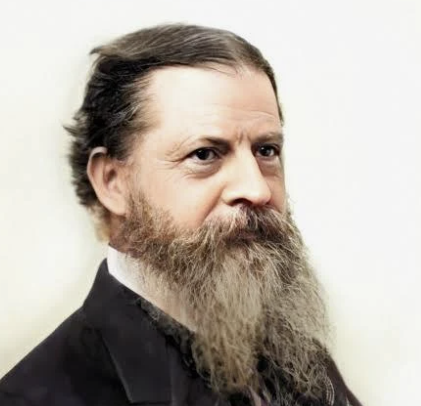
I define a Sign as anything which is so determined by something else, called its Object, and so determines an effect upon a person, which effect I call its Interpretant, that the latter is thereby mediately determined by the former.
▼
Source
Letter to Victoria, Lady Welby (1908) SS 80-81
4 months ago
Logic has borrowed, perhaps, the rules of geometry, without comprehending their force... it does not thence follow that they have entered into the spirit of geometry, and I should be greatly averse... to placing them on a level with that science that teaches the true method of directing reason.
4 months ago
Alas! Your dear friend and servant Galileo has been for the last month hopelessly blind; so that this heaven, this earth, this universe, which I by my marvelous discoveries and clear demonstrations had enlarged a hundred thousand times beyond the belief of the wise men of bygone ages, henceforward for me is shrunk into such a small space as is filled by my own bodily sensations.
▼
Source
Letter to Élie Diodati (2 January 1638), as translated in The Private Life of Galileo : Compiled primarily from his correspondence and that of his eldest daughter, Sister Maria Celeste (1870) by Mary Allan-Olney, p. 279
4 months ago
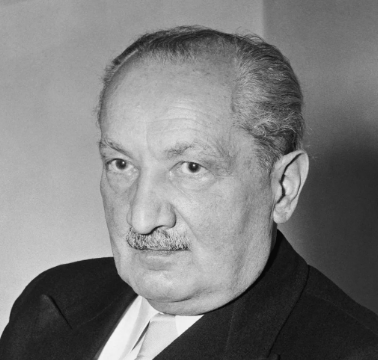
The particularity (Jeweiligkeit) of the places and their manifoldness are grounded in space, and the particularity of the time points is grounded in time. That basic characteristic of the thing, that essential determination of the thingness of the thing to be this one (je dieses), is grounded in the essence of space and time. Our question "What is a thing?" includes, therefore, the questions "What is space?" and "What is time?" It is customary The particularity (Jeweiligkeit) os the places. p. 16
4 months ago
Collectivism, as we know, does not abolish wages, though it introduces considerable modifications into the existing order of things. It only substitutes the State, that is to say, Representative Government, national or local, for the individual employer of labor. Under Collectivism it is the representatives of the nation, or of the district, and deputies and officials who are to have the control of industry. It is they who reserve to themselves the right of employing the surplus of production — in the interests of all.
▼
Source
Ch. 5 : Food, p. 101
4 months ago
When he was praised by some wicked men, he said, "I am sadly afraid that I must have done some wicked thing."
▼
Source
Antisthenes, 4.
4 months ago
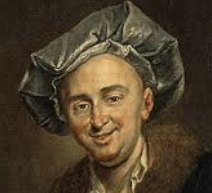
We know in bodies only matter, and we observe the faculty of feeling only in bodies: on what foundation then can we erect an ideal being, disowned by all our knowledge?
▼
Source
Ch. VI Concerning the Sensitive Faculty of Matter
4 months ago
Consciousness must essentially cover an interval of time; for if it did not, we could gain no knowledge of time, and not merely no veracious cognition of it, but no conception whatever. We are therefore, forced to say that we are immediately conscious through an infinitesimal interval of time.
4 months ago
When, in the summer of 1953, that is, still during my university studies in Bonn, I read a recently published lecture by Heidegger from the year 1935, the Introduction to Metaphysics, the jargon, the choice of terminology and the style told me at once that the spirit of fascism was manifested in these motives, thoughts and phrases. The book really unsettled me because I had regarded myself up till then as a student of Heidegger. The newspaper article, in which I poured out my great political and philosophical disappointment the same weekend, is therefore entitled: “Thinking with Heidegger against Heidegger”. At the time it was impossible to know that Heidegger had written anti-Semitic letters to his wife as early as 1916 and that he had become a convinced Nazi long before 1933. The fact that he had remained an unrepentant Nazi, however, could be known by 1953 at the latest.
▼
Source
Jürgen Habermas, in conversation with Michaël Foessel, "[https://www.eurozine.com/critique-and-communication-philosophys-missions/ Critique and communication: Philosophy's missions]" (16 October 2015)
4 months ago
Belief in an ice-cap reaching Middle Europe was at that time rank heresy; but before my eyes a grand picture was rising, and I wanted to draw it, with the thousands of details I saw in it; to use it as a key to the present distribution of floras and faunas; to open new horizons for geology and physical geography. But what right had I to these highest joys, when all around me was nothing but misery and struggle for a mouldy bit of bread; when whatsoever I should spend to enable me to live in that world of higher emotions must needs be taken from the very mouths of those who grew the wheat and had not bread enough for their children? From somebody's mouth it must be taken, because the aggregate production of mankind remains still so low. Knowledge is an immense power. Man must know. But we already know much! What if that knowledge — and only that — should become the possession of all? Would not science itself progress in leaps, and cause mankind to make strides in production, invention, and social creation, of which we are hardly in a condition now to measure the speed?
▼
Source
[http://dwardmac.pitzer.edu/anarchist_archives/kropotkin/memoirs/memoirs4_3.html Part IV, Sect. 3]
4 months ago
Democritus says, "But we know nothing really; for truth lies deep down."
▼
Source
Pyrrho, 8.
CivilSimian.com created by AxiomaticPanic, CivilSimian, Kalokagathia