
4 months ago
The transition from Hegel to Marx is, in all respects, a transition to an essentially different order of truth, no to be interpreted in terms of philosophy. We shall see that all the philosophical concepts of Marxian theory are social and economic categories, whereas Hegel’s social and economic categories are all philosophical concepts. P. 258

4 months ago
Hettner forgets his own chronological data when he maintains that Lamettrie, instigated chiefly by Diderot's 'Pensées Philosophiques,' wrote in 1745 the 'Histoire Naturelle de l'Ame,' and in 1748 'L'Homme Machine;' and in Schlosser's ' History of the World' we may read that Lamettrie was a very ignorant man, who had the impudence to pass off the discoveries and observations of others as his own. Only that in nearly every case where we find a striking similarity of ideas between Lamettrie and any famous contemporary of his, the former had an indisputable priority!

4 months ago
A certain maxim of Logic which I have called Pragmatism has recommended itself to me for diverse reasons and on sundry considerations. Having taken it as my guide for most of my thought, I find that as the years of my knowledge of it lengthen, my sense of the importance of it presses upon me more and more. If it is only true, it is certainly a wonderfully efficient instrument. It is not to philosophy only that it is applicable. I have found it of signal service in every branch of science that I have studied. My want of skill in practical affairs does not prevent me from perceiving the advantage of being well imbued with pragmatism in the conduct of life.
▼
Source
Lecture I : Pragmatism : The Normative Sciences, CP 5.14

4 months ago
I must now explain what I mean by the quantity of action. A certain action is necessary for the carrying of a body from one point to another: this action depends on the velocity which the body has and the space which it describes; but it is neither the velocity nor the space taken separately. The quantity of action varies directly as the velocity and the length of path described; it is proportional to the sum of the spaces, each being multiplied by the velocity with which the body describes it. It is this quantity of action which is here the true expense (dépense) of nature, and which she economizes as much as possible in the motion of light.
▼
Source
Histoire de l'Academie (1744) p. 423; Les Oeuvres De Mr. De Maupertuis (1752) vol. iv p. 17; as quoted by Philip Edward Bertrand Jourdain, [https://books.google.com/books?id=y3UVAQAAIAAJ The Principle of Least Action] (1913) p. 5.
4 months ago
Some one has said that we are moving so fast that when plans are being made to perform some great feat, these plans are broken into by a youth who enters and says, "I have done it."
▼
Source
[http://books.google.com/books?id=4k8LAQAAIAAJ&q=%22we+are+moving+so+fast+that+when+plans+are+being+made+to+perform+some+great+feat+these+plans+are+broken+into+by+a+youth+who+enters+and+says+I+have+done+it%22&pg=PA178#v=onepage Heart-to-Heart Talks with P
4 months ago
Under the rule of a repressive whole, liberty can be made into a powerful instrument of domination. The range of choice open to the individual is not the decisive factor in determining the degree of human freedom, but what can be chosen and what is chosen by the individual.
▼
Source
p. 7
4 months ago
In general there are two distinct and separable meanings of the term "ideology" — the particular and the total. The particular conception of ideology is implied when the term denotes that we are sceptical of the ideas and representations advanced by our opponent. They are regarded as more or less conscious disguises of the real nature of a situation, the true recognition of which would not be in accord with his interests. These distortions range all the way from conscious lies to half-conscious and unwitting disguises; from calculated attempts to dupe others to self-deception. This conception of ideology, which has only gradually become differentiated from the common-sense notion of the lie is particular in several senses. Its particularity becomes evident when it is contrasted with the more inclusive total conception of ideology. Here we refer to the ideology of an age or of a concrete historico-social group, e.g. of a class, when we are concerned with the characteristics and composition of the total structure of the mind of this epoch or of this group. Although they have something in common, there are also significant differences between them.
4 months ago
Mere imagination would indeed be mere trifling; only no imagination is mere.
▼
Source
Vol. VI, par. 286
4 months ago
What postulate do we implicitly admit? It is that the duration of two identical phenomena is the same; or... that the same causes take the same time to produce the same effects. ...Is it impossible that experiment may some day contradict our postulate?
4 months ago
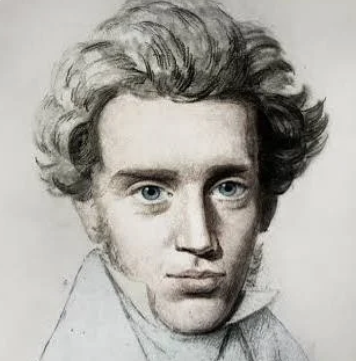
So it happens at times that a person believes that he has a world-view, but that there is yet one particular phenomenon that is of such a nature that it baffles the understanding, and that he explains differently and attempts to ignore in order not to harbor the thought that this phenomenon might overthrow the whole view, or that his reflection does not possess enough courage and resolution to penetrate the phenomenon with his world-view.
▼
Source
Pap. V B 53:20 1844 The Concept of Anxiety, Nichol p. 188
4 months ago
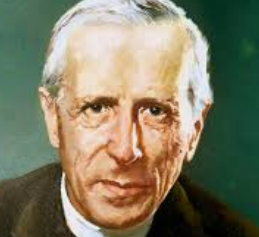
The reality of spirit-matter is inevitably translated into and confirmed by a structure of the spirit.
▼
Source
A Sketch of a Personalistic Universe (1936)
4 months ago
Experience is the name everyone gives to his mistakes.
4 months ago
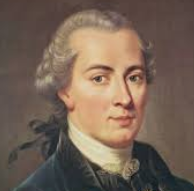
In its relation to the reality of daily life, the high culture of the past was many things—opposition and adornment, outcry and resignation. But it was also the appearance of the realm of freedom: the refusal to behave.
▼
Source
p. 71
4 months ago
Tibet... this is the highest country. No doubt it was inhabited before any other and could even have been the site of all creation and all science. The culture of the Indians, as is known is almost certainly came from Tibet, just as all our arts like agriculture, numbers, the game of chess, etc., seem to have come from India.
▼
Source
quoted in Poliakov, [https://archive.org/details/aryanmythhistory0000poli/mode/2up The Aryan myth; a history of racist and nationalist ideas in Europe]
4 months ago
If a person is unwilling to make a decisive resolution, if he wants to cheat God of the heart's daring venture in which a person ventures way out and loses sight of all shrewdness and probability, indeed, takes leave of his senses or at least all his worldly mode of thinking, if instead of beginning with one step he almost craftily seeks to find out something, to have the infinite certainty changed into a finite certainty, then this discourse will not be able to benefit him. There is an upside-downness that wants to reap before it sows; there is a cowardliness that wants to have certainty before it begins. There is a hypersensitivity so copious in words that it continually shrinks from acting; but what would it avail a person if, double-minded and fork-tongued he wanted to dupe God, trap him in probability, but refused to understand the improbable, that one must lose everything in order to gain everything, and understand it so honestly that, in the most crucial moment, when his soul is already shuddering at the risk, he does not again leap to his own aid with the explanation that he has not yet fully made a resolution but merely wanted to feel his way. Therefore, all discussion of struggling with God in prayer, of the actual loss (since if pain of annihilation is not actually suffered, then the sufferer is not yet out upon the deep, and his scream is not the scream of danger but in the face of danger) and the figurative victory cannot have the purpose of persuading anyone or of converting the situation into a task for secular appraisal and changing God's gift of grace to the venture into temporal small change for the timorous. It really would not help a person if the speaker, by his oratorical artistry, led him to jump into a half hour's resolution, by the ardor of conviction started a fire in him so that he would blaze in a momentary good intention without being able to sustain a resolution or to nourish an intention as soon as the speaker stopped talking.
▼
Source
', Hong, One Who Prays Aright Struggles In Prayer and is Victorious-In That God is Victorious p. 380-381
4 months ago
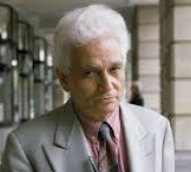
Although Saussure recognized the necessity of putting the phonic substance between brackets ("What is essential in language, we shall see, is foreign to the phonic character of the linguistic sign" [p. 21]. "In its essence it [the linguistic signifier] is not at all phonic" [p. 164]), Saussure, for essential, and essentially metaphysical, reasons had to privilege speech, everything that links the sign to phone. He also speaks of the "natural link" between thought and voice, meaning and sound (p. 46). He even speaks of "thought-sound" (p. 156). I have attempted elsewhere to show what is traditional in such a gesture, and to what necessities it submits. In any event, it winds up contradicting the most interesting critical motive of the Course, making of linguistics the regulatory model, the "pattern" for a general semiology of which it was to be, by all rights and theoretically, only a part. The theme of the arbitrary, thus, is turned away from its most fruitful paths (formalization) toward a hierarchizing teleology:... One finds exactly the same gesture and the same concepts in Hegel. The contradiction between these two moments of the Course is also marked by Saussure's recognizing elsewhere that "it is not spoken language that is natural to man, but the faculty of constituting a language, that is, a system of distinct signs … ," that is, the possibility of the code and of articulation, independent of any substance, for example, phonic substance.
▼
Source
p. 21
4 months ago
Are we to foresee man seeking to fullfil himself collectively upon himself, or personally on a greater than himself? Refusal or acceptance of Omega? ... Universal love would only vivify and detach finally a fraction of the noosphere so as to consummate it—the part which decided to "cross the threshold", to get outside itself into the other.
4 months ago
To remain on earth you must be useful, otherwise Nature regards you as old metal, and is only watching for a chance to melt you over.
4 months ago
At the classical origins of philosophic thought, the transcending concepts remained committed to the prevailing separation between intellectual and manual labor to the established society of enslavement. … Those who bore the brunt of the untrue reality and who, therefore, seemed to be most in need of attaining its subversion were not the concern of philosophy. It abstracted from them and continued to abstract from them.
▼
Source
pp. 134-135
4 months ago
Through laziness and cowardice a large part of mankind, even after nature has freed them from alien guidance, gladly remain immature. It is because of laziness and cowardice that it is so easy for others to usurp the role of guardians. It is so comfortable to be a minor!
4 months ago
Zealousness to learn from life is seldom found, but all the more frequently a desire, inclination, and reciprocal haste to be deceived by life. Undaunted, people do not seem to have a Socratic fear of being deceived, for the voice of God is always a whisper, while the demand of the age is a thousand-tongued rumor, not an all-powerful call that creates great men but a stirring in the offal that creates confused pates, an abracadabra that produces after its kind as is the case with all production. Even less do people seem to have above all a Socratic fear of being deceived by themselves, do not seem to be the least aware that if the self-deceived are the most miserable of all, then among these, again, the most miserable are those who are presumptuously deceived by themselves in contrast to those who are piously deceived.
▼
Source
Two Ages: The Age of Revolution and the Present Age. A Literary Review. By Soren Kierkegaard, 1846 edited and translated by Howard V. Hong and Edna H. Hong 1978 Princeton University Press P. 10
4 months ago
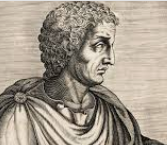
With man, most of his misfortunes are occasioned by man.
▼
Source
Book VII, sec. 5.

4 months ago
I'm afraid of losing my obscurity. Genuineness only thrives in the dark. Like celery.
▼
Source
Those Barren Leaves (1925)
4 months ago
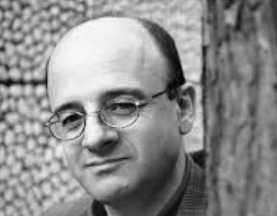
After history has taught us that possession of the Truth often produces fanaticism, and that an individual armed with truth is a potential terrorist, one is led to ask: are relativism and nihilism really the radical evil that we are led to believe? Or do they not also produce an awareness of the relativity of every point of view, and therefore of every religion? And so, do they not convey respect for the point of view of others and, therefore, the fundamental value of tolerance? There is beauty even in relativism and nihilism: they inhibit fanaticism.
4 months ago
Adorno, Marcuse, and other members of the Frankfurt School were explicit about the link between “antifascism,” which was the banner they sported, and sympathy for Communist governments. Like Sartre and his collaborators at Les Temps Modernes, the Critical Theorists considered anti-Communist attitudes proof positive of fascist residues in those who expressed them. After the publication of The Authoritarian Personality in 1950, Adorno was shocked by a suggestion from one of his coworkers, Seymour Martin Lipset, that the psychic grid they had applied to right-wingers might work for left-wing extremists equally well.
▼
Source
Paul Gottfried (2018), The strange death of Marxism: the European Left in the new Millennium, University of Missouri Press, p.71
4 months ago
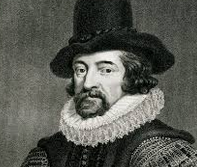
All true metaphysics is taken from the essential nature of the thinking faculty itself, and therefore in nowise invented, since it is not borrowed from experience, but contains the pure operations of thought, that is, conceptions and principles à priori, which the manifold of empirical presentations first of all brings into legitimate connection, by which it can become empirical knowledge, i.e. experience. ...mathematical physicists were thus quite unable to dispense with such metaphysical principles...
▼
Source
Preface, Tr. Bax (1883)
4 months ago
When you wander, as you often delight to do, you wander indeed, and give never such satisfaction as the curious time requires. This is not caused by any natural defect, but first for want of election, when you, having a large and fruitful mind, should not so much labour what to speak as to find what to leave unspoken. Rich soils are often to be weeded.
▼
Source
Letter of Expostulation to Coke, reported in Bartlett's Familiar Quotations, 10th ed. (1919)
4 months ago
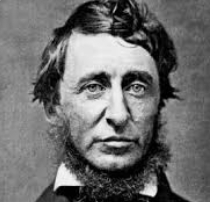
I can understand myself in believing, although in addition I can in a relative misunderstanding comprehend the human aspect of this life: but comprehend faith or comprehend Christ, I cannot.
▼
Source
p. 65
4 months ago
The English mind is intelligent rather than intellectual. The French are intellectual in the sense that the intellect is emancipated and left free to run its own course.
▼
Source
Chap XXXI.
4 months ago
It's a bit embarrassing to have been concerned with the human problem all one's life and find at the end that one has no more to offer by way of advice than 'Try to be a little kinder.'
▼
Source
As quoted in Huston Smith, "Aldous Huxley--A Tribute," The Psychedelic Review, (1964) Vol I, No.3, (Aldous Huxley Memorial Issue), p. 264-5
4 months ago
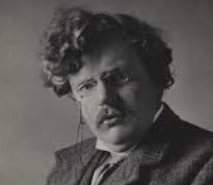
All government is an ugly necessity.
▼
Source
A Short History of England (1917)
4 months ago
That religion in which I must know in advance that something is a divine command in order to recognize it as my duty, is the revealed religion (or the one standing in need of a revelation); in contrast, that religion in which I must first know that something is my duty before I can accept it as a divine injunction is the natural religion. … When religion is classified not with reference to its first origin and its inner possibility (here it is divided into natural and revealed religion) but with respect to its characteristics which make it capable of being shared widely with others, it can be of two kinds: either the natural religion, of which (once it has arisen) everyone can be convinced through his own reason, or a learned religion, of which one can convince others only through the agency of learning (in and through which they must be guided). … A religion, accordingly, can be natural, and at the same time revealed, when it is so constituted that men could and ought to have discovered it of themselves merely through the use of their reason, although they would not have come upon it so early, or over so wide an area, as is required. Hence a revelation thereof at a given time and in a given place might well be wise and very advantageous to the human race, in that, when once the religion thus introduced is here, and has been made known publicly, everyone can henceforth by himself and with his own reason convince himself of its truth. In this event the religion is objectively a natural religion, though subjectively one that has been revealed.
▼
Source
Book IV, Part 1
4 months ago
Neither did the dispensation of God vary in the times after our Saviour came into the world; for our Saviour himself did first show His power to subdue ignorance, by His conference with the priests and doctors of the law, before He showed His power to subdue nature by His miracles. And the coming of this Holy Spirit was chiefly figured and expressed in the similitude and gift of tongues, which are but vehicula scientiæ.
4 months ago
An authorship that began with Either/Or and advanced step by step seeks here its decisive place of rest, at the foot of the altar, where the author, personally most aware of his own imperfections and guilt, certainly does not call himself a truth-witness but only a singular kind of poet and thinker who, without authority, has had nothing new to bring but “has wanted once again to read through, if possible in a more inward way, the original text handed down from the fathers” Preface P. 165
4 months ago
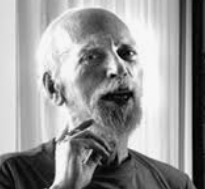
Every war results from the struggle for markets and spheres of influence, and every war is sold to the public by professional liars and totally sincere religious maniacs, as a Holy Crusade to save God and Goodness from Satan and Evil.
▼
Source
Cosmic Trigger II : Down to Earth (1991)
4 months ago
After silence that which comes nearest to expressing the inexpressible is music.
▼
Source
"The Rest is Silence"
4 months ago
The pessimist is commonly spoken of as the man in revolt. He is not. Firstly, because it requires some cheerfulness to continue in revolt, and secondly, because pessimism appeals to the weaker side of everybody, and the pessimist, therefore, drives as roaring a trade as the publican. The person who is really in revolt is the optimist, who generally lives and dies in a desperate and suicidal effort to persuade all the other people how good they are. It has been proved a hundred times over that if you really wish to enrage people and make them angry, even unto death, the right way to do it is to tell them that they are all the sons of God.
▼
Source
"Introduction"
4 months ago
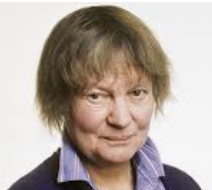
The role of philosophy might be said to be to extend and deepen the self-awareness of mankind.
▼
Source
Ch. 9, p. 137
4 months ago
The first characteristic of the human species is man's ability, as a rational being, to establish character for himself, as well as for the society into which nature has placed him. This ability, however, presupposes an already favorable natural predisposition and an inclination to the good in man, because the evil is really without character (since it is at odds with itself, and since it does not tolerate any lasting principle within itself)
▼
Source
Kant, Immanuel (1996), page 246
4 months ago
Another argument of hope may be drawn from this — that some of the inventions already known are such as before they were discovered it could hardly have entered any man's head to think of; they would have been simply set aside as impossible. For in conjecturing what may be men set before them the example of what has been, and divine of the new with an imagination preoccupied and colored by the old; which way of forming opinions is very fallacious, for streams that are drawn from the springheads of nature do not always run in the old channels.
▼
Source
Aphorism 109
4 months ago
And thus Christianity is played in “Christendom.” Artists in dramatic costumes make their appearance in artistic buildings—there really is no danger at all, anything but that: the teacher is a royal functionary, steadily promoted, making a career—and how he dramatically plays Christianity, in short, he plays comedy. He lectures about renunciation, but he himself is being steadily promoted; he teaches all that about despising worldly titles and rank, but he himself is making a career.
▼
Source
p. 121
4 months ago
Comparative religion and philosophy show that the Thinker can regard itself as mortal, as immortal, as both mortal and immortal (the reincarnation model) or even as non-existent (Buddhism). It can think itself into living in a Christian universe, a Marxist universe, a scientific-relativistic universe, or a Nazi universe—among many possibilities. As psychiatrists and psychologists have often observed (much to the chagrin of their medical colleagues), the Thinker can think itself sick, and can even think itself well again. The Prover is a much simpler mechanism. It operates on one law only: Whatever the Thinker thinks, the Prover proves. To cite a notorious example which unleashed incredible horrors earlier in this century, if the Thinker thinks that all Jews are rich, the Prover will prove it. It will find evidence that the poorest Jew in the most run-down ghetto has hidden money somewhere.
▼
Source
Ch. 1 : The Thinker & The Prover, p. 25
4 months ago
The unitive knowledge of the Divine Ground has, as its necessary condition, self-abnegation and charity. Only by means of self-abnegation and charity can we clear away the evil, folly and ignorance which constitute the thing we call our personality and prevent us from becoming aware of the spark of divinity illuminating the inner man.
4 months ago
There is a great man who makes every man feel small. But the real great man is the man who makes every man feel great.
▼
Source
Ch 1: "The Dickens Period"
4 months ago
[T]here used to be in the old days three intellectual arguments for the existence of God, all of which were disposed of by Immanuel Kant in the Critique of Pure Reason; but no sooner had he disposed of those arguments than he invented a new one, a moral argument, and that quite convinced him. He was like many people: in intellectual matters he was skeptical, but in moral matters he believed implicitly in the maxims that he had imbibed at his mother's knee. That illustrates what the psychoanalysts so much emphasize — the immensely stronger hold upon us that our very early associations have than those of later times.
▼
Source
Bertrand Russell, Why I Am Not a Christian (1927)
4 months ago
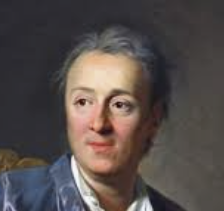
I have often seen an actor laugh off the stage, but I don’t remember ever having seen one weep.
▼
Source
"Paradox on Acting" (1830), as quoted in Selected Writings (1966) edited by Lester G. Crocker

4 months ago
According to this view, the sentences of metaphysics are pseudo-sentences which on logical analysis are proved to be either empty phrases or phrases which violate the rules of syntax. Of the so-called philosophical problems, the only questions which have any meaning are those of the logic of science. To share this view is to substitute logical syntax for philosophy.
▼
Source
p. 8
4 months ago
How significant is the enormous heightening, under mescalin, of the perception of color! ... Man's highly developed color sense is a biological luxury—inestimably precious to him as an intellectual and spiritual being, but unnecessary to his survival as an animal. ... Mescalin raises all colors to a higher power and makes the percipient aware of innumerable fine shades of difference, to which, at ordinary times, he is completely blind. It would seem that, for Mind at Large, the so-called secondary characters of things are primary.
▼
Source
describing his experiment with mescaline, pp. 26-27
4 months ago
For there are two types of great humorist: those who love to see a man absurd and those who hate to see him absurd. Of the first kind are Rabelais and Dickens; of the second kind are Swift and Bernard Shaw.
▼
Source
"The Philosopher"
4 months ago
There are three principal means of acquiring knowledge available to us: observation of nature, reflection, and experimentation. Observation collects facts; reflection combines them; experimentation verifies the result of that combination. Our observation of nature must be diligent, our reflection profound, and our experiments exact. We rarely see these three means combined; and for this reason, creative geniuses are not common.
▼
Source
No. 15
CivilSimian.com created by AxiomaticPanic, CivilSimian, Kalokagathia