

4 months ago
I shall now no more behold my dear father with these "bodily eyes. With him a whole threescore and ten years of the past has doubly died for me. It is as if a new leaf in the great hook of time were turned over. Strange time — endless time or of which I see neither end nor beginning. All rushes on. Man follows man. His life is as a tale that has been told; yet under Time does there not lie Eternity? Perhaps my father, all that essentially was my father, is even now near me, with me. Both he and I are with God. Perhaps, if it so please God, we shall in some higher state of being meet one another, recognize one another. As it is written. We shall be forever with God. The possibility, nay (in some way), the certainty, of perennial existence daily grows plainer to me. "The essence of whatever was, is, or shall be, even now is." God is great. God is good. His will be done, for it will be right. As it is, I can think peaceably of the departed love. All that was earthly, harsh, sinful, in our relation has fallen away; all that was holy in it remains. I can see my dear father's life in some measure as the sunk pillar on which mine was to rise and be built; the waters of time have now swelled up round his (as they will round mine); I can see it all transfigured, though I touch it no longer. I might almost say his spirit seems to have entered into me (so clearly do I discern and love him); I seem to myself only the continuation and second volume of my father. These days that I have spent thinking of him and of his end are the peaceablest, the only Sabbath that I have had in London. One other of the universal destinies of man has overtaken me. Thank Heaven, I know, and have known, what it is to be a son; to love a father, as spirit can love spirit. God give me to live to my father's honor and to His. And now, beloved father, farewell for the last time in this world of shadows I In the world of realities may the Great Father again bring us together in perfect holiness and perfect love! Amen!
4 months ago
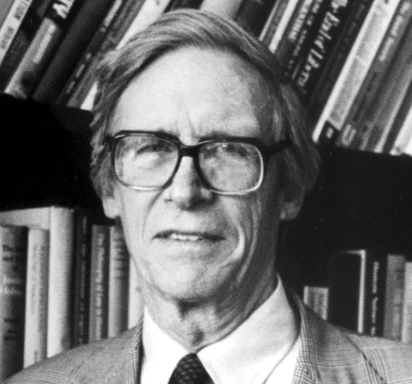
The intolerant can be viewed as free-riders, as persons who seek the advantages of just institutions while not doing their share to uphold them.
▼
Source
Chapter VI, Section 59, pg. 388
4 months ago
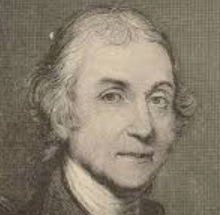
Respect a parliamentary king, and chearfully pay all parliamentary taxes; but have nothing to do with a parliamentary religion, or a parliamentary God. Religious rights, and religious liberty, are things of inestimable value. For these have many of our ancestors suffered and died; and shall we, in the sunshine of prosperity, desert that glorious cause, from which no storms of adversity or persecution could make them swerve? Let us consider if as a duty of the first rank with respect to moral obligation, to transmit to our posterity, and provide, as far as we can, for transmitting, unimpaired, to the latest generations, that generous zeal for religion and liberty, which makes the memory of our forefathers so truly illustrious.
▼
Source
Vol. I : The Dedication (March 1772)
4 months ago
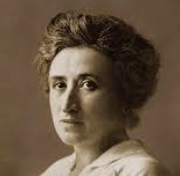
The working class will acquire the sense of the new discipline, the freely assumed self-discipline of the Social Democracy, not as a result of the discipline imposed on it by the capitalist state, but by extirpating, to the last root, its old habits of obedience and servility.

4 months ago
Whoever heard me assert that the grey cat playing just now in the yard is the same one that did jumps and tricks there five hundred years ago will think whatever he likes of me, but it is a stranger form of madness to imagine that the present-day cat is fundamentally an entirely different one.
▼
Source
Quoted by Jorge Luis Borges in his essay "A History of Eternity"

4 months ago
Once we begin to want, we fall under the jurisdiction of the Devil.
4 months ago
The forms of government appear to him almost without meaning; such subjects as the extension of suffrage, the guarantee of any kind of political right, are evidently in his eyes pitiful things, materialism more or less disguised. What he requires is that men should grow morally better, that the number of just men should increase: one wise man more in the world would be to him a fact of more importance than ten political revolutions.
▼
Source
Giuseppe Mazzini, 'On the Genius and Tendency of the Writings of Thomas Carlyle', British and Foreign Review (October 1843), quoted in Essays: Selected from the Writings, Literary, Political, and Religious, of Joseph Mazzini, ed. William Clarke (1887), p.
4 months ago
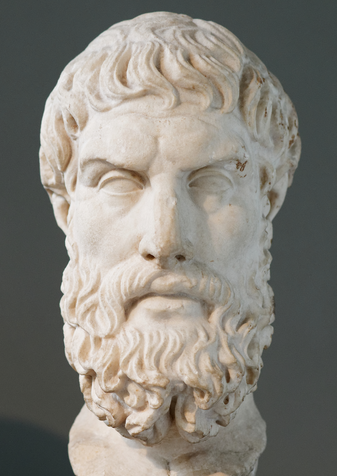
Where without any change in circumstances the things held to be just by law are seen not to correspond with the concept of justice in actual practice, such laws are not really just; but wherever the laws have ceased to be advantageous because of a change in circumstances, in that case the laws were for that time just when they were advantageous for the mutual dealings of the citizens, and subsequently ceased to be just when they were no longer advantageous.
4 months ago
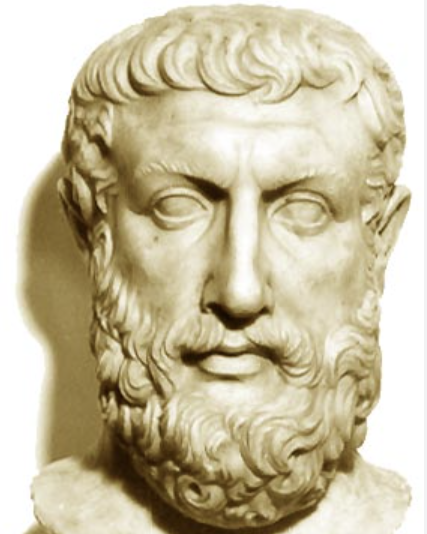
What... was the step that placed the Ionian cosmologists... above the [] level of the Maoris? ...[T]he real advance made by the scientific men of Miletos was that they left off telling tales. They gave up the hopeless task of describing what was, when as yet there was nothing, and asked instead what all things really are now.The great principle which underlies all their thinking, though it is first put into words by Parmenides, is that Nothing comes into being out of nothing, and nothing passes away into nothing. They saw, however, that particular things were always coming into being and passing away again, and from this it followed that their existence was no true or stable one. The only things that were real and eternal were the original matter which passed through all these changes and the motion which gave rise to them, to which was... added that law of proportion or compensation...
4 months ago
Men are products, expressions, reflections; they live to the extent that they coincide with their epoch, or to the extent that they differ markedly from it.
▼
Source
Henry Ward Beecher (1887)

4 months ago
A little doubt is better than total credulity.
▼
Source
Attributed to Al-Ma'arri in Leaving Islam: Apostates Speak Out (2003) by Ibn Warraq, p. 68
4 months ago
Childish and altogether ludicrous is what you yourself are and all philosophers; and if a grown-up man like me spends fifteen minutes with fools of this kind, it is merely a way of passing the time. I've now got more important things to do. Goodbye!
▼
Source
Thrasymachus, in On the Indestructibility of our Essential Being by Death, in Essays and Aphorisms (1970) as translated by R. J. Hollingdale, p. 76
4 months ago
In the fact of being born there is such an absence of necessity that when you think about it a little more than usual, you are left...with a foolish grin.
4 months ago
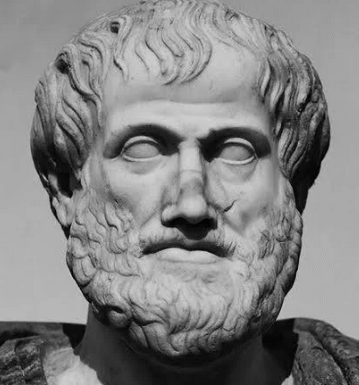
They pronounce absurdly who thus speak, as the Pythagoreans assert: for at the same time they make the infinite to be essence, and distribute it into parts.
▼
Source
Book III, Ch. VI, p. 158.
4 months ago
Wings I saw springing from fair women's shoulders, and from beneath rubble I've seen butterflies flutter.
▼
Source
I (Yo soy un hombre sincero) as translated by Esther Allen in José Martí : Selected Writings (2002), p. 273

4 months ago
Justice stands in an awkward relationship with utility. The general practice of justice conduces to human welfare, probably more than anything else. The old tag sums up justice as 'honeste vivere, neminem laedere, suum cuique tribuere' … Yet, justice seems also to conflict with utility and even with the general welfare, let alone the welfare of particular people.
4 months ago
We can come to look upon the deaths of our enemies with as much regret as we feel for those of our friends, namely, when we miss their existence as witnesses to our success.
▼
Source
Vol. 2, Ch. 26, sect. 311a
4 months ago
Illusion begets and sustains the world; we do not destroy one without destroying the other. Which is what I do every day. An apparently ineffectual operation, since I must begin all over again the next day.
4 months ago
Every man, as the Stoics used to say, is first and principally recommended to his own care; and every man is certainly, in every respect, fitter and abler to take care of himself than of any other person. Every man feels his own pleasures and his own pains more sensibly than those of other people. The former are the original sensations; the latter the reflected or sympathetic images of those sensations. The former may be said to be the substance; the latter the shadow.
▼
Source
Section II, Chap. I.
4 months ago
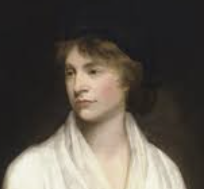
Men have superior strength of body; but were it not for mistaken notions of beauty, women would acquire sufficient to enable them to earn their own subsistence, the true definitions of independence; and to bear those bodily inconveniences and exertions that are requisite to strengthen the mind. Let us then, by being allowed to take the same exercise as boys, not only during infancy, but youth, arrive at perfection of body, that we may know how far the nation superiority of man extends . For what reason or virtue can be expected from a creature when the seed-time of life is neglected? None; did not the winds of heaven casually scatter many useful seeds in fallow ground.
▼
Source
Ch.5
4 months ago
In the development of any science, the first received paradigm is usually felt to account quite successfully for most of the observations and experiments easily accessible to that science’s practitioners. Further development, therefore, ordinarily calls for the construction of elaborate equipment, the development of an esoteric vocabulary and skills, and a refinement of concepts that increasingly lessens their resemblance to their usual common-sense prototypes. That professionalization leads, on the one hand, to an immense restriction of the scientist’s vision and to a considerable resistance to paradigm change. The science has become increasingly rigid. On the other hand, within those areas to which the paradigm directs the attention of the group, normal science leads to a detail of information and to a precision of the observation-theory match that could be achieved in no other way.
▼
Source
p. 64 (2012 ed.)

4 months ago
The true goal of the bourgeois life, in other words, is not self-enactment, but diversion. Most people need the organised distraction of work (if they can find it). Idleness - the life of the playboy who doesn't answer the phone - is simply too demanding.
▼
Source
[http://www.newstatesman.com/books/2009/04/bourgeois-life-work-botton "A difficult business,"] New Statesman (2009-04-16)
4 months ago
The majority of mankind and people who lack refinement conceive it to be pleasure, and hence they approve a life of sensual enjoyment.
▼
Source
(.Bk 1, Chapter III)

4 months ago
Condemn me if you choose — I do that myself, — but condemn me, and not the path which I am following, and which I point out to those who ask me where, in my opinion, the path is.
▼
Source
"Letter to N.N.," quoted by Havelock Ellis in [http://books.google.com/books?id=xCp6OIGcojMC& "The New Spirit"] (1892) p. 226
4 months ago
A child, from the time he can think, should think about all he sees, should suffer for all who cannot live with honesty, should work so that all men can be honest, and should be honest himself. A child who does not think about what happens around him and is content with living without wondering whether he lives honestly is like a man who lives from a scoundrel's work and is on the road to being a scoundrel.
4 months ago
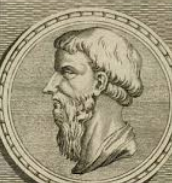
Better to have one friend of great value, than many friends who were good for nothing.
▼
Source
As quoted in The Lives and Opinions of Eminent Philosophers by Diogenes Laërtius, as translated by C. D. Yonge, (1853), "Anacharsis" sect. 5, p. 48
4 months ago
Monotheistic religions alone furnish the spectacle of religious wars, religious persecutions, heretical tribunals, that breaking of idols and destruction of images of the gods, that razing of Indian temples and Egyptian colossi, which had looked on the sun 3,000 years: just because a jealous god had said, 'Thou shalt make no graven image.'
4 months ago
It makes no sense to say that death is the goal of life, but what else is there to say?
4 months ago
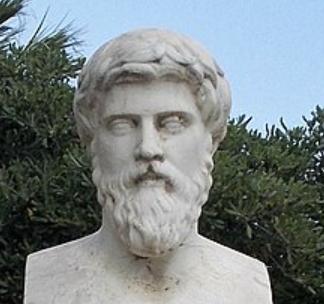
No society can surely be flourishing and happy, of which the greater part of the members are poor and miserable. It is but equity, besides, that they who feed, cloath and lodge the whole body of the people, should have such a share of the produce of their own labour as to be themselves tolerably well fed, clothed, and lodged.
▼
Source
Chapter VIII, p. 94.
4 months ago
Alcibiades had a very handsome dog, that cost him seven thousand drachmas; and he cut off his tail, "that," said he, "the Athenians may have this story to tell of me, and may concern themselves no further with me."
▼
Source
50 Alcibiades
4 months ago
Much in the study of the paranormal was what we would now call pseudo-science. But the line between science and pseudo-science is smudged and shifting; where it lies seems clear only in retrospect. There is no pristine science untouched by the vagaries of faith.
▼
Source
Foreword: Two Attempts to Cheat Death (p. 5)
4 months ago
Now the activity of the practical virtues is exhibited in political or military affairs, but the actions concerned with these seem to be unleisurely. Warlike actions are completely so (for no one chooses to be at war, or provokes war, for the sake of being at war; any one would seem absolutely murderous if he were to make enemies of his friends in order to bring about battle and slaughter); but the action of the statesman is also unleisurely, and-apart from the political action itself—aims at despotic power and honours, or at all events happiness, for him and his fellow citizens—a happiness different from political action, and evidently sought as being different. So if among virtuous actions political and military actions are distinguished by nobility and greatness, and these are unleisurely and aim at an end and are not desirable for their own sake, but the activity of reason, which is contemplative, seems both to be superior in serious worth and to aim at no end beyond itself, and to have its pleasure proper to itself (and this augments the activity), and the self-sufficiency, leisureliness, unweariedness (so far as this is possible for man), and all the other attributes ascribed to the supremely happy man are evidently those connected with this activity, it follows that this will be the complete happiness of man, if it be allowed a complete term of life.
▼
Source
Book X, 1177b.6

4 months ago
What a monument of human smallness is this idea of the philosopher king. What a contrast between it and the simplicity of humaneness of Socrates, who warned the statesmen against the danger of being dazzled by his own power, excellence, and wisdom, and who tried to teach him what matters most — that we are all frail human beings. What a decline from this world of irony and reason and truthfulness down to Plato's kingdom of the sage whose magical powers raise him high above ordinary men; although not quite high enough to forgo the use of lies, or to neglect the sorry trade of every shaman — the selling of spells, of breeding spells, in exchange for power over his fellow-men.
▼
Source
Vol. 1, Ch 8 "The Philosopher King"
4 months ago
Three days later the little princess was buried, and Prince Andrei went up the steps to where the coffin stood, to give her the farewell kiss. And there in the coffin was the same face, though with closed eyes. "Ah, what have you done to me?" it still seemed to say, and Prince Andrei felt that something gave way in his soul and that he was guilty of a sin he could neither remedy nor forget.
▼
Source
Bk. IV, Ch. 9

4 months ago
The Jews were behind all the persecutions of the Christians. They wandered through the country everywhere hating and undermining the Christian faith.
▼
Source
See [https://books.google.com.br/books?id=mF8OAQAAIAAJ Antichrist and the Tribe of Dan] by Gerald Burton Winrod, Defender Publishers, 1933.

4 months ago
What is a weed? A plant whose virtues have yet to be discovered.
▼
Source
Fortune of the Republic (1878)

4 months ago
The eternally repetitive routine, the imposed anonymity and the rigid atomization of numbers and cages are just a few of the dehumanizing, desocializing mechanisms. As for the relationship of prisoners to life outside, it is supposed to be virtually nonexistent. In this respect, the impenetrable concrete, the barbed wire and the armed keepers, ostensibly there to deter escape-bound captives, also suggest something further: prisoners must be guarded from the ingressions of a moving, developing world outside. Disengaged from normal social life, its revelations and influences, they must finally be robbed of their humanity. Yet human beings cannot be willed and molded into nonexistence. In reality the facts of prison life have begun in recent years to bespeak the irrationality of its goals. Even the most drastic repressive measures have not obstructed the progressive ascent of captive men and women to new heights of social consciousness. This has been especially intense among Black and Brown prisoners
▼
Source
Chapter 2, "Lessons: From Attica to Soledad"
4 months ago
Our place is somewhere between being and nonbeing — between two fictions.
4 months ago
By the removal of the unnecessary mouths, and by extracting from the farmer the full value of the farm, a greater surplus, or what is the same thing, the price of a greater surplus, was obtained for the proprietor...
▼
Source
Chapter IV, p. 450 (On Highland Clearances).
4 months ago
Most of our literature and social philosophy after 1850 was the voice of freedom against authority, of the child against the parent, of the pupil against the teacher. Through many years I shared in that individualistic revolt. I do not regret it; it is the function of youth to defend liberty and innovation, of the old to defend order and tradition, and of middle age to find a middle way. But now that I too am old, I wonder whether the battle I fought was not too completely won. Let us say humbly but publicly that we resent corruption in politics, dishonesty in business, faithlessness in marriage, pornography in literature, coarseness in language, chaos in music, meaninglessness in art.
▼
Source
[http://www.blendedbody.com/_cl/_audio/_2ndgen/CenturyOfSelf/MiscDocuments/Warnings/TheSecondSexualRevolution/TimeMagazineJan24-p-1964.htm “The Second Sexual Revolution”], Time magazine, (24 January 1964)
4 months ago
Lysander, when Dionysius sent him two gowns, and bade him choose which he would carry to his daughter, said, "She can choose best," and so took both away with him.
▼
Source
Of Lysander
4 months ago
In ancient Europe, Stoics asserted that a slave could be freer than a master who suffers from self-division. In China, Daoists imagined a type of sage who responded to the flow of events without weighing alternatives. Disciples of monotheistic faiths have believed something similar: freedom, they say, is obeying God’s will. What those who follow these traditions want most is not any kind of freedom of choice. Instead, what they long for is freedom from choice.
▼
Source
The Faith of Puppets: The Freedom of the Marionette (p. 6-7)
4 months ago
Humour is the only test of gravity, and gravity of humour. For a subject which would not bear raillery is suspicious; and a jest which would not bear a serious examination is certainly false wit.
▼
Source
Anthony Ashley-Cooper, 3rd Earl of Shaftesbury, Sensus Communis: An Essay on the Freedom of Wit and Humour (1709), Part 1, Sec. 5, incorrectly attributing it to Gorgias via Aristotle.
4 months ago
I may illustrate this by two very different examples of human behaviour: that of a man who pushes a child into the water with the intention of drowning it; and that of a man who sacrifices his life in an attempt to save the child. Each of these two cases can be explained with equal ease in Freudian and in Adlerian terms. According to Freud the first man suffered from repression (say, of some component of his Oedipus complex), while the second man had achieved sublimation. According to Adler the first man suffered from feelings of inferiority (producing perhaps the need to prove to himself that he dared to commit some crime), and so did the second man (whose need was to prove to himself that he dared to rescue the child). I could not think of any human behaviour which could not be interpreted in terms of either theory. It was precisely this fact — that they always fitted, that they were always confirmed — which in the eyes of their admirers constituted the strongest argument in favour of these theories. It began to dawn on me that this apparent strength was in fact their weakness.
4 months ago
There was something in her higher than what surrounded her. There was in her the glow of the real diamond among glass imitations. This glow shone out in her exquisite, truly enigmatic eyes. The weary, and at the same time passionate, glance of those eyes, encircled by dark rings, impressed one by its perfect sincerity. Everyone looking into those eyes fancied he knew her wholly, and knowing her, could not but love her.
▼
Source
Anna's thoughts about Liza, Part III, Chapter 13

4 months ago
It is true that the successful quest for wisdom might lead to the result that wisdom is not the one thing needful. But this result would owe its relevance to the fact that it is the result of the quest for wisdom: the very disavowal of reason must be reasonable disavowal.
▼
Source
p. 36
4 months ago
Blessed are those who have no talent!
▼
Source
February 1850
4 months ago
The criminalization of black and Latina women includes persisting images of hypersexuality that serve to justify sexual assaults against them both in and outside of prison.
▼
Source
Chapter Four
4 months ago
What I know wreaks havoc upon what I want.
4 months ago
I have no great faith in political arithmetic, and I mean not to warrant the exactness of either of these computations.
▼
Source
Chapter V, p. 577.
CivilSimian.com created by AxiomaticPanic, CivilSimian, Kalokagathia