

4 months ago
Let your accusations be few in number, even if they be just.
▼
Source
The Ring (c. 120). | If "The Ring" refers to the work "The Ring of Sixtus", it is highly unlikely that these quotes are attributed correctly. It is widely believed that "The Ring of Sixtus" was written by a Pythagorean philosopher.

4 months ago
Ours is an industrial civilization, in which no society can prosper unless it possesses an elite of highly trained scientists and a considerable army of engineers and technicians. The possession and wide dissemination of a great deal of correct, specialized knowledge has become a prime condition of national survival. In the United States, during the last twenty or thirty years, this fact seems to have been forgotten. Professional educationists have taken John Dewey's theories of ‘learning through doing’ and of ‘education as life adjustment,’ and have applied them in such a way that, in many American schools, there is now doing without learning, along with courses in adjustment to everything except the basic twentieth-century fact that we live in a world where ignorance of science and its methods is the surest, shortest road to national disaster. During the past half century every other nation has made great efforts to impart more knowledge to more young people. In the United States professional educationists have chosen the opposite course.”
▼
Source
"Knowledge and Understanding", in Vedanta and the West (May-June 1956); later in Collected Essays (1958)
4 months ago
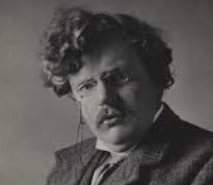
Men do not differ much about what things they will call evils; they differ enormously about what evils they will call excusable.
▼
Source
In The Illustrated London News (23 October 1909)
4 months ago
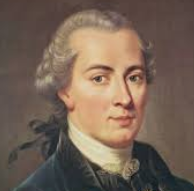
For it is extremely absurd to expect to be enlightened by reason, and yet to prescribe to her beforehand on which side she must incline.
▼
Source
A 747, B 775; as translated by F. Max Mueller
4 months ago
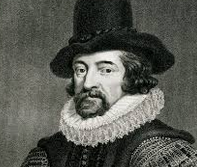
For man seeketh in society comfort, use, and protection: and they be three wisdoms of divers natures, which do often sever: wisdom of the behaviour, wisdom of business, and wisdom of state.
▼
Source
Book II, xxiii
4 months ago
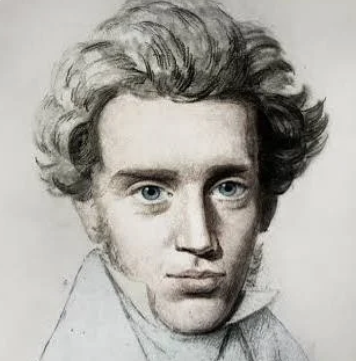
Lord Jesus Christ, our foolish minds are weak; they are more than willing to be drawn—and there is so much that wants to draw us to itself. There is pleasure with its seductive power, the multiplicity with its bewildering distractions, the moment with its infatuating importance and the conceited laboriousness of busyness and the careless time-wasting of light-mindedness and the gloomy brooding of heavy-mindedness—all this will draw us away from ourselves to itself in order to deceive us. But you, who are truth, only you, our Savior and Redeemer, can truly draw a person to yourself, which you have promised to do—that you will draw all to yourself. Then may God grant that by repenting we may come to ourselves, so that you, according to your Word, can draw us to yourself—from on high, but through lowliness and abasement.
▼
Source
p. 157
4 months ago
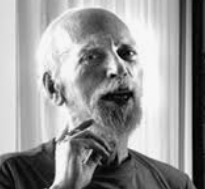
The persons we think we are have been manufactured out of some shotgun wedding of history and and imagination.
▼
Source
The Illuminati Papers (1980), p. 61
4 months ago
In the old dramas it was love that had to be sacrificed to painful duty. In the modern instance the sacrifice is at the shrine of what William James called “the Bitch Goddess, Success.” Love is to be abandoned for the stern pursuit of newspaper notoriety and dollars.
▼
Source
“Silence is Golden,” p. 61
4 months ago
What embitters the world is not excess of criticism, but absence of self-criticism.
▼
Source
"On Bright Old Things — and Other Things", in Sidelights on New London and Newer New York: And Other Essays (1932)
4 months ago
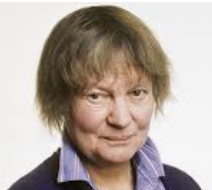
I daresay anything can be made holy by being sincerely worshipped.
▼
Source
The Message to the Planet (1989) p. 322.
4 months ago
Money is the password, and all doors, which are closed to the man of lesser means, fly open to those whom Plutus favors. The invention of money, which has no other usefulness (or at least it should not have any) except for the commercial exchange of the products of man's industry, now serves all that is physically good among men. Especially after money was represented by metal, it has produced avarice which, finally, without indulgence, but by its mere possession, and even with the resolution (of the stingy) not to spend it, still contains a power which people believe can sufficiently compensate for the lack of any other power.
▼
Source
Kant, Immanuel (1996), pages 181-182
4 months ago
But the best demonstration by far is experience, if it go not beyond the actual experiment.
▼
Source
Aphorism 70
4 months ago
To become sober is: to come to oneself in self-knowledge and before God as nothing before him, yet infinitely, unconditionally engaged. P. 104
4 months ago
Everybody who has ever worked for a corporation knows that corporations conspire all the time. Politicians conspire all the time, pot-dealers conspire not to get caught by the narcs, the world is full of conspiracies. Conspiracy is natural primate behavior.
▼
Source
The I in the Triangle, speech held at a bookstore in Santa Cruz, California (1990)
4 months ago
It is not only when it takes the form of physical addiction that sex is evil. It is also evil when it manifests itself as a way of satisfying the lust for power or the climber's craving for position and social distinction.
▼
Source
Ch. 14, p. 358 [2012 reprint]
4 months ago
Truth must of necessity be stranger than fiction ... for fiction is the creation of the human mind, and therefore is congenial to it.
▼
Source
Ch. 4 "Speculation of the House Agent"
4 months ago
Nothing works a more complete and penetrating disaster than every "impersonal" duty, every sacrifice before the Moloch of abstraction.—To think that no one has thought of Kant's categorical imperative as dangerous to life! … What destroys a man more quickly than to work, think and feel without inner necessity, without any deep personal desire, without pleasure—as a mere automaton of duty? That is the recipe for decadence, and no less for idiocy. … Instinct at fault in everything and anything, instinct as a revolt against nature, German decadence as a philosophy—that is Kant!
▼
Source
Nietzsche in The Antichrist (1895), section 11, H. L. Mencken's translation
4 months ago
He never took a pride, as in the humour of some, in putting any of his guests, or that otherwise discours'd with him, to the blush; but was ever ready to countenance and encourage their abilities, whatever they were. Neither was he one that would appropriate the discourse to himself alone, but left a liberty to the rest of the company to take their turns; wherein he took pleasure to hear a man speak in his own faculty, and would draw him on, and allure him to discourse upon such a subject. And for himself, he despised no man's observations; but would light his torch at any man's candle.
▼
Source
William Rawley, "The Life Of the Honourable Author" in Lord Bacon's Essays, &c. Vol. II (London: 1720), pp. xiii–xiv. Cf. Francis Osborne, Advice to a Son: "Thus he [Lord Bacon] did not only learn himself, but gratify such as taught him; who looked upon t
4 months ago
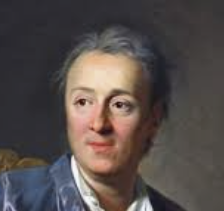
There is no kind of harassment that a man may not inflict on a woman with impunity in civilized societies.
▼
Source
"On Women" (1772), as translated in Selected Writings (1966) edited by Lester G. Crocker

4 months ago
In science there are no 'depths'; there is surface everywhere.
▼
Source
Rudolf Carnap (1929) from the Vienna Circle manifesto.
4 months ago
All that the conscious ego can do is to formulate wishes, which are then carried out by forces which it controls very little and understands not at all.
4 months ago
It is not funny that anything else should fall down; only that a man should fall down. No one sees anything funny in a tree falling down. No one sees a delicate absurdity in a stone falling down. No man stops in the road and roars with laughter at the sight of the snow coming down. The fall of thunderbolts is treated with some gravity. The fall of roofs and high buildings is taken seriously. It is only when a man tumbles down that we laugh. Why do we laugh? Because it is a grave religious matter: it is the Fall of Man. Only man can be absurd: for only man can be dignified.
▼
Source
"Spiritualism"
4 months ago
This is a work that cannot be completed except by a society of men of letters and skilled workmen, each working separately on his own part, but all bound together solely by their zeal for the best interests of the human race and a feeling of mutual good will.
▼
Source
Article on Encyclopedia, as translated in The Many Faces of Philosophy : Reflections from Plato to Arendt (2001), "Diderot", p. 237

4 months ago
The gesture that divides madness is the constitutive one, not the science that grows up in the calm that returns after the division has been made.
▼
Source
Preface to 1961 edition
4 months ago
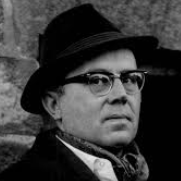
Human nature being irremediably flawed, so that all of us in some degree rebel against the people and the institutions to which we owe most, there is in every man a certain impulse to make himself God: that is, to cast off all authority but his own lust and whim. From this vice comes the corrupting influence of total power upon even the best of natures. The rebellion of Lucifer is the symbol of this ancient anarchic impulse—the passion for overthrowing the just authority of God, that upon the vacant throne of authority the rebel may make himself absolute.
4 months ago
Unlike the masses, intellectuals have a taste for rationality and an interest in facts.
▼
Source
Chapter 5 (p. 43)
4 months ago
It is largely because the free-thinkers, as a school, have hardly made up their minds whether they want to be more optimist or more pessimist than Christianity that their small but sincere movement has failed.
▼
Source
Ch. II: The Great Victorian Novelists (p. 73)
4 months ago
The decisions of law courts should never be printed: in the long run, they form a counterauthority to the law.
4 months ago
The different pieces of evidence did not constitute so many neutral elements, until such time as they could be gathered together into a single body of evidence that would bring the final certainty of guilt. Each piece of evidence aroused a particular degree of abomination. Guilt did not begin when all the evidence was gathered together; piece by piece, it was constituted by each of the elements that made it possible to recognize a guilty person. Thus a semi-proof did not leave the suspect innocent until such time as it was completed; it made him semi-guilty; slight evidence of a serious crime marked someone as slightly criminal. In short, penal demonstration did not obey a dualistic system: true or false; but a principle of continuous gradation; a degree reached in the demonstration already formed a degree of guilt and consequently involved a degree of punishment.
▼
Source
Chapter One, The body of the condemned, pp.23

4 months ago
It's frightening to think that you mark your children merely by being yourself... It seems unfair. You can't assume the responsibility for everything you do — or don't do.
▼
Source
Les Belles Images (1966), Ch. 3
4 months ago
Mr. Aldous Huxley, who is perhaps one of those people who have to perpetrate thirty bad novels before producing a good one, has a certain natural — but little developed — aptitude for seriousness.
▼
Source
The Contemporary English Novelist, La Nouvelle Revue française (1 May 1927)
4 months ago
Strong gongs groaning as the drums beat far.
▼
Source
Lepanto

4 months ago
As there were black swans, though civilized people had existed for three thousand years on the earth without meeting with them...The uniform experience, therefore, of the inhabitants of the known world, agreeing in a common result, without one known instance of deviation from that result, is not always sufficient to establish a general conclusion.
4 months ago
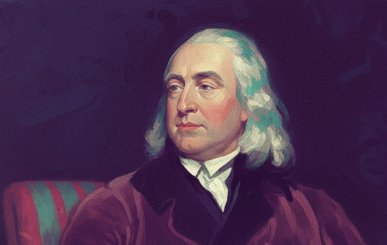
Whenever you are about to be oppressed, you have a right to resist oppression: whenever you conceive yourself to be oppressed, conceive yourself to have a right to make resistance, and act accordingly. In proportion as a law of any kind—any act of power, supreme or subordinate, legislative, administrative, or judicial, is unpleasant to a man, especially if, in consideration of such its unpleasantness, his opinion is, that such act of power ought not to have been exercised, he of course looks upon it as oppression: as often as anything of this sort happens to a man—as often as anything happens to a man to inflame his passions,—this article, for fear his passions should not be sufficiently inflamed of themselves, sets itself to work to blow the flame, and urges him to resistance. Submit not to any decree or other act of power, of the justice of which you are not yourself perfectly convinced. If a constable call upon you to serve in the militia, shoot the constable and not the enemy;—if the commander of a press-gang trouble you, push him into the sea—if a bailiff, throw him out of the window. If a judge sentence you to be imprisoned or put to death, have a dagger ready, and take a stroke first at the judge.
4 months ago
Exercise is the technique by which one imposes on the body tasks that are both repetitive and different, but always graduated. By bending behavior towards a terminal state, exercise makes possible a perpetual characterization of the individual...It thus assures, in the form of continuity and constraint, a growth, an observation, a qualification.
4 months ago
In horror, in terror, she accepted the metamorphosis — gnat, foam, ant, until death. And it's only the beginning, she thought. She stood motionless, as if it were possible to play tricks with time, possible to stop it from following its course. But her hands stiffened against her quivering lips. When the bells began to sound the hour she let out the first scream.
▼
Source
Last lines
4 months ago
He had the notion that because I am a clergyman I should believe anything. Many people have little notions of that kind.
4 months ago
Human beings have faculties more elevated than the animal appetites, and when once made conscious of them, do not regard anything as happiness which does not include their gratification. I do not, indeed, consider the Epicureans to have been by any means faultless in drawing out their scheme of consequences from the utilitarian principle. To do this in any sufficient manner, many Stoic, as well as Christian elements require to be included. But there is no known Epicurean theory of life which does not assign to the pleasures of the intellect, of the feelings and imagination, and of the moral sentiments, a much higher value as pleasures than to those of mere sensation.
▼
Source
Ch. 2
4 months ago
A sovereign shows himself to be a if he disregards his honest advisors, or punishes them for what they have said.
4 months ago
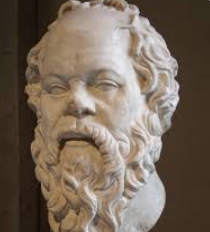
In every one of us there are two ruling and directing principles, whose guidance we follow wherever they may lead; the one being an innate desire of pleasure; the other, an acquired judgment which aspires after excellence.
▼
Source
Phaedrus
4 months ago
I am therefore led to assume or to recognise a form of participation which has the reality of a subject; this participation cannot be, by definition, an object of thought; it cannot serve as a solution - it appears beyond the realm of problems: it is metaproblematical.
4 months ago
A pupil from whom nothing is ever demanded which he cannot do never does all he can.
▼
Source
([https://archive.org/details/autobiography01mill/page/32/mode/1up p. 32])
4 months ago
I have never said that human society ought to be aristocratic, but a great deal more than that. What I have said, and still believe with ever-increasing conviction, is that human society is always, whether it will or no, aristocratic by its very essence, to the extreme that it is a society in the measure that it is aristocratic, and ceases to be such when it ceases to be aristocratic. Of course I am speaking now of society and not of the State.
▼
Source
Chap.II: The Rise Of The Historic Level
4 months ago
Suppose that there are two sorts of existences, one seen, and the other unseen. ...The seen is the changing, and the unseen is the unchanging. ...And further, is not one part of us body, and the rest of us soul? ...Then the soul is more like to the unseen, and the body to the seen? ...the soul is then dragged by the body into the region of the changeable, and wanders and is confused; the world spins round her, and she is like a drunkard when under their influence?

4 months ago
Questions don't change the truth, but they give it motion.
4 months ago
What we principally thought of, was to alter people's opinions; to make them believe according to evidence, and know what was their real interest, which when they once knew, they would, we thought, by the instrument of opinion, enforce a regard to it upon one another. While fully recognizing the superior excellence of unselfish benevolence and love of justice, we did not expect the regeneration of mankind from any direct action on those sentiments, but from the effect of educated intellect, enlightening the selfish feelings. Although this last is prodigiously important as a means of improvement in the hands of those who are themselves impelled by nobler principles of action, I do not believe that any one of the survivors of the Benthamites or Utilitarians of that day, now relies mainly upon it for the general amendment of human conduct.
▼
Source
([https://archive.org/details/autobiography01mill/page/111/mode/1up pp. 111-112])
4 months ago
Nationalism is always an effort in a direction opposite to that of the principle which creates nations. The former is exclusive in tendency, the latter inclusive. In periods of consolidation, nationalism has a positive value, and is a lofty standard. But in Europe everything is more than consolidated, and nationalism is nothing but a mania, a pretext to escape from the necessity of inventing something new, some great enterprise.
▼
Source
Chapter XIV: Who Rules The World?
4 months ago
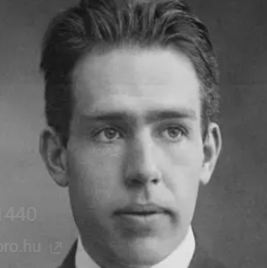
Isolated material particles are abstractions, their properties being definable and observable only through their interaction with other systems.
▼
Source
"Atomic Physics and the Description of Nature" (1934)
4 months ago
[In the world below...] The wise and orderly soul is conscious of her situation, and follows in the path; but the soul which desires the body, and which... has long been fluttering about the lifeless frame and the world of sight, is after many struggles and many sufferings hardly and with violence carried away by her attendant genius, and when she arrives at the place where the other souls are gathered, if she be impure and have done impure deeds or have been concerned in foul murders or other crimes... from that soul everyone flees and turns away; no one will be her companion, no one her guide, but alone she wanders in extremity of evil until certain times are fulfilled...
4 months ago
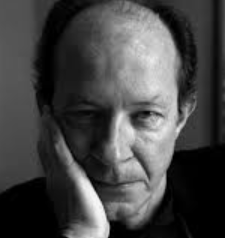
Today, in the era of the complete triumph of the spectacle, what can be reaped from the heritage of Debord? It is clear that the spectacle is language, the very communicativity or linguistic being of humans. This means that a fuller Marxian analysis should deal with the fact that capitalism (or any other name one wants to give the process that today dominated world history) was directed not only toward the expropriation of productive activity, but also and principally toward the alienation of language itself, of the very linguistic and communicative nature of humans, of that logos which one of Heraclitus' fragments identified as the Common. The extreme form of this expropriation of the Common is the spectacle, that is, the politics we live in. But this also means that in the spectacle of our own linguistic nature comes back to us inverted. This is why (precisely because what is being expropriated is the very possibility of common good) the violence of the spectacle is so destructive; but for the same reason the spectacle remains something like a positive possibility that can be used against it.
▼
Source
Ch. 18 : Shekinah
CivilSimian.com created by AxiomaticPanic, CivilSimian, Kalokagathia