
4 months ago
To covet truth is a very distinguished passion.
▼
Source
p. 48
4 months ago
There is no method of reasoning more common, and yet none more blameable, than in philosophical debates to endeavour to refute any hypothesis by a pretext of its dangerous consequences to religion and morality. When any opinion leads us into absurdities, 'tis certainly false; but 'tis not certain an opinion is false, because 'tis of dangerous consequence.
▼
Source
Part 3, Section 2
4 months ago
We ought neither to fasten our ship to one small anchor nor our life to a single hope.
▼
Source
Fragment 30 ([https://en.wikisource.org/wiki/Epictetus,_the_Discourses_as_reported_by_Arrian,_the_Manual,_and_Fragments/Fragments Oldfather translation])
4 months ago
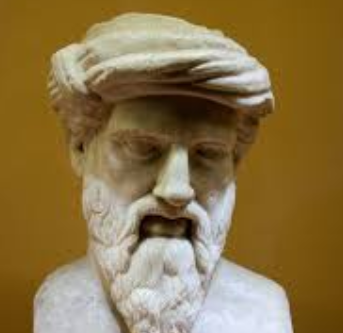
The association between religion and mathematically based science has its origins in the mists of history. ...the very dawn of Western culture in sixth-century B.C. Greece. ...[W]hen the Greeks were turning away from the mythological picture immortalized by Homer and Hesiod, the Ionian philosopher Pythagoras of Samos pioneered a worldview in which mathematics was seen as the key to reality. In place of the mythological gods, Pythagoras painted a picture in which the universe was conceived as a great musical instrument resonating with divine mathematical harmonies. ...[inspiring] mystics, theologians, and physicists ever since. ...But to Pythagoras and his followers, mathematics was the key not simply to the physical world, but more importantly to the spiritual world—for they believed that numbers were literally gods. By contemplating numbers and their relationships, the Pythagoreans sought union with the "divine." For them, mathematics was first and foremost a religious activity.
▼
Source
Margaret Wertheim, Pythagoras' Trousers: God, Physics, and the Gender Wars (1995) Introduction, pp. 9-10.

4 months ago
Getting its history wrong is part of being a nation
▼
Source
translated by Eric Hobsbawm on p. 12 of Nations and Nationalism Since 1780: Programme, Myth, Reality (Cambridge University Press, 1992) from French original ("L'oubli et je dirai même l'erreur historique, sont un facteur essentiel de la formation d'une na

4 months ago
105. All testing, all confirmation and disconfirmation of a hypothesis takes place already within a system. And this system is not a more or less arbitrary and doubtful point of departure for all our arguments; no it belongs to the essence of what we call an argument. The system is not so much the point of departure, as the element in which our arguments have their life.

4 months ago
Be grateful even for hardship, setbacks, and bad people. Dealing with such obstacles is an essential part of training in the Art of Peace.

4 months ago
It was a maxim with him that power is not so much shown in talent or in successful performance as in tone; the absolute or the victorious tone ... He disliked limitations, and welcomed whatever promised to get rid of them, without always inquiring very closely what was left when they were removed.
▼
Source
James Elliot Cabot, A Memoir of Ralph Waldo Emerson (1887)
4 months ago
To know that we are measuring real change we need to have a strong theoretical base.
▼
Source
C. West Churchman, (1970) in: Systems and management annual. Vol 1, p. 338
4 months ago
The soul, too, has her virginity and must bleed a little before bearing fruit.
▼
Source
"Normal Madness," Ch. 3, [http://books.google.com/books?id=apSwAAAAIAAJ&q=%22The+soul+too+has+her+virginity+and+must+bleed+a+little+before+bearing+fruit%22&pg=PA56#v=onepage P. 56]
4 months ago
As every enquiry, which regards religion, is of the utmost importance, there are two questions in particular, which challenge our attention, to wit, that concerning its foundation in reason, and that concerning its origin in human nature. Happily, the first question, which is the most important, admits of the most obvious, at least, the clearest, solution. The whole frame of nature bespeaks an intelligent author; and no rational enquirer can, after serious reflection, suspend his belief a moment with regard to the primary principles of genuine Theism and Religion. But the other question, concerning the origin of religion in human nature, is exposed to some more difficulty. The belief of invisible, intelligent power has been very generally diffused over the human race, in all places and in all ages; but it has neither perhaps been so universal as to admit of no exception, nor has it been, in any degree, uniform in the ideas, which it has suggested. Some nations have been discovered, who entertained no sentiments of Religion, if travellers and historians may be credited; and no two nations, and scarce any two men, have ever agreed precisely in the same sentiments.
▼
Source
Introduction
4 months ago
Those who dwelt in the common auditorium adopted this oath:"I swear by the discoverer of the Tetraktys,which is the spring of all our wisdom;The perennial fount and root of Nature."
▼
Source
Iamblichus of Syrian Chalcis, The Life of Pythagoras (ca. 300 CE) [https://books.google.com/books?id=6HAIAQAAMAAJ Tr.] Kenneth Sylvan Guthrie (1919)
4 months ago
Modern libertarians know of many great thinkers only because of Murray Rothbard. My favorite in this category is the 16th century anarchist, Étienne de la Boetie. To him, the great mystery of politics was obedience to rulers. Why in the world do people agree to be looted and otherwise oppressed by government overlords? It is not just fear, Boetie explains in “The Discourse on Voluntary Servitude,” for our consent is required. And that consent can be non-violently withdrawn.
▼
Source
Lew Rockwell, in [https://www.lewrockwell.com/lrc-blog/etienne-de-la-boetie-and-egypt/ "Étienne de la Boetie and Egypt" (11 February 2011)]
4 months ago
The truth can be spoken only by someone who is already at home in it; not by someone who still lives in untruthfulness, and does no more than reach out towards it from within untruthfulness.
▼
Source
p. 41e
4 months ago
The principle that each group is entitled to its free development on its own lines is not inspired by any feeling of narrow communalism. There are communalisms and communalisms. A community which is inspired by feelings of ill-will towards other communities is low and ignoble. I entertain the highest respect for the customs, laws, religious and social institutions of other communities. Nay, it is my duty, according to the teaching of the Quran, even to defend their places of worship, if need be. Yet I love the communal group which is the source of my life and behaviour; and which has formed me what I am by giving me its religion, its literature, its thought, its culture, and thereby recreating its whole past as a living operative factor, in my present consciousness. Even the authors of the recognise the value of this higher aspect of communalism.
▼
Source
Sir Muhammad Iqbal’s 1930 Presidential Address to the 25th Session of the All-India Muslim League, Allahabad, 29 December 1930 (from [http://www.columbia.edu/itc/mealac/pritchett/00islamlinks/txt_iqbal_1930.html University of Columbia website]). Quoted by
4 months ago
If this were true, the population of the world would be at a stand-still. In truth, the rate of birth is slightly in excess of death. I would suggest that the next edition of your poem should read: “Every moment dies a man, every moment 1 1/16 is born.” Strictly speaking, the actual figure is so long I cannot get it into a line, but I believe the figure 1 1/16 will be sufficiently accurate for poetry.
▼
Source
New Scientist, 4 December 1958, pg.1428. | Comment in response to Alfred Tennyson’s poem Vision of Sin, which included the line Every moment dies a man, // every moment one is born.
4 months ago
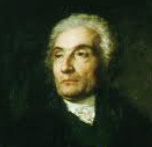
If sovereignty is not anterior to a people, at least these two ideas are collateral, since it takes a sovereign to make a people. It is as impossible to imagine a human society without a sovereign as a hive and a swarm without a queen, for a swarm, in virtue of the eternal laws of nature, exists in this way or it does not exist.
▼
Source
p. 53
4 months ago
Every thing in the world is purchased by labour.
▼
Source
Part II, Essay 1: Of Commerce
4 months ago
Nothing is more important than the formation of fictional concepts, which teach us at last to understand our own.
▼
Source
p. 85e

4 months ago
Quite a few political economists advocate the thesis that a Robinson Crusoe — or what amounts to the same thing, a controlled economy — calculates in terms of profits and losses.
▼
Source
Otto Neurath (1935) "What is Meant by a Rational Economic Theory?" 1935/1987, p. 95; as cited in Cat (2014)
4 months ago
Miracles may be, for anything we know to the contrary, phenomena of a higher order of God's laws, superior to, and, under certain conditions, controlling the inferior order known to us as the ordinary laws of nature.
▼
Source
"Passages from the life of a philosopher", Appendix, p. 490
4 months ago
Do not listen to the reasoners; there has been too much reasoning in France, and reasoning has banished reason. Put aside your fears and reservations, and trust the infallible instinct of your conscience. Do you want to redeem yourselves in your own eyes? Do you want to acquire the right of self-esteem? Do you want to accomplish a sovereign act? . . . Recall your sovereign.
▼
Source
Chapter VIII, p. 76
4 months ago
Berkeley, Hume, Kant, Fichte, Hegel, James, Bergson all are united in one earnest attempt, the attempt to reinstate man with his high spiritual claims in a place of importance in the cosmic scheme.
▼
Source
Edwin Arthur Burtt, The Metaphysical Foundations of Modern Physical Science (1925)
4 months ago
Philosophy may be only a shadow of the reality it tries to grasp, but the novel is altogether more satisfactory. I am almost tempted to say that no philosopher is qualified to do his job unless he is also a novelist ... I would certainly exchange any of the works of Whitehead or Wittgenstein for the novels they ought to have written.
▼
Source
Colin Wilson in Voyage To A Beginning, p. 160-1 (1968)

4 months ago
When we have but the will to do it, that very moment will Justice be done: that very instant the tyrants of the Earth shall bite the dust.
4 months ago
The proprietor of a pornographic book shop may be dimly conscious of a debt to the author of Areopagitica, but Milton is the last person he wants to see in his shop.
▼
Source
Popper and After: Four Modern Irrationalists, Oxford: Pergamon, 1982. Page 54.
4 months ago
Man, in wearing himself out his whole life long by saying: What is that! and what is that called! and what does that mean! is a big spectacle to himself if he wants to open his eyes. All his natural powers tending towards the truth, he never ceases looking for true names; he senses a language prior to that of Babel, and even of Eden.
▼
Source
p. 68

4 months ago
What would you say of that man who was made king by the error of the people, if he had so far forgotten his natural condition as to imagine that this kingdom was due to him, that he deserved it, and that it belonged to him of right? You would marvel at his stupidity and folly. But is there less in the people of rank who live in so strange a forgetfulness of their natural condition?
4 months ago
What economists call over-production is but a production that is above the purchasing power of the worker, who is reduced to poverty by Capital and State. Now, this sort of over-production remains fatally characteristic of the present capitalist production, because — Proudhon has already shown it — workers cannot buy with their salaries what they have produced and at the same time copiously nourish the swarm of idlers who live upon their work.The very essence of the present economic system is, that the worker can never enjoy the well-being he has produced, and that the number of those who live at his expense will always augment. The more a country is advanced in industry, the more this number grows. Inevitably, industry is directed, and will have to be directed, not towards what is needed to satisfy the needs of all, but towards that which, at a given moment, brings in the greatest temporary profit to a few. Of necessity, the abundance of some will be based on the poverty of others, and the straitened circumstances of the greater number will have to be maintained at all costs, that there may be hands to sell themselves for a part only of that which they are capable of producing; without which, private accumulation of capital is impossible!These characteristics of our economical system are its very essence. Without them, it cannot exist; for, who would sell his labor power for less than it is capable of bringing in, if he were not forced thereto by the threat of hunger?And those essential traits of the system are also its most crushing condemnation.
4 months ago
The saying, "Practice is everything," is Periander’s.
▼
Source
Periander, 6.
4 months ago
Rules for Axioms. I. Not to omit any necessary principle without asking whether it is admittied, however clear and evident it may be. II. Not to demand, in axioms, any but things that are perfectly evident in themselves.
4 months ago
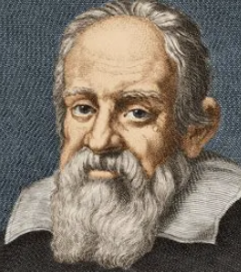
It has been observed that missiles and projectiles describe a curved path of some sort; however no one has pointed out the fact that this path is a parabola. But this and other facts, not few in number or less worth knowing, I have succeeded in proving; and what I consider more important, there have been opened up to this vast and most excellent science, of which my work is merely the beginning, ways and means by which other minds more acute than mine will explore its remote corners.
▼
Source
Author, Third Day. Change of Position
4 months ago
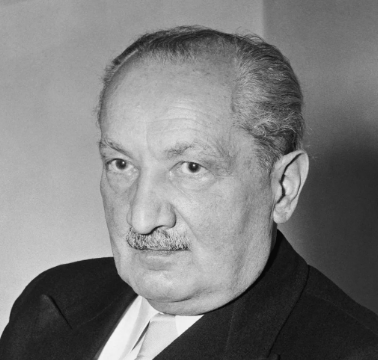
Every questioning is a seeking. Every seeking takes its direction beforehand from what is sought. Questioning is a knowing search for beings in their thatness and whatness.
▼
Source
Introduction: The Exposition of the Question of the Meaning of Being (Stambaugh translation)
4 months ago
We accustom ourselves and our children to hypocrisy, to the practice of a double-faced morality. And since the brain is ill at ease among lies, we cheat ourselves with sophistry. Hypocrisy and sophistry become the second nature of the civilized man. But a society cannot live thus; it must return to truth or cease to exist.
▼
Source
Ch. 1 : Our Riches
4 months ago
He has not acquired a fortune; the fortune has acquired him.
▼
Source
Bion, 50.

4 months ago
The one intelligible theory of the universe is that of objective idealism, that matter is effete mind, inveterate habits becoming physical laws. But before this can be accepted it must show itself capable of explaining the tridimensionality of space, the laws of motion, and the general characteristics of the universe, with mathematical clearness and precision ; for no less should be demanded of every Philosophy.
4 months ago
We do not “have” a body; rather, we “are” bodily.
▼
Source
p. 99
4 months ago
At present, when fraud and adulteration are exercised on such an immense scale in the manufacture of artificial manure, and the manufacture of manure is considered as a chemical process, when it ought to be considered as a physiological one, the gardener prefers to spend an unimaginable amount of labour rather than risk his crop by the use of a pompously labelled and unworthy drug. But it is a social obstacle which depends upon a want of knowledge and a bad social organisation, not upon physical causes.
4 months ago
The Stoics also teach that God is unity, and that he is called Mind and Fate and Jupiter, and by many other names besides.
▼
Source
Zeno, 68.

4 months ago
The Kantian philosophy left a gulf between thought and being, or between subject and object, which the Hegelian philosophy sought to bridge. The bridge was to be made by positing one universal structure of all being. Being was to be a process wherein a thing ‘comprehends’ or ‘grasps’ the various states of existence and draws them into the more or less enduring unity of its ‘self,’ thus actively constituting itself as ‘the same’ throughout all change. Everything, in other words, exists more or less as a ‘subject.’ P. 64

4 months ago
Let us not limit the resources of nature; they are infinite, especially when reinforced by great art.
4 months ago
Wherever ideas come together they tend to weld into general ideas; and whenever they are generally connected, general ideas govern the connection; and these general ideas are living feelings spread out.

4 months ago
Wise men mingle mirth with their cares, as a help either to forget or overcome them; but to resort to intoxication for the ease of one's mind is to cure melancholy by madness.
▼
Source
p. 268 (Intemperance)
4 months ago
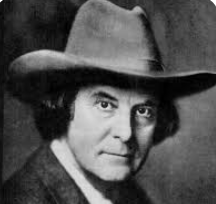
Genius is often only the power of making continuous efforts. The line between failure and success is so fine that we scarcely know when we pass it — so fine that we are often on the line and do not know it. How many a man has thrown up his hands at a time when a little more effort, a little more patience, would have achieved success. As the tide goes clear out, so it comes clear in. In business sometimes prospects may seem darkest when really they are on the turn. A little more persistence, a little more effort, and what seemed hopeless failure may turn to glorious success. There is no failure except in no longer trying. There is no defeat except from within, no really insurmountable barrier save our own inherent weakness of purpose.
▼
Source
As quoted from Electrical Review (c. 1895) without further attribution in The Search for the North Pole (1896) by Evelyn Briggs Baldwin, p. 520, this was later published as part of various works by Hubbard, including FRA Magazine : A Journal of Affirmatio
4 months ago
Either one defines “personality” and “individuality” in terms of their possibilities within the established form of civilization, in which case their realization is for the vast majority tantamount to successful adjustment. Or one defines them in terms of their transcending content, including their socially denied potentialities beyond (and beneath) their actual existence; in this case, their realization would imply transgression, beyond the established form of civilization, to radically new modes of “personality” and “individuality” incompatible with the prevailing ones. Today, this would mean “curing” the patient to become a rebel or (which is saying the same thing) a martyr.
▼
Source
“Critique of Neo-Freudian Revisionism”
4 months ago
The difference between a pessimistic and an optimistic mind is of such controlling importance in regard to every intellectual function, and especially for the conduct of life, that it is out of the question to admit that both are normal, and the great majority of mankind are naturally optimistic.
▼
Source
V
4 months ago
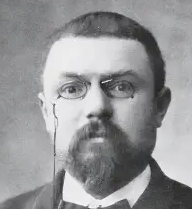
But, one will say, if raw experience can not legitimatize reasoning by recurrence, is it so of experiment aided by induction? We see successively that a theorem is true of the number 1, of the number 2, of the number 3 and so on; the law is evident, we say, and it has the same warranty as every physical law based on observations, whose number is very great but limited. But there is an essential difference. Induction applied to the physical sciences is always uncertain, because it rests on the belief in a general order of the universe, an order outside of us. Mathematical induction, that is, demonstration by recurrence, on the contrary, imposes itself necessarily, because it is only the affirmation of a property of the mind itself.
▼
Source
Ch. I. (1905) Tr. George Bruce Halstead
4 months ago
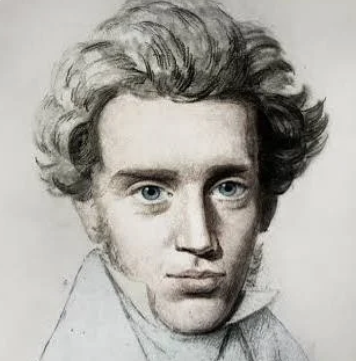
Knowledge can in part be set aside, and one can then go further in order to collect new; the natural scientist can set aside insects and flowers and then go further, but if the existing person sets aside the decision in existence, it is eo ipso lost, and he is changed.
▼
Source
Papers VI B 66, 1845

4 months ago
It is only mental habit that prevents us from realizing how miraculous it is that motion can be passed from one body to another. Once our eyes have opened, nothing is so striking. For those who have never thought about it, it doesn't seem mysterious; by contrast, those who have meditated on it may despair of ever understanding it.
4 months ago
Too often the reformer has been one who caused the rich to band themselves against the poor.
▼
Source
p. 14
CivilSimian.com created by AxiomaticPanic, CivilSimian, Kalokagathia