
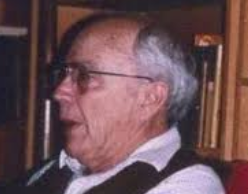
David Stove
Member for
5 months 1 weekDavid Stove — Induction, Scientific Irrationalism, and the Philosopher Who Refused to Be Polite (1927–1994)
David Charles Stove was an Australian philosopher — born in Moree, New South Wales in 1927, educated at the University of Sydney where he graduated with first-class honours in moral and political philosophy in 1950 under the Challis Professor John Anderson, appointed a teaching fellow at Sydney in 1951, lecturing at the University of New South Wales from 1952 and at the University of Sydney from 1965 until his retirement, who committed suicide in 1994 after a diagnosis of esophageal cancer — a philosopher of considerable technical ability in the philosophy of science and inductive logic, and a polemicist of genuinely unusual ferocity, wit, and literary skill who spent the latter part of his career demonstrating that some of the most admired philosophical movements of the twentieth century were elaborate intellectual rubbish.
He held a competition in 1985 to find the worst argument in the world, awarded the prize to himself for an argument he called "The Gem," which appeared in various forms throughout the idealist tradition: "We can know things only under our forms of understanding — therefore we cannot know things as they are in themselves." He considered this argument to be a profound logical fallacy disguised as a profound philosophical insight, and to have done enormous damage to European thought since Kant first gave it respectable currency.
His central concern: the defense of ordinary inductive reasoning against philosophical skepticism — and the exposure of the methods by which philosophers of science had managed to make the denial of that reasoning appear sophisticated rather than self-refuting.
The Technical Work — Induction and Its Defense
Stove's serious philosophical work concentrated on what philosophers call the problem of induction: how can we justifiably infer from observed cases to unobserved ones? How does evidence about past and present swans justify any expectation about the next swan? Hume had argued that no such justification was available — that inductive inference was not rationally grounded but was merely a habit of association. Most subsequent philosophers had accepted this conclusion in one form or another.
Stove disagreed. In "Probability and Hume's Inductive Scepticism" (1973) and "The Rationality of Induction" (1986), he argued that there existed a genuine non-deductive logic — a logic of probability — that justified inductive inference for purely logical reasons. The statement "the next swan is white" was genuinely made probable, though not made certain, by the evidence that all observed swans had been white. This was not merely psychological habit or social convention — it was a genuine logical relation between evidence and conclusion. The skeptical tradition that ran from Hume through Popper had confused the impossibility of deductive certainty about the unobserved with the impossibility of any rational support for beliefs about the unobserved. These were different claims and only the former was true.
"There exists a non-deductive or probabilistic kind of logic which renders 'The next swan is white' probable, though not certain, on the evidence that all swans so far observed have been white — this is not merely a habit, it is a logical relation."
Popper and After — The Four Irrationalists
Stove's most widely read work — "Popper and After: Four Modern Irrationalists" (1982), later reprinted as "Scientific Irrationalism" — was an attack on the four most influential philosophers of science of the twentieth century: Popper, Kuhn, Lakatos, and Feyerabend. His argument was that all four, despite their apparent differences, shared a commitment to the thesis that all logic was deductive — and that since induction was not deductive, no genuine inferential support for scientific theories was possible. The result was a systematic undermining of science presented as a defense of it.
Stove's method was literary-rhetorical as much as philosophical. He showed how the four irrationalists had systematically used what he called the "neutralizing of success words" — placing terms like "knowledge," "discovery," "evidence," and "progress" in contexts that stripped them of their ordinary meaning while retaining their positive connotations. The result was that positions amounting to the claim that science could not establish truth, that there was no scientific progress, and that any theory was as good as any other — positions that, stated bluntly, almost no one would accept — were made to seem sophisticated and defensible by the linguistic camouflage in which they were dressed.
His comparison of Popper's falsificationism to Aesop's fox and the grapes — unable to reach the grapes of inductive knowledge, declaring they must be sour anyway — was the kind of argumentative move that made his work memorable even to those who disagreed with his conclusions. Jokes were, as his biographer noted, essential to his style of argument.
"Popper concluded that science could never establish truth. Stove compared this to Aesop's fable of the fox and the grapes: unable to reach inductive knowledge, the philosopher declares that inductive knowledge is not real knowledge anyway."
The Gem — The Worst Argument in the World
In 1985 Stove organized a competition for the worst argument in the world, and was the winner with his own entry: the argument that appeared in various forms throughout the idealist tradition from Kant to the constructivists — "We can know things only as they appear to us / only as they relate to us / only under our forms of understanding — therefore we cannot know things as they are in themselves."
The fallacy Stove identified was elementary but systematically overlooked: the inference from "we can only know X in a certain way" to "therefore we cannot know X" was simply invalid. "We can only digest food chemically — therefore we cannot actually digest food" would be the parallel structure. The argument was a fraud: it appeared to establish an important limit on human knowledge but in fact established nothing except a trivial tautology dressed in impressive vocabulary. Stove argued this fallacy was embedded in almost all forms of philosophical idealism and in the constructivism of the philosophy of science tradition — it was what made "we can only know the world as it appears to us" slide into "we cannot know the world as it is."
"We can know things only under our forms of understanding — therefore we cannot know things as they are in themselves."
— "The Gem": winner of Stove's 1985 worst argument competition, awarded to himself
Darwinian Fairytales — The Critique of Sociobiology
Stove's attack on what he called "Darwinian Fairytales" — the application of Darwinian selection theory to human behavior — was his most heterodox major work and the one that most troubled his admirers. He argued that the extension of natural selection from biological evolution to human psychology and society was not merely unproven but logically flawed, producing claims about human behavior — that genes were "selfish," that humans were primarily concerned with genetic fitness, that altruism was merely disguised self-interest in reproductive terms — that contradicted obvious features of actual human life.
His specific target was not evolution itself — he accepted that natural selection explained biological diversity — but the claims that the same logic applied to human behavior in ways that reduced kindness to genetic self-interest, that made parental love into a fitness-maximizing strategy, and that described human social life in terms borrowed from population genetics. He considered these claims to be unfalsifiable pseudo-science dressed in the respectability of biological theory. Stove's critics argued he had misread the science; his defenders argued he had identified genuine conceptual confusions that practitioners were reluctant to acknowledge.
"Sociobiology is a new religion in which genes play the role of gods — Darwin can tell you lots of truths about plants, flies, and fish, but if it is human life that you would most like to know about and understand, a good library can be begun by leaving out Darwinism."
The Provocations — What Cannot Be Included Uncritically
Any honest account of Stove must record the essays that led to disciplinary proceedings at Sydney University — "The Intellectual Capacity of Women" (1990), which asserted that women's intellectual capacity was on average inferior to men's, and "Racial and Other Antagonisms" (1989), which argued that racial generalizations, however uncomfortable, were rationally grounded in statistical associations. Both essays were written with the same argumentative style — careful, pointed, provocative — as his philosophical work. Both were widely condemned. Both involved empirical claims that were contested and remain contested.
Stove characterized himself as following the evidence wherever it led regardless of social consequences — the same spirit that animated his philosophy of science. His critics argued that what looked like intellectual courage was in fact the selective application of skepticism: he was suspicious of progressive orthodoxies but credulous about conservative ones, rigorous in criticizing Popper and Kuhn but less rigorous when his conclusions aligned with his political sympathies. This is a genuine charge that his work does not fully answer.
"There is something to offend nearly everyone in Stove's essays — his arguments fly in the face of just about every intellectual cliché going, from relativism and irrationalism on one side to doctrinaire Darwinism on the other."
Legacy — The Underground Philosopher
Stove died in 1994 having achieved significant recognition among a small but devoted readership — largely in philosophy of science and among conservative intellectuals — but little general recognition during his lifetime. His technical work on induction remains genuinely valuable as a defense of probabilistic reasoning against skeptical arguments that most philosophers had accepted too quickly. His polemical work on scientific irrationalism — the exposure of the rhetorical methods through which the denial of scientific progress was made to seem sophisticated — identified real problems in the philosophy of science that the field has been slow to fully acknowledge.
On CivSim he belongs as a limiting case: a philosopher who demonstrated both the value and the danger of uncompromising intellectual honesty. The value: his exposure of "The Gem" and of the neutralizing of success words are genuine contributions to the toolkit of rational argument. The danger: that the willingness to say what others will not can become indistinguishable from the willingness to say what ought not to be said — and that a methodology of universal skepticism toward intellectual fashion is no more reliable than intellectual fashion itself when applied to questions where bias can disguise itself as rigor. His challenge to Universal Humanism is the consistency challenge: a philosophy committed to reason and honesty must apply those commitments as rigorously to its own preferred conclusions as to the conclusions of its opponents.
"Intellectually, Stove was the opposite of clubbable. His opinions flew in the face of just about every intellectual cliché going — and his method was patiently dismantling intellectual absurdity, piece by piece, until what had seemed sophisticated looked simply wrong."
CivilSimian.com created by AxiomaticPanic, CivilSimian, Kalokagathia