
4 months ago
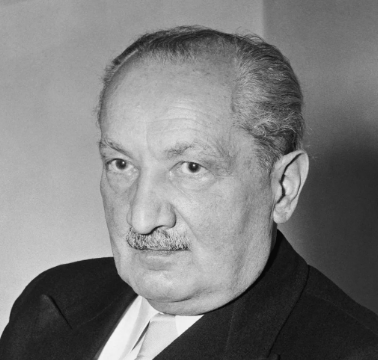
Every questioning is a seeking. Every seeking takes its direction beforehand from what is sought. Questioning is a knowing search for beings in their thatness and whatness.
▼
Source
Introduction: The Exposition of the Question of the Meaning of Being (Stambaugh translation)

4 months ago
We accustom ourselves and our children to hypocrisy, to the practice of a double-faced morality. And since the brain is ill at ease among lies, we cheat ourselves with sophistry. Hypocrisy and sophistry become the second nature of the civilized man. But a society cannot live thus; it must return to truth or cease to exist.
▼
Source
Ch. 1 : Our Riches

4 months ago
He has not acquired a fortune; the fortune has acquired him.
▼
Source
Bion, 50.
4 months ago
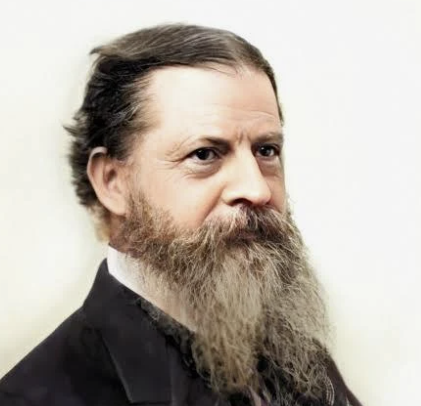
The one intelligible theory of the universe is that of objective idealism, that matter is effete mind, inveterate habits becoming physical laws. But before this can be accepted it must show itself capable of explaining the tridimensionality of space, the laws of motion, and the general characteristics of the universe, with mathematical clearness and precision ; for no less should be demanded of every Philosophy.
4 months ago
We do not “have” a body; rather, we “are” bodily.
▼
Source
p. 99
4 months ago
At present, when fraud and adulteration are exercised on such an immense scale in the manufacture of artificial manure, and the manufacture of manure is considered as a chemical process, when it ought to be considered as a physiological one, the gardener prefers to spend an unimaginable amount of labour rather than risk his crop by the use of a pompously labelled and unworthy drug. But it is a social obstacle which depends upon a want of knowledge and a bad social organisation, not upon physical causes.
4 months ago
The Stoics also teach that God is unity, and that he is called Mind and Fate and Jupiter, and by many other names besides.
▼
Source
Zeno, 68.
4 months ago
The Kantian philosophy left a gulf between thought and being, or between subject and object, which the Hegelian philosophy sought to bridge. The bridge was to be made by positing one universal structure of all being. Being was to be a process wherein a thing ‘comprehends’ or ‘grasps’ the various states of existence and draws them into the more or less enduring unity of its ‘self,’ thus actively constituting itself as ‘the same’ throughout all change. Everything, in other words, exists more or less as a ‘subject.’ P. 64

4 months ago
Let us not limit the resources of nature; they are infinite, especially when reinforced by great art.
4 months ago
Wherever ideas come together they tend to weld into general ideas; and whenever they are generally connected, general ideas govern the connection; and these general ideas are living feelings spread out.

4 months ago
Wise men mingle mirth with their cares, as a help either to forget or overcome them; but to resort to intoxication for the ease of one's mind is to cure melancholy by madness.
▼
Source
p. 268 (Intemperance)
4 months ago
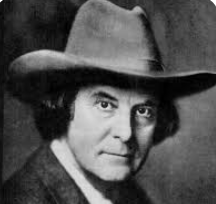
Genius is often only the power of making continuous efforts. The line between failure and success is so fine that we scarcely know when we pass it — so fine that we are often on the line and do not know it. How many a man has thrown up his hands at a time when a little more effort, a little more patience, would have achieved success. As the tide goes clear out, so it comes clear in. In business sometimes prospects may seem darkest when really they are on the turn. A little more persistence, a little more effort, and what seemed hopeless failure may turn to glorious success. There is no failure except in no longer trying. There is no defeat except from within, no really insurmountable barrier save our own inherent weakness of purpose.
▼
Source
As quoted from Electrical Review (c. 1895) without further attribution in The Search for the North Pole (1896) by Evelyn Briggs Baldwin, p. 520, this was later published as part of various works by Hubbard, including FRA Magazine : A Journal of Affirmatio
4 months ago
Either one defines “personality” and “individuality” in terms of their possibilities within the established form of civilization, in which case their realization is for the vast majority tantamount to successful adjustment. Or one defines them in terms of their transcending content, including their socially denied potentialities beyond (and beneath) their actual existence; in this case, their realization would imply transgression, beyond the established form of civilization, to radically new modes of “personality” and “individuality” incompatible with the prevailing ones. Today, this would mean “curing” the patient to become a rebel or (which is saying the same thing) a martyr.
▼
Source
“Critique of Neo-Freudian Revisionism”
4 months ago
The difference between a pessimistic and an optimistic mind is of such controlling importance in regard to every intellectual function, and especially for the conduct of life, that it is out of the question to admit that both are normal, and the great majority of mankind are naturally optimistic.
▼
Source
V
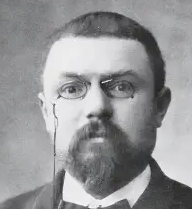
4 months ago
But, one will say, if raw experience can not legitimatize reasoning by recurrence, is it so of experiment aided by induction? We see successively that a theorem is true of the number 1, of the number 2, of the number 3 and so on; the law is evident, we say, and it has the same warranty as every physical law based on observations, whose number is very great but limited. But there is an essential difference. Induction applied to the physical sciences is always uncertain, because it rests on the belief in a general order of the universe, an order outside of us. Mathematical induction, that is, demonstration by recurrence, on the contrary, imposes itself necessarily, because it is only the affirmation of a property of the mind itself.
▼
Source
Ch. I. (1905) Tr. George Bruce Halstead
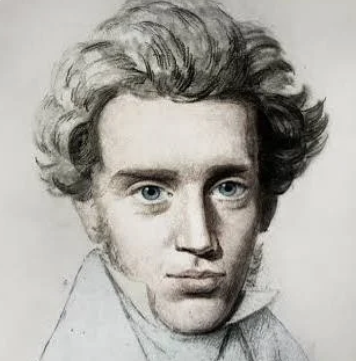
4 months ago
Knowledge can in part be set aside, and one can then go further in order to collect new; the natural scientist can set aside insects and flowers and then go further, but if the existing person sets aside the decision in existence, it is eo ipso lost, and he is changed.
▼
Source
Papers VI B 66, 1845

4 months ago
It is only mental habit that prevents us from realizing how miraculous it is that motion can be passed from one body to another. Once our eyes have opened, nothing is so striking. For those who have never thought about it, it doesn't seem mysterious; by contrast, those who have meditated on it may despair of ever understanding it.
4 months ago
Too often the reformer has been one who caused the rich to band themselves against the poor.
▼
Source
p. 14
4 months ago
The world of their [the bourgeois’] predecessors was a backward, pre-technological world, a world with the good conscience of inequality and toil, in which labor was still a fated misfortune; but a world in which man and nature were not yet organized as things and instrumentalities. With its code of forms and manners. with the style and vocabulary of its literature and philosophy. this past culture expressed the rhythm and content of a universe in which valleys and forests, villages and inns, nobles and villains, salons and courts were a part of the experienced reality. In the verse and prose of this pre-technological culture is the rhythm of those who wander or ride in carriages. who have the time and the pleasure to think, contemplate, feel and narrate. It is an outdated and surpassed culture, and only dreams and childlike regressions can recapture it. But this culture is, in some of its decisive elements. also a post-technological one. Its most advanced images and positions seem to survive their absorption into administered comforts and stimuli; they continue to haunt the consciousness with the possibility of their rebirth in the consummation of technical progress. They are the expression of that free and conscious alienation from the established forms of life with which literature and the arts opposed these forms even where they adorned them. In contrast to the Marxian concept, which denotes man's relation to himself and to his work in capitalist society, the artistic alienation is the conscious transcendence of the alienated existence—a “higher level” or mediated alienation. The conflict with the world of progress, the negation of the order of business, the anti-bourgeois elements in bourgeois literature and art are neither due to the aesthetic lowliness of this order nor to romantic reaction—nostalgic consecration of a disappearing stage of civilization. “Romantic” is a term of condescending defamation which is easily applied to disparaging avant-garde positions, just as the term “decadent” far more often denounces the genuinely progressive traits of a dying culture than the real factors of decay. The traditional images of artistic alienation are indeed romantic in as much as they are in aesthetic incompatibility with the developing society. This incompatibility is the token of their truth. What they recall and preserve in memory pertains to the future: images of a gratification that would dissolve the society which suppresses it
▼
Source
pp. 59-60
4 months ago
It has become extremely questionable whether, in the flux of life, it is a genuinely worthwhile intellectual problem to seek to discover fixed and immutable ideas or absolutes. It is a more worthy intellectual task perhaps to learn to think dynamically and relationally rather than statically.
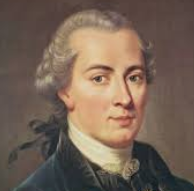
4 months ago
Out of the crooked timber of humanity, no straight thing was ever made.
▼
Source
Idea for a General History with a Cosmopolitan Purpose (1784), Proposition 6. | Variant translations: Out of timber so crooked as that from which man is made nothing entirely straight can be built. | From such crooked wood as that which man is made of, no
4 months ago
What is objective must be common to many minds and consequently transmissible from one to the other, and as this transmission can only come about by... discourse... we are even forced to conclude: no discourse no objectivity.
4 months ago
Irony is a qualification of subjectivity.

4 months ago
No one gets angry at a mathematician or a physicist whom he or she doesn't understand at all, or at someone who speaks a foreign language, but rather at someone who tampers with your own language, with this 'relation,' precisely, which is yours.
▼
Source
Derrida Jacques, Elisabeth Weber (1995), Points...: Interviews, 1974-1994. p. 115
4 months ago
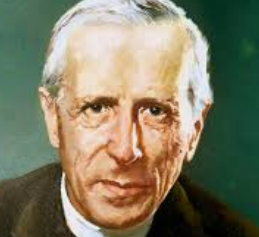
We realise... the fact and... reason for the diversity of animal behaviour. From the moment we regard evolution as... psychical transformation, we see... a multitude of forms of instincts each corresponding to a... solution of the problem of life. The 'psychical' make-up of an insect is not and cannot be that of a vertebrate ; nor can... that of a squirrel be that of a cat or... elephant: this in virtue of the positions... on the tree of life. ...We begin to see ...a gradation formed. If instinct is a variable dimension, the instincts will... create, beneath their complexity, a growing system. They will form as a whole a... fan-like structure in which the higher terms on each nervure are recognised... by a greater range of choice and depending on a better defined centre of coordination and consciousness. ...The 'psychical' make-up of a dog... is... superior to that of a mole or a fish. ...The upholders of the spiritual explanation have no need to be disconcerted when they see... in the higher animals (particularly in the great apes) ways and reactions which strangely recall... 'a reasoning soul'. If the story of life is no more than a movement of consciousness veiled by morphology, it is inevitable that... in the proximity of man, the 'psychical' make-ups seem to reach the borders of intelligence.
4 months ago
When you see a tomcat with his whiskers full of feathers, do not say "Canary!" — he'll take offense.
▼
Source
p. 159
4 months ago
Operational analysis … cannot raise the decisive question whether the consent itself was not the work of manipulation—a question for which the actual state of affairs provides ample justification. The analysis cannot raise it because it would transcend its terms toward transitive meaning—toward a concept of democracy which would reveal the democratic election as a rather limited democratic process. Precisely such a non-operational concept is the one rejected by the authors as “unrealistic” because it defines democracy on too articulate a level as the clear-cut control of representation by the electorate—popular control as popular sovereignty.
▼
Source
p. 116
4 months ago
The sham cause in physical influence consists in rashly assuming that the commerce of substance and transitive forces is sufficiently knowable from their mere existence. Hence it is not so much a system as rather the neglect of all philosophical system as a superfluity in the argument. Freeing the concept from this defect, we shall have a species of commerce alone deserving to be called real, and from which the whole constituting the world merits being called real, and not ideal or imaginary.
4 months ago
Freedom's possibility is not the ability to choose the good or the evil. The possibility is to be able. In a logical system, it is convenient to say that possibility passes over into actuality. However, in actuality it is not so convenient, and an intermediate term is required. The intermediate term is anxiety, but it no more explains the qualitative leap than it can justify it ethically. Anxiety is neither a category of necessity nor a category of freedom; it is entangled freedom, where freedom is not free in itself but entangled, not by necessity, but in itself.
▼
Source
p. 49
4 months ago
Deconstruction
4 months ago
In every age, said scientist-philosopher Pierre Teilhard de Chardin, man has proclaimed himself at a turning point in history. " And to a certain extent, as he is advancing on a rising spiral, he has not been wrong. But there are moments when this impression of transformation becomes accentuated and is thus particularly justified." Teilhard prophesied the phenomenon central to this book: a conspiracy of men and women whose new perspective would trigger a critical contagion of change. Throughout history virtually all efforts to remake society began by altering its outward form and organization.
▼
Source
Marilyn Ferguson in The Aquarian Conspiracy, Chapter 1 (1980)
4 months ago
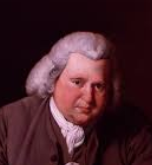
For if we may compare infinities, it would seem to require a greater infinity of power to cause the causes of effects, than to cause the effects themselves. This idea is analogous to the improving excellence observable in every part of the creation; such as in the progressive increase of the solid or habitable parts of the earth from water; and in the progressive increase of the wisdom and happiness of its inhabitants; and is consonant to the idea of our present situation being a state of probation, which by our exertion we may improve, and are consequently responsible for our actions.
▼
Source
Zoönomia, vol. 1 (1794).
4 months ago
Liberating tolerance, then, would mean intolerance against movements from the Right, and toleration of movements from the Left.
▼
Source
An Essay on Liberation Beacon Press, 1969, p. 109[http://www.marcuse.org/herbert/pubs/60spubs/65repressivetolerance.htm]
4 months ago
What is the use of working toward a lawful civic constitution among individuals, i.e., toward the creation of a commonwealth? The same unsociability which drives man to this causes any single commonwealth to stand in unrestricted freedom in relation to others; consequently, each of them must expect from another precisely the evil which oppressed the individuals and forced them to enter into a lawful civic state. The friction among men, the inevitable antagonism, which is a mark of even the largest societies and political bodies, is used by Nature as a means to establish a condition of quiet and security. Through war, through the taxing and never-ending accumulation of armament, through the want which any state, even in peacetime, must suffer internally, Nature forces them to make at first inadequate and tentative attempts; finally, after devastations, revolutions, and even complete exhaustion, she brings them to that which reason could have told them at the beginning and with far less sad experience, to wit, to step from the lawless condition of savages into a league of nations. In a league of nations, even the smallest state could expect security and justice, not from its own power and by its own decrees, but only from this great league of nations … from a united power acting according to decisions reached under the laws of their united will.
▼
Source
Seventh Thesis
4 months ago
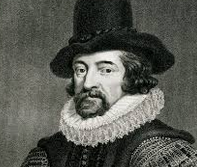
Knowledge, that tendeth but to satisfaction, is but as a courtesan, which is for pleasure, and not for fruit or generation.
▼
Source
Valerius Terminus: Of the Interpretation of Nature (ca. 1603), in Works, Vol. 1, p. 83; The Works of Francis Bacon (1819), Vol. 2, [https://books.google.com/books?id=xgE9AAAAYAAJ&pg=PA133 p. 133]
4 months ago
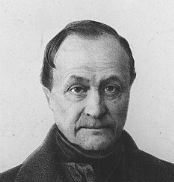
All classes, therefore, must be brought under women’s influence; for all require to be reminded constantly of the great truth that Reason and Activity are subordinate to Feeling. Of their influence upon philosophers I have spoken. If they are men worthy of their mission, they will be conscious of the tendency which their life has to harden them and lead them into useless speculation; and they will feel the need of renewing the ardour of their social sympathy at its native source. Feeling, when it is pure and deep, corrects its own errors, because they clash with the good to which it is ever tending. But erroneous use of the intellectual or practical faculties, cannot be even recognized, much less corrected, without the aid of Affection, which is the only part of our nature that suffers directly from such errors. Therefore whenever either the philosopher or the people deviate from duty, it will be the part of women to remonstrate with them gently, and recall them to the true social principles which are entrusted to their special charge.
▼
Source
p. 253-254
4 months ago
I have needed God every day to defend myself against the abundance of thoughts.
▼
Source
[https://books.google.com/books?id=HPEMMAaSWhQC&lpg=PA73&pg=PA73 P. 73-74] Hong
4 months ago
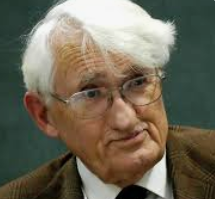
Science can only be comprehended epistemologically, which means as one category of possible knowledge, as long as knowledge is not equated either effusively with the absolute knowledge of a great philosophy or blindly with scientistic self-understanding of the actual business of research.
▼
Source
p. 4
4 months ago
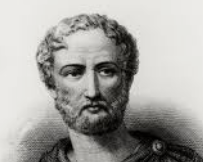
There is nothing to write about, you say. Well, then, write and let me know just this,—that there is nothing to write about; or tell me in the good old style if you are well. That's right. I am quite well.
▼
Source
Letter 11, 1.

4 months ago
Most human beings have an almost infinite capacity for taking things for granted.
▼
Source
"Variations on a Philosopher" in Themes and Variations (1950)
4 months ago
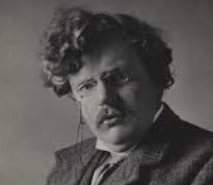
Without education, we are in a horrible and deadly danger of taking educated people seriously.
▼
Source
In The Illustrated London News (1905–1907)
4 months ago
A plant, an animal, the regular order of nature — probably also the disposition of the whole universe — give manifest evidence that they are possible only by means of and according to ideas; that, indeed, no one creature, under the individual conditions of its existence, perfectly harmonizes with the idea of the most perfect of its kind — just as little as man with the idea of humanity, which nevertheless he bears in his soul as the archetypal standard of his actions; that, notwithstanding, these ideas are in the highest sense individually, unchangeably, and completely determined, and are the original causes of things; and that the totality of connected objects in the universe is alone fully adequate to that idea.
▼
Source
B 374
4 months ago
States as great engines move slowly.
▼
Source
Book II
4 months ago
The truth is a trap: you can not get it without it getting you; you cannot get the truth by capturing it, only by its capturing you.
▼
Source
1854

4 months ago
Indeed, it would probably be true to say that the fruit of metaphysical thought is not knowledge but understanding.
▼
Source
Metaphysics, [https://babel.hathitrust.org/cgi/pt?id=uc1.b4410806&seq=22 Introduction, p. 2]
4 months ago
One right-thinking man thinks like all other right-thinking men of his time—that is to say, in most cases, like some wrong-thinking man of another time.
▼
Source
“One and Many,” p. 12
4 months ago
These are the days when the Christian is expected to praise every creed except his own.
▼
Source
In The Illustrated London News (11 August 1928)
4 months ago
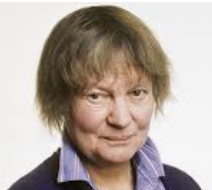
The sin of pride may be a small or a great thing in someone's life, and hurt vanity a passing pinprick or a self-destroying or even murderous obsession. Possibly, more people kill themselves and others out of hurt vanity than out of envy, jealousy, malice or desire for revenge.
▼
Source
The Philosopher's Pupil (1983) p. 76.
4 months ago
Young man! Deny yourself satisfaction (of amusement, of debauchery, of love, etc.), not with the Stoical intention of complete abstinence, but with the refined Epicurean intention of having in view an ever-growing pleasure. This stinginess with the cash of your vital urge makes you definitely richer through the postponement of pleasure, even if you should, for the most part, renounce the indulgence of it until the end of your life. The awareness of having pleasure under your control is, like everything idealistic, more fruitful and more abundant than everything that satisfies the sense through indulgence because it is thereby simultaneously consumed and consequently lost from the aggregate of totality.
▼
Source
Kant, Immanuel (1996), page 54.
4 months ago
Lastly, there are Idols which have immigrated into men's minds from the various dogmas of philosophies, and also from wrong laws of demonstration. These I call Idols of the Theater, because in my judgment all the received systems are but so many stage plays, representing worlds of their own creation after an unreal and scenic fashion.
▼
Source
Aphorism 44
CivilSimian.com created by AxiomaticPanic, CivilSimian, Kalokagathia