
4 months ago
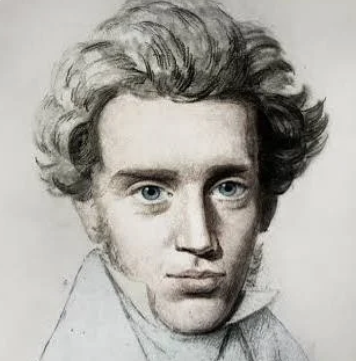
Then he rises from the table and goes out into the Garden of Gethsemane; there he sinks down – oh, that it had happened already! He sinks down, doomed (dodsens) – indeed, was he really any more a dying man (Doende) on the cross than in Gethsemane! If the suffering on the cross was a death agony – ah, this agony in prayer was also a mortal combat; nor was it bloodless, for his sweat fell like drops of blood to the earth.
▼
Source
Soren Kierkegaard, For Self-Examination, Hong p. 63
4 months ago
The creative faculty, the god-power, is not used here with anything less than literalness. When beauty was created by a godly mind, beauty existed, as surely as the paintings of Botticelli or the concerti of Vivaldi exist. When mercy was created, mercy existed. When guilt was created, guilt existed. Out of a meaningless and pointless existence, we have made meaning and purpose; but since this creative act happens only when we relax after great strain, we feel it as 'pouring into us' from elsewhere. Thus, we do not know our own godhood and we are perpetually swindled by those who assure us that it is indeed elsewhere, but they can give us access to it, for a reasonable fee. And when we as a species were ignorant enough to be duped in that way, the swindlers went one step further, invented original sin and other horrors of that sort, and made us even more 'dependent' upon them.
▼
Source
The Historical Illuminatus as spoken by Sigismundo Celine

4 months ago
Our conviction that the world is meaningless is due in part to the fact (discussed in a later paragraph) that the philosophy of meaningless lends itself very effectively to furthering the ends of political and erotic passion; in part to a genuine intellectual error - the error of identifying the world of science, a world from which all meaning has deliberately been excluded, with ultimate reality.
▼
Source
Ch. 14, p. 309 [2012 reprint]
4 months ago
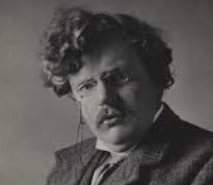
'My country, right or wrong' is a thing that no patriot would think of saying, except in a desperate case. It is like saying, 'My mother, drunk or sober'.
▼
Source
"A Defence of Patriotism"
4 months ago
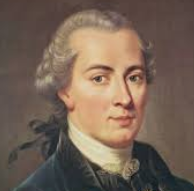
Do what is right, though the world may perish.
▼
Source
This is quoted as Kant in Building Academic Language: Essential Practices for Content Classrooms, Grades 5-12 (2007) by Jeff Zwiers, p. 202, but apparently derives from Kant's arguments in support of the far older Latin proverb Fiat iustitia, pereat mundu

4 months ago
The world's a bubble, and the life of man Less than a span.
4 months ago
Discretion, like the hole in a doughnut, does not exist except as an area left open by a surrounding belt of restriction. It is therefore a relative concept. It always makes sense to ask, "Discretion under which standards?" or "Discretion as to which authority?"
▼
Source
Taking Rights Seriously (1978), p. 31
4 months ago
We live together, we act on, and react to, one another; but always and in all circumstances we are by ourselves. The martyrs go hand in hand into the arena; they are crucified alone. Embraced, the lovers desperately try to fuse their insulated ecstasies into a single self-transcendence; in vain. By its very nature every embodied spirit is doomed to suffer and enjoy in solitude. Sensations, feelings, insights, fancies — all these are private and, except through symbols and at second hand, incommunicable. We can pool information about experiences, but never the experiences themselves. From family to nation, every human group is a society of island universes.
4 months ago
I cannot understand the people who take literature seriously; but I can love them, and I do. Out of my love I warn them to keep clear of this book. It is a collection of crude and shapeless papers upon current or rather flying subjects; and they must be published pretty much as they stand. They were written, as a rule, at the last moment; they were handed in the moment before it was too late, and I do not think that our commonwealth would have been shaken to its foundations if they had been handed in the moment after. They must go out now, with all their imperfections on their head, or rather on mine; for their vices are too vital to be improved with a blue pencil, or with anything I can think of, except dynamite. Their chief vice is that so many of them are very serious; because I had no time to make them flippant. It is so easy to be solemn; it is so hard to be frivolous.
▼
Source
"The Case for the Ephemeral"
4 months ago
There is no good father who would want to resemble our Heavenly Father
▼
Source
No. 51

4 months ago
There are more ideas on earth than intellectuals imagine. And these ideas are more active, stronger, more resistant, more passionate than "politicians" think. We have to be there at the birth of ideas, the bursting outward of their force: not in books expressing them, but in events manifesting this force, in struggles carried on around ideas, for or against them. Ideas do not rule the world. But it is because the world has ideas (and because it constantly produces them) that it is not passively ruled by those who are its leaders or those who would like to teach it, once and for all, what it must think.
▼
Source
As quoted in Michel Foucault (1991) by Didier Eribon, as translated by Betsy Wind, Harvard University Press, p. 282

4 months ago
Burke, could he see our century, never would concede that a consumption-society is the end for which Providence has prepared man.
4 months ago
It is in the social sphere, in the realm of politics and economics, that the Will to Order becomes really dangerous.
▼
Source
Chapter 3 (p. 22)
4 months ago
Marriage is a duel to the death, which no man of honour should decline.
▼
Source
Michael Moon in Part II, ch. IV
4 months ago
Do you see this egg? With this you can topple every theological theory, every church or temple in the world. What is it, this egg, before the seed is introduced into it? An insentient mass. And after the seed has been introduced to into it? What is it then? An insentient mass. For what is the seed itself other than a crude and inanimate fluid? How is this mass to make a transition to a different structure, to sentience, to life? Through heat. And what will produce that heat in it? Motion.
▼
Source
“Conversation Between D’Alembert and Diderot”, as quoted in Selected Writings (1966) edited by Lester G. Crocker, and The Enlightenment and the Intellectual Foundations of Modern Culture (2004) by Louis K Dupré, p. 30 | Variant translation: See this egg.
4 months ago
It is ugly to be punishable, but there is no glory in punishing. Hence the double system of protection that justice has set up between itself and the punishment it imposes.
▼
Source
pp. 10
4 months ago
Integrity has a high psychological and philosophical value, for many people it is a highest value, it associate with health of soul. Dualism, contradiction, torments of hesitation - is something of illness, integrity is health, people strive for it instinctively.
▼
Source
Ch.17 (In Russian, Последняя книга,1999,
4 months ago
Alice in Wonderland fiend.
▼
Source
Walt Disney, as quoted in [http://www.openculture.com/2014/12/when-aldous-huxley-wrote-a-script-for-disneys-alice-in-wonderland.html "When Aldous Huxley Wrote a Script for Disney’s Alice in Wonderland" by Colin Marshall, in Open Culture (8 December 2014)]
4 months ago
To-morrow is the time I get my pay —My uncle’s sword is hanging in the hall —I see a little cloud all pink and grey —Perhaps the rector’s mother will not call —I fancy that I heard from Mr. GallThat mushrooms could be cooked another way —I never read the works of Juvenal —I think I will not hang myself to-day.The world will have another washing day;The decadents decay; the pedants pall;And H. G. Wells has found that children play,And Bernard Shaw discovered that they squall;Rationalists are growing rational —And through thick woods one finds a stream astray,So secret that the very sky seems small —I think I will not hang myself to-day.
▼
Source
A Ballade of Suicide, sts. 2 and 3
4 months ago
France has done more for even English history than England has.
▼
Source
John Stuart Mill. Michelet.On the writing of English history. Complete Works Vol 20. Page 221.http://files.libertyfund.org/pll/pdf/Mill_0223-20_EBk_v7.0.pdf
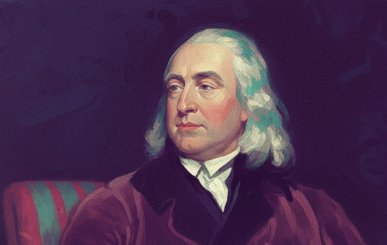
4 months ago
Liberty therefore not being more fit than other words in some of the instances in which it has been used, and not so fit in others, the less the use that is made of it the better. I would no more use the word liberty in my conversation when I could get another that would answer the purpose, than I would brandy in my diet, if my physician did not order me: both cloud the understanding and inflame the passions.
▼
Source
Jeremy Bentham, quoted in P. J. Kelly, Utilitarianism and Distributive Justice: Jeremy Bentham and the Civil Law, Oxford, 1990, p. 96
4 months ago
But let there be no misunderstanding: it is not that a real man, the object of knowledge, philosophical reflection or technological intervention, has been substituted for the soul, the illusion of theologians. The man described for us, whom we are invited to free, is already in himself the effect of a subjection more profound than himself. A 'soul' inhabits him and brings him to existence, which is itself a factor in the mastery that power exercises over the body. The soul is the effect and instrument of a political anatomy; the soul is the prison of the body.

4 months ago
What did today's sacrifices matter: the Universe lay ahead in the future. What did burnings at the stake and massacres matter? The Universe was somewhere else, always somewhere else! And it isn't anywhere: there are only men, men eternally divided.
▼
Source
p. 201
4 months ago
If there is one fact we really can prove, from the history that we really do know, it is that despotism can be a development, often a late development and very often indeed the end of societies that have been highly democratic. A despotism may almost be defined as a tired democracy. As fatigue falls on a community, the citizens are less inclined for that eternal vigilance which has truly been called the price of liberty; and they prefer to arm only one single sentinel to watch the city while they sleep.
4 months ago
The happiness which forms the utilitarian standard of what is right in conduct, is not the agent's own happiness, but that of all concerned. As between his own happiness and that of others, utilitarianism requires him to be as strictly impartial as a disinterested and benevolent spectator. In the golden rule of Jesus of Nazareth, we read the complete spirit of the ethics of utility. To do as one would be done by, and to love one's neighbour as oneself, constitute the ideal perfection of utilitarian morality.
▼
Source
Ch. 2
4 months ago
Parrhesia... in its extreme form... takes place in the "game" of life or death. ...You risk death to tell the truth instead of reposing in the security of a life where... truth goes unspoken. ...He prefers himself as... truth-teller rather than... living... false to himself
4 months ago
Society cares about the individual only in so far as he is profitable. The young know this. Their anxiety as they enter in upon social life matches the anguish of the old as they are excluded from it.
▼
Source
Conclusion, p. 543
4 months ago
Several books I purchased on my trip, among them G. K. Chesterton's The Ballad of the White Horse. Ever read it? It's great.
▼
Source
Robert E. Howard, in a letter to his friend Tevis Clyde Smith (c. September 1927)
4 months ago
The first intellectual operation in which I arrived at any proficiency, was dissecting a bad argument, and finding in what part the fallacy lay: and though whatever capacity of this sort I attained was due to the fact that it was an intellectual exercise in which I was most perseveringly drilled by my father, yet it is also true that the school logic, and the mental habits acquired in studying it, were among the principal instruments of this drilling. I am persuaded that nothing, in modern education, tends so much, when properly used, to form exact thinkers, who attach a precise meaning to words and propositions, and are not imposed on by vague, loose, or ambiguous terms. The boasted influence of mathematical studies is nothing to it; for in mathematical processes, none of the real difficulties of correct ratiocination occur.
▼
Source
([https://archive.org/details/autobiography01mill/page/19/mode/1up p. 19])
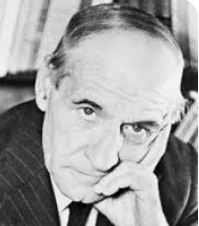
4 months ago
Similarly a work of art vanishes from sight for a beholder who seeks in it nothing but the moving fate of John and Mary or Tristan and Isolde and adjusts his vision to this. Tristan's sorrows are sorrows and can evoke compassion only in so far as they are taken as real. But an object of art is artistic only in so far as it is not real. In order to enjoy Titian's portrait of Charles the Fifth on horseback we must forget that this is Charles the Fifth in person and see instead a portrait — that is, an image, a fiction. The portrayed person and his portrait are two entirely different things; we are interested in either one or the other. In the first case we "live" with Charles the Fifth, in the second we look at an object of art.
▼
Source
"The Dehumanization of Art"
4 months ago
Foucault was often lumped with Derrida. That's very unfair to Foucault. He was a different caliber of thinker altogether.
▼
Source
John Searle, [http://reason.com/archives/2000/02/01/reality-principles-an-intervie/print 2000 interview with Steven R. Postrel and Edward Feser of Reason.com]
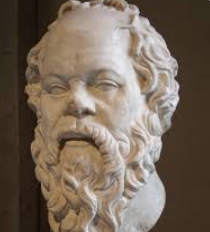
4 months ago
The exchange of one fear or pleasure or pain for another fear or pleasure or pain, which are measured like coins, the greater with the less, is not the exchange of virtue. O, my dear Simmias, is there not one true coin, for which all things ought to exchange?—and that is wisdom; and only in exchange for this, and in company with this, is anything truly bought or sold, whether courage or temperance or justice. ...in the true exchange, there is a purging away of all these things, and temperance, and justice, and courage, and wisdom herself are a purgation of them.

4 months ago
Not every pigeon is a rat with wings. Not every rat with wings is a dove of peace.
4 months ago
But, in my state of mind, this appearance of superiority to illusion added to the effect which Bentham's doctrines produced on me, by heightening the impression of mental power, and the vista of improvement which he did open was sufficiently large and brilliant to light up my life, as well as to give a definite shape to my aspirations.
▼
Source
([https://archive.org/details/autobiography01mill/page/67/mode/1up p. 67])
4 months ago
The mass-man sees in the State an anonymous power, and feeling himself, like it, anonymous, he believes that the State is something of his own. Suppose that in the public life of a country some difficulty, conflict, or problem presents itself, the mass-man will tend to demand that the State intervene immediately and undertake a solution directly with its immense and unassailable resources. This is the gravest danger that to-day threatens civilisation: State intervention; the absorption of all spontaneous social effort by the State.
▼
Source
Chapter XIII: The Greatest Danger, The State
4 months ago
Not that this confusion signifies to them who never care to think about the matter at all, for they have the wit to be well pleased with themselves, however great the turmoil of their ideas. But you, if you are a philosopher, will, I believe, do as I say.
4 months ago
Deleuze is a key figure in postmodern French philosophy. Considering himself an empiricist and a vitalist, his body of work, which rests upon concepts such as multiplicity, constructivism, post-structuralism, difference and desire, stands at a substantial remove from the main traditions of 20th century Continental thought. His thought locates him as an influential figure in present-day considerations of society, creativity and subjectivity. Notably, within his metaphysics he favored a Spinozian concept of a plane of immanence with everything a mode of one substance, and thus on the same level of existence.
▼
Source
Jon Roffe (2002-05) "[http://www.iep.utm.edu/deleuze/#SH3b Gilles Deleuze (1925–1995)]" in Internet Encyclopedia of Philosophy. Last updated: July 12, 2005
4 months ago
A prophecy: The United States of America will become the United States of Banana. And Puerto Rico will be the first half-and-half banana republic state incorporated that will secede from the union. Then will come Liberty Island, then Mississippi Burning, Texas BBQ, Kentucky Fried Chicken—all of them—New York Yankees, Jersey Devils—you name it—will want to break apart—and demand a separation—a divorce. Americans will walk like chickens with their heads cut off.
4 months ago
I thought the predominance of the aristocratic classes, the noble and the rich, in the English Constitution, an evil worth any struggle to get rid of; not on account of taxes, or any such comparatively small inconvenience, but as the great demoralizing agency in the country. Demoralizing, first, because it made the conduct of the government an example of gross public immorality, through the predominance of private over public interests in the State, and the abuse of the powers of legislation for the advantage of classes. Secondly, and in a still greater degree, because the respect of the multitude always attaching itself principally to that which, in the existing state of society, is the chief passport to power; and under English institutions, riches, hereditary or acquired, being the almost exclusive source of political importance; riches, and the signs of riches, were almost the only things really respected, and the life of the people was mainly devoted to the pursuit of them. I thought, that while the higher and richer classes held the power of government, the instruction and improvement of the mass of the people were contrary to the self-interest of those classes, because tending to render the people more powerful for throwing off the yoke: but if the democracy obtained a large, and perhaps the principal, share in the governing power, it would become the interest of the opulent classes to promote their education, in order to ward off really mischievous errors, and especially those which would lead to unjust violations of property. On these grounds I was not only as ardent as ever for democratic institutions, but earnestly hoped that Owenite, St. Simonian, and all other anti-property doctrines might spread widely among the poorer classes; not that I thought those doctrines true, or desired that they should be acted on, but in order that the higher classes might be made to see that they had more to fear from the poor when uneducated, than when educated.
▼
Source
([https://archive.org/details/autobiography01mill/page/171/mode/1up p. 171])
4 months ago
Meditation on any theme, if positive and honest, inevitably separates him who does the meditating from the opinion prevailing around him, from that which … can be called “public” or “popular” opinion.
▼
Source
p. 15

4 months ago
As for life, it is a battle and a sojourning in a strange land; but the fame that comes after is oblivion.
▼
Source
II, 17
4 months ago
Prediction is very difficult, especially about the future.
▼
Source
As quoted in Teaching and Learning Elementary Social Studies (1970) by Arthur K. Ellis, [https://books.google.com/books?id=87iRaPyukx8C&focus=searchwithinvolume&q=%22prediction+is+very+difficult%22 p. 431] | The above quote is also attributed to various h

4 months ago
Animal Liberation is Human Liberation too.
▼
Source
Preface
4 months ago
He who drinks with the greatest appetite is the least inclined to look for a draught which is not at hand.
4 months ago
True equality consists in each drawing benefits from society in exact proportion to his social outlay, that is to his real capacity, to the beneficent use he makes of his abilities. And this equality is the natural foundation of industrial society.
▼
Source
Syst. Indus, VI, 17, as quoted from E.Durkheim, Socialism and Saint-Simon (1958)
4 months ago
liberals such as Mill, and later socialists and feminists of different political sympathies, likened women's situation within marriage and their deprivation of civil rights to the state of slavery. As Mill expressed it in The Subjection of Women, a text that was first published in 1861, the year of the outbreak of the American Civil War, 'no slave is a slave to the same lengths, and in so full a sense of the word, as a wife is'.
▼
Source
Maxine Molyneux Women's Movements in International Perspective: Latin America and Beyond (2000)
4 months ago
Death, like generation, is a secret of Nature.
▼
Source
IV, 5
4 months ago
We do not have to make self- sacrifice a necessary element of altruism. We can regard people as altruists because of the kind of interests they have rather than because they are sacrificing their interests.
▼
Source
Chapter 9: Altruism and Happiness (p. 103)

4 months ago
The accusation of bitterness implicitly acknowledges that a great many people have never been granted the social goods likely to lead to the luxury of cultivating sympathetic emotional lives.
▼
Source
"Being Dismissed: The Politics of Emotional Expression," Hypatia, 9:3 (Summer 1994), p. 49
4 months ago
Each bud flowers but once and each flower has but its minute of perfect beauty; so, in the garden of the soul each feeling has, as it were, its flowering instant, its one and only moment of expansive grace and radiant kingship. Each star passes but once in the night through the meridian over our heads and shines there but an instant; so, in the heaven of the mind each thought touches its zenith but once, and in that moment all its brilliancy and all its greatness culminate. Artist, poet, or thinker, if you want to fix and immortalize your ideas or your feelings, seize them at this precise and fleeting moment, for it is their highest point. Before it, you have but vague outlines or dim presentiments of them. After it you will have only weakened reminiscence or powerless regret; that moment is the moment of your ideal.
▼
Source
30 December 1850
CivilSimian.com created by AxiomaticPanic, CivilSimian, Kalokagathia