

4 months ago
Parrhesia... in its extreme form... takes place in the "game" of life or death. ...You risk death to tell the truth instead of reposing in the security of a life where... truth goes unspoken. ...He prefers himself as... truth-teller rather than... living... false to himself

4 months ago
Society cares about the individual only in so far as he is profitable. The young know this. Their anxiety as they enter in upon social life matches the anguish of the old as they are excluded from it.
▼
Source
Conclusion, p. 543
4 months ago
Several books I purchased on my trip, among them G. K. Chesterton's The Ballad of the White Horse. Ever read it? It's great.
▼
Source
Robert E. Howard, in a letter to his friend Tevis Clyde Smith (c. September 1927)
4 months ago
The first intellectual operation in which I arrived at any proficiency, was dissecting a bad argument, and finding in what part the fallacy lay: and though whatever capacity of this sort I attained was due to the fact that it was an intellectual exercise in which I was most perseveringly drilled by my father, yet it is also true that the school logic, and the mental habits acquired in studying it, were among the principal instruments of this drilling. I am persuaded that nothing, in modern education, tends so much, when properly used, to form exact thinkers, who attach a precise meaning to words and propositions, and are not imposed on by vague, loose, or ambiguous terms. The boasted influence of mathematical studies is nothing to it; for in mathematical processes, none of the real difficulties of correct ratiocination occur.
▼
Source
([https://archive.org/details/autobiography01mill/page/19/mode/1up p. 19])
4 months ago
Similarly a work of art vanishes from sight for a beholder who seeks in it nothing but the moving fate of John and Mary or Tristan and Isolde and adjusts his vision to this. Tristan's sorrows are sorrows and can evoke compassion only in so far as they are taken as real. But an object of art is artistic only in so far as it is not real. In order to enjoy Titian's portrait of Charles the Fifth on horseback we must forget that this is Charles the Fifth in person and see instead a portrait — that is, an image, a fiction. The portrayed person and his portrait are two entirely different things; we are interested in either one or the other. In the first case we "live" with Charles the Fifth, in the second we look at an object of art.
▼
Source
"The Dehumanization of Art"
4 months ago
Foucault was often lumped with Derrida. That's very unfair to Foucault. He was a different caliber of thinker altogether.
▼
Source
John Searle, [http://reason.com/archives/2000/02/01/reality-principles-an-intervie/print 2000 interview with Steven R. Postrel and Edward Feser of Reason.com]
4 months ago
The exchange of one fear or pleasure or pain for another fear or pleasure or pain, which are measured like coins, the greater with the less, is not the exchange of virtue. O, my dear Simmias, is there not one true coin, for which all things ought to exchange?—and that is wisdom; and only in exchange for this, and in company with this, is anything truly bought or sold, whether courage or temperance or justice. ...in the true exchange, there is a purging away of all these things, and temperance, and justice, and courage, and wisdom herself are a purgation of them.

4 months ago
Not every pigeon is a rat with wings. Not every rat with wings is a dove of peace.
4 months ago
But, in my state of mind, this appearance of superiority to illusion added to the effect which Bentham's doctrines produced on me, by heightening the impression of mental power, and the vista of improvement which he did open was sufficiently large and brilliant to light up my life, as well as to give a definite shape to my aspirations.
▼
Source
([https://archive.org/details/autobiography01mill/page/67/mode/1up p. 67])
4 months ago
The mass-man sees in the State an anonymous power, and feeling himself, like it, anonymous, he believes that the State is something of his own. Suppose that in the public life of a country some difficulty, conflict, or problem presents itself, the mass-man will tend to demand that the State intervene immediately and undertake a solution directly with its immense and unassailable resources. This is the gravest danger that to-day threatens civilisation: State intervention; the absorption of all spontaneous social effort by the State.
▼
Source
Chapter XIII: The Greatest Danger, The State
4 months ago
Not that this confusion signifies to them who never care to think about the matter at all, for they have the wit to be well pleased with themselves, however great the turmoil of their ideas. But you, if you are a philosopher, will, I believe, do as I say.
4 months ago
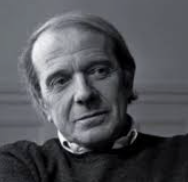
Deleuze is a key figure in postmodern French philosophy. Considering himself an empiricist and a vitalist, his body of work, which rests upon concepts such as multiplicity, constructivism, post-structuralism, difference and desire, stands at a substantial remove from the main traditions of 20th century Continental thought. His thought locates him as an influential figure in present-day considerations of society, creativity and subjectivity. Notably, within his metaphysics he favored a Spinozian concept of a plane of immanence with everything a mode of one substance, and thus on the same level of existence.
▼
Source
Jon Roffe (2002-05) "[http://www.iep.utm.edu/deleuze/#SH3b Gilles Deleuze (1925–1995)]" in Internet Encyclopedia of Philosophy. Last updated: July 12, 2005
4 months ago
A prophecy: The United States of America will become the United States of Banana. And Puerto Rico will be the first half-and-half banana republic state incorporated that will secede from the union. Then will come Liberty Island, then Mississippi Burning, Texas BBQ, Kentucky Fried Chicken—all of them—New York Yankees, Jersey Devils—you name it—will want to break apart—and demand a separation—a divorce. Americans will walk like chickens with their heads cut off.
4 months ago
I thought the predominance of the aristocratic classes, the noble and the rich, in the English Constitution, an evil worth any struggle to get rid of; not on account of taxes, or any such comparatively small inconvenience, but as the great demoralizing agency in the country. Demoralizing, first, because it made the conduct of the government an example of gross public immorality, through the predominance of private over public interests in the State, and the abuse of the powers of legislation for the advantage of classes. Secondly, and in a still greater degree, because the respect of the multitude always attaching itself principally to that which, in the existing state of society, is the chief passport to power; and under English institutions, riches, hereditary or acquired, being the almost exclusive source of political importance; riches, and the signs of riches, were almost the only things really respected, and the life of the people was mainly devoted to the pursuit of them. I thought, that while the higher and richer classes held the power of government, the instruction and improvement of the mass of the people were contrary to the self-interest of those classes, because tending to render the people more powerful for throwing off the yoke: but if the democracy obtained a large, and perhaps the principal, share in the governing power, it would become the interest of the opulent classes to promote their education, in order to ward off really mischievous errors, and especially those which would lead to unjust violations of property. On these grounds I was not only as ardent as ever for democratic institutions, but earnestly hoped that Owenite, St. Simonian, and all other anti-property doctrines might spread widely among the poorer classes; not that I thought those doctrines true, or desired that they should be acted on, but in order that the higher classes might be made to see that they had more to fear from the poor when uneducated, than when educated.
▼
Source
([https://archive.org/details/autobiography01mill/page/171/mode/1up p. 171])
4 months ago
Meditation on any theme, if positive and honest, inevitably separates him who does the meditating from the opinion prevailing around him, from that which … can be called “public” or “popular” opinion.
▼
Source
p. 15

4 months ago
As for life, it is a battle and a sojourning in a strange land; but the fame that comes after is oblivion.
▼
Source
II, 17
4 months ago
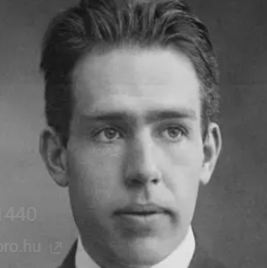
Prediction is very difficult, especially about the future.
▼
Source
As quoted in Teaching and Learning Elementary Social Studies (1970) by Arthur K. Ellis, [https://books.google.com/books?id=87iRaPyukx8C&focus=searchwithinvolume&q=%22prediction+is+very+difficult%22 p. 431] | The above quote is also attributed to various h

4 months ago
Animal Liberation is Human Liberation too.
▼
Source
Preface
4 months ago
He who drinks with the greatest appetite is the least inclined to look for a draught which is not at hand.
4 months ago
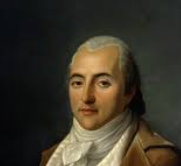
True equality consists in each drawing benefits from society in exact proportion to his social outlay, that is to his real capacity, to the beneficent use he makes of his abilities. And this equality is the natural foundation of industrial society.
▼
Source
Syst. Indus, VI, 17, as quoted from E.Durkheim, Socialism and Saint-Simon (1958)
4 months ago
liberals such as Mill, and later socialists and feminists of different political sympathies, likened women's situation within marriage and their deprivation of civil rights to the state of slavery. As Mill expressed it in The Subjection of Women, a text that was first published in 1861, the year of the outbreak of the American Civil War, 'no slave is a slave to the same lengths, and in so full a sense of the word, as a wife is'.
▼
Source
Maxine Molyneux Women's Movements in International Perspective: Latin America and Beyond (2000)
4 months ago
Death, like generation, is a secret of Nature.
▼
Source
IV, 5
4 months ago
We do not have to make self- sacrifice a necessary element of altruism. We can regard people as altruists because of the kind of interests they have rather than because they are sacrificing their interests.
▼
Source
Chapter 9: Altruism and Happiness (p. 103)

4 months ago
The accusation of bitterness implicitly acknowledges that a great many people have never been granted the social goods likely to lead to the luxury of cultivating sympathetic emotional lives.
▼
Source
"Being Dismissed: The Politics of Emotional Expression," Hypatia, 9:3 (Summer 1994), p. 49
4 months ago
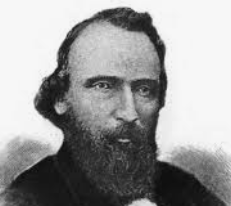
Each bud flowers but once and each flower has but its minute of perfect beauty; so, in the garden of the soul each feeling has, as it were, its flowering instant, its one and only moment of expansive grace and radiant kingship. Each star passes but once in the night through the meridian over our heads and shines there but an instant; so, in the heaven of the mind each thought touches its zenith but once, and in that moment all its brilliancy and all its greatness culminate. Artist, poet, or thinker, if you want to fix and immortalize your ideas or your feelings, seize them at this precise and fleeting moment, for it is their highest point. Before it, you have but vague outlines or dim presentiments of them. After it you will have only weakened reminiscence or powerless regret; that moment is the moment of your ideal.
▼
Source
30 December 1850
4 months ago
It's unfortunate that this has happened. No. It's fortunate that this has happened and I've remained unharmed by it—not shattered by the present or frightened of the future. It could have happened to anyone. But not everyone could have remained unharmed by it.
▼
Source
IV, 49a

4 months ago
Reflect upon the providence and wisdom of God in all created things and praise Him in them all.
▼
Source
Maxim 35, p. 258
4 months ago
The landed men are the true owners of our political vessel, the moneyed men are no more than passengers in it.
▼
Source
Some Reflections on the Present State of the Nation (1753)
4 months ago
Reverence the gods, and help men. Short is life.
▼
Source
VI, 30

4 months ago
I came hither solely with the design to simplify my way of life and to secure the independence through which I could be enabled to remain true to myself.
▼
Source
Letter to Goethe, (1828).

4 months ago
And thus to the present moment they affirm that their Christ is not come, because He is not come in majesty; while they are ignorant of the fact that He was first to come in humility.
▼
Source
Chapter XIV.—Conclusion. Clue to the Error of the Jews.
4 months ago
A patriot king will neither neglect, nor sacrifice his country's interest. No other interest, neither a foreign nor a domestic, neither a public nor a private, will influence his conduct in government... To give ease and encouragement to manufactory at home, to assist and protect trade abroad, to improve and keep in heart the national colonies, like so many farms of the mother-country, will be principal and constant parts of the attention of such a prince.
▼
Source
pp. 190-191
4 months ago
The function [of objective thinking] is to reduce all phenomena which bear witness to the union of subject and world, putting in their place the clear idea of the object as in itself and of the subject as pure consciousness. It therefore severs the links which unite the thing and the embodied subject, leaving only sensible qualities to make up our world (to the exclusion of the modes of appearance which we have described), and preferably visual qualities, because these give the impression of being autonomous, and because they are less directly linked to our body and present us with an object rather than introducing us into an atmosphere. But in reality all things are concretions of a setting, and any explicit perception of a thing survives in virtue of a previous communication with a certain atmosphere.
▼
Source
p. 374
4 months ago
Look round at the courses of the stars, as if thou wert going along with them; and constantly consider the changes of the elements into one another; for such thoughts purge away the filth of the terrene life.
▼
Source
VII, 47
4 months ago
There is a science of Dynamics in man's fortunes and nature, as well as of Mechanics. There is a science which treats of, and practically addresses, the primary, unmodified forces and energies of man, the mysterious springs of Love, and Fear, and Wonder, of Enthusiasm, Poetry, Religion, all which have a truly vital and infinite character; as well as a science which practically addresses the finite, modified developments of these, when they take the shape of immediate “motives,” as hope of reward, or as fear of punishment.
4 months ago
Hungary conquered and in chains has done more for freedom and justice than any people for twenty years. But for this lesson to get through and convince those in the West who shut their eyes and ears, it was necessary, and it can be no comfort to us, for the people of Hungary to shed so much blood which is already drying in our memories. In Europe's isolation today, we have only one way of being true to Hungary, and that is never to betray, among ourselves and everywhere, what the Hungarian heroes died for, never to condone, among ourselves and everywhere, even indirectly, those who killed them. It would indeed be difficult for us to be worthy of such sacrifices.
▼
Source
The Blood of the Hungarians (1957)

4 months ago
For men use, if they have an evil turn, to write it in marble: and whoso doth us a good turn we write it in dust.
▼
Source
Richard III and His Miserable End (1543)
4 months ago
Geometry was invented that we might expeditiously avoid, by drawing Lines, the Tediousness of Computation. Therefore these two Sciences ought not to be confounded. The Antients did so industriously distinguish them from one another, that they never introduc'd Arithmetical Terms into Geometry. And the Moderns, by confounding both, have lost the Simplicity in which all the Elegancy of Geometry consists. Wherefore that is Arithmetically more simple which is determin'd by the more simple Æquations, but that is Geometrically more simple which is determin'd by the more simple drawing of Lines; and in Geometry, that ought to be reckon'd best which is Geometrically most simple. Wherefore, I ought not to be blamed, if with that Prince of Mathematicians, Archimedes and other Antients, I make use of the Conchoid for the Construction of solid Problems.
4 months ago
The philosopher says that God's knowledge is the measure of things, and that things are the measure of man's knowledge.
▼
Source
p. 77.
4 months ago
Suppose that thou hast detached thyself from the natural unity... yet here there is this beautiful provision, that it is in thy power again to unite thyself. God has allowed this to no other part, after it has been separated and cut asunder, to come together again. ...he has distinguished man, for he has put it in his power not to be separated at all from the universal ...he has allowed him to be returned and to be united and to resume his place as a part.
▼
Source
VIII, 34

4 months ago
True confessions are written with tears only. But my tears would drown the world, as my inner fire would reduce it to ashes.
4 months ago
With stupidity and sound digestion man may front much.
▼
Source
Bk. II, ch. 4.
4 months ago
Those who need myths are indeed poor. Here the gods serve as beds or resting places as the day races across the sky.
▼
Source
"Noces à Tipasa"

4 months ago
Their philosophy is like a church, that is all discipline, and no doctrine
4 months ago
Ideologies capable of influencing and winning the acceptance of great masses of people are an indispensable verbal cement holding the fabric of any given type of society together.
▼
Source
p. 25; as cited in: Thomas Diefenbach (2009) Management and the Dominance of Managers. p. 138
4 months ago
Turn thy thoughts now to the consideration of thy life, thy life as a child, as a youth, thy manhood, thy old age, for in these also every change was a death. Is this anything to fear?
▼
Source
IX, 21
4 months ago
The fear of your own solitude, of its vast surface and its infinity... Remorse is the voice of solitude. And what does this whispering voice say? Everything in us that is not human anymore.
4 months ago
No man lives without jostling and being jostled; in all ways he has to elbow himself through the world, giving and receiving offense.
4 months ago
If the world were clear, art would not exist.
4 months ago
As we know the sun doth not only dispense heat but some other secret influx, so did God also in the creation, and from Him the sun and all the stars received what they have, for God Himself is a supernatural sun or fire, according to that oracle of Zoroaster: "That Architect Who built up the cosmos by His unaided power was Himself another orb of fire."
CivilSimian.com created by AxiomaticPanic, CivilSimian, Kalokagathia