
4 months ago
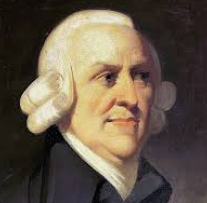
The man who employs either his labour or his stock in a grater variety of ways than his situation renders necessary, can never hurt his neighbour by underselling him. He may hurt himself, and he generally does so. Jack of all trades will never be rich, says the proverb. But the law ought always to trust people with the care of their own interest, as in their local situations they must generally be able to judge better of it than the legislator can do.
▼
Source
Chapter V, Digression, p. 572.
4 months ago
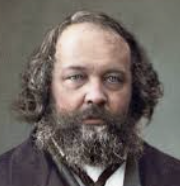
Do not believe, Gentlemen, that I recoil before the frank explanation of my socialist ideas. I could ask nothing better than to defend them here. But I do not think that the regulatory fifteen minutes would suffice for this debate. However there is one point, one accusation hurled against me that I cannot leave without a response. Because I demand the economic and social equalization of classes and individuals, because with the Congress of laborers at Brussels, I have declared myself a partisan of collective property, I have been reproached for being a communist. What difference, they have said to me, do you intend between communism and collectivity? I am astonished, truly, that Mr. Chaudey does not understand that difference, he, the testamentary executor of Proudhon! I detest communism, because it is the negation of liberty and because I can conceive nothing human without liberty. I am not a communist because communism concentrates and causes all the power of society to be concentrated in the State, because it leads necessarily to the centralization of property in the hands of the State, while I want the abolition of the State, — the radical extirpation of that principle of authority and of the guardianship of the State, which under the pretext of moralizing and civilizing men, have thus far enslaved, oppressed, exploited and depraved them, I want the organization of society and of collective or social property from bottom to top, by the way of free association, and not from top to bottom by means of any sort of authority. Wishing the abolition of the State, I want the abolition of individually hereditary property, which is only an institution of the State, nothing but a consequence of the very principle of the State. That is the sense in which, Gentlemen, I am collectivist and not at all communist.
4 months ago
When the British came there was, throughout India, a system of communal schools, managed by the village communities. The agents of the East India Company destroyed these village communities, and took steps to replace the schools; even today, after a century of effort to restore them, they stand at only 66% of their number a hundred years ago. Hence, the 93 % illiteracy of India. (source: The Case for India - By Will Durant Simon and Schuster, New York. 1930 p.44).

4 months ago
It must be said that charity can, in no way, exist along with mortal sin.
▼
Source
[http://dhspriory.org/thomas/QDdeVirtutibus2.htm#6 Quaestiones disputatae: De caritate] (Disputed Questions: On Charity, c. 1270)

4 months ago
Every good thing is gentle and consistent, progressing in good order and not going beyond what is right.
▼
Source
2, 39, 4

4 months ago
To be ignorant of the past is to remain a child.
▼
Source
Cicero

4 months ago
Service of the people by sciences and arts will only exist when men live with the people and as the people live, and without presenting any claims will offer their scientific and artistic services, which the people will be free to accept or decline as they please.

4 months ago
It is as absurd to expect members of philosophy departments to be philosophers as it is to expect members of art departments to be artists.
▼
Source
“What is liberal education,” p. 7


4 months ago
I also think it's important for us to think forward and to imagine future history in a way that is not restrained by our own lifetimes. Oftentimes people say, well, if it takes that long, I'll be dead. So what? Everybody dies, right? And if people who were involved in the struggle against slavery-I'm thinking about people like Frederick Douglass, or Ida B. Wells in the struggle against lynching if they had that very narrow individualistic sense of their own contributions, where would we be today? And so we have to learn how to imagine the future in terms that are not restricted to our own lifetimes.
4 months ago
The evident justice and utility of the foregoing maxims have recommended them more or less to the attention of all nations.
▼
Source
Chapter II, Part II, p. 894.
4 months ago
This man was born not under an ordinary star but under a comet.
▼
Source
Alexander Herzen, as quoted in The Doctrine of Anarchism of Michael A. Bakunin (1968) by Eugène Pyziur, p. 1
4 months ago
Wittgenstein, Elizabeth Taylor, Bertrand Russell, Thomas Merton, Yogi Berra, Allen Ginsberg, Harry Wolfson, Thoreau, Casey Stengel, The Lubavitcher Rebbe, Picasso, Moses, Einstein, Hugh Hefner, Socrates, Henry Ford, Lenny Bruce, Baba Ram Dass, Gandhi, Sir Edmund Hillary, Raymond Lubitz, Buddha, Frank Sinatra, Columbus, Freud, Norman Mailer, Ayn Rand, Baron Rothschild, Ted Williams, Thomas Edison, H.L. Mencken, Thomas Jefferson, Ralph Ellison, Bobby Fischer, Emma Goldman, Peter Kropotkin, you, and your parents. Is there really one kind of life which is best for each of these people?
▼
Source
Ch. 10 : A Framework for Utopia; The Framework, p. 310
4 months ago
The attitude of the ruling classes to the laborers is that of a man who has felled his adversary to the earth and holds him down, not so much because he wants to hold him down, as because he knows that if he let him go, even for a second, he would himself be stabbed, for his adversary is infuriated and has a knife in his hand. And therefore, whether their conscience is tender or the reverse, our rich men cannot enjoy the wealth they have filched from the poor as the ancients did who believed in their right to it. Their whole life and all their enjoyments are embittered either by the stings of conscience or by terror.
▼
Source
Chapter V, Contradiction Between our Life and our Christian Conscience

4 months ago
Class instinct is subjective and spontaneous. ... To arrive at proletarian class positions, the class instinct of proletarians only needs to be educated; the class instinct of the petty bourgeoisie, and hence of intellectuals, has, on the contrary, to be revolutionized.
▼
Source
p. 2
4 months ago
For what are they all in their high conceit, When man in the bush with God may meet?
▼
Source
Good-bye, st. 4
4 months ago
It suffices to remember how many sorrows he is spared who no longer thinks too many thoughts, how much more "in accordance with reality" a person behaves when he affirms that the real is the right, how much more capacity to use the machinery falls to the person who integrates himself with it uncomplainingly.
▼
Source
p. 286

4 months ago
How comes it to pass then, that we appear such Cowards in reasoning, and are so afraid to stand the Test of Ridicule?
▼
Source
Vol. 1, p. 11; "A Letter Concerning Enthusiasm".
4 months ago
The political is the most intense and extreme antagonism, and every concrete antagonism becomes that much more political the closer it approaches the most extreme point, that of the friend-enemy grouping.
4 months ago
All this may seem somewhat elementary. But consider what Adam Smith has done, with his impetus of self-interest and his regulator of competition. First, he has explained how prices are kept from ranging arbitrarily away from the actual cost of producing a good. Second, he has explained how society can induce its producers of commodities to provide it with what it wants. Third, he has pointed out why high prices are a self-curing disease, for they cause production in those lines to increase. And finally, he has accounted for a basic similarity of incomes at each level of the great producing strata of the nation. In a word, he has found in the mechanism of the market a self-regulating system for society’s orderly provisioning.
▼
Source
Robert Heilbroner, The Worldly Philosophers 7th ed. (1999), Chapter III. The Wonderful World of Adam Smith
4 months ago
I agree with Paul that love is more important than faith and hope; but so are honesty, integrity, and moral courage. The world needs less faith and more love and nobility.
▼
Source
Preface
4 months ago
The appreciation of the merits of art (of the emotions it conveys) depends upon an understanding of the meaning of life, what is seen as good and evil. Good and evil are defined by religions.

4 months ago
That it is a perfect absurdity to suppose that any body of men would ever take a man's money without his consent, for any such object as they profess to take it for, viz., that of protecting him; for why should they wish to protect him, if he does not wish them to do so? To suppose that they would do so, is just as absurd as it would be to suppose that they would take his money without his consent, for the purpose of buying food or clothing for him, when he did not want it.
4 months ago
He is great who is what he is from Nature, and who never reminds us of others.
▼
Source
Uses of Great Men
4 months ago
The concept of positivity in itself, in abstracto, has become part and parcel of the ideology today. ... Critique has started to become suspect, regardless of its content.
▼
Source
p. 23

4 months ago
Now Euxenus realized that he was attached to a lofty ideal, and asked him at what point he would begin it. Apollonius answered: "At the point at which physicians begin, for they, by purging the bowels of their patients prevent some from being ill at all, and heal others." And having said this he declined to live upon a flesh diet, on the ground that it was unclean, and also that it made the mind gross; so he partook only of dried fruits and vegetables, for he said that all the fruits of the earth are clean. And of wine he said that it was a clean drink because it is yielded to men by so well-domesticated a plant as the vine; but he declared that it endangered the mental balance and system and darkened, as with mud, the ether which is in the soul. After then having thus purged his interior, he took to walking without shoes by way of adornment and clad himself in linen raiment, declining to wear any animal product.
▼
Source
Philostratus, Life of Apollonius, translation by F.C. Conybeare, Book 1, § 8. [http://www.livius.org/sources/content/philostratus-life-of-apollonius/ Full text online at Livius.org].
4 months ago
How absurd it must seem for an immortal soul to be destined for Heaven or Hell, and yet be sitting in a kitchen, as a maid, or to see oneself objectified as a mechanic! how falsely the usual sunrise waked us, the clock dial, the city street the job! How wrongfully people find themselves in these systems — our time isn't there, our space isn't there, our space isn't even here... the whole social story of waking, and certainly the day of the mechanic, is false.
▼
Source
Traces (1930), p. 27
4 months ago
Thus, the original core components of classical political economy enumerated in Smith's Wealth of Nations, and transformed in the economic theorizing of later classicals – that is, until John Maynard Keynes chose in The General Theory of Employment, Interest and Money (1936) to alter retrospectively the referent of this denotation to include any “orthodox” (non-Marxist) economist who was a quantity theorist – comprised a set of conceptual tools for analyzing and understanding the operation of market and later capitalist production and exchange.
▼
Source
Shannon C. Stimson, "Classical Political Economy", in Coole, Diana H.; Gibbons, Michael; Ellis, Elisabeth et al., The encyclopedia of political thought (2014)
4 months ago
So on matters of faith, continued the Chinaman, the student of Confucius, it is pride that causes error and discord among men. As with the sun, so it is with God. Each man wants to have a special God of his own, or at least a special God for his native land. Each nation wishes to confine in its own temples Him, whom the world cannot contain. 'Can any temple compare with that which God Himself has built to unite all men in one faith and one religion?... Where are there any records of God's goodness so easy to understand as the blessings which God has strewn abroad for man’s happiness? Where is there any book of the law so clear to each man as that written in his heart? What sacrifices equal the self-denials which loving men and women make for one another? And what altar can be compared with the heart of a good man, on which God Himself accepts the sacrifice? 'The higher a man's conception of God, the better will he know Him. And the better he knows God, the nearer will he draw to Him, imitating His goodness, His mercy, and His love of man.... So spoke the Chinaman, the student of Confucius; and all who were present in the coffee-house were silent, and disputed no more as to whose faith was the best.
▼
Source
Part VI:The Coffee-House of Surat (1893) Adaptions from the French

4 months ago
It is forbidden to dwell in the vicinity of any of those with an evil tongue, and all the more to sit with them and listen to their words.
▼
Source
Chapter 7, Section 6, pp. 51-52
4 months ago
Art is a jealous mistress.
▼
Source
Wealth

4 months ago
As Voltaire once remarked, "It is the privilege of the real genius, especially one who opens up a new path, to make great mistakes with impunity." The Copernican revolution brought about by Kant was, I think, the most important single turning point in the history of philosophy. For that reason there has been, ever since, a watershed in understanding between those who have taken his work on board and those who have not. For a good many of the problems he uncovered, the solutions he put forward have not stood the test of time, but his uncovering of the problems remains the most illuminating thing a philosopher has ever done. Because of the fundamental character of these problems, and because Kant did not solve them, confronting them has been the most important challenge to philosophy ever since.
▼
Source
p. 157
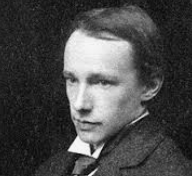
4 months ago
It is raining but I do not believe that it is.
▼
Source
One of the statements presenting what has become known as "Moore's paradox, from a famous lecture concerning logical inconsistency in 1942, as quoted in Reason in Theory and Practice (1969) by Roy Edgley, p. 71; in which he also stated "It is not raining,
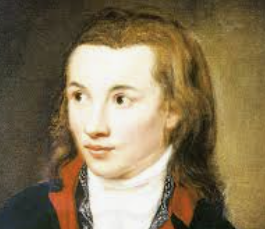
4 months ago
Before abstraction everything is one, but one like chaos; after abstraction everything is united again, but this union is a free binding of autonomous, self-determined beings. Out of a mob a society has developed, chaos has been transformed into a manifold world.
▼
Source
Fragment No. 95
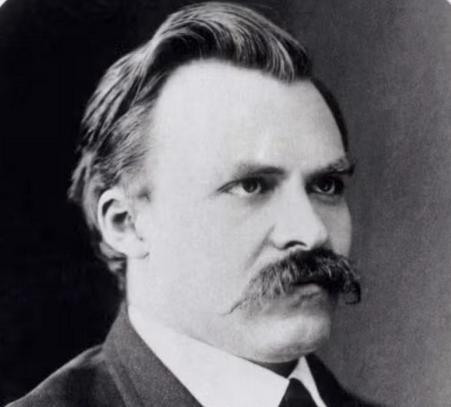
4 months ago
Best is not to be ... second-best is to die quickly
▼
Source
page 37-36
4 months ago
Giving alms is only a virtuous deed when you give money that you yourself worked to get.
▼
Source
p. 83
4 months ago
Know that this Universe, in its entirety, is nothing else but one individual being; that is to say, the outermost heavenly sphere, together with all included therein, is as regards individuality beyond all question a single being like Said and Omar. The variety of its substances—I mean the substances of that sphere and all its component parts—is like the variety of the substances of a human being: just as, e.g., Said is one individual, consisting of various solid substances, such as flesh, bones, sinews of various humours, and of various spiritual elements; in like manner this sphere in its totality is composed of the celestial orbs, the four elements and their combinations; there is no vacuum whatever therein, but the whole space is filled up with matter. Its centre is occupied by the earth, earth is surrounded by water, air encompasses the water, fire envelopes the air, and this again is enveloped by the fifth substance (quintessence). These substances form numerous spheres, one being enclosed within another so that no intermediate empty space, no vacuum, is left. One sphere surrounds and closely joins the other. All the spheres revolve with constant uniformity, without acceleration or retardation; that is to say, each sphere retains its individual nature as regards its velocity and the peculiarity of its motion; it does not move at one time quicker, at another slower. Compared with each other, however, some of the spheres move with less, others with greater velocity. The outermost, all-encompassing sphere, revolves with the greatest speed; it completes its revolution in one day, and causes every thing to participate in its motion, just as every particle of a thing moves when the entire body is in motion; for all existing beings stand in the same relation to that sphere as a part of a thing stands to the whole. These spheres have not a common centre; the centres of some of them are identical with the centre of the Universe, while those of the rest are different from it. Some of the spheres have a motion independent of that of the whole Universe, constantly revolving from East to West, while other spheres move from West to East. The stars contained in those spheres are part of their respective orbits; they are fixed in them, and have no motion of their own, but participating in the motion of the sphere of which they are a part, they themselves appear to move. The entire substance of this revolving fifth element is unlike the substance of those bodies which consist of the other four elements, and are enclosed by the fifth element.
4 months ago
'Tis very certain that each man carries in his eye the exact indication of his rank in the immense scale of men, and we are always learning to read it. A complete man should need no auxiliaries to his personal presence.
▼
Source
Behavior
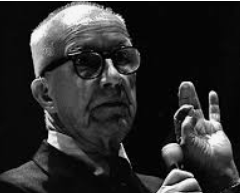
4 months ago
I find all of our world society is operating exclusively in parts. We know this because the word synergy is unknown popularly and it is the only word that means “behavior of wholes unpredicted by behavior of their parts.” This proves that society does not even think that it has a need for such a word. This discloses that society does not think that there are behaviors of wholes unpredicted by the parts. It thinks statistics and probability are all that we need but if “probability” and “statistics” were of any power at all we could not have a stock market or gambling for we would know exactly how things are coming out and no one would bet against the probability.
4 months ago
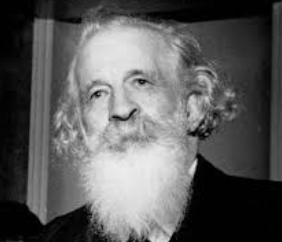
If I were asked to name the chief benefit of the house, I should say: the house shelters day-dreaming, the house protects the dreamer, the house allows one to dream in peace.
▼
Source
Ch. 1
4 months ago
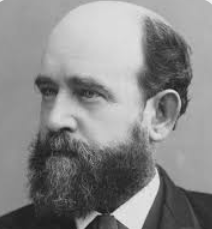
A great change is going on all over the civilized world similar to that infeudation which, in Europe, during the rise of the feudal system, converted free proprietors into vassals, and brought all society into subordination to a hierarchy of wealth and privilege. Whether the new aristocracy is hereditary or not makes little difference. Chance alone may determine who will get the few prizes of a lottery. But it is not the less certain that the vast majority of all who take part in it must draw blanks. The forces of the new era have not yet had time to make status hereditary, but we may clearly see that when the industrial organization compels a thousand workmen to take service under one master, the proportion of masters to men will be but as one to a thousand, though the one may come from the ranks of the thousand. "Master"! We don't like the word. It is not American! But what is the use of objecting to the word when we have the thing? The man who gives me employment, which I must have or suffer, that man is my master, let me call him what I will.
▼
Source
Ch. 5 : The March of Concentration
4 months ago
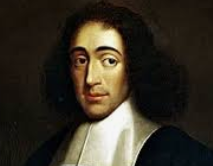
Nature offers nothing that can be called this man's rather than another's ; but, under nature, everything belongs to all — that is, they have authority to claim it for themselves. But, under dominion, where it is by common law determined what belongs to this man, and what to that, he is called just who has a constant will to render to every man his own, but he, unjust who strives, on the contrary, to make his own that which belongs to another.
▼
Source
Ch. 2, Of Natural Right
4 months ago
Sleep is for the inhabitants of Planets only. In another time, Man will sleep and wake continually at once. The greater part of our Body, of our Humanity itself, yet sleeps a deep sleep.
4 months ago
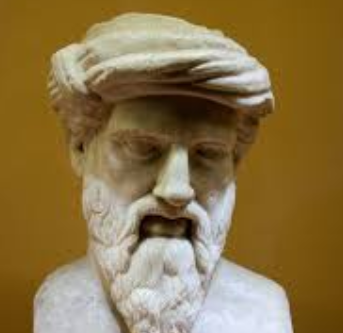
When going to the temple to adore Divinity neither say nor do any thing in the interim pertaining to the common affairs of life.
▼
Source
Symbol 1
4 months ago
... the republic of creative minds: each giant calling to his brother through the desolate intervals of time. And undisturbed by the wanton noises of the dwarfs that creep past beneath them, their high spirit-converse continues.
▼
Source
p. 32
4 months ago
It was Jane Addams, the founder of Hull House in Chicago, who most consistently carried Tolstoyan ideas into practice. Addams had visited Tolstoy in Russia and was a lifelong admirer of his work. She well understood the practical implications of his ideas, which she expressed as follows: "Tolstoy would make non-resistance aggressive. He would carry over into the reservoirs of moral influence all the strength which is now spent in coercion and resistance." In his spirit, she advocated "a newer humanitarianism," aggressive in its pursuit of social welfare and international in its reach, as a moral equivalent for war. Addams steadfastly carried these convictions into practice in her peace activities during World War I and her leadership in the postwar Women's International League for Peace and Freedom. She suffered ostracism, vilification and isolation for her pacifism, but she was one of a handful of people who kept the idea and tradition alive in a time of conformity and reaction.
▼
Source
Gerda Lerner, Why History Matters: Life and Thought (1997)
4 months ago
We suffer from the evils which we, by our own free will, inflict on ourselves and ascribe them to God, who is far from being connected with them!
▼
Source
Ch.12
4 months ago
Some of your hurts you have cured, And the sharpest you still have survived, But what torments of grief you endured From evils which never arrived!
▼
Source
Borrowing From the French
4 months ago
Synergy means behavior of integral, aggregate, whole systems unpredicted by behaviors of any of their components or subassemblies of their components taken separately from the whole.
▼
Source
[http://www.rwgrayprojects.com/synergetics/s01/p0100.html 102.00]
4 months ago
He was curious and he was alertly attentive to all that went on around him. He had that rarest of all attributes in the scholar and historian — that gift without which all education is useless. He had mother wit. He read what he needed to read, and he understood what he read. And he was fortunate; he lived and worked in a rapidly developing society. George had the unique opportunity of studying the formation of a civilization — the change of an encampment into a thriving metropolis. He saw a city of tents and mud change into a fine town of paved streets and decent housing, with tramways and buses. And as he saw the beginning of wealth, he noted the first appearance of pauperism. He saw degradation forming as he saw the advent of leisure and affluence, and he felt compelled to discover why they arose concurrently.
▼
Source
Agnes de Mille, in an Afterword for editions of Progress and Poverty
CivilSimian.com created by AxiomaticPanic, CivilSimian, Kalokagathia