
3 months 4 weeks ago
If Providence erases, it is no doubt in order to write.
▼
Source
Chapter II, p. 20
3 months 4 weeks ago
You need only look around you, replied PHILO, to satisfy yourself with regard to this question. A tree bestows order and organisation on that tree which springs from it, without knowing the order; an animal in the same manner on its offspring; a bird on its nest; and instances of this kind are even more frequent in the world than those of order, which arise from reason and contrivance. To say, that all this order in animals and vegetables proceeds ultimately from design, is begging the question; nor can that great point be ascertained otherwise than by proving, a priori, both that order is, from its nature, inseparably attached to thought; and that it can never of itself, or from original unknown principles, belong to matter.
▼
Source
Philo to Demea, Part VII

3 months 4 weeks ago
Three years after Einstein’s General Theory of Relativity was verified by Eddington, ending belief in fixed space and time, Ludwig Wittgenstein, one of the key figures of our period, published his Tractatus Logico-Philosophicus, which cumulatively over the decades tended to destroy confidence in philosophy as a guide to human reason. For half a century Wittgenstein’s influence on academic philosophy was immense. By the early 1990s doubts were raised about his sanity: was he a genius, or simply a madman? But by then much damage had been done. A leading Logical Positivist like Sir A.J. Ayer, who at the time of his death in 1989 was widely regarded as the world’s leading philosopher, remarked with some complacency that philosophy demonstrated that man was ignorant rather than knowledgeable: ‘[It] tends to show that we can’t really know lots of things which we think we know.’ Empirical popular knowledge, usually termed ‘common sense’, had been dismissed contemptuously by Bertrand Russell as ‘the metaphysics of savages’.
▼
Source
Paul Johnson, Modern Times: A History of the World from the 1920s to the 1980s, 1991

3 months 4 weeks ago
America is just the country that shows how all the written guarantees in the world for freedom are no protection against tyranny and oppression of the worst kind. There the politician has come to be looked upon as the very scum of society. The peoples of the world are becoming profoundly dissatisfied and are not appeased by the promise of the social-democrats to patch up the State into a new engine of oppression.
▼
Source
Speech (26 September 1891); as quoted in Peter Kropotkin : From Prince to Rebel (1990) by George Woodcock and Ivan Avakumovic, p. 269
3 months 4 weeks ago
If it has been revealed to man that the Almighty made him out of the dust of the earth, and breathed into his nostrils the breath of life, it is in vain to tell a Christian that man was originally a speck of albumen, and passed through the stages of monads and monkeys, before he attained his present intellectual preeminence. If it be a received truth that the Creator has repeatedly interposed in the government of the universe and displayed his immediate agency in miraculous interpositions, it is an insult to any reader to tell him that the being slumbers on his throne and rules under a "primal arrangement in his counsels," and "by a code of laws of unbending operation."
3 months 4 weeks ago
All pain is a punishment, and every punishment is inflicted for love as much as for justice.
▼
Source
"Fifth Dialogue," p. 149
3 months 4 weeks ago
The hospitality of primitive peoples, respect for human life, the sense of reciprocal obligation, compassion for the weak, courage, extending even to the sacrifice of self for others which is first learnt for the sake of children and friends, and later for that of members of the same community — all these qualities are developed in man anterior to all law, independently of all religion, as in the case of the social animals. Such feelings and practices are the inevitable results of social life. Without being, as say priests and metaphysicans, inherent in man, such qualities are the consequence of life in common. But side by side with these customs, necessary to the life of societies and the preservation of the race, other desires, other passions, and therefore other habits and customs, are evolved in human association. The desire to dominate others and impose one's own will upon them; the desire to seize upon the products of the labor of a neighboring tribe; the desire to surround oneself with comforts without producing anything, while slaves provide their master with the means of procuring every sort of pleasure and luxury — these selfish, personal desires give rise to another current of habits and customs.
▼
Source
II
3 months 4 weeks ago
When Thales was asked what was difficult, he said, "To know one’s self." And what was easy, "To advise another."
▼
Source
Thales, 9.
3 months 4 weeks ago
Joseph de Maistre is another of those men whose word, like that of Burke, has vitality. In imaginative power he is altogether inferior to Burke. On the other hand his thought moves in closer order than Burke's, more rapidly, more directly; he has fewer superfluities. Burke is a great writer, but Joseph de Maistre's use of the French language is more powerful, more thoroughly satisfactory, than Burke's use of the English. It is masterly; it shows us to perfection of what that admirable instrument, the French language, is capable.
▼
Source
Matthew Arnold, "Joseph de Maistre on Russia" in English Literature and Irish Politics (1873), p. 87
3 months 4 weeks ago
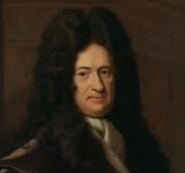
Thus there is nothing waste, nothing dead in the universe; no chaos, no confusions, save in appearence. We might compare this to the appearence of a pond in the distance, where we can see the confused movement and swarming of the fish, without distinguishing the fish themselves.Thus we are that each living body has a dominante entelechy, which in case of an animal is the soul, but the members of this living body are full of other living things, plants and animals, of which each has in turn ita dominant entelechy or soul.
▼
Source
Monadology (69-70).

3 months 4 weeks ago
They [men] have corrupted this [God's supernatural] order by making profane things what they should make of holy things, because in fact, we believe scarcely any thing except which pleases us.
3 months 4 weeks ago
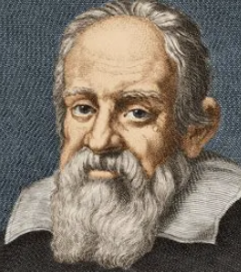
I cannot without great astonishment — I might say without great insult to my intelligence — hear it attributed as a prime perfection and nobility of the natural and integral bodies of the universe that they are invariant, immutable, inalterable, etc., while on the other hand it is called a great imperfection to be alterable, generable, mutable, etc. For my part I consider the earth very noble and admirable precisely because of the diverse alterations, changes, generations, etc. that occur in it incessantly. If, not being subject to any changes, it were a vast desert of sand or a mountain of jasper, or if at the time of the flood the waters which covered it had frozen, and it had remained an enormous globe of ice where nothing was ever born or ever altered or changed, I should deem it a useless lump in the universe, devoid of activity and, in a word, superfluous and essentially non-existent. This is exactly the difference between a living animal and a dead one; and I say the same of the moon, of Jupiter, and of all other world globes. The deeper I go in considering the vanities of popular reasoning, the lighter and more foolish I find them. What greater stupidity can be imagined than that of calling jewels, silver, and gold "precious," and earth and soil "base"? People who do this ought to remember that if there were as great a scarcity of soil as of jewels or precious metals, there would not be a prince who would not spend a bushel of diamonds and rubies and a cartload of gold just to have enough earth to plant a jasmine in a little pot, or to sow an orange seed and watch it sprout, grow, and produce its handsome leaves, its fragrant flowers, and fine fruit. It is scarcity and plenty that make the vulgar take things to be precious or worthless; they call a diamond very beautiful because it is like pure water, and then would not exchange one for ten barrels of water. Those who so greatly exalt incorruptibility, inalterability, etc. are reduced to talking this way, I believe, by their great desire to go on living, and by the terror they have of death. They do not reflect that if men were immortal, they themselves would never have come into the world. Such men really deserve to encounter a Medusa's head which would transmute them into statues of jasper or of diamond, and thus make them more perfect than they are.
▼
Source
Sagredo | Variant translation: I cannot without great wonder, nay more, disbelief, hear it being attributed to natural bodies as a great honor and perfection that they are impassable, immutable, inalterable, etc.: as conversely, I hear it esteemed a great
3 months 4 weeks ago
Practised for centuries, repression has so badly succeeded that it has but led us into a blind alley from which we can only issue by carrying torch and hatchet into the institutions of our authoritarian past.
3 months 4 weeks ago
Aristippus said that a wise man’s country was the world.
▼
Source
Aristippus, 13.
3 months 4 weeks ago
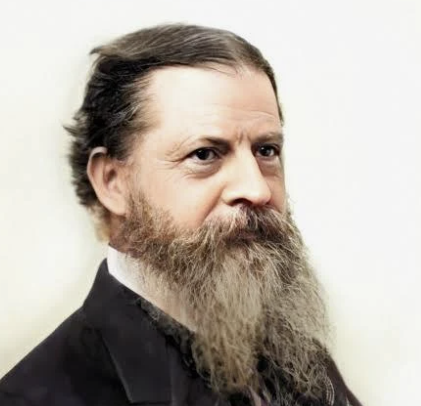
The entire universe is perfused with signs, if it is not composed exclusively of signs.
▼
Source
Quoted in Essays in Zoosemiotics (1990) by Thomas A. Sebeok ISSN 08385858 -->
3 months 4 weeks ago
The best books are those, which those who read them believe they themselves could have written.
3 months 4 weeks ago
I have never met a man so ignorant that I could not learn something from him.
▼
Source
As quoted in The Story of Civilization : The Age of Reason Begins, 1558-1648 (1935) by Will Durant, p. 605
3 months 4 weeks ago
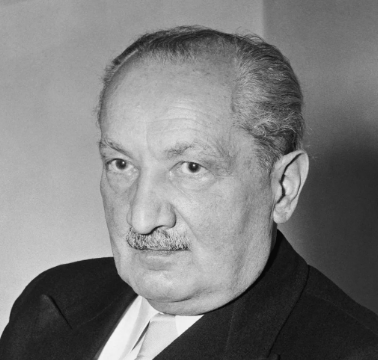
Mathematics is as little a natural science as philosophy is one of the humanities. Philosophy in its essence belongs as little in the philosophical faculty as mathematics belongs to natural science. To house philosophy and mathematics in this way today seems to be a blemish or a mistake in the catalog of the universities. Plato put over the entrance to his Academy the words: "Let no one who has not grasped the mathematical enter here!" p. 69,75
3 months 4 weeks ago
It is not sufficient to distribute the profits realized by a trade in equal parts, if at the same time thousands of other workers are exploited. It is a case of PRODUCING THE GREATEST AMOUNT OF GOODS NECESSARY TO THE WELL-BEING OF ALL, WITH THE LEAST POSSIBLE WASTE OF HUMAN ENERGY.
▼
Source
Ch. 8 : Ways and Means
3 months 4 weeks ago
One of the sayings of Diogenes was that most men were within a finger’s breadth of being mad; for if a man walked with his middle finger pointing out, folks would think him mad, but not so if it were his forefinger.
▼
Source
Diogenes, 6.

3 months 4 weeks ago
I reduce to two the systems of philosophy which deal with man's soul. The first and older system is materialism; the second is spiritualism.
3 months 4 weeks ago
Indeed, even this last moment will be recognized like the rest, at least, be just beginning to be so.
3 months 4 weeks ago
It is rather difficult to describe Heidegger’s face because he could never look straight into one’s eyes for long. His natural expression revealed a reflective brow, an inscrutable countenance, and downcast eyes, which now and again would cast a quick glance to assess the situation. Forced, in conversation, to look one straight in the face, he would appear reserved and insecure, for he lacked the gift of candid communication with other people. Hence his natural expression was one of cautious, peasant-sly mistrust
▼
Source
Karl Löwith, Heidegger’s colleague, as quoted in Ettinger, Hannah Arendt/Martin Heidegger, p. 11.
3 months 4 weeks ago
One single war — we all know — may be productive of more evil, immediate and subsequent, than hundreds of years of the unchecked action of the mutual-aid principle may be productive of good.
3 months 4 weeks ago
The chief good is the suspension of the judgment, which tranquillity of mind follows like its shadow.
▼
Source
Pyrrho, 11.

3 months 4 weeks ago
When capitalism is negated, social processes no longer stand under the rule of blind natural laws. P. 318
3 months 4 weeks ago
In the year 1742 he... received there a position as surgeon to the Guard. In this capacity he made a campaign in Germany, and... was seized by a violent fever, and used this opportunity in order to institute observations upon himself as to the influence of quickened circulation upon thought. He came to the conclusion that thought is nothing but a consequence of the organisation of our mechanism. ...[H]e tried during his convalescence to explain the mental functions by the help of anatomy, and he had his conjectures printed under the title of a 'Natural History of the Soul.' The regimental chaplain sounded the alarm, and soon a universal cry of indignation was raised... His books were recognised as heretical, and he could no longer continue to be surgeon of the Guard. ...about the same time ...writing a satire on his rivals, the foremost Paris practitioners. ...He fled in the year 1746 to Leyden. Here he wrote ...a new satire upon the charlatanism and ignorance of doctors, and soon afterwards (1748) appeared also his 'Homme Machine.'
3 months 4 weeks ago
The next simplest feature that is common to all that comes before the mind, and consequently, the second category, is the element of Struggle.
▼
Source
Lecture II : The Universal Categories, § 2 : Struggle, CP 5.45
3 months 4 weeks ago
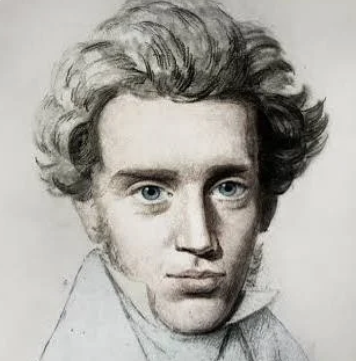
It will be easy for us once we receive the ball of yarn from Ariadne (love) and then go through all the mazes of the labyrinth (life) and kill the monster. But how many are there who plunge into life (the labyrinth) without taking that precaution?
▼
Source
Journal entry, August 1, 1835

3 months 4 weeks ago
The most beautiful discoveries since the Renaissance, indeed since the beginnings of all science, are the laws governing light, whether moving through a uniform medium, or being reflected from an opaque surface, or changing direction upon entering another transparent medium.
3 months 4 weeks ago
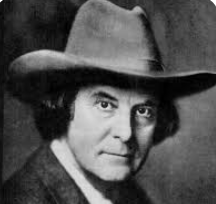
The point I wish to make is this: McKinley gave Rowan a letter to be delivered to Garcia; Rowan took the letter & did not ask, "Where is he at?" By the Eternal! there is a man whose form should be cast in deathless bronze and the statue placed in every college of the land. It is not book-learning young men need, nor instruction about this and that, but a stiffening of the vertebrae which will cause them to be loyal to a trust, to act promptly, concentrate their energies: do the thing — "Carry a message to Garcia!"
3 months 4 weeks ago
Ideas, aspirations, and objectives that, by their content, transcend the established universe of discourse and action are either repelled or reduced to terms of this universe.
▼
Source
p. 12
3 months 4 weeks ago
As long as one does not call his own position into question but regards it as absolute, while interpreting his opponents' ideas as a mere function of the social positions they occupy, the decisive step forward has not yet been taken.
3 months 4 weeks ago
The principle of interpretation says that "a sign is something by knowing which we know something more" (Peirce). The Peircean idea of semiosis is the idea of an infinite process of interpretation.
▼
Source
Umberto Eco, in Semiotics and the Philosophy of Language (1984), [O] : Introduction
3 months 4 weeks ago
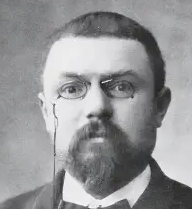
We should like to represent... the... universe, and... feel... we understood it. We... never can attain this representation: our weakness is too great. But... we desire... to conceive an infinite intelligence... which should see all, and... classify all in its time, as we classify, in our time, the little we see. ...This supreme intelligence would be only a ; infinite in one sense... limited in another, since it would have... imperfect recollection of the past... otherwise all recollections would be equally present... and for it there would be no time.
3 months 4 weeks ago
Since my earliest childhood a barb of sorrow has lodged in my heart. As long as it stays I am ironic — if it is pulled out I shall die.
▼
Source
1847
3 months 4 weeks ago
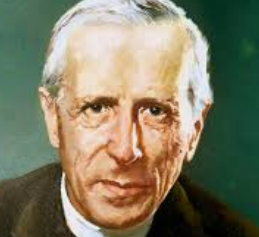
Above all I feel that you must resign yourself to taking me as I am, that is, with the congenital quality (or weakness) which ever since my childhood has caused my spiritual life to be completely dominated by a sort of profound 'feeling' for the organic realness of the World. At first it was an ill-defined feeling in my mind and heart, but as the years have gone by it has gradually become a precise, compelling sense of the Universe's general convergence upon itself; a convergence which coincides with, and culminates at its zenith in, him in quo omina constant, and whom the Society has taught me to love.
▼
Source
Letter from Cape Town to Father General, Jean-Baptiste Janssens (12 October 1951)
3 months 4 weeks ago
If your religion does not change you, then you had better change your religion.
3 months 4 weeks ago
The range of socially permissible and desirable satisfaction is greatly enlarged, but through this satisfaction, the Pleasure Principle is reduced—deprived of the claims which are irreconcilable with the established society. Pleasure, thus adjusted, generates submission.
▼
Source
p. 75
3 months 4 weeks ago
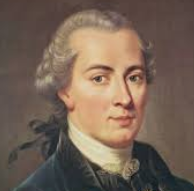
The force of the word World, as commonly used, of itself falls in with us. For no one will attribute accidents to the World as parts, but as determinations, states; hence the so-called world of the ego, unrestrained by the single substance and its accidents, is not very appositely called a World, unless, perhaps, an imaginary one.
3 months 4 weeks ago
If the ethical – that is, social morality – is the highest ... then no categories are needed other than the Greek philosophical categories.
▼
Source
Fear and Trembling, p. 55

3 months 4 weeks ago
When I say that this phase is necessary, the word phase is perhaps not the most rigorous one. It is not a question of a chronological phase, a given moment, or a page that one day simply will be turned, in order to go on to other things. The necessity of this phase is structural; it is the necessity of an interminable analysis: the hierarchy of dual oppositions always reestablishes itself. Unlike those authors whose death does not await their demise, the time for overturning is never a dead letter.
▼
Source
p. 41-42
3 months 4 weeks ago
God is inexhaustibly attainable in the totality of our action.
▼
Source
The Divinisation of Our Activities, p. 63
3 months 4 weeks ago
No man needs a vacation so much as the man who has just had one.
▼
Source
This quote is often misattributed to Hubbard. He helped popularize the quote, but never wrote it himself. The earliest instance that Quote Investigator could locate was in an article from The Boston Cooking-School Magazine titled "Out-of-Doors for the Hom
3 months 4 weeks ago
The contemporary mathematical and symbolic logic is certainly very different from its classical predecessor, but they share the radical opposition to dialectical logic. In terms of this opposition, the old and the new formal logic express the same mode of thought. it is purged from that “negative” which loomed so large at the origins of logic and of philosophic thought — the experience of the denying, deceptive, falsifying power of the established reality. And with the elimination of this experience, the conceptual effort to sustain the tension between “is” and “ought”, and to subvert the established universe of discourse in the name of its own truth is likewise eliminated from all thought which is to be objective, exact, and scientific. For the scientific subversion of the immediate experience which establishes the truth of science as against that of immediate experience does not develop the concepts which carry in themselves the protest and the refusal. The new scientific truth which they oppose to the accepted one does not contain in itself the judgment that condemns the established reality. … In contrast, dialectical thought is and remains unscientific to the extent to which it is such judgment.
▼
Source
pp. 139-140
3 months 4 weeks ago
A public can only arrive at enlightenment slowly. Through revolution, the abandonment of personal despotism may be engendered and the end of profit-seeking and domineering oppression may occur, but never a true reform of the state of mind. Instead, new prejudices, just like the old ones, will serve as the guiding reins of the great, unthinking mass. All that is required for this enlightenment is freedom; and particularly the least harmful of all that may be called freedom, namely, the freedom for man to make public use of his reason in all matters. But I hear people clamor on all sides: Don't argue! The officer says: Don't argue, drill! The tax collector: Don't argue, pay! The pastor: Don't argue, believe!
3 months 4 weeks ago
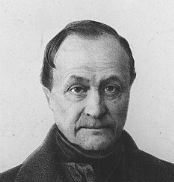
The dead govern the living.
▼
Source
Le Catéchisme positiviste (1852)
3 months 4 weeks ago
Everyone who knows something about the dangers of reflection and the dangerous walk along the road of reflection also knows that it is dubious when a person, instead of getting out of the tension through resolution and action, becomes productive about his state in tension. Then there is no effort to get out of the state, but reflection fixes the situation for reflection and thereby fixes the man. The more richly thoughts and expressions offer themselves, the more briskly the productivity advances-in the wrong direction-the more dangerous it becomes and the more it hides from the person, concerned that his work, his extremely strenuous work, his very interesting (perhaps also for a third party who has a total view) work, is a work of bogging himself down deeper and deeper. That is, he does not work himself loose but works himself fast and becomes interesting to himself by reflecting on the tension and diverts himself with an utterly piecemeal productivity about detached details, with isolated short articles.
▼
Source
The Book of Adler, by Søren Kierkegaard, Hong 1998 p. 127
3 months 4 weeks ago
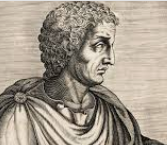
It has been observed that the height of a man from the crown of the head to the sole of the foot is equal to the distance between the tips of the middle fingers of the two hands when extended in a straight line.
▼
Source
Book VII, sec. 77.

3 months 4 weeks ago
ONE of the evil results of the political subjection of one people by another is that it tends to make the subject nation unnecessarily and excessively conscious of its past. Its achievements in the old great days of freedom are remembered, counted over and exaggerated by a generation of slaves, anxious to convince the world and themselves that they are as good as their masters. Slaves cannot talk of their present greatness, because it does not exist; and prophetic visions of the future are necessarily vague and unsatisfying. There remains the past. Out of the scattered and isolated facts of history it is possible to build up Utopias and Cloud Cuckoo Lands as variously fantastic as the New Jerusalems of prophecy. It is to the past — the gorgeous imaginary past of those whose present is inglorious, sordid, and humiliating — it is to the delightful founded-on-fact romances of history that subject peoples invariably turn. Thus, the savage and hairy chieftains of Ireland became in due course “the Great Kings of Leinster,” “the mighty Emperors of Meath.” Through centuries of slavery the Serbs remembered and idealised the heroes of Kossovo. And for the oppressed Poles, the mediaeval Polish empire was much more powerful, splendid, and polite than the Roman. The English have never been an oppressed nationality; they are in consequence most healthily unaware of their history. They live wholly in the much more interesting worlds of the present — in the worlds of politics and science, of business and industry. So fully, indeed, do they live in the present, that they have compelled the Indians, like the Irish at the other end of the world, to turn to the past. In the course of the last thirty or forty years a huge pseudo-historical literature has sprung up in India, the melancholy product of a subject people’s inferiority complex. Industrious and intelligent men have wasted their time and their abilities in trying to prove that the ancient Hindus were superior to every other people in every activity of life. Thus, each time the West has announced a new scientific discovery, misguided scholars have ransacked Sanskrit literature to find a phrase that might be interpreted as a Hindu anticipation of it. A sentence of a dozen words, obscure even to the most accomplished Sanskrit scholars, is triumphantly quoted to prove that the ancient Hindus were familiar with the chemical constitution of water. Another, no less brief, is held up as the proof that they anticipated Pasteur in the discovery of the microbic origin of disease. A passage from the mythological poem of the Mahabharata proves that they had invented the Zeppelin. Remarkable people, these old Hindus. They knew everything that we know or, indeed, are likely to discover, at any rate until India is a free country; but they were unfortunately too modest to state the fact baldly and in so many words. A little more clarity on their part, a little less reticence, and India would now be centuries ahead of her Western rivals. But they preferred to be oracular and telegraphically brief. It is only after the upstart West has repeated their discoveries that the modern Indian commentator upon their works can interpret their dark sayings as anticipations. On contemporary Indian scholars the pastime of discovering and creating these anticipations never seems to pall. Such are the melancholy and futile occupations of intelligent men who have the misfortune to belong to a subject race. Free men would never dream of wasting their time and wit upon such vanities. From those who have not shall be taken away even that which they have.
▼
Source
Jesting Pilate: An Intellectual Holiday (1926). pp. 141-143.
CivilSimian.com created by AxiomaticPanic, CivilSimian, Kalokagathia