

3 months 4 weeks ago
I come out as if there were no hours in the days, nor planets in the hours; Neither do I care for any thing, but that interlude of Perendenga in Michael Cervantes: Let the old Man my Master live, and Christ be with us thus all. Thou wilt wonder now where this drives, Conde de lemos, nor a cardinal to pray for.
3 months 4 weeks ago
From the moment of his self-dedication, when he threw His cares away, and went forth not knowing where to lay his head, the whole energy which others spend on interests of their own was poured into his humane and divine affections, and filled his life with an enthusiasm resistless and unique. However quiet his words, it is impossible not to feel the tender depths from which they come.
▼
Source
Vol. II, p. 31.
3 months 4 weeks ago
When scientists take part in activity they transform themselves from scientists into acting beings, that is, they become elements, data, facts; as soon as they reflect on their activity, however, they are re-transformed into scientists. The trained specialist qua scientist looks upon himself as a chain of judgments and inferences; qua member of society, he regard himself as a mere object. The same holds for everyone. The individual is divided into innumerable functions, the interconnection of which are unknown. In society a man is pater familias under one aspect, business man under another, thinker under a third; to be more precise, he is not a human being at all, but all these aspects and many more in an inevitable succession.
▼
Source
p. 155.

3 months 4 weeks ago
If a man is mistaken, instruct him kindly and show him his error. But if thou art not able, blame thyself, or blame not even thyself.
▼
Source
X, 4
3 months 4 weeks ago
Our labour preserves us from three great evils -- weariness, vice, and want.

3 months 4 weeks ago
Read day and night, devour books — these sleeping pills — not to know but to forget! Through books you can retrace your way back to the origins of spleen, discarding history and its illusions.

3 months 4 weeks ago
I suppose the body to be nothing but a statue or machine made of earth, which God forms with the explicit intention of making it as much as possible like us.
▼
Source
{{cite book

3 months 4 weeks ago
It is a most earnest thing to be alive in this world; to die is not sport for a man. Man's life never was a sport to him; it was a stern reality, altogether a serious matter to be alive!
3 months 4 weeks ago
"I conclude that all is well," says Oedipus, and that remark is sacred. It echoes in the wild and limited universe of man. It teaches that all is not, has not been, exhausted. It drives out of this world a god who had come into it with dissatisfaction and a preference for futile suffering. It makes of fate a human matter, which must be settled among men.

3 months 4 weeks ago
Abstinence from all injustice to other first-rate powers is a greater tower of strength than anything that can be gained by the sacrifice of permanent tranquillity for an apparent temporary advantage.
▼
Source
Book I, 1.42-[3]
3 months 4 weeks ago
Similarly, societies where news is censored cannot enjoy the luxury of false objectivity because they do not have the true variety. In free civilizations, false objectivity must be fought by true objectivity, not by some alien bureaucracy. Prejudiced history is eliminated, or at least combated, by serious history, and corrupt journalism can only be defeated by honest journalism, not by a government commission whose first act may be to distribute some secret subsidies.
▼
Source
As quoted in [http://www.friesian.com/gonzalz2.htm#note-9 Totalitarian Temptation] (1976).
3 months 4 weeks ago
Every philosophical, ethical, and political idea—its lifeline connecting it with its historical origins having been severed—has a tendency to become the nucleus of a new mythology, and this is one of the reasons why the advance of enlightenment tends at certain points to revert to superstition and paranoia. The majority principle … has become the sovereign force to which thought must cater. It is a new god, not in the sense in which the heralds of the great revolutions conceived it, namely, as a power of resistance to existing injustice, but as a power of resistance to anything that does not conform.
▼
Source
p. 30.
3 months 4 weeks ago
Have I done something for the general interest? Well then I have had my reward. Let this always be present to thy mind, and never stop doing such good.
▼
Source
XI, 4
3 months 4 weeks ago
All joys do not cause laughter; great pleasures are serious: pleasures of love do not make us laugh.
▼
Source
p. 43
3 months 4 weeks ago
Nothing surpasses the pleasures of idleness: even if the end of the world were to come, I would not leave my bed at an ungodly hour.
3 months 4 weeks ago
Enjoying things which are pleasant; that is not the evil: it is the reducing of our moral self to slavery by them that is.
3 months 4 weeks ago
What is a rebel? A man who says no.
▼
Source
Chapter 1
3 months 4 weeks ago
That war is an evil is a proposition so familiar to every one that it would be tedious to develop it. No one is forced to engage in it by ignorance, or kept out of it by fear, if he fancies there is anything to be gained by it.
▼
Source
Book IV, 4.59-[2]; "Nobody is driven into war by ignorance, and no one who thinks that he will gain anything from it is deterred by fear." ([http://www.classicpersuasion.org/pw/thucydides/thucydides-passages.php?pleaseget=4.59-64 trans.] Benjamin Jowett)
3 months 4 weeks ago
Through a vicious circle of pure reason skepsis itself becomes dogma.
▼
Source
Briefwechsel, ed. Arthur Henkel (1955-1975), vol. V, p. 432.
3 months 4 weeks ago
Whatever happens to you has been waiting to happen since the beginning of time. The twining strands of fate wove both of them together: your own existence and the things that happen to you.
▼
Source
V. 8, trans. Gregory Hays
3 months 4 weeks ago
The art of praising caused the art of pleasing.
▼
Source
p. 152
3 months 4 weeks ago
Life creates itself in delirium and is undone in ennui.
3 months 4 weeks ago
Yes, truly, it is a great thing for a Nation that it get an articulate voice; that it produce a man who will speak forth melodiously what the heart of it means!
3 months 4 weeks ago
To be happy, we must not be too concerned with others.
3 months 4 weeks ago
Lakshmi, the Goddess of wealth, comes of Her own accord where fools are not respected, grain is well stored up, and the husband and wife do not quarrel.

3 months 4 weeks ago
The fire i th' flint Shows not till it be struck
▼
Source
Poet, scene i
3 months 4 weeks ago
In many cases it is a matter for decision and not a simple matter of fact whether x understands y; and so on.
3 months 4 weeks ago
Trust not him with your secrets, who, when left alone in your room, turns over your papers.
▼
Source
No. 449
3 months 4 weeks ago
Marcus Aurelius does not direct his reflections to others but only to himself. The “”Memoirs“” are not a lesson for an ideal or real disciple (as Seneca's “'Letters to Lucilius”' were), but a continuous effort to remind “'himself”' of the philosophical cornerstones that alone can guarantee him serenity and inner peace. They therefore have a dramatic tone that is lacking in other ancient and modern moral works. Marcus Aurelius' interlocutor is only himself: Marcus Aurelius, emperor and man. Only within himself does he believe he can find the law of truth and goodness. Seeking solitude is useless, he says; one must withdraw into oneself because only in the depths of one's soul can tranquillity and truth be found. This attitude, which was adopted by the Christian world, is the fundamental leitmotif of Marcus Aurelius's “Memoirs”. In himself, man finds the reason with which divine providence has ordered the universe, and the criterion of truth and moral conduct. But by withdrawing into himself, man does not find himself in isolation: reason binds him to all men with whom he shares it.
3 months 4 weeks ago
No snowflake in an avalanche ever feels responsible.
▼
Source
Stanisław Jerzy Lec, More Unkempt Thoughts [Myśli nieuczesane nowe] (1964)
3 months 4 weeks ago
If there is anyone who owes everything to Bach, it is certainly God.

3 months 4 weeks ago
"Understanding being nothing else, but conception caused by Speech."
▼
Source
The First Part, Chapter 4, p. 17
3 months 4 weeks ago
Adversity is sometimes hard upon a man; but for one man who can stand prosperity, there are a hundred that will stand adversity.
▼
Source
(Often shortened to "can't stand prosperity" as an unknown quote).
3 months 4 weeks ago
Some of the dissident young look abroad for models. They are attracted by the writing of the French novelist Albert Camus, who, in his conflict between his Algerian birth and his intellectual allegiance to France, expressed some of the conflict they feel; but he is dead.
▼
Source
Margaret Mead Culture and Commitment: A Study of the Generation Gap (1970)

3 months 4 weeks ago
Now, that we do not really know of what sort each thing is, or is not, has often been shown.

3 months 4 weeks ago
Among civilized peoples, especially the very wealthy population of the United States of America, women have become objects of luxury who consume but do not produce.
▼
Source
p. 297.
3 months 4 weeks ago
Ambition is the grand enemy of all peace.
▼
Source
p. 140
3 months 4 weeks ago
Law could never, by determining exactly what is noblest and must just for one and all, enjoin upon them that which is best; for the differences of men and of actions and the fact that nothing, I may say, in human life is ever at rest, forbid any science whatsoever to promulgate any simple rule for everything and for all time… So, that which is persistently simple is inapplicable to things which are never simple.
▼
Source
294a-c
3 months 4 weeks ago
Only the idiot is equipped to breathe.
3 months 4 weeks ago
And because the condition of Man, (as hath been declared in the precedent Chapter) is a condition of Warre of every one against everyone; in which case every one is governed by his own Reason; and there is nothing he can make use of, that may not be a help unto him, in preserving his life against his enemyes; It followeth, that in such a condition, every man has a Right to every thing; even to one anothers body.
▼
Source
The First Part, Chapter 14, p. 64
3 months 4 weeks ago
Men do reverence men. Men do worship in that 'one temple of the world,' as Novalis calls it, the Presence of a Man! Hero-worship, true and blessed, or else mistaken, false and accursed, goes on everywhere and everywhen. In this world there is one godlike thing, the essence of all that was or ever will be of godlike in this world: the veneration done to Human Worth by the hearts of men. Hero-worship, in the souls of the heroic, of the clear and wise,—it is the perpetual presence of Heaven in our poor Earth: when it is not there, Heaven is veiled from us; and all is under Heaven's ban and interdict, and there is no worship, or worthship, or worth or blessedness in the Earth any more!—
3 months 4 weeks ago
Men have made an idol of luck as an excuse for their own thoughtlessness. Luck seldom measures swords with wisdom. Most things in life quick wit and sharp vision can set right.

3 months 4 weeks ago
The historical materialist leaves it to others to be drained by the whore called "Once upon a time" in historicism's bordello.
▼
Source
XVI
3 months 4 weeks ago
The mind of man may be compared to a musical instrument with a certain range of notes, beyond which in both directions we have an infinitude of silence.
▼
Source
Matter and Force.
3 months 4 weeks ago
Socrates:...Can you point out any compelling rhetorical reason why he should have put his arguments together in the order that he has? Phaedrus: You do me too much honour if you suppose that I am capable of divining his motives so exactly.
▼
Source
264b
3 months 4 weeks ago
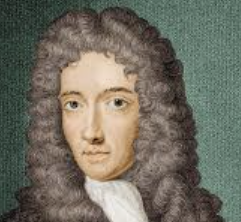
It seems not absurd to conceive, that at first production of mixt bodies, the universal matter, whereof they among other parts of the universe consisted, was actually divided, into little particles, of several sizes and shapes, variously moved.
▼
Source
Proposition I
3 months 4 weeks ago
No one can enjoy freedom without trembling.
3 months 4 weeks ago
For it is not the bare Words, but the Scope of the writer that giveth true light, by which any writing is to bee interpreted; and they that insist upon single Texts, without considering the main Designe, can derive no thing from them clearly; but rather by casting atomes of Scripture, as dust before mens eyes, make everything more obscure than it is; an ordinary artifice of those who seek not the truth, but their own advantage.
▼
Source
The Third Part, Chapter 43, p. 331
3 months 4 weeks ago
He thinks that Hero-worship, done differently in every different epoch of the world, is the soul of all social business among men; that the doing of it well, or the doing of it ill, measures accurately what degree of well-being or of ill- being there is in the world's affairs. He thinks that we, on the whole, do our Hero-worship worse than any Nation in this world ever did it before: that the Burns an Exciseman, the Byron a Literary Lion, are intrinsically, all things considered, a baser and falser phenomenon than the Odin a God, the Mahomet a Prophet of God. It is this Editor's clear opinion, accordingly, that we must learn to do our Hero-worship better; that to do it better and better, means the awakening of the Nation's soul from its asphyxia, and the return of blessed life to us,—Heaven's blessed life, not Mammon's galvanic accursed one. To resuscitate the Asphyxied, apparently now moribund, and in the last agony if not resuscitated: such and no other seems the consummation. 'Hero-worship,' if you will,—yes, friends; but, first of all, by being ourselves of heroic mind.

3 months 4 weeks ago
From a young age, I've viewed the animals we abuse and kill as akin - functionally, intellectually and emotionally - to small children. Small children are vulnerable. Typically, they don't need "liberating". Infants and toddlers in particular need looking after. The problem - when I was a teenager - was that most of interventions I could think of to alleviate wild animal suffering might easily make things worse in the long run. Thus if we sought to rescue herbivores, then obligate carnivores (and their young) would starve. If we were to phase out carnivorous predators altogether, then there would a population explosion of "prey" species. Lots of herbivores would then starve too. The food chain seemed an inexorable fact of the world - a fact as immutable as, say, the Second Law of Thermodynamics. Only after reading Eric Drexler's classic "Engines of Creation: The Coming Era of Nanotechnology" did I gradually come to realize that there were technical solutions to all these problems - notably in vitro meat, immunocontraception, neurochips to modulate behaviour, nanobots to manage marine ecosystems, and ultimately rewriting the vertebrate genome.
▼
Source
"[https://www.hedweb.com/hedethic/interviewoct2009.html Interview with Pensata Animal]", Pensata Animal, 25 Oct. 2009
CivilSimian.com created by AxiomaticPanic, CivilSimian, Kalokagathia