

6 months 1 week ago
But it is better to assume principles less in number and finite, as Empedocles makes them to be. All philosophers... make principles to be contraries... (for Parmenides makes principles to be hot and cold, and these he demominates fire and earth) as those who introduce as principles the rare and the dense. But Democritus makes the principles to be the solid and the void; of which the former, he says, has the relation of being, and the latter of non-being. ...it is necessary that principles should be neither produced from each other, nor from other things; and that from these all things should be generated. But these requisites are inherent in the first contraries: for, because they are first, they are not from other things; and because they are contraries, they are not from each other.

5 months 6 days ago
In regard to propaganda the early advocates of universal literacy and a free press envisaged only two possibilities: the propaganda might be true, or it might be false. They did not foresee what in fact has happened, above all in our Western capitalist democracies-the development of a vast mass communications industry, concerned in the main neither with the true nor the false, but with the unreal, the more or less totally irrelevant. In a word, they failed to take into account man's almost infinite appetite for distraction.
▼
Source
source
Chapter 4 (pp. 35-36)

3 months 2 weeks ago
As a way of maintaining relative intellectual independence, having the attitude of an amateur instead of a professional is a better course.
▼
Source
source
p. 87

1 month 4 weeks ago
The three great elements of modern civilization, gunpowder, printing, and the Protestant religion.
▼
Source
source
The State of German Literature (1827).

5 months 1 week ago
The entire process seems simple and natural, i.e., possesses the naturalness of a shallow rationalism.
▼
Source
source
Vol. II, Ch. III, p. 95.

5 months 1 day ago
If our intention now is to reveal classical unreason on its own terms, outside of its ties with dreams and error, it must be understood not as a form of reason that is somehow diseased, lost or mad, but quite simply as reason dazzled.
▼
Source
source
Part Two: 2. The Transcendence of Delirium
1 month 2 weeks ago
The first discipline modernity's originators imposed upon themselves was that of self-restraint, learning to live with vulgarity. Their high expectations for effectiveness were made possible by low expectations of what was to be.
▼
Source
source
Commerce and Culture, p. 285.
5 months 6 days ago
As for 'taking sides' - the choice, it seems to me, is no longer between two users of violence, two systems of dictatorship. Violence and dictatorship cannot produce peace and liberty; they can only produce the results of violence and dictatorship, results with which history has made us only too sickeningly familiar. The choice now is between militarism and pacifism. To me, the necessity of pacifism seems absolutely clear.
▼
Source
source
Authors Take Sides on the Spanish War (1937) edited by Nancy Cunard and published by the Left Review
3 months 4 weeks ago
Another doctrine repugnant to Civill Society, is that whatsoever a man does against his Conscience, is Sinne; and it dependeth on the presumption of making himself judge of Good and Evill. For a man's Conscience and his Judgement are the same thing, and as the Judgement, so also the Conscience may be erroneous.
▼
Source
source
The Second Part, Chapter 29, p. 168
1 month 4 days ago
The ruling power within, when it is in its natural state, is so related to outer circumstances that it easily changes to accord with what can be done and what is given it to do.
▼
Source
source
IV, 1

1 month 3 weeks ago
It was a great deed to conquer Carthage, but a greater deed to conquer death.

3 months 2 weeks ago
No revolution can ever succeed as a factor of liberation unless the MEANS used to further it be identical in spirit and tendency with the PURPOSES to be achieved. Revolution is the negation of the existing, a violent protest against man's inhumanity to man with all the thousand and one slaveries it involves. It is the destroyer of dominant values upon which a complex system of injustice, oppression, and wrong has been built up by ignorance and brutality. It is the herald of NEW VALUES, ushering in a transformation of the basic relations of man to man, and of man to society.
4 months 3 weeks ago
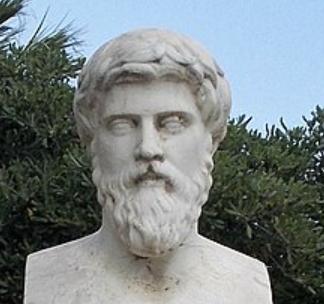
Alcibiades had a very handsome dog, that cost him seven thousand drachmas; and he cut off his tail, "that," said he, "the Athenians may have this story to tell of me, and may concern themselves no further with me."
▼
Source
source
50 Alcibiades

6 months 4 days ago
Now in this island of Atlantis there was a great and wonderful empire which had rule over the whole island and several others, and over parts of the continent and, furthermore, the men of Atlantis had subjected the parts of Libya within the columns of Heracles as far as Egypt, and of Europe as far as Tyrrhenia. This vast power, gathered into one, endeavored to subdue at a blow our country and yours and the whole of the region within the straits, and then, Solon, your country shone forth, in the excellence of her virtue and strength, among all mankind.


5 months 3 weeks ago
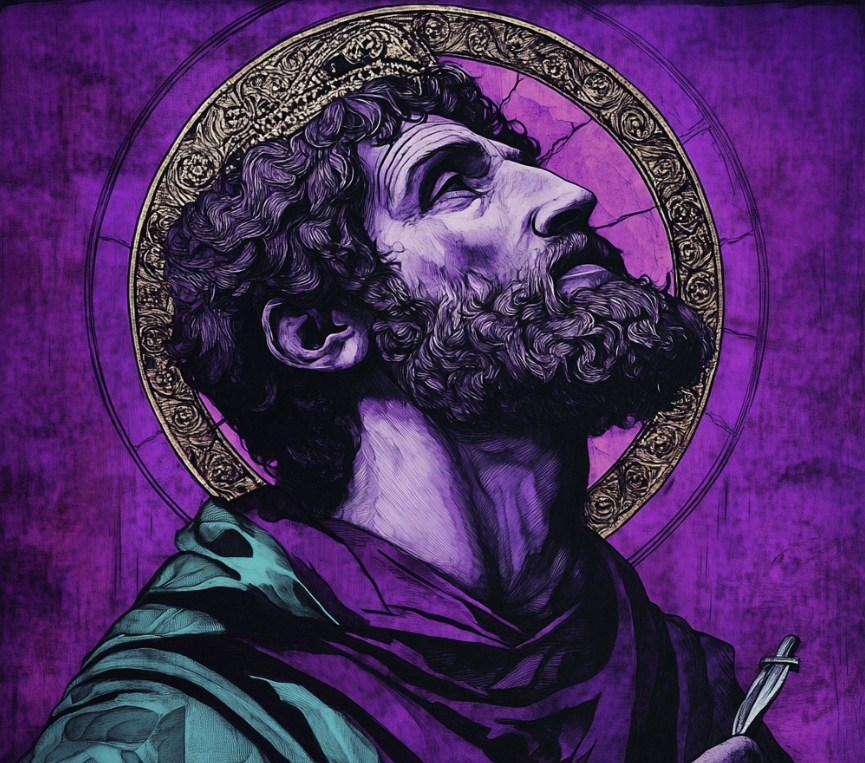
Will is to grace as the horse is to the rider.

3 months 6 days ago
When an individual passes from one period of life to another a time comes when he cannot go on in senseless activity and excitement as before, but has to understand that although he has out-grown what before used to direct him, this does not mean that he must live without any reasonable guidance, but rather that he must formulate for himself an understanding of life corresponding to his age, and having elucidated it must be guided by it. And in the same way a similar time must come in the growth and development of humanity.
▼
Source
source
VI

5 months 1 day ago
You can't lead the people if you don't love the people. You can't save the people, if you don't serve the people.
▼
Source
source
Hope on a Tightrope: Words and Wisdom (2008); also on "The Way I See It" Starbucks Coffee Cup #284
5 months 3 weeks ago
Come the Day of Judgment, some believe that the body will be different from our present body. This is only transient, that will be eternal. For this also there are religious arguments.
3 months 4 weeks ago
When the whole is at stake, there is no crime except that of rejecting the whole, or not defending it. ... Those who identify themselves with the whole, who are installed as the leaders and defenders of the whole can make mistakes, but they cannot do wrong-they are not guilty. They may become guilty again when this identification no longer holds, when they are gone.
▼
Source
source
pp. 82-83

5 months 6 days ago
For me, reason is the natural organ of truth; but imagination is the organ of meaning. Imagination, producing new metaphors or revivifying old, is not the cause of truth, but its condition.
▼
Source
source
"Bluspels and Flalansferes: A Semantic Nightmare", Rehabilitations and Other Essays, 1939

4 months 3 days ago
The tendency to regard continuity, in the sense in which I shall define it, as an idea of prime importance in philosophy conveniently may be be termed synechism. The present paper is intended chiefly to show what synechism is, and what it leads to.
3 months 2 days ago
They say cowardice is infectious; but then argument is, on the other hand, a great emboldener.
▼
Source
source
Ch. 4, The Sea Chest.
3 months 2 weeks ago
Has not authority from time immemorial stamped every step of progress as treasonable?
1 month 2 weeks ago
But what we've got going wrong is we've got a kind of bifurcation in cultural development:You take your classified telephone directory, and open up "Churches", and have a ruler in your hand. And you will find that the longest space is occupied by authoritarian, Bible-banging churches. And these people are barbarians, who take the written word of the Bible literally. Because they need terribly, they have a personal need, for something to depend on. ... The government realizes that there is a very large number of people like that; and therefore, to keep their votes, they have to pander to those kind of people. And these are the boys who never grew up; they always need Papa. ... The trouble is that the boys who need Papa, are violent. They have the guns. And they are the types of people who like to be soldiers, policemen-tough guys. And therefore they have a great deal of power.
▼
Source
source
Interviewed on Les Hixon's show "In The Spirit" on WBAI New York
4 months 4 days ago
Allow me, Gentlemen, to pose this question in a more serious manner. Do I need to tell you that it is not a question at first of the natural, physiological, ethnographic difference that exists between individuals, but of the social difference, that is produced by the economic organization of society? Give to all the children, from their birth, the same means of maintenance, education, and instruction; give then to all the men thus raised the same social milieu, the same means of earning their living by their own labor, and you will see then that many of these differences, that we believe to be natural differences, will disappear because they are nothing but the effect of an unequal division of the conditions of intellectual and physical development - of the conditions of life.
3 months 2 weeks ago
This perversion of the ethical values soon crystallized into the all-dominating slogan of the Communist Party: THE END JUSTIFIES ALL MEANS. Similarly in the past the Inquisition and the Jesuits adopted this motto and subordinated to it all morality. It avenged itself upon the Jesuits as it did upon the Russian Revolution. In the wake of this slogan followed lying, deceit, hypocrisy and treachery, murder, open and secret. It should be of utmost interest to students of social psychology that two movements as widely separated in time and ideas as Jesuitism and Bolshevism reached exactly similar results in the evolution of the principle that the end justifies all means. The historic parallel, almost entirely ignored so far, contains a most important lesson for all coming revolutions and for the whole future of mankind.

5 months 2 weeks ago
There is nothing so easy, so sweet, and so favourable, as the divine law: it calls and invites us to her, guilty and abominable as we are; extends her arms and receives us into her bosom, foul and polluted as we at present are, and are for the future to be. But then, in return, we are to look upon her with a respectful eye; we are to receive this pardon with all gratitude and submission, and for that instant at least, wherein we address ourselves to her, to have the soul sensible of the ills we have committed, and at enmity with those passions that seduced us to offend her.
▼
Source
source
Ch. 56, tr. Cotton, rev. W. Carew Hazlitt, 1877

4 months 1 week ago
France had for some time been guilty of a continued series of hostile acts against this country, both external and internal: first, she directed her pursuits to universal empire, under the name of fraternity, in order to overturn the fabric of our laws and government.
▼
Source
source
Speech in the House of Commons (12 February 1793)

3 months 4 weeks ago
Recognize what is in your sight, and that which is hidden from you will become plain to you. For there is nothing hidden which will not become manifest.

5 months 1 week ago
It requires twenty years for a man to rise from the vegetable state in which he is within his mother's womb, and from the pure animal state which is the lot of his early childhood, to the state when the maturity of reason begins to appear. It has required thirty centuries to learn a little about his structure. It would need eternity to learn something about his soul. It takes an instant to kill him.
▼
Source
source
"Man: General Reflection on Man", 1771
1 month 4 days ago
Thou sufferest justly: for thou choosest rather to become good to-morrow than to be good to-day.
▼
Source
source
VIII, 22

3 months 3 days ago
The successful scientist and the raving crank are separated by the quality of their inspirations. But I suspect that this amounts, in practice, to a difference, not so much in ability to notice analogies as in ability to reject foolish analogies and pursue helpful ones.
▼
Source
source
Chapter 8 "Explosions and Spirals" (pp. 195-196)
3 weeks 6 days ago
I am enough of an artist to draw freely upon my imagination. Imagination is more important than knowledge. Knowledge is limited. Imagination encircles the world.
5 months 1 week ago
The law of faith, being a covenant of free grace, God alone can appoint what shall be necessarily believed by everyone whom He will justify. What is the faith which He will accept and account for righteousness, depends wholly on his good pleasure. For it is of grace, and not of right, that this faith is accepted. And therefore He alone can set the measures of it: and what he has so appointed and declared is alone necessary. No-body can add to these fundamental articles of faith; nor make any other necessary, but what God himself hath made, and declared to be so. And what these are which God requires of those who will enter into, and receive the benefits of the new covenant, has already been shown. An explicit belief of these is absolutely required of all those to whom the gospel of Jesus Christ is preached, and salvation through his name proposed.
▼
Source
source
§ 156

5 months 2 weeks ago
I say that man without the grace of God nonetheless remains the general omnipotence of God who effects, and moves and impels all things in a necessary, infallible course; but the effect of man's being carried along is nothing--that is, avails nothing in God's sight, nor is reckoned to be anything but sin.
▼
Source
source
p. 265

6 months 1 week ago
Haste is universal because everyone is in flight from himself.
1 month 4 days ago
Time is a sort of river of passing events, and strong is its current; no sooner is a thing brought to sight than it is swept by and another takes its place, and this too will be swept away.
▼
Source
source
IV, 43

1 month 1 week ago
Among the sayings and discourses imputed to him [Jesus] by his biographers, I find many passages of fine imagination, correct morality, and of the most lovely benevolence; and others again of so much ignorance, so much absurdity, so much untruth, charlatanism, and imposture, as to pronounce it impossible that such contradictions should have proceeded from the same being. I separate, therefore, the gold from the dross; restore to Him the former, and leave the latter to the stupidity of some, and roguery of others of His disciples. Of this band of dupes and impostors, Paul was the great Coryphaeus, and first corruptor of the doctrines of Jesus. These palpable interpolations and falsifications of His doctrines, led me to try to sift them apart.
▼
Source
source
Letter to William Short
1 month 1 week ago
Let those flatter who fear; it is not an American art. To give praise which is not due might be well from the venal, but would ill beseem those who are asserting the rights of human nature. They know, and will therefore say, that kings are the servants, not the proprietors of the people.
1 month 3 weeks ago
No man ought to glory except in that which is his own.

3 months 5 days ago
Each of our senses makes its own space, but no sense can function in isolation. Only as sight relates the touch, or kinaesthesia, or sound, can the eye see.

5 months 1 week ago
Poetry must be new as foam, and as old as the rock.
▼
Source
source
March 1845

3 months 2 weeks ago
We are now living in an age of literary exhaustion; we get used to the bleak landscape. Cyril Connolly said that the writer's business is to produce masterpieces; but what masterpieces have been produced in the past fifty years?
▼
Source
source
p. 11
3 months 6 days ago
The attitude of the ruling classes to the laborers is that of a man who has felled his adversary to the earth and holds him down, not so much because he wants to hold him down, as because he knows that if he let him go, even for a second, he would himself be stabbed, for his adversary is infuriated and has a knife in his hand. And therefore, whether their conscience is tender or the reverse, our rich men cannot enjoy the wealth they have filched from the poor as the ancients did who believed in their right to it. Their whole life and all their enjoyments are embittered either by the stings of conscience or by terror.
▼
Source
source
Chapter V, Contradiction Between our Life and our Christian Conscience
4 months 3 weeks ago
In speaking of the move from subjective to objective characterization, I wish to remain noncommittal about the existence of an endpoint, the completely objective intrinsic nature of the thing, which one might or might not be able to reach. It may be more accurate to think of objectivity as a direction in which the understanding can travel. And in understanding a phenomenon like lightning, it is legitimate to go as far away as one can from a strictly human viewpoint.But in the case of experience, on the other hand, the connexion with a particular point of view seems much closer. It is difficult to understand what could be meant by the objective character of an experience, apart from the particular point of view from which its subject apprehends it. After all, what would be left of what it was like to be a bat if one removed the viewpoint of the bat?
▼
Source
source
p. 173.
1 month 4 days ago
Have I done something for the general interest? Well then I have had my reward. Let this always be present to thy mind, and never stop doing such good.
▼
Source
source
XI, 4
3 months 1 week ago
Our tools are extensions of our purposes, and so we find it natural to make metaphorical attributions of intentionality to them; but I take it no philosophical ice is cut by such examples.
5 months 1 week ago
Ever from one who comes to-morrow Men wait their good and truth to borrow.
▼
Source
source
Merlin's Song, II
CivilSimian.com created by AxiomaticPanic, CivilSimian, Kalokagathia