


9 months 1 week ago
Pass in, pass in, the angels say, In to the upper doors; Nor count compartments of the floors, But mount to Paradise By the stairway of surprise.
▼
Source
source
Merlin, I, st. 2
9 months 1 week ago
The Indian teaching, through its clouds of legends, has yet a simple and grand religion, like a queenly countenance seen through a rich veil. It teaches to speak truth, love others, and to dispose trifles. The East is grand - and makes Europe appear the land of trifles .... all is soul and the soul is Vishnu ... cheerful and noble is the genius of this cosmogony. Hari is always gentle and serene - he translates to heaven the hunter who has accidentally shot him in his human form, he pursues his sport with boors and milkmaids at the cow pens; all his games are benevolent and he enters into flesh to relieve the burdens of the world.
▼
Source
source
Quoted in S. Londhe, A Tribute to Hinduism, New Delhi: Pragun Publication, 2008

7 months 3 weeks ago
Imagination, which is the social sense, animates the inanimate and anthropomorphizes everything; it humanizes everything and even makes everything identical with man. And the work of man is to supernaturalize Nature - that is to say, to make it divine by making it human, to help it to become conscious of itself, in short. The action of reason, on the other hand, is to mechanize or materialize.

5 months 4 days ago
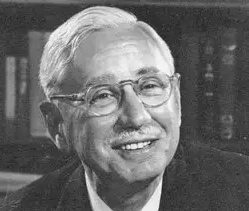
This is a fine saying of Plato: That he who is discoursing about men should look also at earthly things as if he viewed them from some higher place; should look at them... a mixture of all things and an orderly combination of contraries.
▼
Source
source
VII, 48
5 months 3 weeks ago
Rooted in freedom, bonded in the fellowship of danger, sharing everywhere a common human blood, we declare again that all men are brothers, and that mutual tolerance is the price of liberty.

9 months 1 week ago
Liberty, as we all know, cannot flourish in a country that is permanently on a war footing, or even a near war footing. Permanent crisis justifies permanent control of everybody and everything by the agencies of central government.
▼
Source
source
Chapter 1 (p. 14)

5 months 4 weeks ago
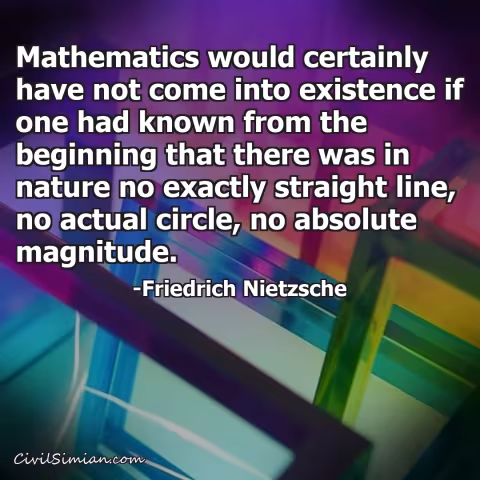
No man lives without jostling and being jostled; in all ways he has to elbow himself through the world, giving and receiving offense.


8 months 1 week ago
How did they meet? By chance, like everybody ... Where did they come from? From the nearest place. Where were they going? Do we know where we are going?
▼
Source
source
Prologue

8 months 1 week ago
Applaud us when we run, console us when we fall, cheer us when we recover.
▼
Source
source
Speech at Bristol Previous to the Election (6 September 1780), quoted in The Works of the Right Honourable Edmund Burke, Vol. II (1855), p. 129
9 months 1 week ago
You shall have joy, or you shall have power, said God; you shall not have both.
▼
Source
source
October 1842
5 months 4 days ago
Never let the future disturb you. You will meet it, if you have to, with the same weapons of reason which today arm you against the present.
▼
Source
source
VII, 8 (Penguin Classics edition of Meditations, translated by Maxwell Staniforth)


9 months 2 days ago
If you tried to doubt everything you would not get as far as doubting anything. The game of doubting itself presupposes certainty.

9 months 6 days ago
Before we as individuals are even conscious of our existence we have been profoundly influenced for a considerable time (since before birth) by our relationship to other individuals who have complicated histories, and are members of a society which has an infinitely more complicated and longer history than they do (and are members of it at a particular time and place in that history); and by the time we are able to make conscious choices we are already making use of categories in a language which has reached a particular degree of development through the lives of countless generations of human beings before us. . . . We are social creatures to the inmost centre of our being. The notion that one can begin anything at all from scratch, free from the past, or unindebted to others, could not conceivably be more wrong.
▼
Source
source
As quoted in Popper (1973) by Bryan Magee
8 months 2 weeks ago
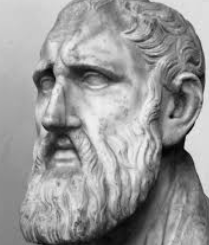
A bad feeling is a commotion of the mind repugnant to reason, and against nature.
▼
Source
source
As quoted in Tusculanae Quaestiones by Cicero, iv. 6.

5 months 1 week ago
I shall often go wrong through defect of judgment. When right, I shall often be thought wrong by those whose positions will not command a view of the whole ground. I ask your indulgence for my own errors, which will never be intentional, and your support against the errors of others, who may condemn what they would not if seen in all its parts.
5 months 2 weeks ago
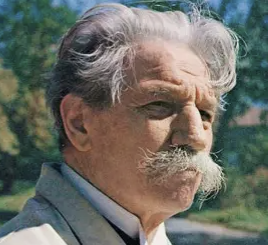
At sunset of the third day, near the village of Igendja, we moved along an island set in the middle of the wide river. On a sandback to our left, four hippopotamuses and their young plodded along in our same direction. Just then, in my great tiredness and discouragement, the phrase "Reverence for Life" struck me like a flash. As far as I knew, it was a phrase I had never heard nor ever read. I realized at once that it carried within itself the solution to the problem that had been torturing me. Now I knew that a system of values which concerns itself only with our relationship to other people is incomplete and therefore lacking in power for good. Only by means of reverence for life can we establish a spiritual and humane relationship with both people and all living creatures within our reach. Only in this fashion can we avoid harming others, and, within the limits of our capacity, go to their aid whenever they need us.

8 months ago
Judge not, and ye shall not be judged: condemn not, and ye shall not be condemned: forgive, and ye shall be forgiven: Give, and it shall be given unto you; good measure, pressed down, and shaken together, and running over, shall men give into your bosom. For with the same measure that ye mete withal it shall be measured to you again.
▼
Source
source
(Luke 6:37-38) (KJV)
9 months 1 week ago
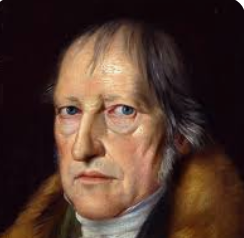
If there are different Notions of the science of Philosophy, it is the true Notion alone that puts us in a position to understand the writings of philosophers who have worked in the knowledge of it. For in thought, and particularly in speculative thought, comprehension means something quite different from understanding the grammatical sense of the words alone, and also from understanding them in the region of ordinary conception only. Hence we may possess a knowledge of the assertions, propositions, or of the opinions of philosophers; we may have occupied ourselves largely with the grounds of and deductions from these opinions, and the main point in all that we have done may be wanting - the comprehension of the propositions.
▼
Source
source
First divsion, Chapter I. - The Metaphysics of the Understanding…
5 months 4 weeks ago
Consider the great elements of human enjoyment, the attainments and possessions that exalt man's life to its present height, and see what part of these he owes to institutions, to Mechanism of any kind; and what to the instinctive, unbounded force, which Nature herself lent him.

8 months 3 days ago
Erosion of our being by our infirmities: the resulting void is filled by the presence of consciousness, what am I saying? - that void is consciousness itself.
7 months 2 weeks ago
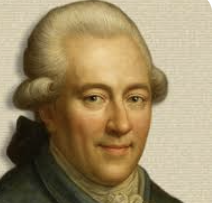
Rational free spirits are the light brigade who go on ahead and reconnoitre the ground which the heavy brigade of the orthodox will eventually occupy.
▼
Source
source
H 36
8 months 2 weeks ago
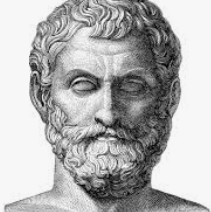
Nothing is more ancient than God, for He was never created; nothing more beautiful than the world, it is the work of that same God; nothing is more active than thought, for it flies over the whole universe; nothing is stronger than necessity, for all must submit to it.
▼
Source
source
As quoted in Love and Live Or Kill and Die: Realities of the Destruction of Human Life (2009) by James H. Wilson, p. 72

9 months 1 week ago
On the death of a friend, we should consider that the fates through confidence have devolved on us the task of a double living, that we have henceforth to fulfill the promise of our friend's life also, in our own, to the world.
▼
Source
source
February 28, 1840
8 months 3 days ago
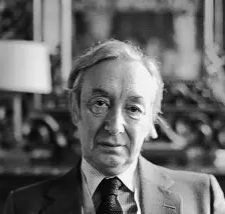
To say that authority, whether secular or religious, supplies no ground for morality is not to deny the obvious fact that it supplies a sanction.
▼
Source
source
"The Meaning of Life".
7 months 2 weeks ago
Immature love says: "I love you because I need you." Mature love says: "I need you because I love you."
▼
Source
source
Ch. 2

9 months 1 week ago
There are, in every country, some magnificent charities established by individuals. It is, however, but little that any individual can do, when the whole extent of the misery to be relieved is considered. He may satisfy his conscience, but not his heart. He may give all that he has, and that all will relieve but little. It is only by organizing civilization upon such principles as to act like a system of pulleys, that the whole weight of misery can be removed.
▼
Source
source
Means by Which the Fund Is to Be Created


7 months 2 weeks ago
I agree as to the doubtful value of competitive examination. The qualities which you really want, viz., self-control, self-reliance, habits of accurate thought, integrity and what you generally call trustworthiness, are not decided by competitive examination, which test little else than the memory.
▼
Source
source
Letter to Lord Stanley (May 17, 1857), published in Florence Nightingale on Wars and the War Office: Collected Works of Florence Nightingale. Vol. 15 (2011), edited by Lynn McDonald, p. 265.
8 months 3 weeks ago
Self-taught poverty is a help toward philosophy, for the things which philosophy attempts to teach by reasoning, poverty forces us to practice.
▼
Source
source
Stobaeus, iv. 32a. 11
8 months 3 days ago
If there is anyone who owes everything to Bach, it is certainly God.

9 months 1 week ago
Setting the mind to remember... involves a continual minimal irradiation of excitement into paths which lead thereto... the continued presence of the thing in the 'fringe' of our consciousness. Letting the thing go involves withdrawal of the irradiation, unconsciousness of the thing, and... obliteration of the paths.
▼
Source
source
Ch. 16
9 months 1 week ago
The Grecian are youthful and erring and fallen gods, with the vices of men, but in many important respects essentially of the divine race. In my Pantheon, Pan still reigns in his pristine glory, with his ruddy face, his flowing beard, and his shaggy body, his pipe and his crook, his nymph Echo, and his chosen daughter Iambe; for the great god Pan is not dead, as was rumored. No god ever dies. Perhaps of all the gods of New England and of ancient Greece, I am most constant at his shrine.

8 months 1 week ago
Men reject their prophets and slay them, but they love their martyrs and honor those they have slain.
8 months 3 weeks ago
The noblest people are those despising wealth, learning, pleasure and life; esteeming above them poverty, ignorance, hardship and death.
▼
Source
source
Stobaeus, iv. 29a. 19
6 months 2 weeks ago
I've always written at the top of my lungs and from some secret motives within. I have followed the advice of my good friend Federico Fellini who, when asked about his work, said, "Don't tell me what I'm doing, I don't want to know."
▼
Source
source
Ray Bradbury, "Author's Introduction" to 2003 Folio Society edition of Fahrenheit 452



7 months 2 weeks ago
I could see clearly that this problem could only be solved on the individual and personal level; political revolt is irrelevant. Both Camus and Sartre had been neatly hog-tied by their earlier radicalism. Camus came to see that rebellion is a political roundabout that revolves back to the same old tyranny; too ashamed to admit that he had outgrown his leftism, he found himself in an intellectual cul-de-sac. Sartre accused Camus of being a reactionary; but he paid for his own refusal to reexamine his political convictions by congealing into a grotesque attitude of permanent indignation, shaking his fist at some abstract Authority. Where politics is concerned, he seemed determined to be guided by his emotions.
▼
Source
source
p. 101
9 months 1 week ago
No man can have society upon his own terms. If he seeks it, he must serve it too.
▼
Source
source
1833

8 months 4 weeks ago
Philosophers get attention only when they appear to be doing something sinister-corrupting the youth, undermining the foundations of civilization, sneering at all we hold dear. The rest of the time everybody assumes that they are hard at work somewhere down in the sub-basement, keeping those foundations in good repair. Nobody much cares what brand of intellectual duct tape is being used.
▼
Source
source
"Philosophical Convictions." The Nation, June 14, 2004.
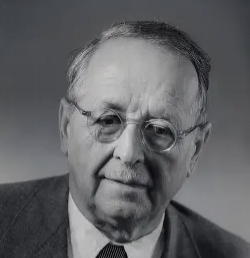
5 months 2 weeks ago
This letter, if judged by the novelty and profundity of ideas it contains, is perhaps the most substantial piece of writing in the whole literature of mankind.
▼
Source
source
Symmetry (1952), quote on p. 138; referring to a letter by Évariste Galois to Auguste Chevalier from May 29, 1832, two days before Galois' death, containing a testamentary summary of Galois' discoveries

8 months 3 weeks ago
For a thinking man is where Wisdom is at home.
▼
Source
source
Ahunuvaiti Gatha; Yasna 30, 9.

8 months 3 weeks ago
A sensible man takes pleasure in what he has instead of pining for what he has not.
7 months 3 weeks ago
There are pretenses which are very sincere, and marriage is their school.
▼
Source
source
Tres novelas ejemplares y un prólogo [Three Exemplary Novels and a Prologue] (1920); Two Mothers

5 months 1 week ago
History, I believe, furnishes no example of a priest-ridden people maintaining a free civil government. This marks the lowest grade of ignorance of which their civil as well as religious leaders will always avail themselves for their own purposes.
▼
Source
source
Letter to Alexander von Humboldt (6 December 1813) Scanned letter at The Library of Congress Transcript at The Library of Congress
10 months 1 week ago
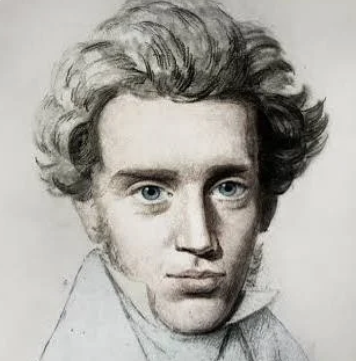
It belongs to the imperfection of everything human that man can only attain his desire by passing through its opposite.
CivilSimian.com created by AxiomaticPanic, CivilSimian, Kalokagathia