


9 months 2 days ago
Logic takes care of itself; all we have to do is to look and see how it does it.
▼
Source
source
Journal entry (13 October 1914), also in Tractatus Logico-Philosophicus (§ 5.47)

7 months 2 weeks ago
I've always believed that a writer has got to remain an outsider. If I was offered anything like the Nobel Prize for Literature, I'd find it an extremely difficult conflict because I'd be basically disinclined to accept.
▼
Source
source
Interview with Paul Newman in Abraxas Unbound #7

5 months 3 weeks ago
Every candid eye, I think, will read the Koran far otherwise than so. It is the confused ferment of a great rude human soul; rude, untutored, that cannot even read; but fervent, earnest, struggling vehemently to utter itself in words. With a kind of breathless intensity he strives to utter himself; the thoughts crowd on him pell-mell: for very multitude of things to say, he can get nothing said. The meaning that is in him shapes itself into no form of composition, is stated in no sequence, method, or coherence;-they are not shaped at all, these thoughts of his; flung out unshaped, as they struggle and tumble there, in their chaotic inarticulate state.

9 months 2 weeks ago
One of the principal reasons that diverts those who are entering upon this knowledge so much from the true path which they should follow, is the fancy that they take at the outset that good things are inaccessible, giving them the name great, lofty, elevated, sublime. This destroys everything. I would call them low, common, familiar: these names suit it better; I hate such inflated expressions.

9 months 2 weeks ago
What defects women have, we must check them for in private, gently by word of mouth, for woman is a frail vessel.
▼
Source
source
Table Talk, quoted in Luther On "Woman"
5 months 6 days ago
Small creatures die because larger creatures are hungry. How superior to this human confusion of greed and creed, blood and fire.
9 months 5 days ago
The hazards of the generalized prisoner's dilemma are removed by the match between the right and the good.
▼
Source
source
Chapter IX, Section 86, p. 577

9 months 5 days ago
"Everything is both a trap and a display; the secret reality of the object is what the Other makes of it."
6 months ago
Copernicus never discusses matters of religion or faith, nor does he use argument that depend in any way upon the authority of sacred writings which he might have interpreted erroneously. ... He did not ignore the Bible, but he knew very well that if his doctrine were proved, then it could not contradict the Scriptures when they were rightly understood.
7 months 6 days ago
You worldly-minded people are most unfortunate! You are surrounded with sorrows and troubles overhead and underfoot and to the right and to the left, and you are enigmas even to yourselves.
▼
Source
source
p. 37
8 months 3 weeks ago
Mediocrity in poets has never been tolerated by either men, or gods, or booksellers.
▼
Source
source
Lines 372-373


7 months 2 weeks ago
An absolute power would be one that never becomes apparent, never pointed to itself, one that rather blended completely into what goes without saying. Power shines in its own absence.
7 months 1 week ago
When it became obvious what a dumb and cruel and spiritually and financially and militarily ruinous mistake our war in Vietnam was, every artist worth a damn in this country, every serious writer, painter, stand-up comedian, musician, actor and actress, you name it, came out against the thing. We formed what might be described as a laser beam of protest, with everybody aimed in the same direction, focused and intense. This weapon proved to have the power of a banana-cream pie three feet in diameter when dropped from a stepladder five-feet high.
▼
Source
source
Kurt Vonnegut vs. the !&#*!@ Interview with Joel Bleifuss, In These Times
5 months 3 weeks ago
Get, by six hundred and fifty-eight votes, or by no vote at all, by the silent intimation of your own eyesight and understanding given you direct out of Heaven, and more sacred to you than anything earthly, and than all things earthly,-a correct image of the fact in question, as God and Nature have made it: that is the one thing needful; with that it shall be well with you in whatsoever you have to do with said fact. Get, by the sublimest constitutional methods, belauded by all the world, an incorrect image of the fact: so shall it be other than well with you; so shall you have laud from able editors and vociferous masses of mistaken human creatures; and from the Nature's Fact, continuing quite silently the same as it was, contradiction, and that only. What else?
6 months 3 days ago
The modern man who has ceased to believe, without ceasing to be credulous, hangs, as it were, between heaven and earth, and is at rest nowhere.
▼
Source
source
Ch. I: "The Problem of Unbelief", §2, p. 9.

7 months 3 weeks ago
And what is its moral proof? We may formulate it thus: Act so that in your own judgment and in the judgment of others you may merit eternity, act so that you may become irreplaceable, act so that you may not merit death. Or perhaps thus: Act as if you were to die tomorrow, but to die in order to survive and be eternalized. The end of morality is to give personal, human finality to the Universe; to discover the finality that belongs to it - if indeed it has any finality - and to discover it by acting.
7 months 2 weeks ago
There is in Shaw, as in Gurdjieff and Nietzsche, a recognition of the immense effort of Will that is necessary to express even a little freedom, that places them beside Pascal and St. Augustine as religious thinkers. Their view is saved from pessimism only by its mystical recognition of the possibilities of pure Will, freed from the entanglements of automatism.
▼
Source
source
p. 292

7 months 4 days ago
All forms of violence are quests for identity. When you live on the frontier, you have no identity. You're a nobody.

8 months 2 days ago
Knowledge, having irritated and stimulated our appetite for power, will lead us inexorably to our ruin.

9 months 1 week ago
Opinion is like a pendulum and obeys the same law. If it goes past the centre of gravity on one side, it must go a like distance on the other; and it is only after a certain time that it finds the true point at which it can remain at rest.
▼
Source
source
Vol. 2 "Further Psychological Observations" as translated in Essays and Aphorisms (1970), as translated by R. J. Hollingdale
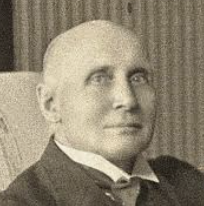
7 months 3 weeks ago
That knowledge which adds greatness to character is knowledge so handled as to transform every phase of immediate experience.
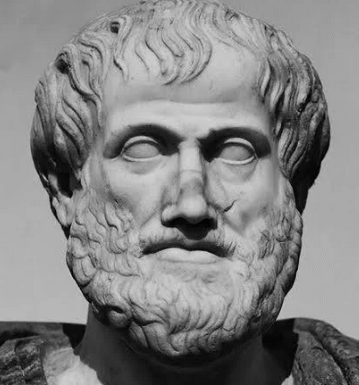
10 months 1 week ago
Since... nature is a principle of motion and mutation... it is necessary that we should not be ignorant of what motion is... But motion appears to belong to things continuous; and the infinite first presents itself to the view in that which is continuous. ...Frequently ...those who define the continuous, employ the nature or the infinite, as if that which is divisible to infinity is continuous.
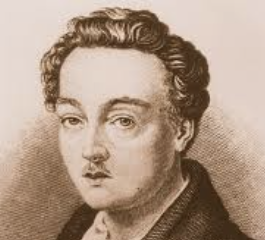
8 months 6 days ago
A good man with a good conscience doesn't walk so fast.
▼
Source
source
Scene X.
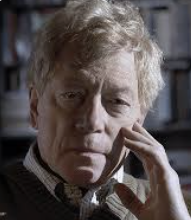
6 months 4 weeks ago
Conservatives believe that our identities and values are formed through our relations with other people, and not through our relation with the state. The state is not an end but a means. Civil society is the end, and the state is the means to protect it. The social world emerges through free association, rooted in friendship and community life. And the customs and institutions that we cherish have grown from below, by the 'invisible hand' of co-operation. They have rarely been imposed from above by the work of politics, the role of which, for a conservative, is to reconcile our many aims, and not to dictate or control them.
▼
Source
source
"Stand up for the real meaning of freedom," The Spectator
7 months 2 weeks ago
The lack of objectivity, as far as foreign nations are concerned, is notorious. From one day to another, another nation is made out to be utterly depraved and fiendish, while one's own nation stands for everything that is good and noble. Every action of the enemy is judged by one standard - every action of oneself by another. Even good deeds by the enemy are considered a sign of particular devilishness, meant to deceive us and the world, while our bad deeds are necessary and justified by our noble goals which they serve.

9 months 1 week ago
A bureaucracy always tends to become a pedantocracy.
▼
Source
source
Ch. VI: Of the Infirmities and Dangers to Which Representative Government Is Liable (p. 234)

9 months 1 week ago
You must do nothing before him, which you would not have him imitate. If any thing escape you, which you would have pass as a fault in him, he will be sure to shelter himself under your example, and shelter himself so as that it will not be easy to come at him, to correct it in him the right way.
▼
Source
source
Sec. 71
5 months 2 weeks ago
To have faith is to trust yourself to the water. When you swim you don't grab hold of the water, because if you do you will sink and drown. Instead you relax, and float.
▼
Source
source
The Essence of Alan Watts
7 months 4 weeks ago
An integral part of totalitarian control is the attack on critical and independent thought. The appeal to facts is substituted for the appeal to reason. No reason can sanction a regime that uses the greatest productive apparatus man has ever created in the interest of an increasing restriction on human satisfactions-no reason except the fact that the economic system can be retained in no other way. Just as the Fascist emphasis on action and change prevents the insight into necessity of rational courses of action and change, [Giovanni] Gentile's deification of thinking prevents the liberation of thought from the shackles of 'the given.'
▼
Source
source
P. 405
5 months 2 weeks ago
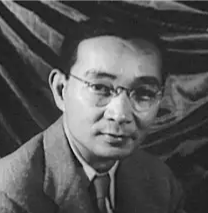
When the mirror meets with an ugly woman, when a rare ink-stone finds a vulgar owner, and when a good sword is in the hands of a common general, there is utterly nothing to be done about it.
▼
Source
source
p. 317
9 months 1 week ago
Our moral virtues benefit mainly other people; intellectual virtues, on the other hand, benefit primarily ourselves; therefore the former make us universally popular, the latter unpopular.
9 months 6 days ago
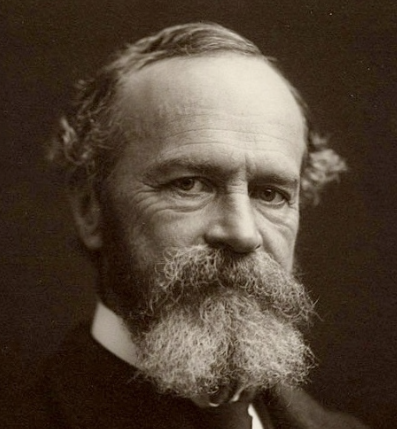
Real culture lives by sympathies and admirations, not by dislikes and disdain - under all misleading wrappings it pounces unerringly upon the human core.
▼
Source
source
The Social Value of the College-Bred

8 months 1 week ago
If you were to destroy in mankind the belief in immortality, not only love but every living force maintaining the life of the world would at once be dried up. Moreover, nothing then would be immoral, everything would be lawful, even cannibalism.
▼
Source
source
Book II, ch. 6 (trans. Constance Garnett) Pyotr Miusov, summarizing an argument made by Ivan at a social gathering
8 months 1 week ago
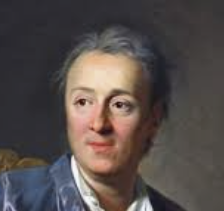
It is said that desire is a product of the will, but the converse is in fact true: will is a product of desire.
▼
Source
source
"Will, Freedom"
9 months 5 days ago
At best the principles that economists have supposed the choices of rational individuals to satisfy can be presented as guidelines for us to consider when we make our decisions.
▼
Source
source
Chapter IX, Section 84, p. 558
8 months 2 days ago
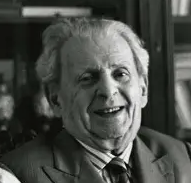
The theory of transparency was set up in reaction to the theory of mental images, of an inner tableu which the perception of an object would leave in us. In imagination our gaze always goes outward, but imagination modifies and neutralizes the gaze: the real world appears in it as it were between parenthesis or quote marks.
▼
Source
source
The Levinas reader by Levinas, Emmanuel p. 134
9 months 2 weeks ago
The Apostle Paul wants us to work with our hands in order to share with the needy (Ephesians 5:28). Notice that he could have said that we should work to support ourselves. But Paul says that we work to give to those in need. This is why caring for our body is also a Christian work. If the body is healthy and fit, we are able to work and save money that can be used to help those in need.
▼
Source
source
p. 80
6 months ago
I would say here something that was heard from an ecclesiastic of the most eminent degree [probably Caesar Baronius]: "The intention of the Holy Ghost is to teach us how one goes to heaven, not how heaven goes.
▼
Source
source
Variant translation: I would say here something that was heard from an ecclesiastic of the most eminent degree: "That the intention of the Holy Spirit is to teach us how one goes to heaven, not how the heavens go."
10 months 4 days ago
Victories over ingrained patterns of thought are not won in a day or a year.
8 months 3 weeks ago
When the objective gaze is turned on human beings and other experiencing creatures, who are undeniably parts of the world, it can reveal only what they are like in themselves. And if the way things are for these subjects is not part of the way things are in themselves, an objective account, whatever it shows, will omit something. So reality is not just objective reality, and the pursuit of objectivity is not an equally effective method of reaching the truth about everything.
▼
Source
source
"Subjective and Objective" (1979), pp. 212-213.

9 months 1 week ago
I must confess that I am deeply troubled. I fear that human beings are intent upon acting out a vast deathwish and that it lies with us now to make every effort to promote resistance to the insanity and brutality of policies which encompass the extermination of hundreds of millions of human beings.
▼
Source
source
Letter to Rudolf Carnap, June 21, 1962
8 months 2 days ago
Sooner or later, each desire must encounter its lassitude: its truth . . .
9 months 1 week ago
"I don't want to! Why should I?" "Because more people will be happier if you do than if you don't." "So what? I don't care about other people." "You should." "But why?" "Because more people will be happier if you do than if you don't."
▼
Source
source
Dialogue between Russell and his daughter Katharine, as quoted in My Father - Bertrand Russell, 1975
5 months 6 days ago
The God who gave us life, gave us liberty at the same time; the hand of force may destroy, but cannot disjoin them.
▼
Source
source
Summary View of the Rights of British America (1774); The Writings of Thomas Jefferson (19 Vols., 1905) edited by Andrew A. Lipscomb and Albert Ellery Bergh, Vol. 1, p. 211
7 months 4 weeks ago
True poetry is a function of awakening. It awakens us, but it must retain the memory of previous dreams.
▼
Source
source
Introduction
7 months 4 days ago
Logos is the formal cause of the kosmos and all things, responsible for their nature and configuration.
▼
Source
source
p. 37
7 months 3 weeks ago
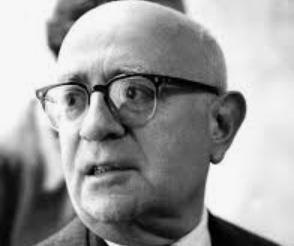
In a world that has been thoroughly permeated by the structures of the social order, a world that so overpowers every individual that scarcely any option remains but to accept it on its own terms, such naiveté reproduces itself incessantly and disastrously. What people have forced upon them by a boundless apparatus, which they themselves constitute and which they are locked into, virtually eliminates all natural elements and becomes "nature" to them.
▼
Source
source
p. 12
CivilSimian.com created by AxiomaticPanic, CivilSimian, Kalokagathia