To think so little of actual life for a completely imaginary one is really a dual use scourge of imagination...



O my Father, if this cup may not pass away from me, except I drink it, thy will be done.
Corrupt influence, which is itself the perennial spring of all prodigality, and of all disorder; which loads us, more than millions of debt; which takes away vigor from our arms, wisdom from our councils, and every shadow of authority and credit from the most venerable parts of our constitution.
The Christian Scholastics... might have shown that God Himself said that He had "imprinted an active principle in the elements of matter (Gen. i; Is. lxvi).
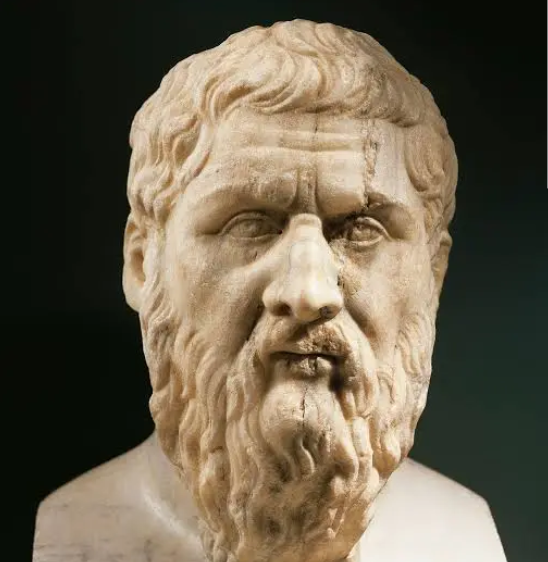
Perception and knowledge could never be the same.

A fundamental economic reconstruction, bringing with it very far-reaching changes in ways of thinking and feeling, in philosophy and art and private relations, seems absolutely necessary if industrialism is to become the servant of man instead of his master. In all this, I am at one with the Bolsheviks; politically, I criticize them only when their methods seem to involve a departure from their own ideals.

The flesh spreads, further and further, like a gangrene upon the surface of the globe. It cannot impose limits upon itself, it continues to be rife despite its rebuffs, it takes its defeats for conquests, it has never learned anything. It belongs above all to the realm of the Creator, and it is indeed in the flesh that He has projected His maleficent instincts.
Every technology contrived and "outered" by man has the power to numb human awareness during the period of its first interiorization.
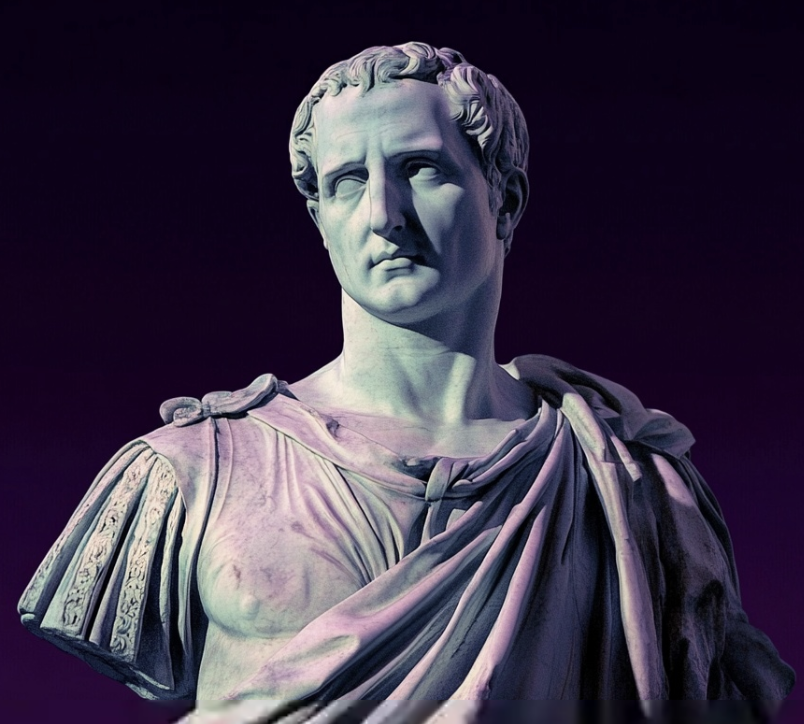
I will speak in a low voice, just so as to let the judges hear me. For men are not wanting who would be glad to excite that people against me and against every eminent man; and I will not assist them and enable them to do so more easily.
...I pray to God to make me free of God.
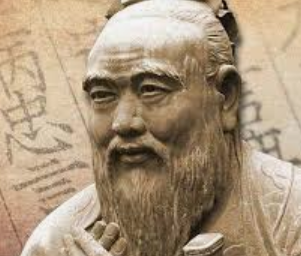
Cornered vessel without corners, strange cornered vessel, strange cornered vessel.
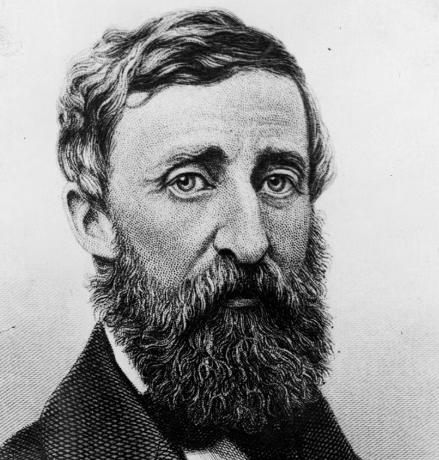
Talk of mysteries! - Think of our life in nature, - daily to be shown matter, to come in contact with it, - rocks, trees, wind on our cheeks! The solid earth! the actual world! the common sense! Contact! Contact! Who are we? where are we?

If two men who were friends in their youth meet again when they are old, after being separated for a life-time, the chief feeling they will have at the sight of each other will be one of complete disappointment at life as a whole; because their thoughts will be carried back to that earlier time when life seemed so fair as it lay spread out before them in the rosy light of dawn, promised so much - and then performed so little.
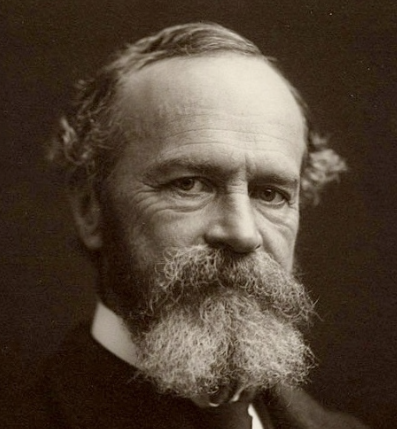
The study a posteriori of the distribution of consciousness shows it to be exactly such as we might expect in an organ added for the sake of steering a nervous system grown too complex to regulate itself.
In the past you rivalled the Achaians and the Macedonians, peoples of your own race, and Philip, their commander, for the hegemony and glory, but now that the freedom of the Hellenes is at stake at a war against an alien people (Romans), ...And does it worth to ally with the barbarians, to take the field with them against the Epeirotans, the Achaians, the Akarnanians, the Boiotians, the Thessalians, in fact with almost all the Hellenes with the exception of the Aitolians who are a wicked nation... ...So Lakedaimonians it is good to remember your ancestors,... be afraid of the Romans... and do ally yourselves with the Achaians and Macedonians. But if some the most powerful citizens are opposed to this policy at least stay neutral and do not side with the unjust.
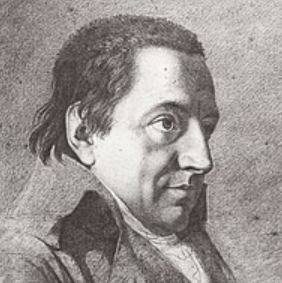
Marriage is a union between two persons - one man and one woman. A woman who has given herself up to one, can not give herself up to a second, for her whole dignity requires that she should belong only to this one.
All that is Life in me urges me to give up God.
By virtue of depression, we recall those misdeeds we buried in the depths of our memory. Depression exhumes our shames.
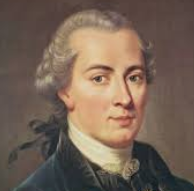
Habit... makes the endurance of evil easy (which, under the name of patience, is falsely honored as a virtue), because sensations of the same type, when continued without alteration for a long time, draw our attention away from the senses so that we are scarcely conscious of them at all. On the other hand, habit also makes the consciousness and the remembrance of good that has been received more difficult, which then gradually leads to ingratitude (a real vice). [...] Acquired habit deprives good actions of their moral value because it undermines mental freedom and, moreover, it leads to thoughtless repetitions of the same acts (monotony), and thus becomes ridiculous.
To-day, there are too many points of view of equal value and prestige, each showing the relativity of the other, to permit us to take any one position and to regard it as impregnable and absolute. Only this socially disorganized intellectual situation makes possible the insight, hidden until now by a generally stable social structure and the practicability of certain traditional norms, that every point of view is particular to a social situation.
This is the Supreme Duty of the man who struggles - to set out for the lofty peak which Christ, the first-born sone of salvation, attained. How can we begin? If we are to follow him we must have a profound knowledge of his conflict, we must relive his anguish: his victory over the blossoming snares of the earth, his sacrifice of the great and small joys of men and his ascent from sacrifice to sacrifice, exploit to exploit, to martyrdom's summit, the Cross.
In the realm of physics it is perhaps only the theory of relativity which has made it quite clear that the two essences, space and time, entering into our intuition, have no place in the world constructed by mathematical physics. Colours are thus "really" not even æther-vibrations, but merely a series of values of mathematical functions in which occur four independent parameters corresponding to the three dimensions of space, and the one of time.
But he has no fear; unconquered he looks down from a lofty height upon his sufferings.
Beware of false prophets, which come to you in sheep's clothing, but inwardly they are ravening wolves.
The basis of all Natural Systems of Classification is the Idea of Natural Affinity. The Principle which this Idea involves is this:-Natural arrangements, obtained from 'different' sets of characters, must 'coincide' with each other.
If one rejects laissez faire on account of man's fallibility and moral weakness, one must for the same reason also reject every kind of government action.

I was assailed by memories of a life that wasn't mine anymore, but one in which I'd found the simplest and most lasting joys.
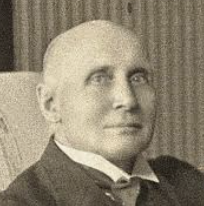
The salvation of reality is its obstinate, irreducible, matter-of-fact entities, which are limited to be no other than themselves. Neither science, nor art, nor creative action can tear itself away from obstinate, irreducible, limited facts.

An old fairy tale has it that science began with the rejection of superstition. In fact it was the rejection of rationalism that gave birth to scientific inquiry. Ancient and medieval thinkers believed the world could be understood by applying first principles. Modern science begins when observation and experiment come first, and the results are accepted even when what they show seems to be impossible.
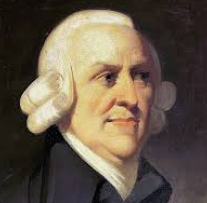
No fixed capital can yield any revenue but by means of a circulating capital.
Mechanical, chemical, and vital Forces form an ascending progression, each including the preceding. Chemical Affinity includes in its nature Mechanical Force, and may often be practically resolved into Mechanical Force. (Thus the ingredients of gunpowder, liberated from their chemical union, exert great mechanical Force : a galvanic battery acting by chemical process does the like.) Vital Forces include in their nature both chemical Affinities and mechanical Forces: for Vital Powers produce both chemical changes, (digestion,) and motions which imply considerable mechanical force, (as the motion of the sap and of the blood.)
If a man walk in the woods for love of them half of each day, he is in danger of being regarded as a loafer; but if he spends his whole day as a speculator, shearing off those woods and making earth bald before her time, he is esteemed an industrious and enterprising citizen. As if a town had no interest in its forests but to cut them down!
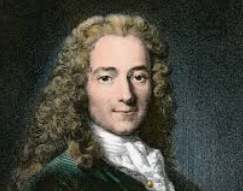
Ancient histories, as one of our wits has said, are but fables that have been agreed upon.
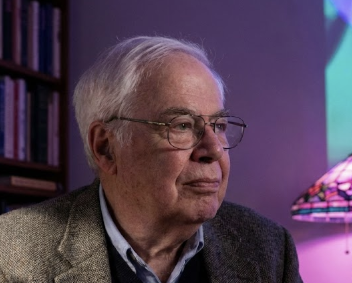
On James's view, "true" resembles "good" or "rational" in being a normative notion, a compliment paid to sentences that seem to be paying their way and that fit with other sentences which are doing so.
Like great works, deep feelings always mean more than they are conscious of saying.
Properties perceived in nature will depend on how one looks and how one looks depends on the economic interest one has in the resources of nature. The value of profit maximization is thus linked to reductionist systems, while the value of life and the maintenance of life is linked to holistic and ecological systems.
Erect I make a resolution; prone I revoke it.

The sublime is excited in me by the great stoical doctrine, Obey thyself.

To wisdom belongs the intellectual apprehension of things eternal; to knowledge, the rational apprehension of things temporal.
There is but one mode by which man can possess in perpetuity all the happiness which his nature is capable of enjoying, - that is by the union and co-operation of all for the benefit of each. Union and co-operation in war obviously increase the power of the individual a thousand fold. Is there the shadow of a reason why they should not produce equal effects in peace; why the principle of co-operation should not give to men the same superior powers, and advantages, (and much greater) in the creation, preservation, distribution and enjoyment of wealth?
Korell is that frequent phenomenon in history: the republic whose ruler has every attribute of the absolute monarch but the name. It therefore enjoyed the usual despotism unrestrained even by those two moderating influences in the legitimate monarchies: regal, honor and court etiquette.
Logic teaches us that on such and such a road we are sure of not meeting an obstacle; it does not tell us which is the road that leads to the desired end. For this, it is necessary to see the end from afar, and the faculty which teaches us to see is intuition. Without it, the geometrician would be like a writer well up in grammar but destitute of ideas.
CivilSimian.com created by AxiomaticPanic, CivilSimian, Kalokagathia